hardware
66 stories filed under hardware on Beyond Market Intelligence. The newest of them: “Pixel 11 arrives with smarter AI features and more standard storage”, “Designing Smarter Inference for High-Volume Workloads at Lower Cost”, and “Situational Awareness bets $400 million on chip startup Source Foundry”. Google's Pixel 11 lineup is leaning into intelligence over hardware, and that is a bet worth watching. Meryem Arik's guide cuts straight to a question most teams avoid: how do you make AI inference genuinely cheap when the workload is massive but patience is on your side? Acme AI is the next-generation, AI-powered spreadsheet platform built to replace Excel and redefine how analysts, data scientists, and enterprise teams work… The list below is every hardware story on Beyond Market Intelligence, newest first.

Pixel 11 arrives with smarter AI features and more standard storage
Google's Pixel 11 lineup is leaning into intelligence over hardware, and that is a bet worth watching. The starting price climbs $100, but the jump to 256GB base storage softens the sting. Fewer physical changes means Gemini carries more of the load, which feels like the right trade for users who want their devices to do more thinking. For a deeper look at how AI reshapes everyday tools, our piece on adaptive systems offers useful perspective.
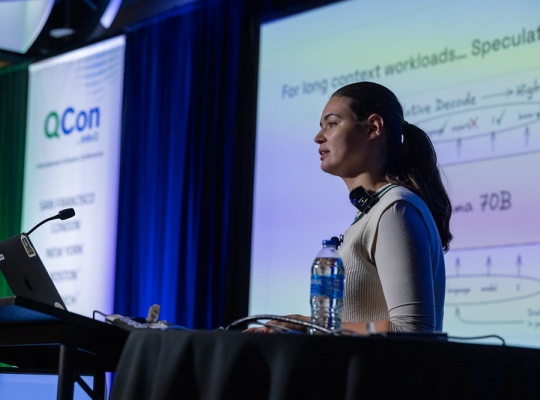
Designing Smarter Inference for High-Volume Workloads at Lower Cost
Meryem Arik's guide cuts straight to a question most teams avoid: how do you make AI inference genuinely cheap when the workload is massive but patience is on your side? Her answer isn't a single trick but a series of deliberate trade-offs across hardware, runtimes, and queue design. For engineering leaders tired of ballooning costs, her approach reframes non-real-time processing as a strategic advantage. It's practical, clear, and refreshingly grounded.

Situational Awareness bets $400 million on chip startup Source Foundry
Source Foundry just raised $400 million, and the investor writing the check is Situational Awareness, a hedge fund that knows a thing or two about high-stakes conviction. For a firm often framed as embattled, this isn't a retreat; it's a clear statement that big bets remain on the table. The move signals confidence in AI infrastructure, even when the broader narrative gets noisy. It also reminds us that capital still flows to those who build the picks and shovels.

Anthropic builds a team to design custom chips for faster AI models
Anthropic is assembling a team to design its own custom AI chips, a move that signals a deliberate shift toward co-designing hardware and models. The Claude maker wants its technology to run faster and more efficiently, and that ambition starts at the silicon level. It's a smart bet on control and performance, even if the execution won't be simple. For anyone tracking how AI infrastructure evolves, this feels like a natural next step rather than a leap.

Apple launches device leasing to ease hardware costs amid chip shortage
Apple's new 'Upgrade' leasing program with Klarna lands at a telling moment. As the industry-wide memory chip shortage drives hardware costs up, this move gives users a more flexible path to newer devices without the usual upfront sting. It's a practical response to a frustrating market, and it reframes how we think about owning tech. For more on how hardware constraints are shaping innovation, our piece on real-world computer vision deployments offers useful context.

The True Energy Cost of Running Local LLMs on Apple Silicon
Five models, sustained generation, and a wall-socket meter don't lie: running a local LLM on Apple Silicon has a real, measurable price. This piece puts actual wattage under scrutiny at $0.31/kWh, and the findings land with more weight than the RTX-3090 numbers hinted at. We appreciate the rigor here; it turns vague claims into a practical cost conversation. For those ready to move beyond basics, our guide to distributed algorithms offers a natural next step.

Enigma's $71M seed round aims to make robot control as intuitive as volume
Enigma's $71M raise signals something practical: making robot control feel as intuitive as turning a dial. Led by Index Ventures and Ribbit Capital, with Sarah Guo's Conviction Partners joining, this seed round backs a simpler interaction model. We're encouraged by the focus on accessibility over flashy claims. It aligns with our own explorations, like the piece on questioning AI clones, where ease of use meets ethical nuance. For those tracking how humans interface with intelligent systems, this is a step worth watching closely.

GPUs reach new frontiers as Nvidia powers lunar exploration.
Nvidia is sending GPUs to the moon. If there's a place in the universe lacking them, that's where they're headed. It's a bold, almost playful move, but it underscores something real: AI infrastructure is becoming as universal as computing itself. We're watching the boundaries of where data work happens expand, and it's worth exploring what that means for everyday users. For a deeper look at how this infrastructure is evolving, check out our piece on Nscale securing $3.36B to advance AI-native spreadsheet infrastructure.

AI budgets shift hardware priorities, mainframe sales feel the squeeze
IBM's stock just took a hard hit, and the culprit isn't a product failure. It's AI. After a shocking quarter, the CEO pointed to corporate hardware budgets being temporarily wrecked by AI spending. That's a compelling twist: the technology meant to modernize is, for now, cannibalizing the old guard. We're not ready to write off the mainframe, but this moment demands a closer look at how priorities shift.

Apple expands device access with new lease-to-own program
Apple's move to team up with Klarna on a lease-to-own program marks a practical shift for the hardware giant, just as it eyes higher prices across its lineup. This isn't about flashy tech; it's about making iPhones, iPads, and Macs more attainable. We see the logic: spread the cost, lower the barrier. For users weighing upgrades, this feels like a step toward flexibility. Curious how Apple's broader strategy evolves?

Discover how Light brings color and affordability to the flip phone revival.
Kaiwei Tang helped create the Motorola Razr, so when he says the flip phone is relevant again, it's worth listening. Light's new device is colorful and cheap, a refreshingly straightforward take on a familiar form. It's not about nostalgia for its own sake; it's about proving that simplicity still has a place. We're curious to see if this resonates beyond the novelty. For more on how minimal tech is gaining traction, check out "Focus on Essentials: A Smartphone Alternative for Intentional Living."

Physics-Based Computing Offers a New Path for AI's Energy Challenge
Analog chips are making a comeback, and it's about time we paid attention. The promise is real: computing with physics instead of digital logic could ease AI's energy hunger. But here's the catch, noise nearly killed this idea once before. That's the tension this piece explores with the clarity we need. It's a smart, grounded look at whether analog can finally deliver, or drown in its own signal.

Why OpenAI's first hardware is more than a novelty
OpenAI's first piece of hardware isn't a device for work. It's a basketball. That's the kind of unexpected move that makes you pause, and it's worth asking why a company known for AI would dip into sports gear. The answer feels less about utility and more about sparking curiosity. It's a playful invitation to explore what AI can mean beyond the screen. If you're questioning how far this technology should reach, our piece on talking to an AI clone offers a thoughtful counterpoint.

Aina pilots a new device designed to control AI agents, not just observe
Ultrahuman's former hardware VP has raised $5.5 million to build devices that don't just record your world, they act on it. The new company, Aina, plans to pilot its first device in the coming weeks, and that speed matters. This is about moving from passive capture to active control, a shift that feels overdue. For context on how AI agents already handle sensitive data, our piece on shared user images is worth a look. The potential here is real, but execution will define it.

A new keyboard from OpenAI invites a seamless coding workflow.
OpenAI's new $230 keyboard for Codex lands with a familiar tension: a bold tool for developers arriving amid a legal fight with Apple over hardware trade allegations. The light-up design feels intentional, built to pair with its agentic coding app, yet the timing complicates the story. We're not here to litigate the case, but it's worth asking what this signals about focus.

One wire harness startup aims to modernize aerospace manufacturing.
A SpaceX veteran just raised $65 million to modernize the wiring that powers rockets, missiles, and satellites. It's a fascinating bet on the unglamorous hardware behind aerospace, pulling harnesses out of the Cold War era and into something more efficient. The scale feels overdue. For context on how AI is reshaping critical infrastructure, our piece on Anthropic exploring Akamai's cloud for AI-native workloads offers a useful parallel. This isn't flashy, but it's where real progress often hides.

Explore how AI gains a physical voice with a companion that moves.
OpenAI's first hardware device is reportedly a screenless speaker with moving parts, designed to feel less like a tool and more like a companion. That's a curious pivot for a company rooted in software, and it raises questions about whether we're ready for AI that physically nudges into our space. The ambition is intriguing, but the execution will matter. For more on how AI companions land in practice, our piece "Talking to My AI Clone Taught Me to Question the Tech" offers a grounded counterpoint.

Your Local LLM Costs Less Than You Think, and Size Isn't the Reason
The cheapest local model isn't the smallest, and the priciest isn't the biggest. That's the takeaway from a hands-on measurement of eight models running on a single RTX 3090, where actual GPU electricity costs were tracked in euros per million tokens. It's a grounded, useful reality check for anyone exploring local AI. If you're weighing similar tradeoffs in your own workflow, our piece on verifying your AI's understanding offers another practical angle worth your time.