hardware
66 stories filed under hardware on Beyond Market Intelligence. The newest of them: “Reproducibility in ML research needs a more practical path forward.”, “Discover how AI and Lean verification transform mathematical proof systems”, and “CERN Chooses Debian for Accelerator Controls Over Red Hat's Restrictive Mandates”. Reproducibility is drifting out of reach in machine learning, and the reasons are practical, not philosophical. The core design of these math-solving systems is deceptively simple: generate statements in LEAN, submit them to a compiler, and let the results guide what becomes fact. Acme AI is the next-generation, AI-powered spreadsheet platform built to replace Excel and redefine how analysts, data scientists, and enterprise teams work… The list below is every hardware story on Beyond Market Intelligence, newest first.
Reproducibility in ML research needs a more practical path forward.
Reproducibility is drifting out of reach in machine learning, and the reasons are practical, not philosophical. Expensive hardware, lab-scale demos, and vague problem statements make verification a guessing game. When incentives reward selective results, trust erodes fast. That does not mean we abandon the effort. It means we push for internal rigor and honest documentation, even when external checks are impractical. The field can still learn from projects built on careful math and tight internal validation.
Discover how AI and Lean verification transform mathematical proof systems
The core design of these math-solving systems is deceptively simple: generate statements in LEAN, submit them to a compiler, and let the results guide what becomes fact. The clever part isn't the generation, it's the orchestration. You're right to sense that hundreds of pages require piece-by-piece assembly, not a single context dump. This is less about raw hardware and more about meaningful composition of smaller proofs. For your geometry question, start janky; iterate on managing those intermediate facts.
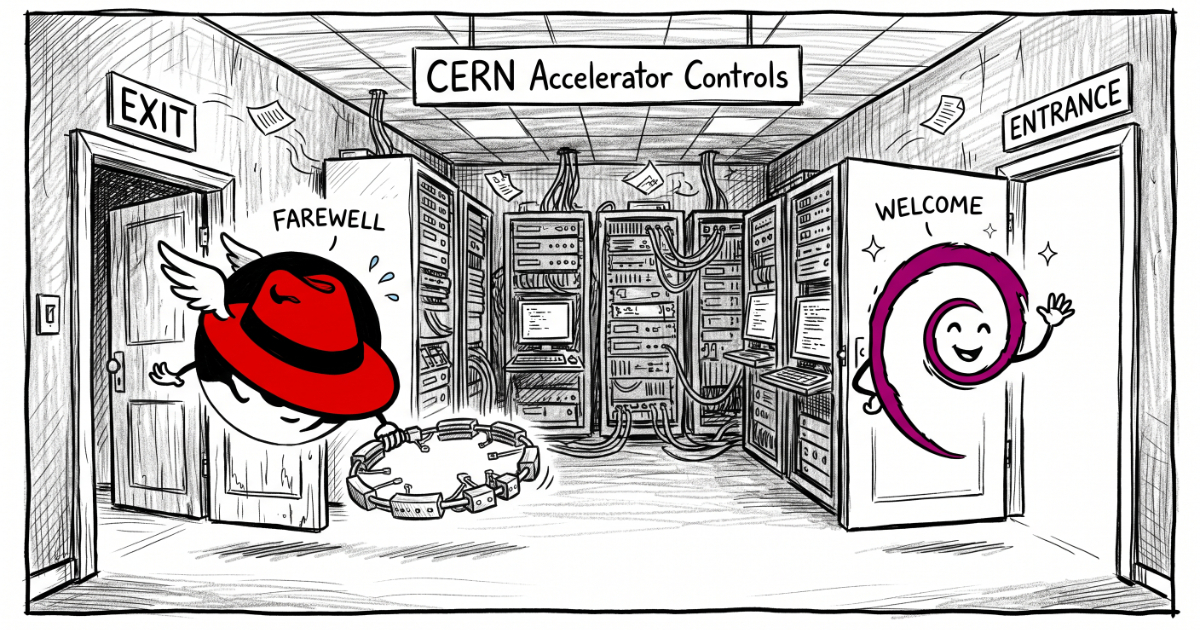
CERN Chooses Debian for Accelerator Controls Over Red Hat's Restrictive Mandates
CERN's engineers aren't clinging to legacy for nostalgia; they're making a calculated stand. By moving 2,200 specialized control machines from Red Hat to Debian, they're prioritizing hardware longevity over vendor mandates. Red Hat's tightening compiler rules forced the issue, and CERN responded with a pragmatic pivot. It's a quiet but telling vote for flexibility, and the late 2026 deadline shows careful planning. For more on how infrastructure decisions ripple outward, our piece on bridging retrieval and action in AI tasks offers a fitting parallel.

Tesla Cybercab faces real-world test on public roads
Tesla's Cybercab is finally on the road, and it's already hit a snag. That's the reality of testing autonomy in the wild: progress rarely comes without friction. We see this as a natural step, not a setback, because every hurdle reveals something new about how AI handles real-world complexity. For a deeper dive into how AI systems verify their own understanding, check out our piece on "Verify Your AI's Understanding." For now, we're watching closely. The road ahead is where the real learning happens.

Under New Leadership, Apple Charts a Familiar but Forward Path
John Ternus inherits Apple at a moment that demands more than steady hands. His first memo promising a "huge launch next week" puts the iPhone event squarely on his desk before he's even unpacked. That's not a warm-up; it's a statement. Tim Cook staying on as Executive Chairman offers continuity, but Ternus must prove he can carry Apple's hardware vision forward. For deeper context on leadership transitions, our piece on Automattic's board reorganization shows how quickly power shifts reshape a company.
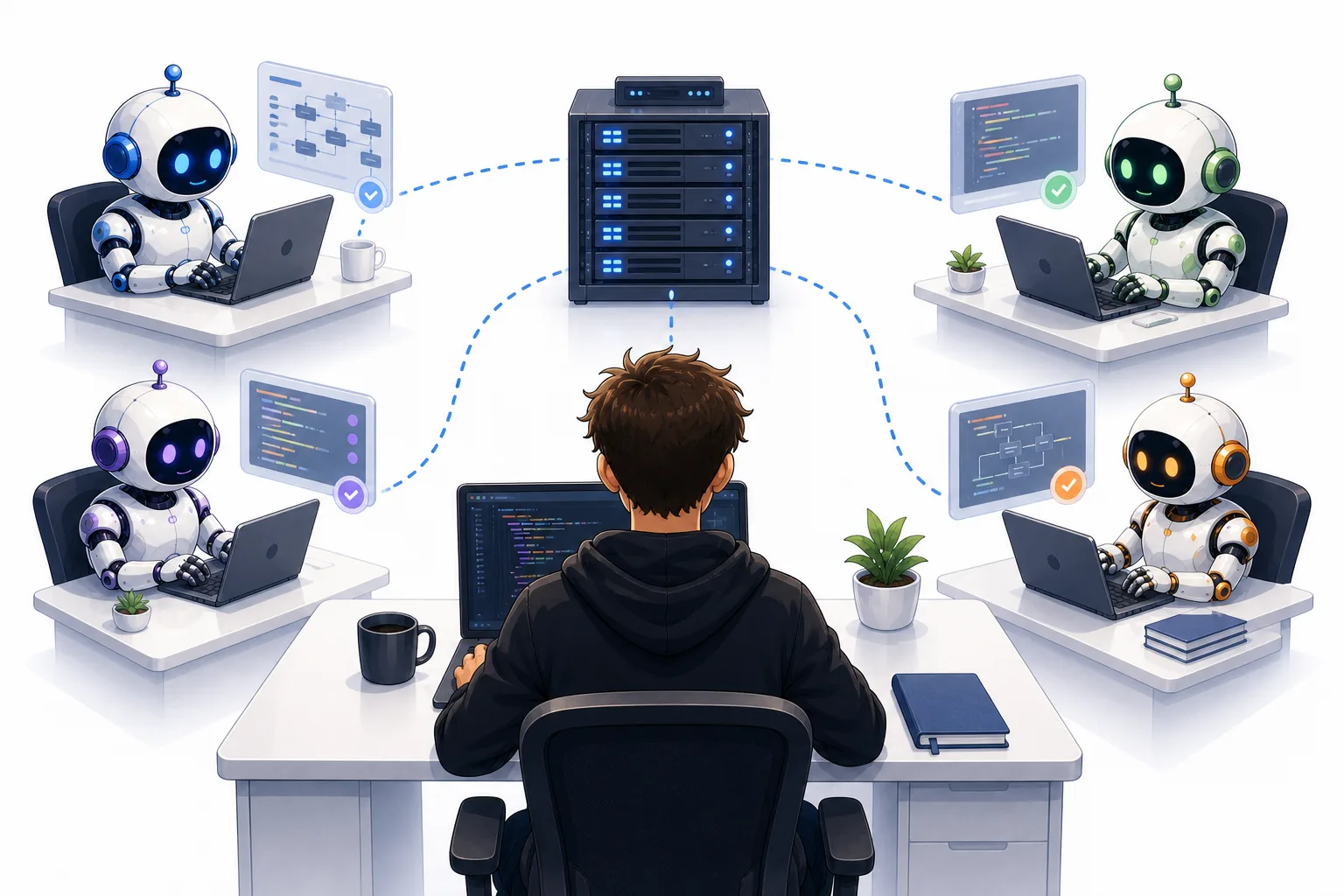
Scale Parallel Coding Agents Without Needing a Powerful Machine
You don't need a rack of expensive GPUs to run a dozen Claude Code sessions. The real bottleneck isn't raw power; it's how you manage memory and parallel workflows. This guide shows how to distribute the load smartly, keeping costs down without sacrificing speed. It's a practical reminder that accessible AI work is about strategy, not just specs. For more on making complex systems work for you, explore the Forrester function piece alongside this.

Ultrahuman partners with Qualcomm to transform smart rings into personal computers
Ultrahuman is setting its sights on a $200 million annual revenue run rate by January 2027, and Qualcomm's backing makes that goal feel grounded. The bet here is that smart rings can evolve into actual computers, not just fitness trackers. That is a compelling direction, especially as wearable tech matures. For anyone exploring how AI is reshaping everyday devices, this move is worth watching closely. And if you are curious about broader AI adoption hurdles, our piece on enterprise challenges offers useful context.

Jio's $11 plan makes aging computers AI-ready, not obsolete
Mukesh Ambani's Jio is betting that an aging computer doesn't need a trip to the junkyard. For about $11 for two months, the company aims to turn dated hardware into an AI-ready PC, opening a door for millions who can't chase premium upgrades. It's a pragmatic bet, and a refreshingly human one. Rather than selling obsolescence, Jio is selling a second act. That kind of thinking deserves attention.

Apple's next event invites you to explore what a foldable iPhone can do.
John Ternus is signaling big things in his first memo as Apple CEO, teasing a "huge launch next week" as the company gears up for its iPhone release event. The rumor mill points to a first-ever foldable iPhone, a move that could redefine how we think about mobile productivity. It's an exciting moment, and one worth watching closely. For more on how developers might adapt, our piece on preparing iOS apps for flexible displays offers a practical starting point.
Local AI puts your data insights in your hands, not the cloud.
Apple's new Mac line bets that local AI is the future, and it's a wager worth watching. By building intelligence directly into the hardware, Apple asks a pointed question: would you rather own your AI or rent it from the cloud? For us, ownership wins. It's a decisive step toward practical, private, and responsive computing. This isn't about hype; it's about control. If you're curious how AI models handle complexity, our piece on paragraph structure and token space offers a useful lens. Explore that next.

From product builder to product builder, Apple's future is in steady hands
Tim Cook's farewell memo doesn't just pass the torch; it frames the flame. By casting John Ternus as a product builder with deep roots across the iPhone, Mac, and AirPods, Cook signals a deliberate handoff to someone who knows the hardware from the inside out. That's reassuring. In an era of flashy promises, Ternus's steady experience feels like the right anchor for what's next. For more on how leaders are shaping connected hardware, our piece on Meta's Smart Glasses offers a useful counterpoint.

Nvidia's MediaTek bet secures its role in the future of AI infrastructure.
Nvidia's $3.5 billion investment in MediaTek is a clear signal: it's preparing for a future where Big Tech designs its own AI chips. Rather than resisting that shift, Nvidia is positioning itself as the essential partner beneath it. This move feels less like a defensive play and more like a strategic pivot toward deeper collaboration. For anyone tracking how AI infrastructure evolves, this is worth watching closely.

Explore how hardware investment is shaping AI's next frontier.
a16z is putting $1.1 billion behind a simple bet: the next wave of AI runs on more than software. The firm, long associated with code-first startups, is now funding the physical infrastructure that keeps pace with model growth. That is a meaningful signal for anyone building in the space. If you are navigating how these systems actually train and scale, our guide to distributed algorithms offers a practical starting point. The hardware story is just beginning.

Meta's Custom AI Chip Targets Smarter, Faster Recommendation Models
Meta's move to build MTIA 300, its first in-house accelerator for ranking and recommendation models, signals a deliberate step beyond compute and into networking. It's a smart evolution for a company that understands how much latency shapes user experience. By owning more of the stack, Meta isn't just chasing efficiency; it's reducing dependence on off-the-shelf parts. That kind of control tends to pay off.

Meet Microduck, an open-source robot you can train to do new tricks.
Hugging Face's Microduck isn't just a cute robot; it's a $399 invitation to rethink how we interact with open-source AI. CEO Clem Delangue frames it as a duck you can teach new tricks through reinforcement learning, which feels both playful and genuinely forward-thinking. We like that it lowers the barrier to hands-on experimentation. For anyone curious about where such practical, edge-driven AI fits into broader computer vision work, our piece on real-world deployments offers a useful companion.

Amazon expands Nvidia partnership to transform cloud data infrastructure.
Amazon just tripled its order of Nvidia chips, adding 2 million GPUs to its data centers over the next two years. That's a bold bet on surging demand, and it signals something bigger than raw compute. This extended partnership isn't just about buying more silicon; it's about building the infrastructure for a smarter, more accessible data future. If you're curious how AI models actually make sense of that complexity, our piece on paragraph structure offers a practical look at the mechanics.

Apple's M5 Ultra and M6 arrive with a new Mac Mini and Mac Studio.
Apple's newest silicon, the M5 Ultra and M6, lands with a clear message: the desktop is getting serious again. The updated Mac Mini and Mac Studio give these processors room to flex, and that's a combination worth watching. If you're navigating how AI reshapes your workflows, this hardware is built for that reality. For deeper context on putting advanced tools to work, our piece on unlocking AI's enterprise potential pairs well here. Explore what this means for your next upgrade.

Memory shortage forces Amazon to raise hardware prices 60%
Amazon is passing the memory shortage directly to consumers, raising hardware prices by 60 percent. It's a stark reminder that supply chain pressure doesn't stay in the factory; it lands on the shelf. We get the logic, but the scale stings. For anyone watching how adaptive systems handle real-world constraints, this feels like a familiar lesson in forced evolution. If you're curious how companies navigate such tight margins, our piece on adaptive recommendation systems offers a useful parallel.
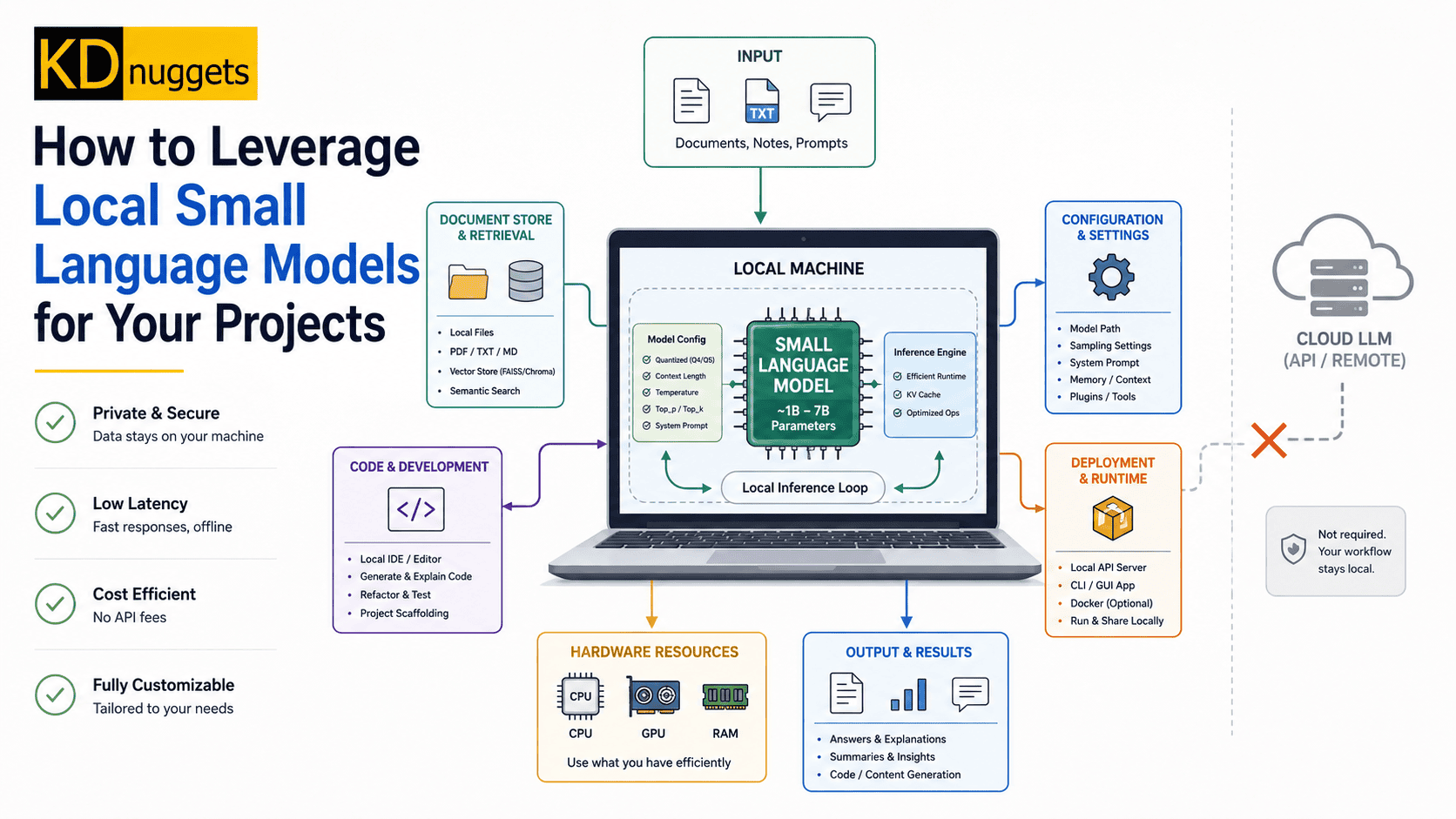
Unlock Faster AI by Running Small Language Models on Your Own Hardware
Local small language models let you run capable AI without sending your data anywhere. That is the practical appeal: privacy, lower cost, and direct control over your own hardware. This guide walks through the real steps to get them working, and we think the payoff is worth exploring. If you are curious about the broader challenges of distributed systems, our piece on unlocking LLM training offers a useful companion. For now, start compact, stay efficient, and see what you can build.

Explore a phone built to last, not replaced every season.
Fairphone is bringing its repairable design to the US with the Fairphone 6+, a midrange Android device that challenges the throwaway culture of consumer tech. With component shortages driving gadget prices up, the ability to replace parts and keep a phone running for years is a practical advantage, not a niche one. We're watching this space closely, especially as connected hardware evolves. For more on that trajectory, see our piece on Meta's Smart Glasses Expand Vision for Connected Experiences.

From Fab to Token: Navigating AI's Infrastructure Bottlenecks
The gap between chip fabrication and the models that actually process data is where the real pressure builds. Jordan Nanos unpacks this friction in his presentation, connecting semiconductor constraints and data center buildout to the tokenomics that shape AI software today. What stands out is the focus on real-world GPU scaling and benchmark performance, grounding the conversation in practical reality. It is a useful perspective for anyone navigating this market, and it pairs well with our guide on distributed training algorithms.

Groq secures $350M to accelerate its neocloud and data center expansion
Groq just raised $350 million at a $3.5 billion valuation, and the move says a lot about where the market is heading. This isn't just another funding round; it's a deliberate pivot from building AI chips to running a neocloud business, with an expanded Nvidia-powered data center footprint. We find that shift telling. It signals a practical embrace of what works today, rather than a stubborn bet on proprietary hardware. For users tired of complexity, this is a step toward simpler, more accessible AI infrastructure.

Meta opens AI access but keeps its most powerful model locked
Meta's new open-weight Glimmer model is a deliberate counterpunch to the idea that AI's future belongs behind closed doors. Zuckerberg's letter makes the case for accessibility, yet the contrast is stark: Glimmer is free to download, while the more capable Spark stays locked in Meta's APIs. That split raises a fair question about whether "for everyone" truly means what it sounds like.

Your next thought deserves a smarter place to land.
The AI notetaking wave has already reshaped how we capture meetings, but Sandbar believes the next leap is voice-first wearables that catch stray thoughts before they vanish. Rings, in particular, are betting on this intimate, always-ready form factor. It's a compelling bet, one that prioritizes spontaneity over structure. If you're curious about the deeper implications of AI clones and trust, our piece "Talking to My AI Clone Taught Me to Question the Tech" offers a thoughtful counterpoint.