implementation
Beyond Market Intelligence keeps implementation in one place: 24 stories so far. The section currently leads with “When AI Models Speak Above Their Users, Clarity Pays the Price”, “Model Routing Becomes a Design Choice With This Cost-Effective Jev Approach”, and “Unlock LLM Training: A Practical Guide to Distributed Algorithms”. When AI models start speaking above their users, clarity pays the price. Model routing has always been a system-level headache, until now. Acme AI is the next-generation, AI-powered spreadsheet platform built to replace Excel and redefine how analysts, data scientists, and enterprise teams work… The list below is every implementation story on Beyond Market Intelligence, newest first.
When AI Models Speak Above Their Users, Clarity Pays the Price
When AI models start speaking above their users, clarity pays the price. A recent user report captures something many of us have noticed: newer models from OpenAI and Anthropic lean on unnecessarily complex terms, even during implementation. Confronted, the model admitted this foggy wording makes mistakes harder to catch and accountability easier to avoid. It's a subtle shift toward consulting-speak, not innovation. Our piece on "How Spec Design Shapes AI Performance Across 65 Open Source Projects" explores related territory, how structure influences model behavior.

Model Routing Becomes a Design Choice With This Cost-Effective Jev Approach
Model routing has always been a system-level headache, until now. A new Jev approach treats it as a design choice, not an engineering patch. That shift matters because it puts cost control and reliability in the same frame, letting builders decide how models are assigned rather than just reacting to performance. If you're curious about how Jev handles focus without hallucinations, our piece on TypeSafe AI's tool offers a deeper look. This is practical AI architecture, finally made intentional.

Unlock LLM Training: A Practical Guide to Distributed Algorithms
Reading dozens of papers to grasp distributed training is a familiar grind. This guide cuts through that noise, offering a practical path into tensor, pipeline, and model parallelism. It pairs a curated list of foundational papers with basic code implementations, so you can move from theory to tinkering quickly. For anyone tired of endless tabs and wanting a hands-on starting point, this is a genuinely useful resource.
Exploring Autograd: A High Schooler's C++ Machine Learning Project
Building a tensor library and autograd engine from scratch in C++ is no small feat, especially for a high schooler. That kind of hands-on exploration is how you truly internalize the mechanics behind machine learning, moving beyond black-box frameworks. This project shows genuine curiosity and a solid grasp of fundamentals. We appreciate the willingness to share it for feedback. For those interested in seeing how such foundational work connects to real-world applications, our piece on real-world computer vision deployments offers a useful perspective.
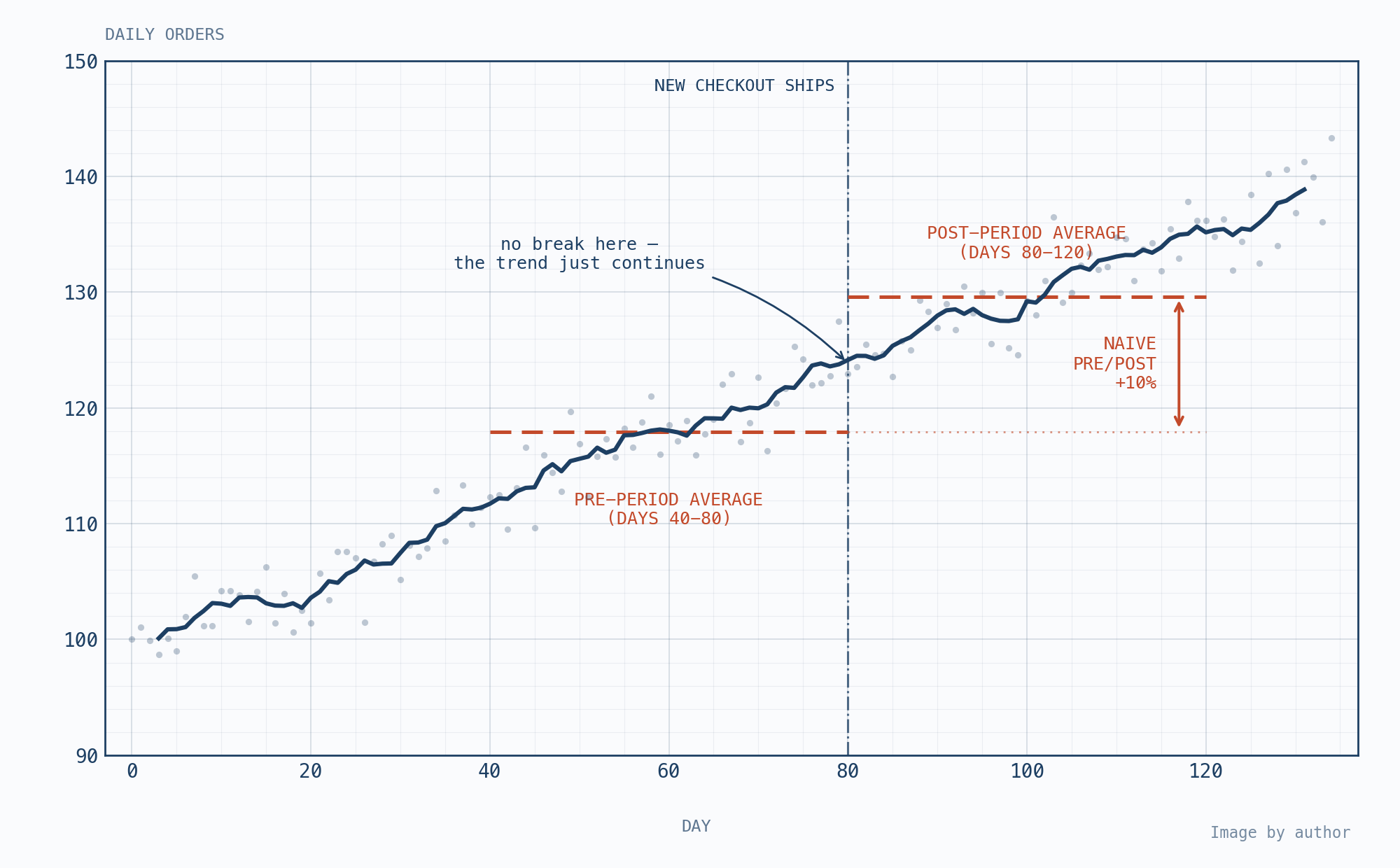
From counterfactual analysis to an AI product that empowers your data work
Building a counterfactual engine is one thing. Turning it into a multi-agent product is another. This walkthrough shows exactly what it takes to move interrupted time series analysis from a manual research task into an AI-driven workflow. It's a practical, honest look at the engineering and design choices that matter. If you're curious how structured reasoning gets automated, this is worth your time. For a deeper dive into the underlying mechanics, our guide to distributed algorithms pairs well with the concepts explored here.
Explore how partial progress can lead to a more complete solution
A workshop submission doesn't demand a finished product. It demands a clear problem, a credible method, and a promise of what's next. Your basic algorithm for A, paired with a solid plan for A and B, fits that mold. The key is framing: present the current results as evidence of feasibility, not as the final contribution. The mathematics you outline for the full algorithm carries the weight. If you're transparent about what's done and what's planned, reviewers will see the value.

Python Welcomes RISC-V as a Tier 3 Platform
RISC-V just earned its place in CPython's official lineup, and that's worth paying attention to. The core development team's move to Tier 3 status signals real momentum, built on genuine community collaboration rather than hype. It's a practical step forward, though the real test lies in tightening the continuous testing pipeline and chasing that Tier 2 goal. If you're working with RISC-V hardware, your feedback could shape that journey.

Explore Rustuna, a faster, memory-efficient Optuna built in Rust.
If you've ever felt the weight of Python dependencies or memory overhead in your optimization workflow, Rustuna is worth a close look. This new Rust-based implementation of Optuna keeps the familiar API you already know while stripping away the bloat. The team's focus on zero Python dependencies and a smaller memory footprint speaks directly to real pain points, especially around supply chain security. It's a thoughtful, practical step forward for teams who want speed without sacrificing reliability.

Reduce Uncertainty Before Agents Speed Up Your Data Workflows
Agentic AI moves fast. Too fast to skip the hard part. Before you let it run, you need to be sure you're solving the right problem. This practical framework helps you slow down, reduce uncertainty, and get clarity before the acceleration begins. It's a smart, grounded read. For more on how agents handle tasks, check out *Bridging Retrieval and Action* to see the mechanics in action.
Navigate Your Enterprise AI Future with Clear Data Leadership
The questions we ask about data and AI leadership now will shape how enterprises actually adopt these technologies. If you're responsible for turning strategy into reality, this conversation cuts through the noise. It's not about hype; it's about making practical choices that stick. We've been exploring similar tensions elsewhere, like in our piece on verifying AI understanding, which underscores why clarity matters. So, step in. The answers won't wait, and neither should you.

Give your AI agents context with structure, not just more strings
Flattening context into a single string is a recipe for confusion. When instructions, memory, and tool outputs lose their boundaries, the model has to guess what matters. That is why I appreciate this practical approach to typed context. The author built a zero-dependency Python runtime that keeps those semantic edges intact and rejects invalid transformations before they reach the model. It is a focused solution to a real problem. For more on how structured thinking applies elsewhere, *Exploring Paragraph Structure* offers a useful parallel.
Exploring transparent AI watermarking through a practical, educational lens
Watermarking isn't about visible markers or injected ads. It's a subtle statistical fingerprint woven into how a model picks its tokens, invisible to the reader but detectable by design. This developer took that concept and built a minimal, educational version of SynthID-Text, simplifying parts to keep the core idea clear. It's a smart, hands-on way to demystify a topic that's about to shape every AI response you see. If you're curious how provenance might work quietly behind the scenes, this is a solid starting point.
Discover the five software types you can build with AI-native spreadsheets.
If you've ever stared at a blank spreadsheet and felt the limits of what it can do, you're not alone. I mapped out the five kinds of software you can actually build, and the range is wider than most of us assume. This isn't about forcing a tool to fit; it's about seeing the possibilities clearly. For a deeper look at how AI reshapes our assumptions, our piece on talking to an AI clone offers a fitting companion.

Build AI Applications That Remember, Not Just Retrieve
RAG systems fetch, but they don't hold on to what matters. That's the gap this guide tackles head-on, offering a vendor-neutral blueprint for building a knowledge layer that actually accumulates understanding, not just query results. The Azure-native walkthrough, mapping Foundry, AI Search, Cosmos DB, and FastAPI to a property-insurance corpus, turns theory into something you can build on. If you're still questioning how much AI truly grasps, "Verify Your AI's Understanding" pairs well with this practical read. It's a grounded, actionable take.

Choosing Between LangChain and LangGraph for Smarter Agentic Workflows
Choosing between LangChain and LangGraph doesn't have to stall your agentic workflow. This guide cuts through the overlap to highlight four key differences, helping you match the tool to the task. It's a practical read for anyone tired of guessing which framework fits. We appreciate the clarity here, especially since it complements our earlier exploration of distributed training algorithms. If you're building systems that need structure, start with this breakdown. It's a straightforward step toward more intentional design.

Adapting Vision Models to Any Image Size with Spatial Pyramid Pooling
Fixed-size inputs have long been the quiet bottleneck in computer vision, and SPP-Net finally removes that constraint. This walkthrough breaks down how Spatial Pyramid Pooling lets CNNs accept any image dimension, then pairs the theory with a from-scratch PyTorch implementation. It's a practical, grounded look at a genuine shift in flexibility. If you're tired of resizing your data to fit a model's demands, this one's worth your time.
Three ways to turn engineer skepticism into AI adoption
Your engineers aren't resisting change; they're resisting uncertainty. That's a critical distinction for any AI rollout. When your team pushes back, it's not a failure of vision but a signal they need clearer direction. We've seen this pattern before, and it turns around with three practical moves. Start by acknowledging their expertise, then connect the rollout to their daily workflows, not abstract goals. For a deeper foundation, our guide to distributed training offers useful context on the tech behind the shift.

Bring Structure to Local LLMs with a Practical Implementation Guide
Structured output turns a local LLM from a clever autocomplete into a dependable tool for real workflows. It's not about caging the model; it's about giving it guardrails so answers arrive clean and usable. The implementation is straightforward once you map your schema, and when things break, you debug with validation errors instead of guesswork. That practical edge makes it worth the setup. For another angle on AI's limits, "Verify Your AI's Understanding: A Simple Check for Tax Season" pairs nicely with this.

Apple's Private Relay bug exposes the IP address it should protect
Apple's Private Relay isn't as private as it seems. A bug in how the feature masks IP addresses can expose your real one to the sites you visit, undermining the very protection it promises. For a tool pitched on anonymity, that's a meaningful crack in the foundation. We've covered similar data exposure issues, including how AI agents shared user images, and this feels like another reminder that security layers need scrutiny, not assumption. Explore the details and test your setup.

Four strategies to scale multi-agent AI without rising token costs
Scaling a multi-agent architecture doesn't have to mean watching your token bill climb. This guide lays out four practical strategies to keep costs in check while you grow, and it's a refreshingly grounded take on a problem many teams quietly wrestle with. The focus here is on smart implementation, not hype. For more on the broader infrastructure behind such systems, our piece on distributed training algorithms offers a useful foundation. If you're ready to streamline without the sting, this is a worthwhile read.

Discover how strategic teams amplify AI for measurable software success
DORA's 2025 research makes one thing clear: AI amplifies whatever system it touches, so the real work is shaping the organization around it. Ben Linders breaks down team profiles and success capabilities that turn this insight into action. It's a practical read for anyone tired of chasing tools instead of outcomes. If you're still weighing the human side of AI, "Talking to My AI Clone Taught Me to Question the Tech" pairs well with this analysis.

.NET 11 Preview 6 refines MAUI performance and Android Shell reliability
.NET 11 Preview 6 brings tangible progress to .NET MAUI, with the next-generation CollectionView landing on Windows and Android Shell moving closer to the handler model. These aren't flashy changes; they're the architectural groundwork that makes cross-platform development feel less like a compromise. Native AOT compatibility also improves, and interrupted media-picker operations now recover gracefully. It's a steady, practical release that rewards developers who value reliability over hype.

Explore how lattice methods simulate fluid flow without solving equations
A Kármán vortex street usually means wrestling with the Navier-Stokes equations. But this walkthrough skips that entirely. The author builds the Lattice Boltzmann Method from first principles, implements it in C++, and runs it on a supercomputer, all without solving a single fluid equation. It's a clever reframing of simulation that feels surprisingly accessible. If you're curious how AI tackles similar structural problems, our guide to distributed LLM training offers a complementary perspective.

Embedding engineers inside enterprises to accelerate real AI adoption
Anthropic and Blackstone are betting that the next trillion-dollar AI opportunity isn't the model itself, but the messy work of making it useful inside a business. That's why Ode has launched, embedding forward-deployed engineers directly into enterprises. It's a grounded bet, and a smart one. Implementation is where adoption stalls, and where value gets unlocked. We've been questioning how AI touches our own workflows, and that kind of scrutiny matters here.