infrastructure
Beyond Market Intelligence keeps infrastructure in one place: 101 stories so far. The section currently leads with “Explore how portable modular data centers can transform AI infrastructure.”, “Texas pauses data center growth to rethink energy demands”, and “Simplify infrastructure governance with policy-as-code built into Terraform”. Runware is betting that the future of data centers fits in a pod. Texas has long been the default answer for data center developers chasing cheap power and light regulation. Acme AI is the next-generation, AI-powered spreadsheet platform built to replace Excel and redefine how analysts, data scientists, and enterprise teams work… The list below is every infrastructure story on Beyond Market Intelligence, newest first.

Explore how portable modular data centers can transform AI infrastructure.
Runware is betting that the future of data centers fits in a pod. This week, the AI infrastructure company unveiled Sonic Inference Pod, a modular data center designed to answer a simple question: can portability redefine how we deploy compute? It's a bold move, and one that feels less like a gimmick and more like a response to real friction. Traditional infrastructure is heavy and rigid. Exploring a modular path could empower teams to meet AI's demands with unexpected agility.

Texas pauses data center growth to rethink energy demands
Texas has long been the default answer for data center developers chasing cheap power and light regulation. But the governor's call for audits signals that even the most business-friendly state has limits. Growth without scrutiny eventually hits a wall, and Texas just found its own. It's a reminder that infrastructure booms don't fail quietly; they strain until someone blinks. For context on how quickly energy demand is reshaping tech decisions, our piece on Crusoe pausing its Boom turbine deployment shows even startups are recalibrating.

Simplify infrastructure governance with policy-as-code built into Terraform
HashiCorp has rolled out tfpolicy, a new HCL-based policy-as-code framework for Terraform, now in public beta within HCP Terraform. The move targets a persistent pain point: governance has long meant juggling separate tools and languages, which slows down teams. By embedding policy creation and enforcement directly into Terraform workflows, tfpolicy keeps things simpler and more intuitive. It's a practical step toward modernizing infrastructure governance. For more on how AI is reshaping related workflows, our piece on bridging retrieval and action offers useful context.

SpaceX delays removal of unpermitted turbines at xAI data center
SpaceX is building a new power plant for xAI's Colossus data centers, yet the existing, unpermitted turbines will stay put for another year. That is a long time to operate in a regulatory gray zone, and it raises fair questions about how swiftly infrastructure can outpace permitting. We are not here to judge the tradeoffs lightly, but the timeline feels stretched. For those wrestling with technology's ripple effects, our piece on questioning an AI clone offers a fitting, human counterpoint.

Florida rethinks EV funds to explore air taxi infrastructure
Florida wants to pull $200M from federal EV charger funds to build air taxi pads linking golf courses, luxury apartments, and airports. That's a bold pivot, and it raises a fair question: are we solving tomorrow's mobility or just skipping today's grid? Repurposing charger dollars for flying cars is a creative bet, but it shouldn't leave EV drivers grounded. For more on how infrastructure bets are shifting, our piece on Nscale's AI-native spreadsheet funding offers a useful contrast.

Discover how AI makes infrastructure compliance simpler and more accessible
Infrastructure is booming, and with it, the complexity of staying compliant. Dili just raised $21.7M in a Series A led by Khosla Ventures, with backing from Allianz, Rebel Fund, and Y Combinator's Garry Tan. That's a strong signal that AI-native compliance is moving from experiment to essential. We see this as a natural evolution of the spreadsheet's role: not just tracking data, but making it trustworthy.

Your personal AI agent is closer than you think.
Mark Zuckerberg sees a future where billions of people rely on personal AI agents, and he's betting Meta's massive infrastructure spending on that conviction. It's a bold wager, one that asks investors to trust the payoff before the product fully lands. The vision is compelling, but the distance between today's tools and that scale is real. For a grounded look at how this feels in practice, our piece "Talking to My AI Clone Taught Me to Question the Tech" offers a useful counterpoint.

Simplify private network DNS management with Cloudflare's unified platform.
Managing internal DNS often means juggling separate systems for private and public traffic. Cloudflare just simplified that. Its Internal DNS service is now generally available, bringing authoritative and recursive DNS for private networks onto a single platform. That consolidation matters for teams tired of patching together fragmented tools. It is a practical step toward cleaner operations, not just another feature drop. For more on how Cloudflare approaches infrastructure efficiency, their work with EmDash shows a similar instinct for simplifying the backend.

Power demands from data centers test grid capacity for the first time.
Grid operators just made a hard call: temporary power cuts for data centers on the largest US grid to prevent blackouts. It's a pragmatic move, born from the breakneck pace of construction outpacing generation. We see the tension clearly, growth is only sustainable if the grid can carry it. This isn't about slowing innovation; it's about steadying the foundation. For a deeper look at how infrastructure strains shape tech decisions, our piece on Cloudflare's EmDash migration offers a useful counterpoint.
Finding the Right Compute for Your AI Inference Workloads
Sourcing compute for inference workloads is a puzzle most teams know well, and this post gets straight to the point. The ask for real experiences with services like RunPod or Vast.ai is smart; those pain points are where practical answers live. It's a grounded way to cut through the noise. We appreciate the directness here, and the survey feels like a natural next step for anyone who's been there.
Mastering the Technical Interview for Live Streaming Deployments
Preparing for a live streaming deployment interview means more than rehearsing answers. You need to show how CI/CD pipelines, Kafka, and Kubernetes work together under real-time pressure. For an MLE role, focus on fault tolerance, scaling, and data consistency. Your friend should map out scenarios around message replay, pod autoscaling, and rolling updates. It's practical, not theoretical. For deeper grounding, our guide "Unlock LLM Training: A Practical Guide to Distributed Algorithms" offers a solid base on system coordination.

Explore how AI infrastructure is reshaping energy and grid systems
The Smart Systems Stage at TechCrunch Disrupt 2026 is where energy, infrastructure, and technology truly collide. Expect real talk on fusion breakthroughs and the mounting grid strain that AI is placing on the entire economy. It's a conversation about building smarter, not just faster. If you've been questioning how far AI should push our systems, our piece on questioning your AI clone offers a timely counterpoint. Explore the agenda and see where your next step fits.

Explore cost-effective vector search with on-disk ANN indexes like DiskANN
RAM is the ceiling that most vector search budgets hit first. When that ceiling gets too expensive, the conversation shifts to disk. The real trade-offs between in-memory HNSW and on-disk options like SPANN and DiskANN are walked through, giving a practical lens on latency versus storage cost. It's a grounded look at architecting infrastructure that scales without breaking the bank. For a deeper dive into system-level choices, our piece on adaptive recommendation systems offers a useful parallel.

How data centers can build resilience beyond the grid
A single downed power line in Northern Virginia turned into a stark reminder that data centers remain dangerously brittle when the grid stumbles. This close call wasn't just a flicker of inconvenience; it exposed a systemic weakness in how these facilities handle disruption. The fix isn't more backup batteries. It's smarter, AI-driven load management that anticipates failures before they cascade. We need to demand resilience, not just redundancy.
OpenAI's infrastructure investment signals a new era for data intelligence.
OpenAI's planned $750 billion infrastructure spend through 2030 is a staggering number, one that equals Sweden's entire GDP. That scale isn't just ambitious; it's a clear signal that the company is betting its future on building the physical backbone for AI. We think that's a bold, necessary move, though it raises real questions about execution and return. For a deeper look at how these systems actually learn and why such heavy investment matters, our guide to distributed training algorithms is a practical next step.
Securing AI in production: Google's three-layer blueprint for GKE
Google Cloud's new GKE Security Blueprint arrives at a necessary moment. Moving AI from prototype to production has outpaced traditional security thinking, and that gap demands more than patchwork fixes. The three-layer approach, covering infrastructure, model integrity, and application security, offers a practical path forward. It's not about hype; it's about making production safer. For teams wrestling with these challenges, this guidance feels timely. If you're exploring how AI reshapes expectations, our piece on verifying AI's understanding during tax season pairs well with this conversation.

Data centers could soon demand as much power as an entire nation.
The latest projections are stark: data centers could quadruple their electricity consumption by 2035, with new builds through 2033 potentially guzzling as much power as India uses today. That is a massive operational challenge, not just an environmental one. It forces the industry to rethink how we build and power the digital backbone. We have covered the performance side of this shift, like Cloudflare's blog finding gains with EmDash, but the energy question is the one that now demands immediate attention.

Measure the carbon cost of your software delivery pipelines
Most software teams never see the environmental cost of hitting "deploy." GitLab is changing that by bringing carbon awareness directly into CI/CD pipelines. It's a practical step toward Green DevOps, giving engineering teams a clear measure of the emissions their delivery work generates. That visibility matters. You can't reduce what you don't track. For anyone exploring how AI and data tools shape modern workflows, our guide on monitoring Cypress tests with Grafana offers a similar hands-on approach to persistent observability.
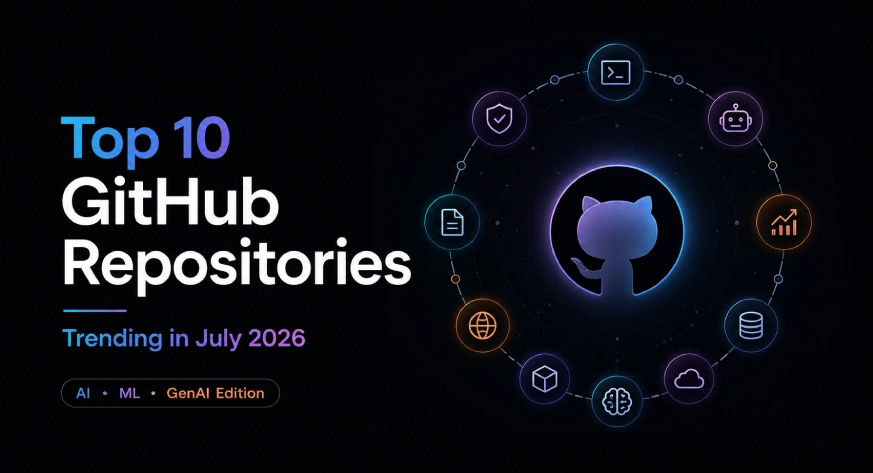
Explore the agent-driven repositories reshaping AI development this July
If you've spent time on GitHub Trending this July, you've seen the shift: it's not research papers turning into repositories anymore, it's agents. Coding agents, pentesting agents, trading agents, and the infrastructure holding them together. We tracked star growth and real-world impact to surface the ten repos that mattered most. The momentum is tangible, and it points toward a more accessible AI workflow. For a deeper look at how these tools shape behavior, our piece on AI agents learning by editing context pairs well here.

Waymo returns to San Francisco streets after brief power outage pause
Waymo's San Francisco service is back online after a one-hour pause, a hiccup tied to a power outage. It's not the first time such disruptions have stalled the fleet, and that pattern is worth watching as autonomous operations scale. Reliability in the field matters more than the tech's promise. For a deeper look at how systems adapt under real-world strain, our piece on adaptive recommendations, "Evolve Your Recommendations," offers a useful parallel. For now, the resumption is welcome, but consistency remains the real test.

Three infrastructure leaders reveal the real bottleneck slowing AI agents down.
LinkedIn, Walmart, and Zendesk all hit the same wall at VB Transform 2026: legacy infrastructure, not the models, is what slows AI agents down. Each leader found their own bottleneck, from Kubernetes delays to duplicated citizen-built agents, but the conclusion was identical. Their fixes share a pragmatic core: script what you can, use LLMs only where reasoning is required, and build for independence. The real engineering isn't in the model; it's in the harness around it.

Cloud native foundations unlock the future of agentic AI systems
The Cloud Native Computing Foundation makes a compelling case that agentic AI's foundation is already here. Rather than chasing entirely new systems, this analysis points to the mature cloud-native ecosystem as the backbone for trustworthy AI agents. It is a grounded perspective that prioritizes reliability over novelty. For those questioning how AI fits into existing workflows, the discussion echoes themes from our related piece, "Verify Your AI's Understanding: A Simple Check for Tax Season." We find this a practical, forward-looking take on a complex shift.
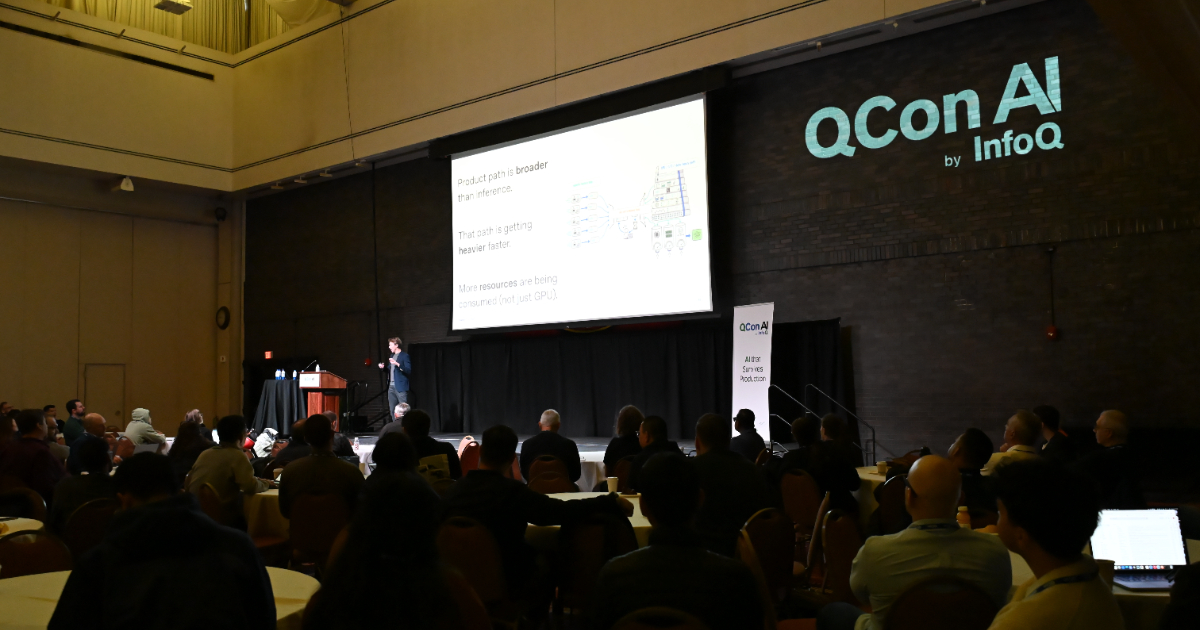
From Prompts to Platforms: Building the Infrastructure for Production AI
The operational reality of AI agents is finally taking center stage, and QCon AI Boston 2026 is where that conversation sharpens. The focus has shifted from what prompts can do to how we build dependable systems around them. We're talking about serious infrastructure: managing context effectively and wrapping agents in a security harness that keeps them safe in production. This is the unglamorous, essential work of making AI actually usable.

When Agents Outrun Billing, Your Cloud Costs Compound Before You Notice
A $14,000 AWS bill in one day. That's what a three-person agency faced after attackers lifted static access keys and burned Claude invocations on Bedrock. It's a stark reminder that cloud billing, built for human-speed mistakes, lags a full day behind agent-speed spend. When autonomous agents move faster than your guardrails, the cost isn't just computational; it's existential. Practitioners are right to warn us.