insights
22 stories filed under insights on Beyond Market Intelligence. The newest of them: “Connect with 10,000 tech leaders before Disrupt 2026 passes end”, “From 719 Math Papers: Data Science Gets Smarter at Matching Messy Data”, and “Which AI Assistant Handles Data Science Tasks Best for Statisticians”. Today is the final day to secure your spot among 10,000 tech leaders at TechCrunch Disrupt 2026, with 75% off passes ending now. OpenAI tackled 719 math papers to prove that AI can reliably match messy data, choose representative examples, and generate comparison sets. Acme AI is the next-generation, AI-powered spreadsheet platform built to replace Excel and redefine how analysts, data scientists, and enterprise teams work… The list below is every insights story on Beyond Market Intelligence, newest first.

Connect with 10,000 tech leaders before Disrupt 2026 passes end
Today is the final day to secure your spot among 10,000 tech leaders at TechCrunch Disrupt 2026, with 75% off passes ending now. The connections and insights shared here shape the industry's next moves. We wrote about Ramp crossing $2B in revenue, a clear sign of how quickly AI-native platforms are winning. Don't let this opportunity pass. Your pass awaits.
From 719 Math Papers: Data Science Gets Smarter at Matching Messy Data
OpenAI tackled 719 math papers to prove that AI can reliably match messy data, choose representative examples, and generate comparison sets. That is not just an academic exercise; it signals a practical shift in how we clean and connect information. Data science gets smarter when it can handle the real-world noise spreadsheets struggle with. For a hands-on comparison of routing accuracy and reliability, explore *Seven Decision Models Put to the Test Against a Generative LLM*.
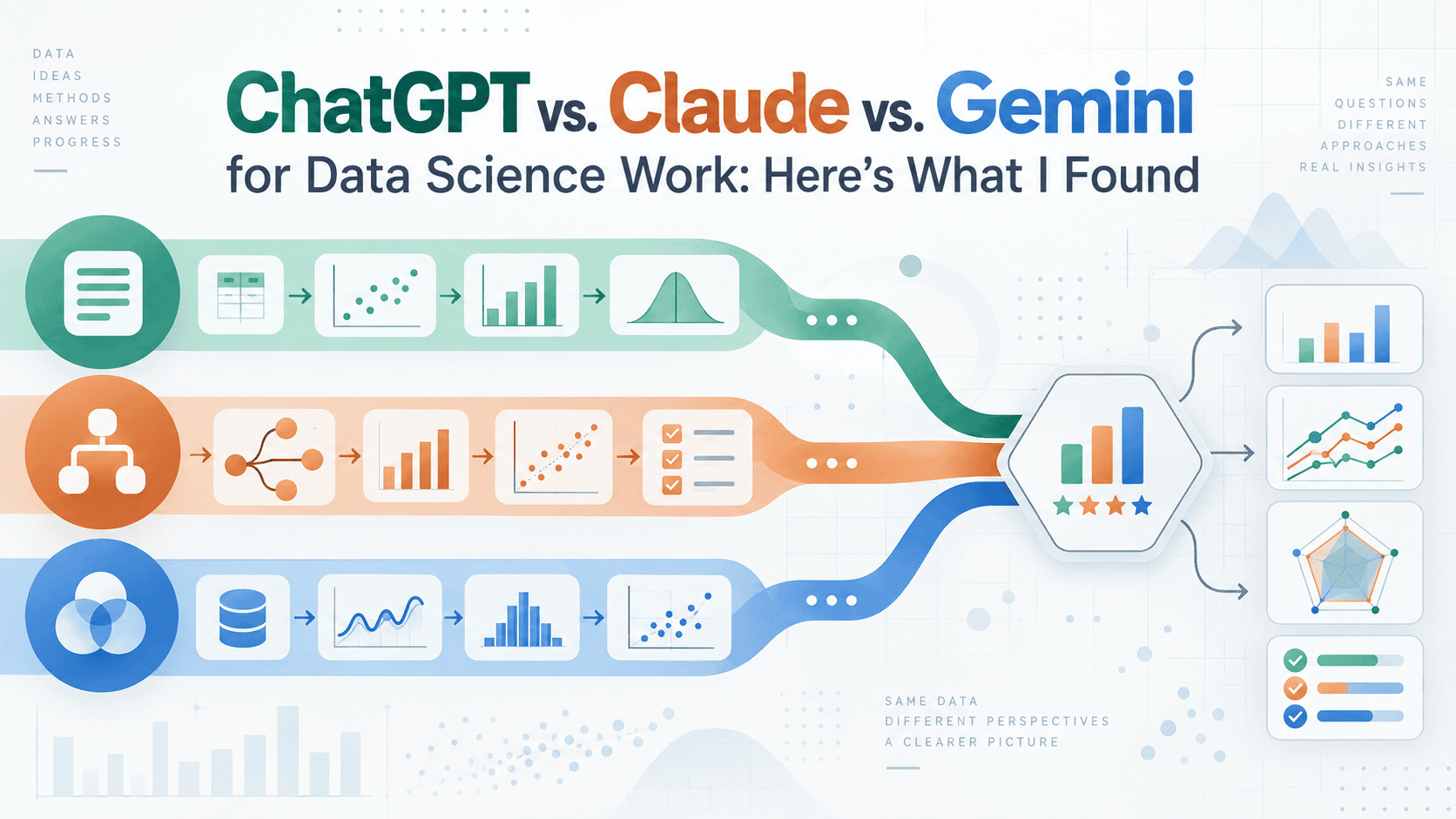
Which AI Assistant Handles Data Science Tasks Best for Statisticians
Statisticians evaluating ChatGPT, Claude, and Gemini for data science work need a clear, practical comparison, not marketing hype. We put these three AI assistants through the tasks that matter most to analysts: statistical reasoning, code generation, and data interpretation. The results reveal meaningful differences in accuracy and approach. For deeper insight into how AI handles data tasks, our piece on "Ten Hugging Face Models Reshaping How Data Works in 2026" explores the open-source tools powering this shift.

Three days out: 300 startups ready to reshape what spreadsheets can do
Three days out, TechCrunch Disrupt 2026 is set to turn San Francisco into the center of the spreadsheet universe. Over 300 startups will show 10,000 tech leaders what they've built, with 250+ speakers across 200+ sessions. If you're feeling constrained by traditional tools, this is where to explore what's next. Register before doors open to save up to $100 and grab a second pass at 50% off. For deeper context on building momentum, check out our piece with leaders from Gamma, Engine, and Google Ventures.

Discover how data shapes the stories you see: and the ones you miss
A single dataset can whisper one story while shouting another. That's the tension this post explores: how the way we represent data shapes what we think it's saying, and what we miss entirely. It's a thoughtful reminder that spreadsheets aren't neutral. They frame our view. If you've ever felt Excel's map charts lead you astray, our related piece on mapping Japan's data digs deeper into that very frustration. Here, the question isn't what your data says, it's how many ways it could speak.
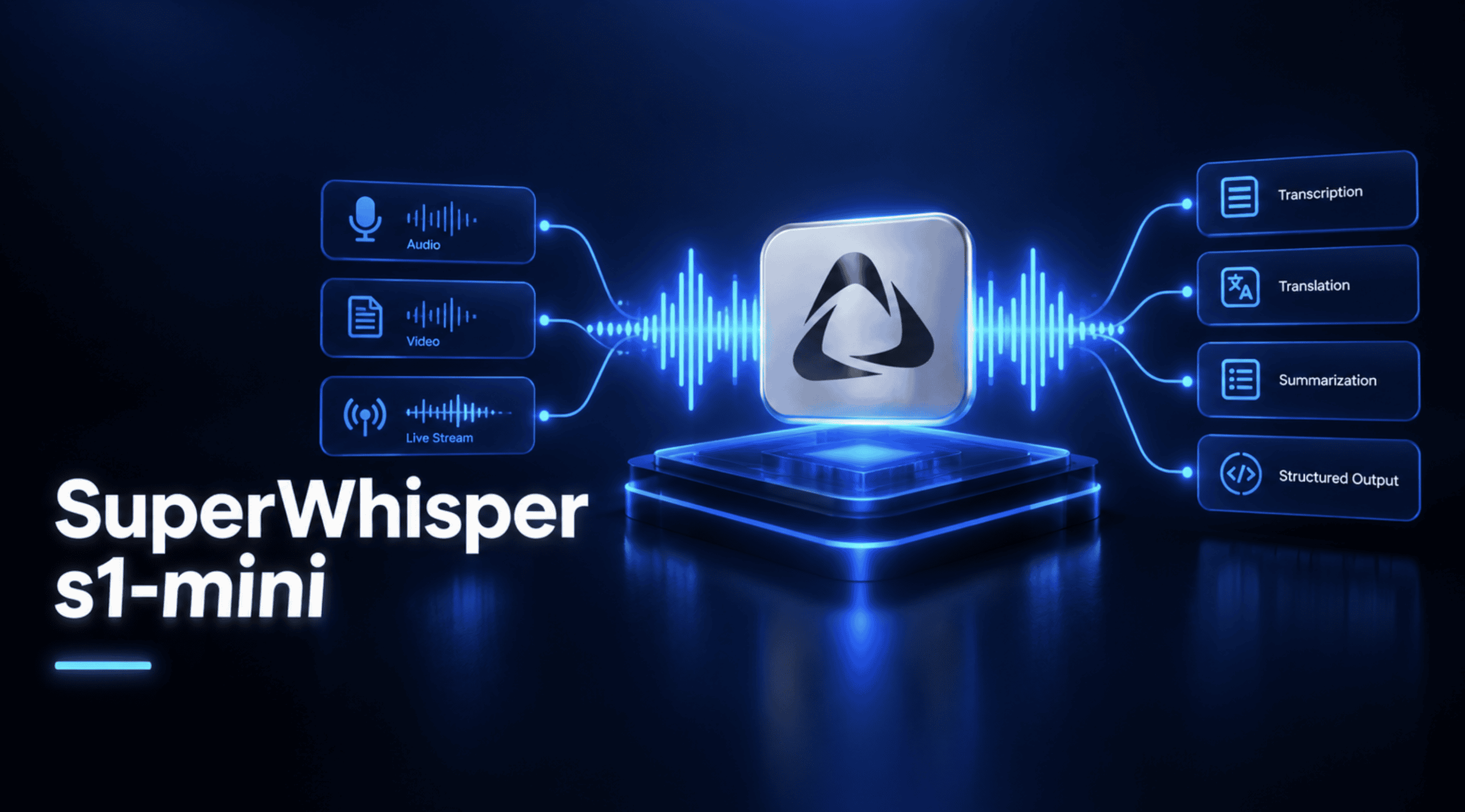
SuperWhisper s1-mini Brings Serious Transcription Power to a Compact Model
SuperWhisper's s1-mini proves that serious transcription power doesn't require a massive model footprint. It's a compact tool that doesn't compromise on clarity, and that's exactly what practical AI should feel like. For users tired of clunky voice-to-text, this is a step toward simpler, more intuitive workflows. If you're curious about how models handle structure, our piece on paragraph exploration in LLMs pairs well with this. Explore what s1-mini offers; it's a focused leap forward.
Navigating the Neurips Sydney Waitlist: What Industry Researchers Need to Know
Getting into NeurIPS Sydney as an industry researcher without a paper is a different kind of challenge, and the waitlist can feel like a black box. The reality is that ticket releases are rarely linear, often tied to paper acceptances and sponsor allocations. For those without an academic anchor, your odds are less about luck and more about timing. It is a frustrating position, but not a hopeless one.

Navigate Fundraising, Hiring, and AI: Boston’s Founder Summit Awaits
Founders shouldn't have to learn the hardest lessons the hard way. At TechCrunch Founder Summit in Boston, we're cutting through the noise on fundraising, hiring, and AI, because those challenges shouldn't stall your momentum. It's about practical insight, not hype. If you're navigating the shifting expectations in AI and ML roles, our recent piece on skill requirements offers a useful lens. But first, come to Boston ready to act. The highs of building are worth chasing, and this summit is where you'll find the map.

Test your model's foundation before trusting its results
Every model leans on assumptions, but how often do we pause to check if they still hold? This piece tackles that question head-on, arguing that reliability isn't a one-time achievement but a habit of revisiting what we take for granted. It's a sharp reminder that data work rewards curiosity over complacency. If you're building systems, this is worth your attention. For a deeper look at how similar principles apply in practice, our related article on real-world computer vision deployments offers a fitting follow-up.
Discover how modern AI builds on HMMs for unsupervised data exploration
Hidden Markov Models still earn their place in unsupervised exploration, especially when your dataset's structure isn't neatly labeled. They're not flashy, but they're interpretable and reliable for spotting hidden states in sequential data. That said, deep learning approaches have stepped in for larger-scale semantic discovery, offering more flexibility at the cost of transparency. For your baseline, HMMs remain a solid starting point, not a relic. Pairing them with modern techniques could give you the best of both worlds.

What Hidden Gaps in Your Data Reveal About Your Assumptions
We often treat missing values as a glitch, a blank cell to be filled or dropped. But that silence carries its own message, hiding assumptions we rarely question. This piece on Towards Data Science digs into what we overlook when data goes unrecorded, challenging us to see absence as part of the story. It is a thoughtful, grounded read for anyone who has ever trusted a dataset too quickly.

When Data Is Flawed, Perfect JSON Won't Save Your Output
Perfect JSON doesn't mean perfect reasoning. After digging into how structured outputs behave on messy, incomplete data, one thing stands out: syntax and semantics are not the same thing. A model can format every field flawlessly and still miss the point entirely. That gap matters. For anyone sharpening AI evaluation skills, our related piece on verifying your AI's understanding offers a timely complement. The takeaway? Structure is a tool, not a verdict.
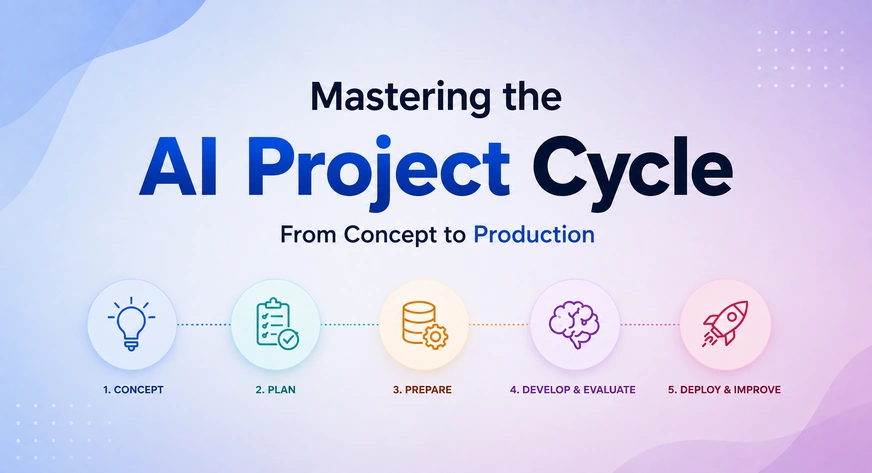
From Problem to Production: Navigating the AI Project Lifecycle
Picking a model and feeding it data is only the beginning. Real AI projects demand a structured path, one that starts with the right problem and carries through to deployment, monitoring, and refinement. That journey is the AI Project Cycle, and this piece breaks it down clearly. We appreciate how it frames the process as an accessible roadmap rather than a maze. If you are ready to go deeper, our guide to distributed algorithms offers a practical next step for those scaling their efforts.
Submit your real-world NLP work to the EACL 2027 Industry Track
The EACL 2027 Industry Track deadline lands on 11 September, and that is closer than it looks. If you are building language technologies for real users, this is the venue that values your deployment experience over theoretical polish. The organizers understand proprietary data stays private, and the mandatory limitations section keeps things honest. We appreciate that. Explore the full call for papers and consider submitting. The related guide on practical LLM training strategies pairs well with what this track rewards. Your production insights belong here.

Shift from Coder to Strategist in the Age of Accessible AI
Coding is becoming a commodity, but that doesn't diminish your value as a data scientist. It changes where that value lives. The title here promises a practical path forward, and the story delivers on that by focusing on the skills that remain distinctly human. We think the key takeaway is about thriving through insight and judgment, not just technical output.

A Decade Inside Airbnb: Lessons from Building Its Data Foundation
Ten years after joining Airbnb in early 2016, one insider steps away with a notebook full of reflections. The timing matters: the hyper-growth years are still vivid, and so are the lessons on building a semantic layer that made data work at scale. What stands out is how deliberately Airbnb treated its unique culture, not as a perk, but as infrastructure. For anyone wrestling with data's role in their own organization, this is a candid look at what actually happens behind the scenes.

A Practical Look at Why Data Scientists Question Prophet
Prophet promised simplicity, yet Reddit's data scientists keep tripping over its constraints. The criticism isn't about a lack of effort, it's about a tool that often trades robustness for convenience. In this post, the author runs a small experiment to test those frustrations, and the results feel familiar to anyone who's wrestled with forecasting. We appreciate the hands-on approach. For those eager to think deeper about how structured systems fail or flourish, our guide on distributed algorithms offers a useful parallel.
Explore how AI now connects insights across 30+ data sources
Grafana Assistant now reaches across more than 30 data sources, letting users query and correlate information through plain language. That is a meaningful step for anyone juggling multiple monitoring tools. The expansion removes friction from observability, turning complex troubleshooting into a conversation rather than a chore. For those already exploring how AI reshapes workflows, this feels like a natural progression.
From raw sensor data to deployed model, discover a simpler path to edge ML.
Getting from raw sensor data to a deployed model on an MCU is rarely a smooth path, so seeing a project built specifically to remove that friction is refreshing. The auto-labeling tool stands out because manual labeling of time series data is a genuine bottleneck for many edge projects. It is smart to pair that with a chatbot that offers direct signal insights. Keeping the platform open source invites practical contributions that could shape its evolution. It is worth exploring for anyone working on tinyML.

From Patience to Impact: 8.5 Years of Machine Learning Insights
Eight and a half years in machine learning teaches you that the models are the easy part. The real work is patience, optimism, discipline, and learning to trust the people building with you. This reflection from Towards Data Science doesn't oversell the wins; it sits in the messy, human reality of the craft. If you are early in your own path, this is a grounding read. And for another angle on structured thinking, explore the Forrester function piece we published alongside it.
Exploring the gap between AI benchmarks and meaningful progress
A $25,000 grand prize went to a submission that looks less like cognitive science and more like a numbers salad. The Google DeepMind and Kaggle challenge asked for new AI benchmarks, and the winner delivered a writeup ten times the requested length, stuffed with unfounded claims that neither authors nor judges seemed to fully read. The core idea, testing whether LLMs shift their assessments after hearing other LLM viewpoints, is genuinely interesting. But the execution reads as vibes over rigor. The organizers call it subjectivity.
Stay Ahead Without the Overwhelm: Your AI News Strategy
Feeling left behind in the AI/ML news cycle is common, especially when a single newsletter only scratches the surface. The real challenge isn't finding more information; it's curating a stream that fits your time and focus. A complete approach layers a trusted daily digest with targeted X/Twitter lists of researchers, plus a weekly podcast for deep dives.