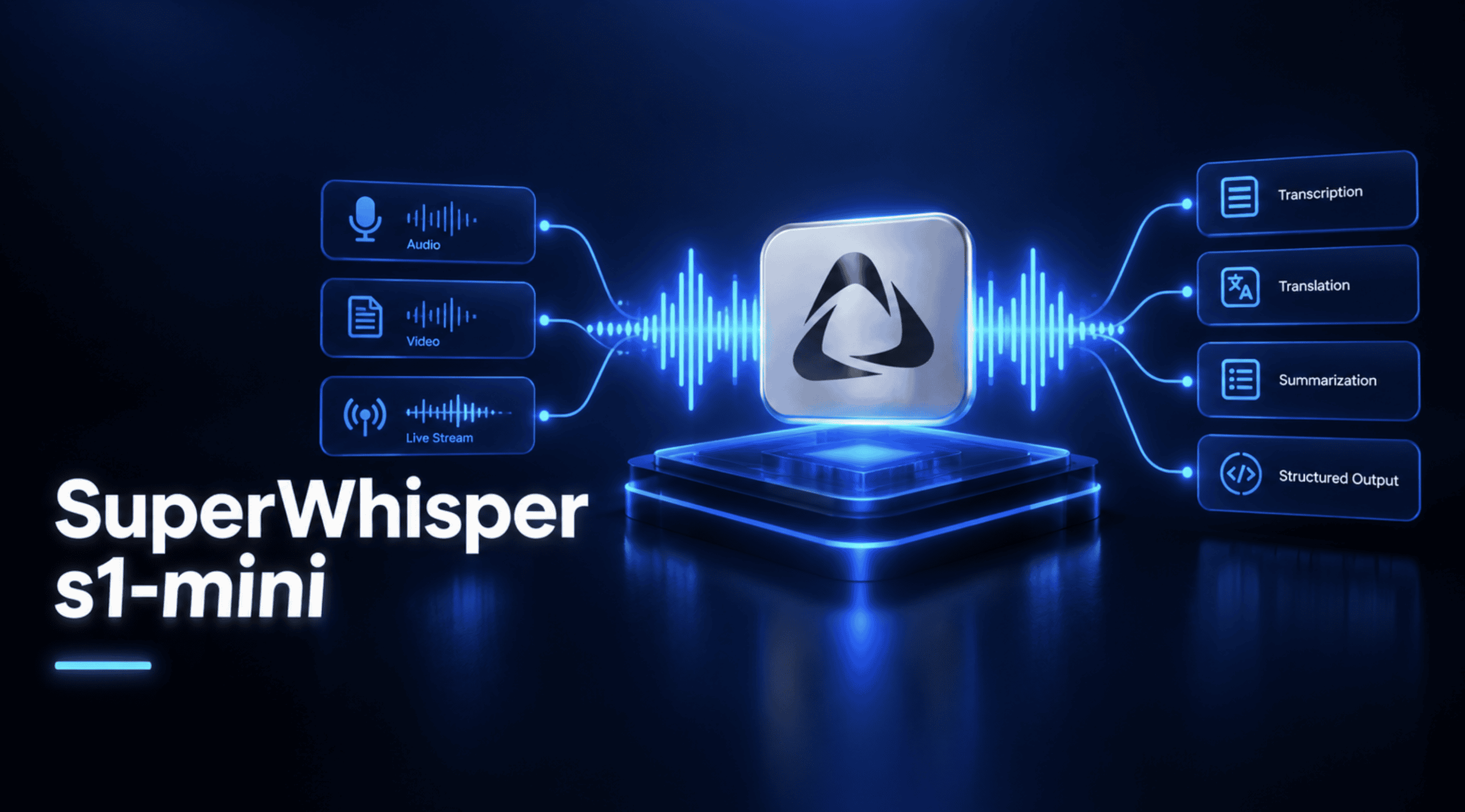
The real story here is not that SuperWhisper s1-mini transcribes speech accurately. It is that a compact model can now deliver serious transcription power without demanding a data center. That distinction matters, because it changes what users should expect from their own workflows. We are no longer waiting for the future of voice-to-text. It is already small enough to fit where you work.
What stands out is the gap between capability and size. Historically, transcription models that approached this level of quality required serious compute, which meant they lived in the cloud, required an internet connection, and introduced latency into every interaction. The s1-mini flips that assumption. It brings the processing closer to the user, which is not just a performance upgrade. It is a shift in what feels possible. If you are someone who has been frustrated by the lag of cloud-based dictation or the privacy concerns of sending audio to a server, this is a meaningful step forward. The practical takeaway is direct: you can now get near real-time, accurate transcription in a package that does not dominate your system resources. That opens doors for on-device assistants, note-taking tools, and accessibility features that were previously impractical.
This also fits into a broader pattern we have been tracking across the AI landscape. We are seeing a recurring theme where the focus moves from raw model size to how efficiently a model operates within constraints. The Gemini's Brief Hacks Highlight AI's Evolving Data Access Landscape shows how even large-scale systems face friction when interacting with data. Meanwhile, Explore Jev: The AI Model Rethinking Text Generation demonstrates that innovation often comes from rethinking architecture rather than adding parameters. And the way models handle structure, as discussed in Exploring Paragraph Structure: How LLMs Navigate Token Space, influences everything from coherence to context retention. SuperWhisper fits into this trend by proving that a smaller footprint does not have to mean a compromised experience.
But here is the question worth watching: does the s1-mini signal a plateau in transcription quality, or is it the beginning of a race toward efficiency? The model is impressive, yet it also forces a conversation about trade-offs. Accuracy is not the only metric. Latency, battery life, and the ability to handle diverse accents and noisy environments all factor into whether this feels like a genuine tool or a promising demo. We think the direction is right. The next step is seeing how developers integrate this into everyday applications, and whether the compact approach can scale across different languages and use cases. The detail to watch is not the word error rate on clean audio. It is how the model performs in the messy reality of your daily life. That is where the true measure of its power will be found.