knowledge graph
Beyond Market Intelligence keeps knowledge graph in one place: 7 stories so far. The section currently leads with “From reactive fixes to self-healing data: inside Netflix's observability knowledge graph”, “Four AI Retrieval Methods Benchmarked for Real-World Trade-offs”, and “Beyond Prompts and Loops: How Graph Engineering Shapes Smarter AI”. Netflix processes 38 million events per second, and its engineers were tired of playing catch-up. Four retrieval architectures, one laptop, and a single set of documents. Acme AI is the next-generation, AI-powered spreadsheet platform built to replace Excel and redefine how analysts, data scientists, and enterprise teams work… The list below is every knowledge graph story on Beyond Market Intelligence, newest first.
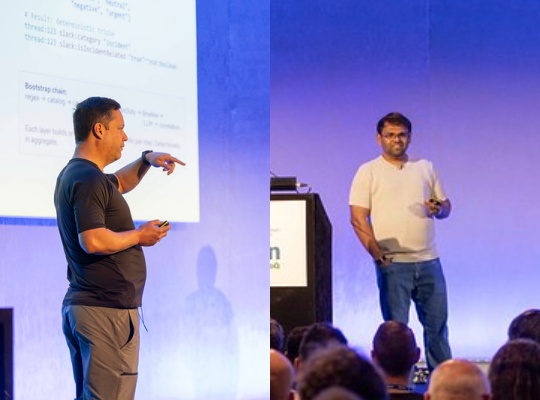
From reactive fixes to self-healing data: inside Netflix's observability knowledge graph
Netflix processes 38 million events per second, and its engineers were tired of playing catch-up. Prasanna Vijayanathan and Renzo Sanchez-Silva share how the company replaced reactive monitoring with an AI-driven operational ontology, using Claude and graph databases to unify MELT telemetry into queryable knowledge. The result is automated triaging, root-cause analysis, and systems that heal themselves. It is a practical, human-centered shift toward data that works for you.
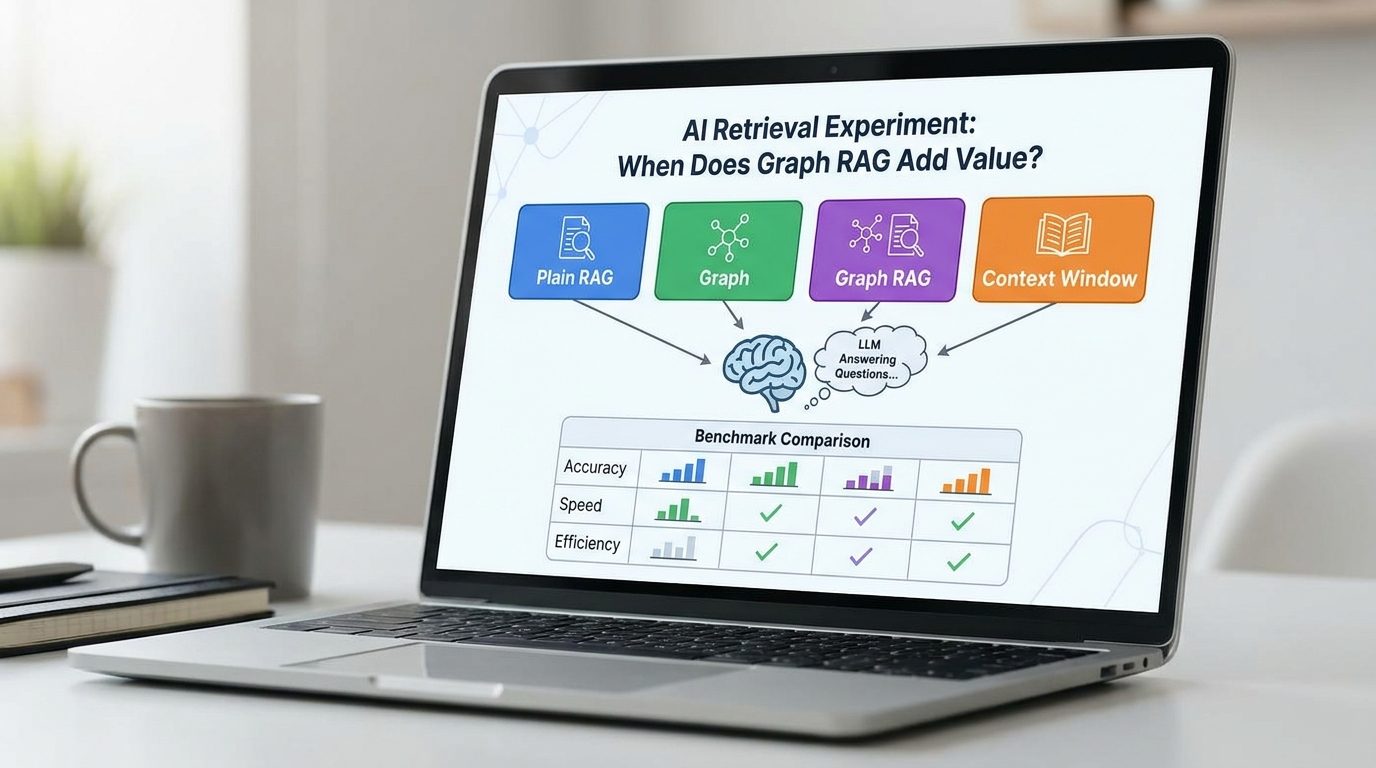
Four AI Retrieval Methods Benchmarked for Real-World Trade-offs
Four retrieval architectures, one laptop, and a single set of documents. That's the setup for this hands-on experiment, which benchmarks plain RAG, graph RAG, and a frontier model's context window against the same questions. The results offer a practical look at when graph RAG earns its complexity. For those exploring how AI structures understanding, our related piece on verifying AI comprehension in tax season is a natural next step. The trade-offs here are worth your attention.
Beyond Prompts and Loops: How Graph Engineering Shapes Smarter AI
The debate over loops versus graphs in AI agent design isn't just technical sparring; it's a signal of how far we've come. Graph engineering moves beyond the linear constraints of prompts and loops, offering a structured way to build workflows that adapt and scale. It's a practical evolution, not a buzzword. For those still wrestling with token-level nuances, our piece on paragraph structure offers a useful parallel. This shift matters because it redefines what we can build, and we're just beginning to explore its potential.

Discover how AI is reshaping brand visibility beyond clicks and rankings.
The old playbook for measuring brand visibility is quietly failing. Most teams still track rankings and traffic, but AI engines now assemble answers directly on the screen, bypassing your website entirely. That creates a zero-click world where your content isn't the destination, it's just one piece of evidence. Winning means becoming part of the answer itself. That requires consistent, structured, and original knowledge machines can trust. It's a harder standard, but it's also a more honest one.

Explore How Bounded AI Agents Navigate Knowledge Graphs for Smarter Insights
Most of us hand our AI agents a search box and call it a day. The approach argues for something sharper: typed tools, hard bounds, and a gate the model cannot talk past. The payoff is letting the agent wander a knowledge graph on its own, within strict limits. Four models and one wrong prediction later, the question is whether that discipline is worth it. We think it is, and the reasoning here is worth your attention.

When to choose GraphRAG over vector search for deeper insights
Forget the hype about GraphRAG being a universal upgrade. The evidence is clear: it's a specialized tool, not a replacement for standard retrieval. Microsoft's own research shows it crushes vector RAG on global, sensemaking questions, winning up to 83% of comparisons, but on simple fact lookups, the two are effectively tied. The real takeaway isn't about choosing sides. It's about building a router that sends each query to the method it deserves. That's how you get the gains without paying for indexing you don't need.

Your data pipeline is the real reason your AI is confidently wrong
The failure that doesn't look like a failure is the one that quietly undoes your AI system. You ship it, stakeholders sign off, and months later, the answers drift wrong, not because the model changed, but because the data behind it didn't move with the world. That's not a retrieval problem; it's a data engineering one. Correctness, freshness, consistency, lineage, these are the checks that matter, and most pipelines still monitor for completion, not truth. If you're chasing model swaps, you're solving the wrong puzzle.