KV cache
KV cache at Beyond Market Intelligence is a file of 10 stories. The newest of them: “Fast visual answers, typed questions, calibrated probabilities in ~400 ms”, “Optimize LLM memory with a VRAM formula and three targeted strategies”, and “Discover how AI models learn to focus on what matters in your data.”. Traditional spreadsheets ask you to adapt to their limits. Inference servers don't hit a compute wall first; they hit a memory one. Acme AI is the next-generation, AI-powered spreadsheet platform built to replace Excel and redefine how analysts, data scientists, and enterprise teams work… The list below is every KV cache story on Beyond Market Intelligence, newest first.

Fast visual answers, typed questions, calibrated probabilities in ~400 ms
Traditional spreadsheets ask you to adapt to their limits. Peekaboolean flips that, turning image questions into a fast, structured exchange. The builder behind it, u/bykof, traded slow, free-form generation for a system that scores only the answers you define. That discipline delivers ~400 ms responses on a laptop and a 0.78 choice accuracy against a 30B teacher. It is a pragmatic step toward AI that feels less like a magic trick and more like a tool that respects your time.
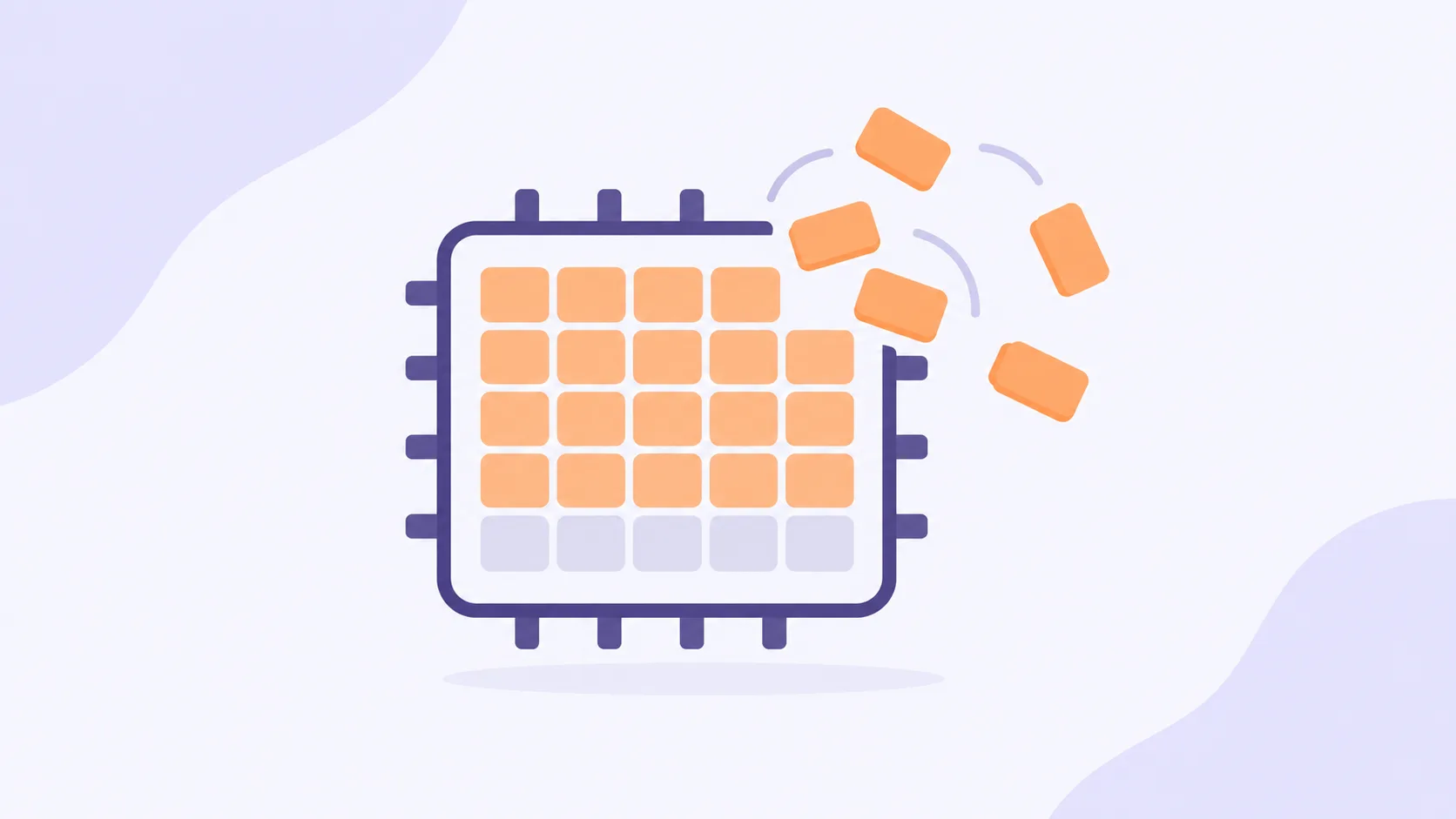
Optimize LLM memory with a VRAM formula and three targeted strategies
Inference servers don't hit a compute wall first; they hit a memory one. The KV cache tax quietly consumes your VRAM budget, leaving GPUs idle while requests stall. This piece breaks down the formula behind that imbalance and maps three optimization strategies to the exact traffic patterns that trigger out-of-memory errors. It's a practical look at why serving fails and how to plan around it. For a deeper foundation on distributed systems, pair this with our guide to distributed training algorithms.
Discover how AI models learn to focus on what matters in your data.
Large language models read the entire context window to find the few tokens that actually matter. That is expensive. This work asks a simpler question: why not let the model say where it wants to look? Declarative Attention does exactly that, letting the model declare focus regions and skip most of the cache. The results are compelling. Across 15 long-context tasks, attended tokens drop by over half with minimal accuracy loss. It is a practical step toward smarter, faster inference.
Exploring how KV cache transforms LLM inference into an interactive runtime
Most LLM agents feel reactive because they move token by token, pausing for the model to catch up. Our team has been exploring a different path: modifying the model's inference state, the KV cache, to make it a true runtime. This approach, outlined in a post by our researchers, powers more interactive systems. We see this as a key axis for agent capability, sitting between costly model changes and abstract harnesses.

When Milliseconds Matter: Teaching LLMs to Forget on Purpose
Most LLM runtimes treat memory as an endless resource, but this one treats it as a deadline. It refuses admission rather than miss a 33ms robot control cycle, evicting KV cache by meaning instead of age, all in hand-written CUDA. That's a sharp rebuke to the bloat most of us accept. It's a focused, practical stand for precision, and it makes you wonder what else we're letting slip.
Compact AI runs 400 tokens per second on a laptop CPU with 60 MB
A 250M parameter model that runs at 400 tokens per second on a laptop CPU, no GPU required, is a practical statement about efficiency. The 60 MB deployment, achieved through sub-2-bit quantization, and the 1-bit disk cache for long context are the technical details that matter here. The developer trained it on 30B tokens and built a vocabulary from fixed 512-bit codes, which is an unusual choice that shows in the WordSim-353 scores.
Explore the Hidden Geometry Inside Your Model's Working Memory
The KV cache isn't a flat list; it's a navigable vector space, and this researcher turned that observation into a working system. On a frozen Qwen3.5-2B at 32k context, geometric routing cuts physical KV reads by 16-31× while still retrieving the planted long-range needle. That's not a theoretical pitch; it's a reproducible demo. The insight is that attention is already similarity search, so indexing old context isn't a hack, it's the natural next step.

Nvidia's simple math cuts costly recomputation across AI models
Swapping models mid-session has always meant paying the full prefill tax again, until now. Nvidia's researchers found that a simple linear mapping can transfer a KV cache between compatible models, bypassing the expensive recomputation that bogs down multi-LLM agentic workflows. The math is refreshingly direct, not a heavyweight neural network. On tested pairs, this approach runs up to 25 times faster while keeping nearly all accuracy. It's a practical fix for a costly bottleneck, and it points toward leaner long-horizon AI systems.
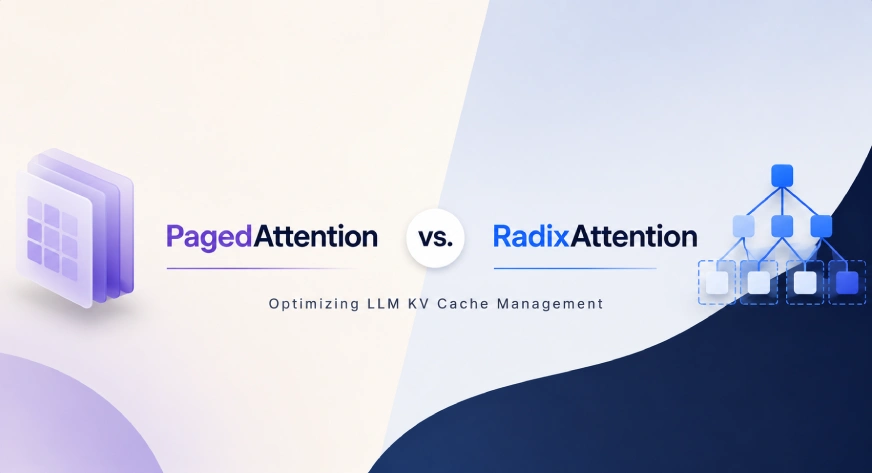
Unlocking LLM Performance Through Smarter Memory Management
KV cache memory can quietly decide whether an LLM deployment thrives or stalls. PagedAttention tackles fragmentation with smarter allocation, while RadixAttention targets prefix reuse. Both cut the GPU strain that limits concurrency and throughput. What stands out is how practical these optimizations feel. Production latency improves without demanding new hardware. For readers exploring how context shapes model behavior, our piece on agentic context learning pairs well with this discussion. It is a useful next step for understanding what makes modern LLMs efficient beyond raw architecture.

Transcribing Long Documents with a More Intelligent OCR Approach
A month after Baidu launched Unlimited-OCR, the model's focus on long-document transcription stands out. Unlike typical vision-language systems, it tackles the real bottleneck of expanding Key-Value caches, which slow down multi-page processing. That is a practical step forward. For readers eager to understand how AI handles context at scale, our guide to distributed training offers a useful parallel. Baidu's approach feels less like a flashy demo and more like a genuine fix for a persistent workflow problem.