LangChain
8 stories filed under LangChain on Beyond Market Intelligence. The newest of them: “Your framework choice depends on what you are optimizing for”, “Faster chunking in Rust without sacrificing accuracy, now open source”, and “Explore Agent Harnesses: Architecting AI for Financial Efficiency”. Choosing the right framework for your large language model application comes down to one question: what are you actually optimizing for? Chunking speed usually trades away accuracy, but this open-source Rust library challenges that trade-off. Acme AI is the next-generation, AI-powered spreadsheet platform built to replace Excel and redefine how analysts, data scientists, and enterprise teams work… The list below is every LangChain story on Beyond Market Intelligence, newest first.
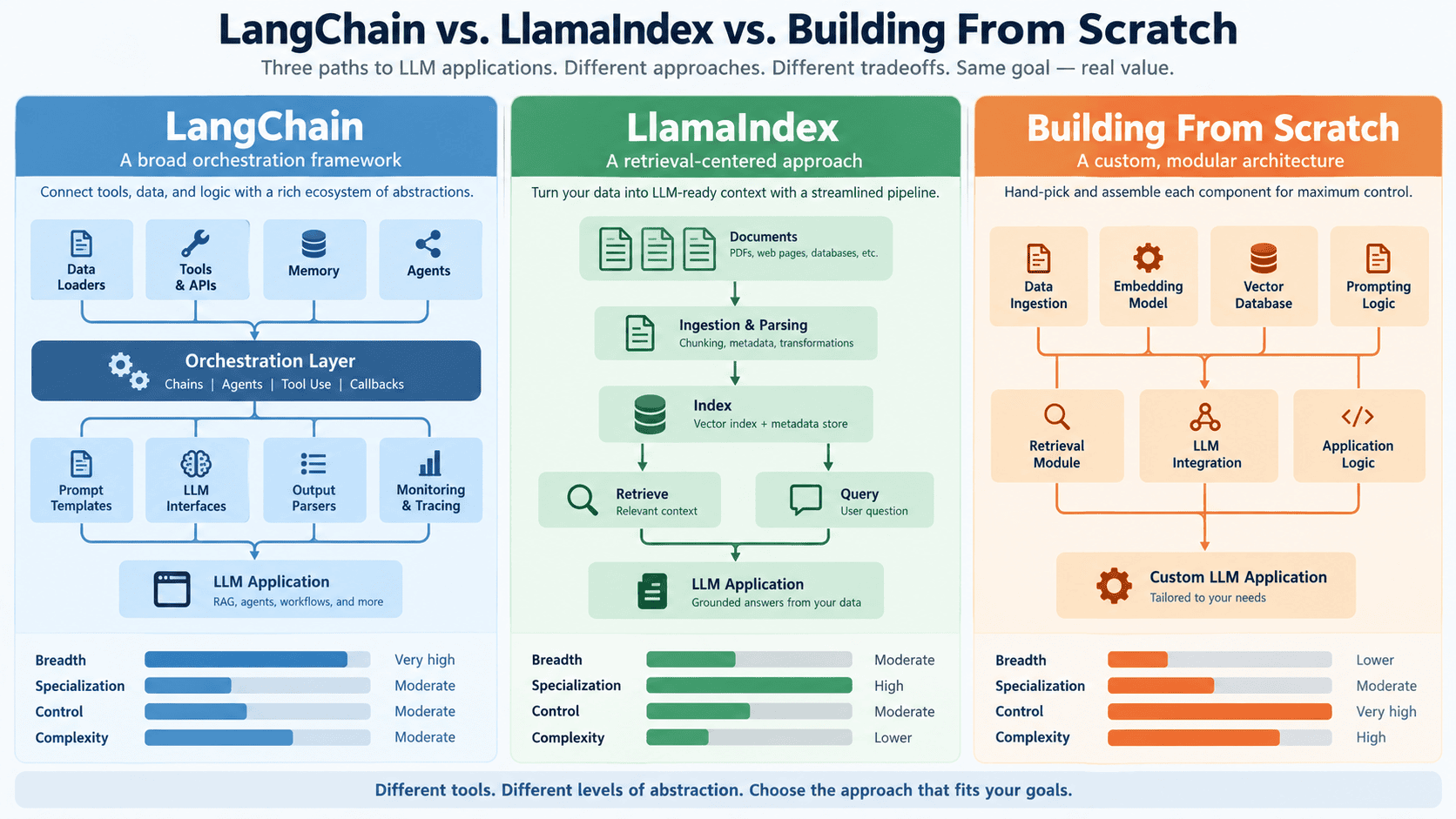
Your framework choice depends on what you are optimizing for
Choosing the right framework for your large language model application comes down to one question: what are you actually optimizing for? There is no universal answer. Speed demands different architecture than cost-efficiency or safety. That is the honest starting point. For a deeper look at how frameworks shape agent behavior, read our coverage of Google's EnvHarness, which dynamically adapts training environments to help AI agents learn from their own weaknesses.
Faster chunking in Rust without sacrificing accuracy, now open source
Chunking speed usually trades away accuracy, but this open-source Rust library challenges that trade-off. Chunkr delivers throughput measured in gigabytes per second, outperforming LangChain and LlamaIndex by wide margins while supporting strategies like recursive, markdown header, and hierarchical chunking. Its native PDF loader processes pages 15.9x faster than pypdf. For teams wrestling with large document pipelines, this is a practical leap forward. If you're exploring how performance shapes AI tooling, our piece on spec design across 65 open-source projects offers useful context.

Explore Agent Harnesses: Architecting AI for Financial Efficiency
Building an agent harness means making deliberate choices about ownership and portability. Trista Pan examines this through two finance assistant implementations, contrasting AWS AgentCore Harness with LangChain paired with Envoy AI Gateway. Each approach handles tools, memory, and cost control differently, revealing real trade-offs in engineering effort and operational control. It is a practical comparison for teams deciding where to invest. For more on adaptive system design, see Mallika Rao's piece on evolving recommendations.
When AI Spending Runs Ahead of Your Controls, Three Platforms Won't Help
Enterprise AI teams are done betting on a single orchestration platform. The median enterprise now runs three at once, not by accident, but because no one fully trusts one vendor. Security concerns and a desire for their own permissioning controls drive this hybrid approach. Microsoft leads today, but Anthropic dominates future consideration. Yet visibility remains a problem: one in five still can't stop a runaway agent's spending in real time. That gap between ambition and control is where the real work begins.
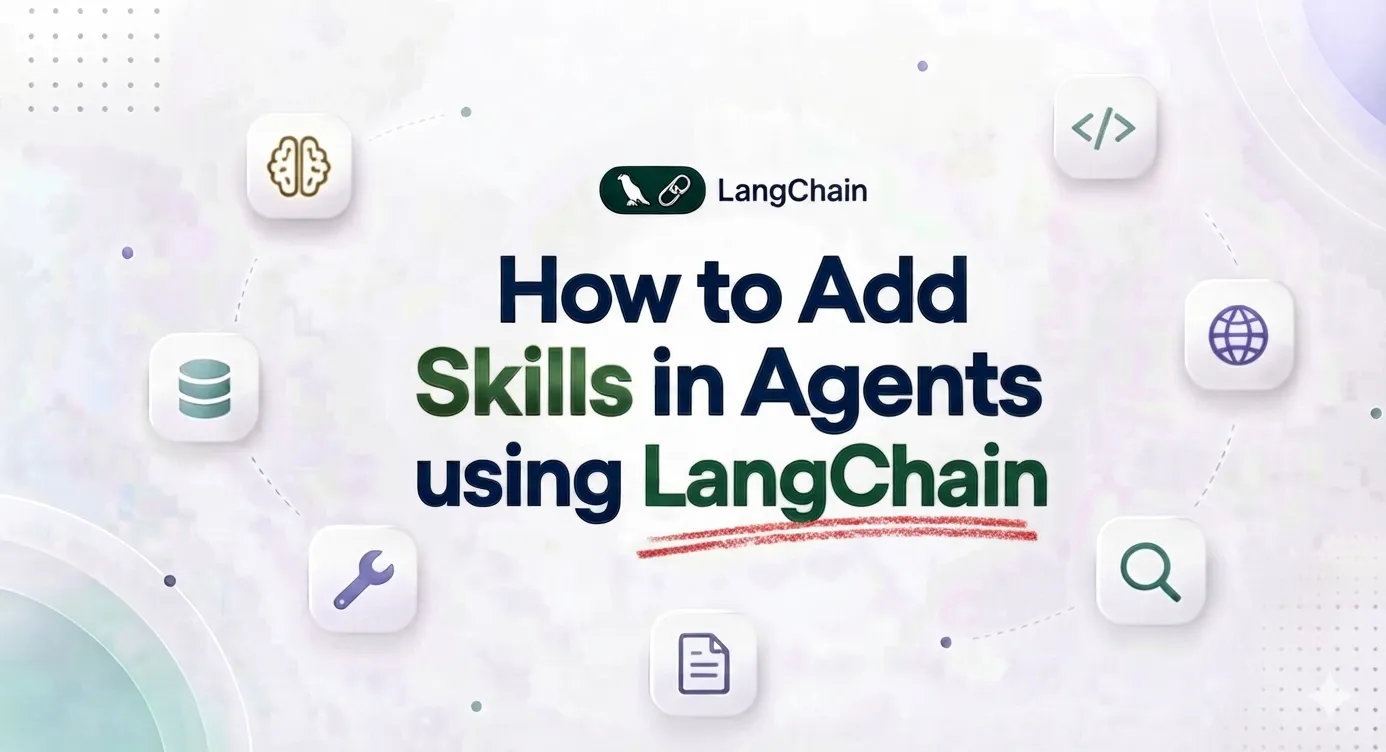
Give your AI agents new skills without retraining the model
Ever wondered how ChatGPT and Gemini pull off PDFs and PowerPoints when an LLM is all they have? The trick isn't a smarter model; it's skills, instructions an agent loads only when needed. That's a clever, accessible idea, and seeing it applied through LangChain makes it feel actionable. We like how this reframes capability as context, not complexity. For a deeper take on how agents learn by editing context rather than weights, check out our piece on Agentic Context Learning. It's a natural next step.

Choosing Between LangChain and LangGraph for Smarter Agentic Workflows
Choosing between LangChain and LangGraph doesn't have to stall your agentic workflow. This guide cuts through the overlap to highlight four key differences, helping you match the tool to the task. It's a practical read for anyone tired of guessing which framework fits. We appreciate the clarity here, especially since it complements our earlier exploration of distributed training algorithms. If you're building systems that need structure, start with this breakdown. It's a straightforward step toward more intentional design.
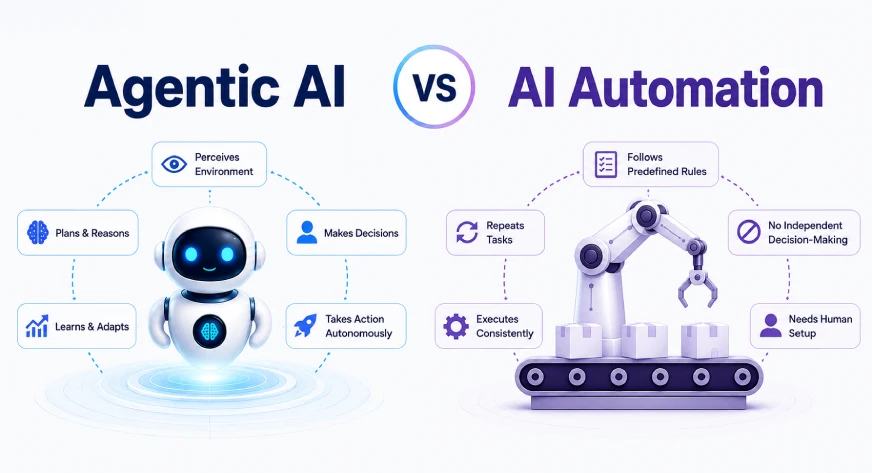
From Demos to Production: Building AI That Handles the Unexpected
A team wraps a few LangChain calls in a loop, adds tools, and calls it an agent. The demo impresses. Then production hits an unexpected input, and the workflow breaks. That is not agency; that is automation wearing a costume. The real difference is adaptability, and confusing the two costs you in downtime. For a deeper look at how agents truly learn, check out our piece on editing context instead of weights.
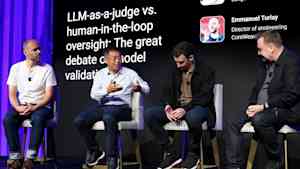
Why a perfect AI conversation can still signal a broken product
A single AI agent conversation can look flawless on its own and still point to a broken product. That gap is driving a shift in how enterprises evaluate agents, away from scoring individual traces and toward comparing cohorts of users against a baseline. At VB Transform 2026, Harrison Chase of LangChain, Hui Zhang of Conviva, and Emmanuel Turlay of CoreWeave described the move toward contrastive analysis and cheaper, narrower judge models. The takeaway: evaluation criteria are becoming the new product spec.