layers
Beyond Market Intelligence keeps layers in one place: 7 stories so far. The section currently leads with “The real story of October GitHub was the infrastructure around AI models”, “Demystifying Transformer Architecture Through Hands-On Implementation”, and “How neural triads of noun, verb, and conjunction can reshape data reasoning”. If you spent any time on GitHub Trending in October, you saw something unexpected. Jumbledsaturn52's implementation of the 2017 transformer architecture in PyTorch is exactly the kind of hands-on exploration that builds genuine understanding. Acme AI is the next-generation, AI-powered spreadsheet platform built to replace Excel and redefine how analysts, data scientists, and enterprise teams work… The list below is every layers story on Beyond Market Intelligence, newest first.

The real story of October GitHub was the infrastructure around AI models
If you spent any time on GitHub Trending in October, you saw something unexpected. The story wasn't the AI models themselves. It was the infrastructure wrapped around them. Agent runtimes, skills, gateways, inference engines, and auditing tools drew more attention than the models they support. One repository added over 415,000 stars in four weeks. That's a clear signal: the real value is shifting to how we deploy and govern AI, not just build it.

Demystifying Transformer Architecture Through Hands-On Implementation
Jumbledsaturn52's implementation of the 2017 transformer architecture in PyTorch is exactly the kind of hands-on exploration that builds genuine understanding. Two encoder-decoder layers with just 1,000 training words will of course produce shaky predictions. The bottleneck here is clear: small data and shallow depth demand more epochs, which takes time. Consider reducing sequence length, using mixed-precision training, or pre-initializing weights to accelerate learning. Don't be discouraged, even limited runs reveal how attention mechanisms truly work.
How neural triads of noun, verb, and conjunction can reshape data reasoning
A single sentence like "the Siamese cat ate the mouse then died" hides a rich structure of relationships. By breaking it down into noun-verb-conjunction triads, (Null) Cat ate, also Mouse eaten, then cat died, we give neural networks a simple, structured internal language for reasoning. Each attention head holds one triad, forming a graph of interconnected thoughts that builds understanding incrementally, much like how we process a book sentence by sentence.
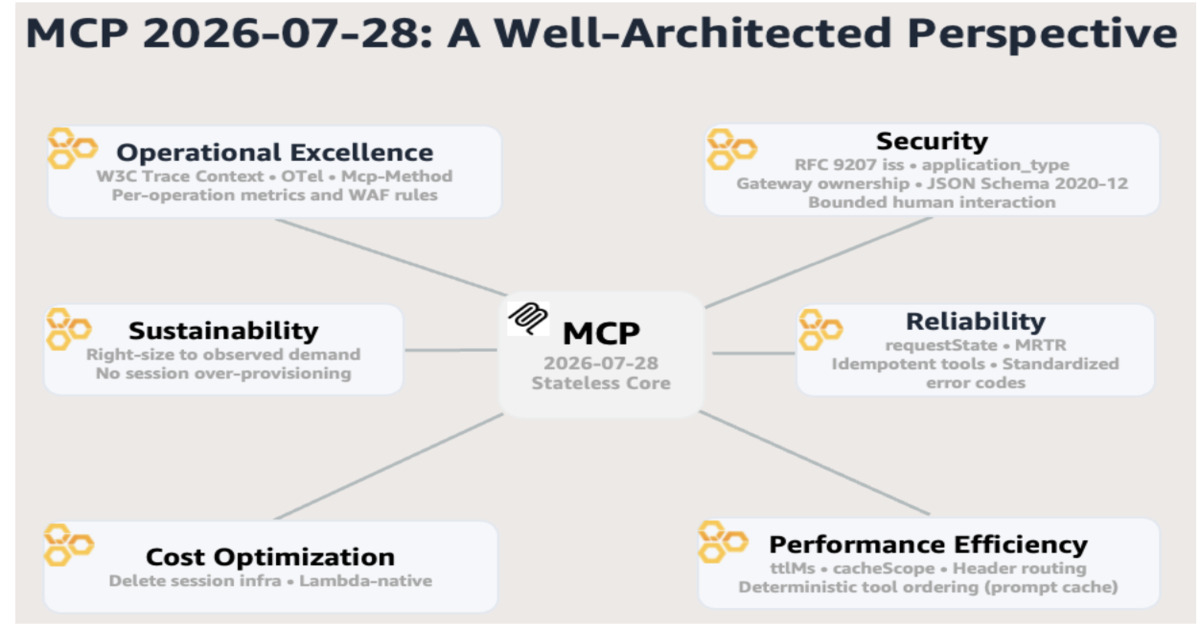
Scale AWS Server Deployments Effortlessly with Stateless Model Context Protocol
The latest Model Context Protocol specification strips away session-level overhead, and that matters for anyone running remote MCP servers at scale. By removing sticky-session requirements and session storage, AWS enables independent request routing, which makes horizontal scaling far more straightforward. The trade-off is real: application state, retries, and observability now live in other layers. That shift feels like a mature step forward, not a workaround.
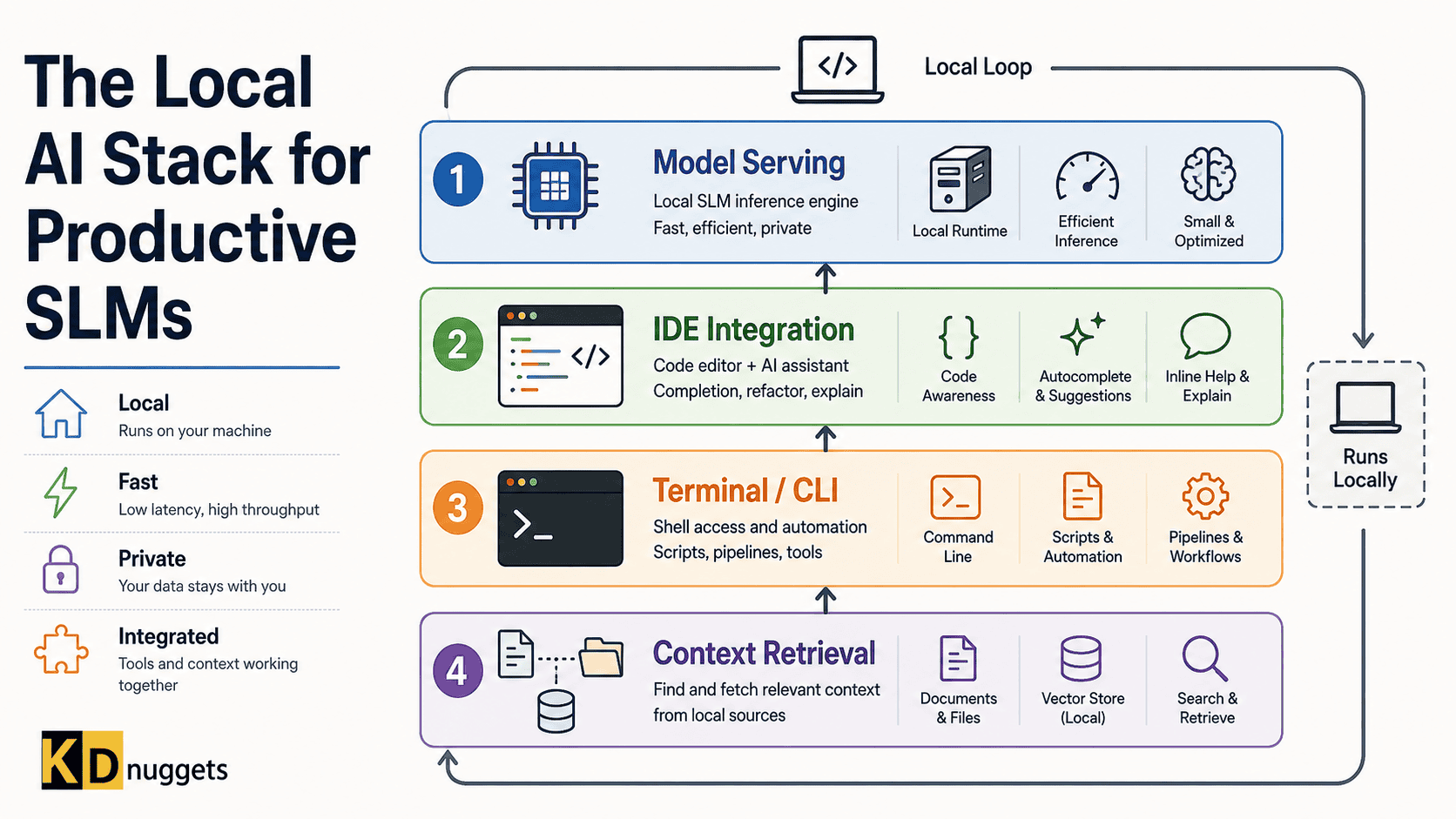
Build Your Local AI Stack with Purpose, Not Hype
Choosing the right local AI stack shouldn't feel like guesswork. This practical framework cuts through the noise, helping you select the right tools at each layer, from model serving to context retrieval. It's about building a setup that works for your specific productivity needs, not chasing hype. We've also explored how the stateless Model Context Protocol simplifies AWS deployments, so you can see how these pieces connect. Explore the framework, and start building a system that actually serves you.

Building Trust into AI: Secure Architecture for Enterprise Agents
Taking an AI agent from prototype to production is where the real test begins. This piece tackles the often-messy transition head-on, focusing on the responsible AI, security, and governance layers that keep enterprise deployments safe. It's a grounded look at building trust into the architecture itself, not bolting it on later. For those wrestling with similar scaling challenges, it pairs well with our broader coverage on agentic workflows. We appreciate the clarity here, as it makes a complex subject feel genuinely approachable.
Teaching a transformer exact arithmetic by hand, not training
A single transformer model, its weights hand-set with no training, just averted the arithmetic meltdown that defines its peers. One version nails all three million possible three-digit products, and the same approach scales to twelve-digit multiplication. What stands out is the compiler work: turning the grade-school algorithm into a standard Phi-3 checkpoint through Torchwright. Frontier models crumble at seven digits, five scoring zero out of five hundred, while this one holds steady.