learning
Beyond Market Intelligence keeps learning in one place: 18 stories so far. The section currently leads with “Explore How Adaptive Training Environments Help AI Agents Learn from Weaknesses”, “7 Resources to Explore How AI Agents Learn to Improve Themselves”, and “Explore how machines learn through multi-armed bandit simulations in Python”. Google researchers have opened up EnvHarness, a framework that adapts agent-training environments to target an agent's specific weaknesses, without touching the agent, environment, or evaluation system. Self-improvement is the next frontier for AI agents, and these 7 resources show exactly how that learning happens. Acme AI is the next-generation, AI-powered spreadsheet platform built to replace Excel and redefine how analysts, data scientists, and enterprise teams work… The list below is every learning story on Beyond Market Intelligence, newest first.

Explore How Adaptive Training Environments Help AI Agents Learn from Weaknesses
Google researchers have opened up EnvHarness, a framework that adapts agent-training environments to target an agent's specific weaknesses, without touching the agent, environment, or evaluation system. This is a smart shift in focus. Instead of building bigger models, we can build smarter training loops that help agents learn where they struggle. The result is better learning, not just more of it. For those exploring how to build more capable agents, AWS's open-source tools for smarter AI development offer another compelling path forward.
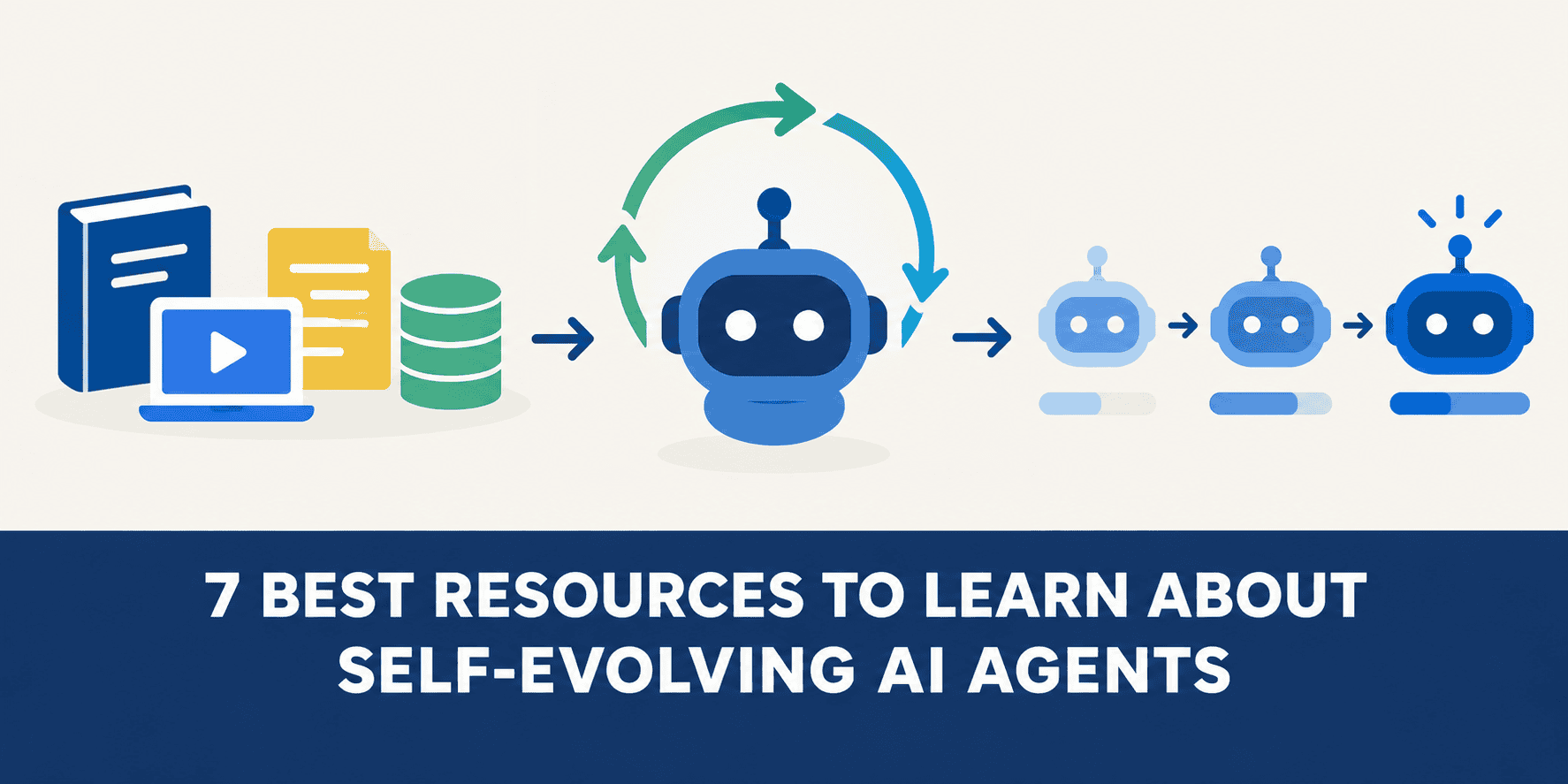
7 Resources to Explore How AI Agents Learn to Improve Themselves
Self-improvement is the next frontier for AI agents, and these 7 resources show exactly how that learning happens. From reinforcement loops to iterative feedback systems, the path to autonomous growth is becoming clearer. If you're curious about real-world applications, our coverage of the Hermes Agent developer's $90M raise illustrates how this technology is moving into business hands. Explore these resources to understand how machines refine their own behavior, and what that means for the future of intelligent tools.

Explore how machines learn through multi-armed bandit simulations in Python
Reinforcement learning often feels abstract until you watch an agent learn in real time. Multi-armed bandit simulations in Python make that process tangible, showing how machines balance exploration and exploitation through trial and error. The approach is accessible enough for beginners yet powerful enough to reveal core AI principles. If you are ready to move beyond static datasets, this hands-on exploration will transform how you think about autonomous decision-making.

Expanding Your Tech Fluency: Key Insights Beyond Artificial Intelligence
Artificial intelligence dominates the conversation, but true fluency demands more. In "10 Things I'm Learning Beyond AI to Become More Technologically Fluent," the author steps past the hype to explore the foundational technologies quietly shaping our world. It's a refreshing, grounded take that invites you to broaden your digital toolkit. For those ready to deepen their understanding, this piece pairs well with our guide on navigating AI/ML job requirements, where the skill shift becomes tangible.
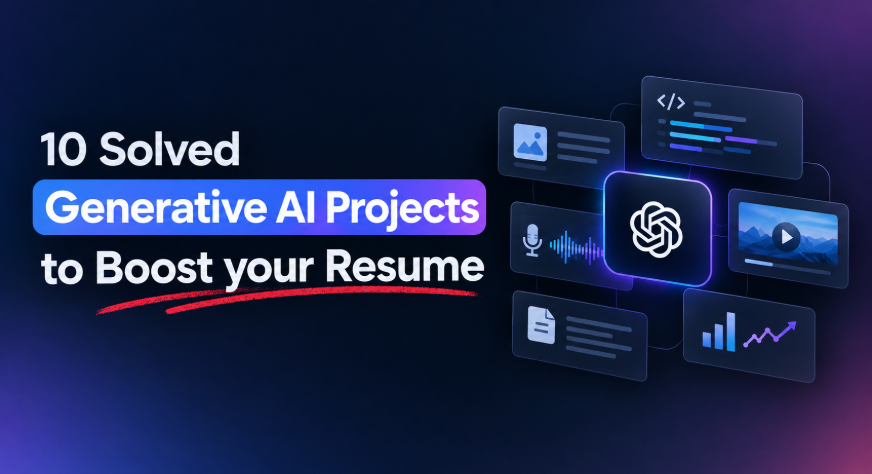
Showcase Your AI Skills: 10 Projects to Build Your Portfolio
Recruiters don't ask for certificates; they ask for proof. That's why building a portfolio matters more than memorizing theory. This guide walks through 10 solved projects across AI domains, from core machine learning to advanced generative systems, showing exactly how to bridge the gap between learning and real-world problem-solving. It's a practical, no-fluff resource for anyone ready to demonstrate their range. For those also exploring how models scale, our guide on distributed training offers a useful technical complement.

Explore the Inner Workings of sanoTTS: A Deep Dive into AI Synthesis
Every tensor on the sanoTTS anatomy page is real, pulled from the shipped int8 model as it synthesized an actual sentence. No stand-ins. That authenticity turns a technical breakdown into something you can trust and explore. This is vibe coding at its best, using interactive visuals to make the core mechanics of AI synthesis click. If you are curious about how these models truly operate, this is a refreshingly honest look.

Visualize Neural Network Learning: An Interactive Exploration
A single hidden layer in a neural network doesn't just memorize points; it draws straight lines. With ReLU activations, one layer of width three can carve the input space into up to four linear segments. Stack another layer, and those segments multiply, so "3 3" can theoretically hit 16. The catch is that training rarely pushes the network to that theoretical max. It's a tidy, visual way to see why depth matters.

Transfer learning for physics with simplified dynamical models
Training an RL agent on one complex physical system rarely transfers cleanly to another. That is the bottleneck this approach tackles directly, using reduced order models to compress the dynamics into something the agent can actually reuse. It is a smart, practical step toward generalizable simulation control. If you are already wrestling with how to scale your own models, our guide to distributed training algorithms pairs well with this mindset. The takeaway: smarter abstractions, not brute force, are the way forward.

Explore How Graph Neural Networks Unlock Smarter Data Connections
Graph neural networks can feel like a black box, but they don't have to. This visual guide breaks down GCN, MPNN, and GAT by showing exactly how they pass messages and weigh connections. It's a clear, practical look at the mechanics, and it's perfect for anyone ready to move beyond spreadsheet mental models. For a broader perspective on how AI structures complex information, you might also explore our related guide on paragraph structure in LLMs.
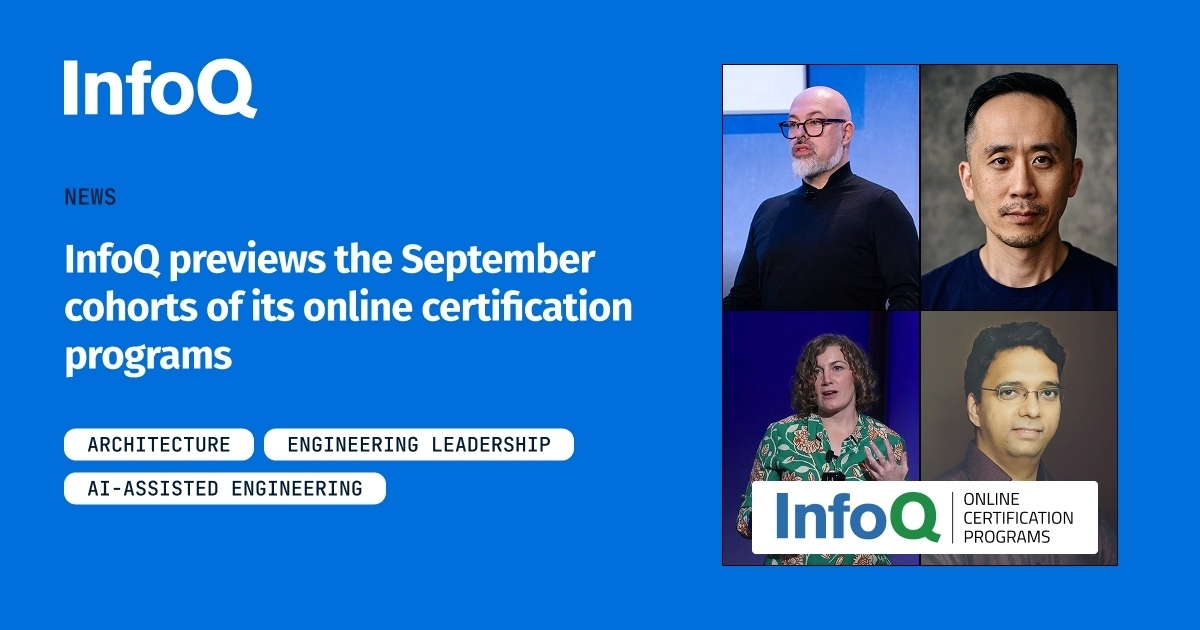
Explore September's certification cohorts with expert-led, future-focused learning paths.
InfoQ is giving us a first look at the September cohorts of its online certification programs, and the lineup is worth your attention. Luca Mezzalira, Michelle Brush, Zichuan Xiong, and Premanand Chandrasekaran are set to lead these sessions, bringing serious depth to the table. We appreciate that InfoQ keeps pushing practical, skills-focused learning forward. If you are aiming to sharpen your distributed systems know-how, our guide on LLM training algorithms pairs well with what these programs promise.

From Zero to Automation: Free AI Courses That Empower Your Skills
Starting from zero in AI automation is no longer a barrier. We have curated seven free courses that respect your current skill level, whether you are just opening a spreadsheet for the first time or ready to build complex workflows. The selection spans from gentle introductions to hands-on projects, ensuring a practical path forward. It is a straightforward way to move from consuming content to creating solutions.

Google's new AI tools help students study smarter, not harder
Google's new study tools in Search and Gemini feel like a natural next step, not a flashy leap. The goal is straightforward: make Gemini the assistant students actually reach for when learning gets tough. That means simplifying the complex, which is exactly what thoughtful AI should do. It's a smart move in the ongoing race with OpenAI, and it prioritizes real outcomes over hype. For anyone juggling coursework, this could genuinely lighten the load.
When peer reviews chase perfect control, they miss the real insight.
LLM-assisted peer review has a hidden cost: it can drown authors in speculative critiques. A recent discussion highlights two recurring issues. First, LLMs excel at listing uncontrolled variables, but they fail to weigh whether those variables actually threaten the paper's core conclusion. Second, their feedback often drifts into vague, field-level abstractions instead of concrete methodological comparisons. This shifts the burden onto authors to debunk endless hypotheticals. The real skill isn't generating critiques; it's filtering them.

Explore how free sandboxes remove friction from learning AWS
Setting up a sandbox for a workshop used to mean handing over your own AWS account and crossing your fingers. That friction is gone. The AWS Builder Center now provides free, time-limited environments, so developers can learn without watching their credit card or worrying about surprise charges. It is a practical fix for a long-standing community request, and it removes a real barrier to hands-on learning. For anyone exploring new AWS technologies, this makes building and experimenting feel far more accessible.

Explore smarter data labeling by using AI to focus human effort where it matters most.
Human labeling is expensive, and most of it goes into teaching models what they should already learn from less. Using ML active learning to target annotation where it truly matters reduces paying for redundant work. It's a smart, grounded approach for teams feeling the squeeze on time and budget. If you're exploring smarter ways to train models, our guide on distributed algorithms pairs nicely with this mindset.

Unlock AI's true ROI by empowering teams, not just individuals
Atlassian's research points to a truth most organizations haven't caught yet: AI delivers value at the team level, not just for individuals. Dr. Molly Sands and her team found that while 89% of executives see individual speed improving, only 6% can name clear ROI. That gap is telling. The teams that succeed share context, redesign workflows, and build a learning culture. It's a practical, human-centered approach. For more on questioning AI's limits, see "Talking to My AI Clone Taught Me to Question the Tech."

How Neural Networks Learn: Building Intuition for Backpropagation
Backpropagation often feels like a black box, but this guide pulls back the curtain without drowning you in math. The author builds intuition step by step, showing how neural networks learn by adjusting weights through error feedback. It's a practical starting point for anyone ready to move past surface-level understanding. If you're curious about how these concepts scale, our related guide, "Unlock LLM Training: A Practical Guide to Distributed Algorithms," offers a natural next step.

Five free resources to deepen your agentic AI knowledge
Learning to build with agentic AI can feel like standing at the base of a steep mountain, especially when every new tool promises to change the rules. That is why we curated five free resources that cut through the noise and focus on practical, hands-on progress. No hype, just clear pathways to deepen your understanding. If you are questioning how far to trust these systems, our piece on talking to an AI clone offers a thoughtful counterpoint worth exploring.