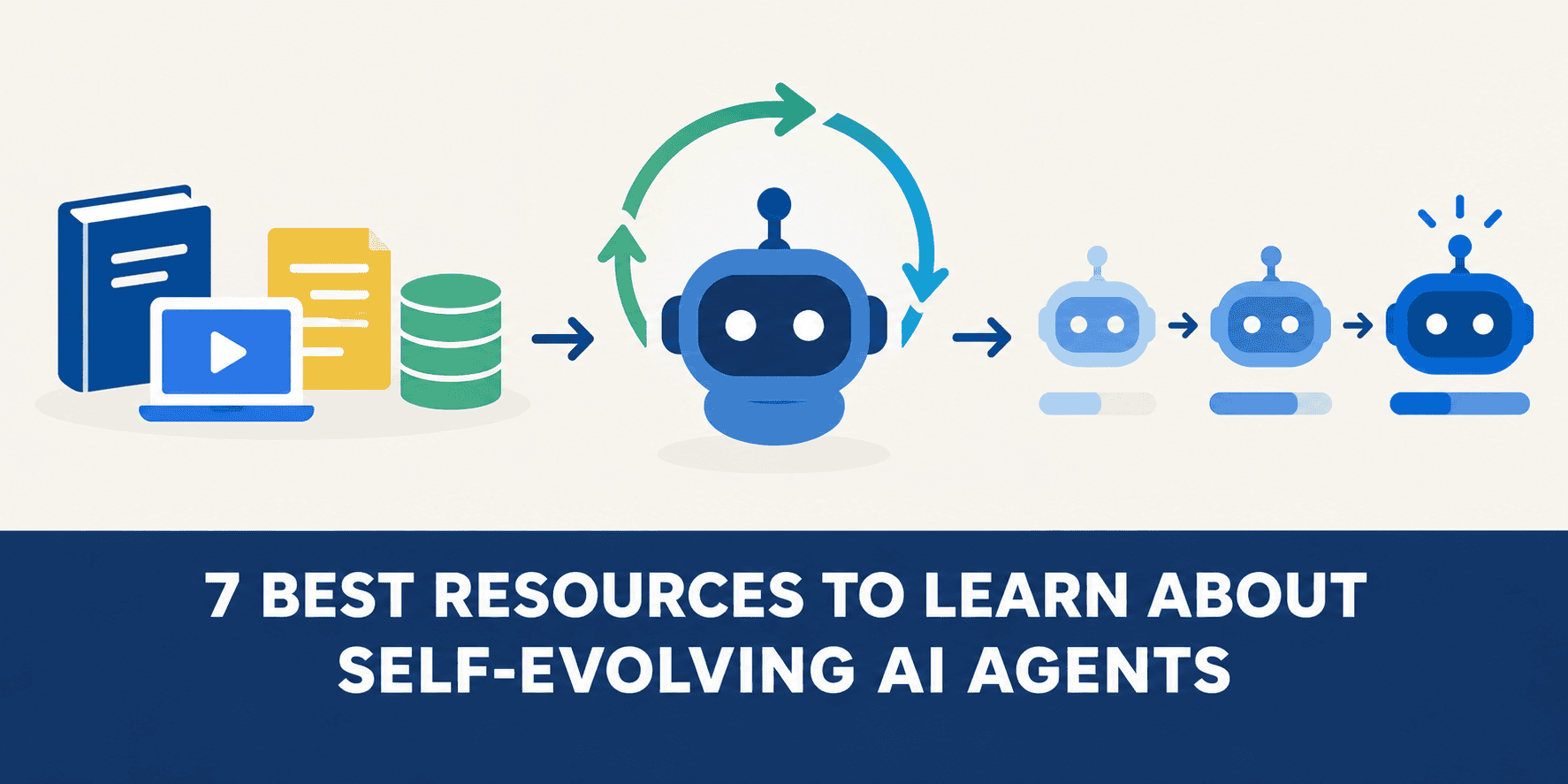
Self-improving AI agents sound like science fiction, but they are becoming a practical reality that every spreadsheet user should start paying attention to. The curated list of seven resources on this topic is not just for machine learning engineers, it is a signal that the tools we use tomorrow will learn from our behaviors and adapt without manual intervention. For anyone who has ever felt constrained by traditional spreadsheets, this is the moment to understand what is coming next.
The connection between self-improving agents and your daily workflow is more direct than it might seem. When Hermes Agent developer secures $90M to bring AI agents to business users, the investment validates that enterprise customers are ready for software that learns on the job. Similarly, Microsoft's new Surface Laptop Ultra puts Nvidia-powered AI agents in your hands, meaning the hardware to run these agents locally is already shipping. The seven resources bridge that gap nicely: they explain how machines improve through trial and error, much like the exploration of multi-armed bandit simulations in Python that shows how agents optimize decisions over time. This is not theoretical. It is the engine behind spreadsheets that automatically refine formulas, suggest better data layouts, and flag anomalies before you notice them.
Our take is straightforward: do not wait for the polished product to arrive. The resources listed are deliberately accessible, and that is the point. The best way to prepare for AI-native spreadsheets is to understand how reinforcement learning teaches agents to correct their own mistakes. The multi-armed bandit example, for instance, is a perfect entry point. It demonstrates how an agent balances trying new approaches against sticking with what already works, exactly the tension that your future spreadsheet assistant will navigate when it decides whether to recommend a pivot table or a different visualization. By working through these materials now, you build the mental model to evaluate which agent-based features actually deliver value when they land in your tools.
The concrete takeaway here is that self-improvement in AI agents is not a distant milestone; it is already being funded, packaged into laptops, and taught through open resources. The specific detail to watch is how these agents handle the trade-off between speed and accuracy as they learn. If an agent in your spreadsheet takes too long to suggest an improvement, the feature becomes noise. If it acts too quickly, it may override your intent. The resources in this collection all address that balance, and understanding it now will let you judge the next generation of spreadsheet tools with a critical eye, not as a passive user, but as someone who knows exactly what "self-improving" means under the hood.