LLM agents
Beyond Market Intelligence keeps LLM agents in one place: 5 stories so far. The section currently leads with “Exploring whether AI agents can match human creativity in data discovery”, “Grant Your LLM Safe Autonomy in 9 Practical Steps”, and “EvoUndo gives AI agents the power to evolve safely without losing control.”. Can LLM agents match human creativity in data discovery? Giving an LLM permission to act sounds like a leap of faith. Acme AI is the next-generation, AI-powered spreadsheet platform built to replace Excel and redefine how analysts, data scientists, and enterprise teams work… The list below is every LLM agents story on Beyond Market Intelligence, newest first.
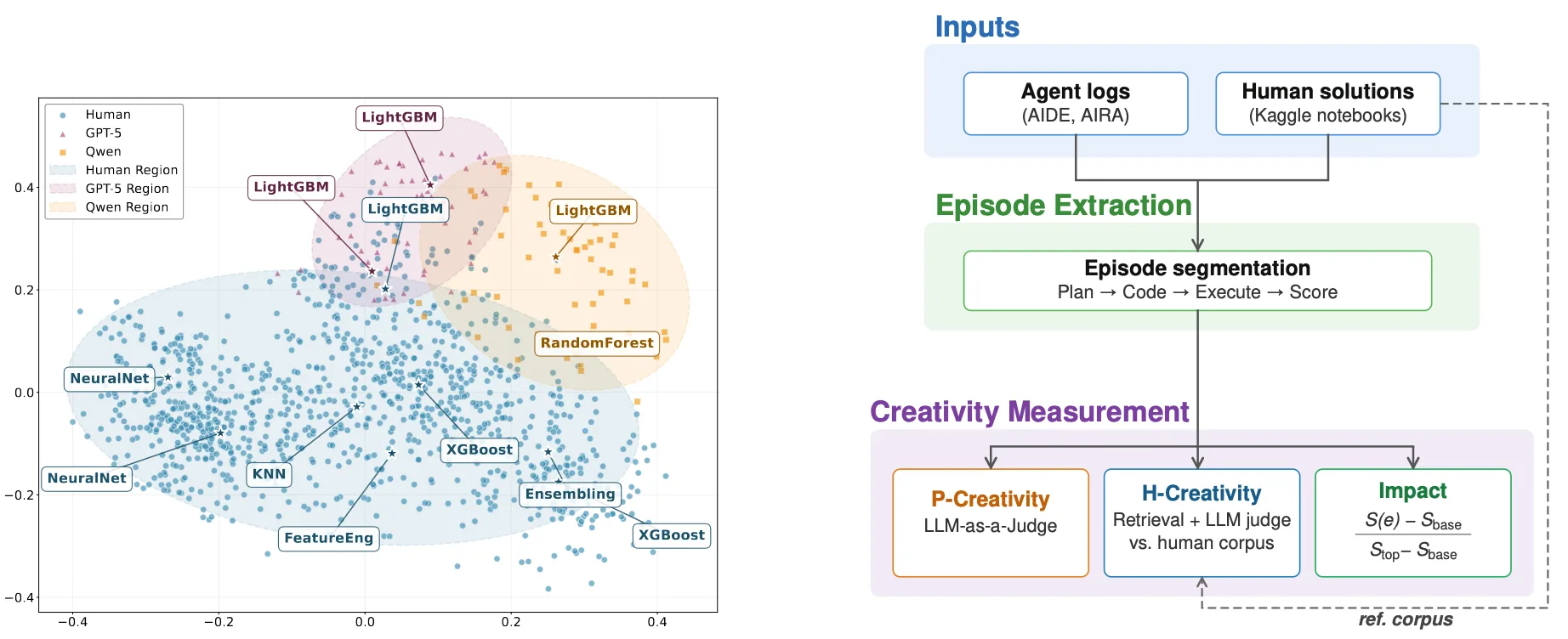
Exploring whether AI agents can match human creativity in data discovery
Can LLM agents match human creativity in data discovery? That's the question at the heart of this exploration, which measures the creative potential of AI agents through a practical lens. The results challenge assumptions about what automation can achieve. For those ready to move beyond theory, "Grant Your LLM Safe Autonomy in 9 Practical Steps" offers a grounded path forward. This is not about replacing human insight, it's about understanding where machine-driven discovery truly excels.

Grant Your LLM Safe Autonomy in 9 Practical Steps
Giving an LLM permission to act sounds like a leap of faith. This guide doesn't ask you to take that leap blindly, it breaks the process into nine practical steps. The author builds a control plane for AI agents, walking through how to grant safe autonomy without losing oversight. It's the kind of grounded, actionable thinking that makes complex systems feel manageable.
EvoUndo gives AI agents the power to evolve safely without losing control.
Self-modifying agents are risky. EvoUndo, a new framework, shows that a successful mutation can leave persistent effects that are unsafe to reverse. Testing 600 unseen tasks, it found 197 capability-improving mutations that failed recoverability verification. This research reveals that fixing these failures requires more than just iterative prompting. It demands co-designing verification, state grounding, and recovery-language expressivity. We appreciate how this work reframes the problem, moving beyond simple repair strategies toward a more principled approach.

Choosing Between LangChain and LangGraph for Smarter Agentic Workflows
Choosing between LangChain and LangGraph doesn't have to stall your agentic workflow. This guide cuts through the overlap to highlight four key differences, helping you match the tool to the task. It's a practical read for anyone tired of guessing which framework fits. We appreciate the clarity here, especially since it complements our earlier exploration of distributed training algorithms. If you're building systems that need structure, start with this breakdown. It's a straightforward step toward more intentional design.

Real-time agent teamwork cracks AI's long-horizon coding limits.
Four AI agents coordinating in real time nearly doubled the accuracy of a single Claude Code instance on enterprise coding tasks. That's not hype; it's a measured result from Coral AI Labs' AgentRadio. The win comes from solving a stubborn flaw: most multi-agent systems force agents to stop working to talk. AgentRadio lets them listen passively while they work. That distinction matters. Coordination, it turns out, can beat raw model power. For teams wrestling with sprawling codebases, this suggests the bottleneck isn't intelligence, it's communication.