LLM-as-a-judge
Beyond Market Intelligence keeps LLM-as-a-judge in one place: 5 stories so far. The section currently leads with “Scaling AI Agents From Prototype to Production on Kubernetes”, “Why Small Decision Models Beat LLMs for AI Answer Evaluation”, and “From siloed AI evals to a unified framework for production-grade agentic products”. Transitioning AI agents from a local FastAPI prototype to a production-grade system on Kubernetes is a challenge many teams are now facing. Jev takes a different path in the AI evaluation debate. Acme AI is the next-generation, AI-powered spreadsheet platform built to replace Excel and redefine how analysts, data scientists, and enterprise teams work… The list below is every LLM-as-a-judge story on Beyond Market Intelligence, newest first.
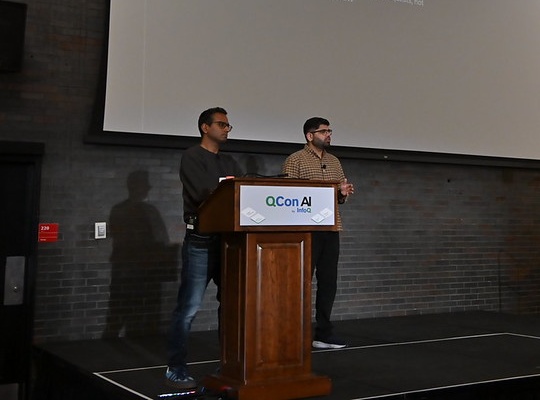
Scaling AI Agents From Prototype to Production on Kubernetes
Transitioning AI agents from a local FastAPI prototype to a production-grade system on Kubernetes is a challenge many teams are now facing. Deepak Mohanakumar Chandramouli and Bhumik Vinodkumar Thakkar share practical insights on RayCluster topology, stateful memory, and auto-scaling under dynamic traffic. They also cover guardrails, multi-region setups, and LLM-as-a-judge evaluation pipelines. For more on scaling reliable infrastructure, see our coverage of ARC's latest upgrades for self-hosted runners.
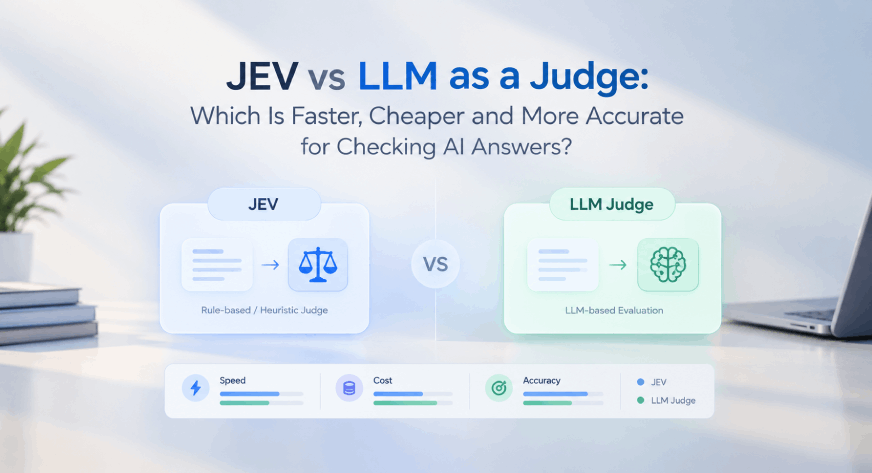
Why Small Decision Models Beat LLMs for AI Answer Evaluation
Jev takes a different path in the AI evaluation debate. Where LLM-as-a-Judge generates full responses for every check, Jev returns a short choice with a confidence score. That is a leaner, faster route to the same destination. Teams feeling the cost and delay of large-model judging should explore this approach. It keeps the evaluation simple without sacrificing reliability. For more on how small decision models fit into the broader routing conversation, our piece on model routing as a design choice pairs well with this discussion.

From siloed AI evals to a unified framework for production-grade agentic products
Moving from ad-hoc AI agent evaluations to a unified, production-grade framework is the kind of transition most teams only talk about. Susan Chang shows how Elastic actually did it. She balances LLM-as-a-judge with deterministic rules and bridges Python data science evals with TypeScript production code. Deep tracing catches regressions across complex RAG and cybersecurity workloads. It is a practical, human-centered approach to keeping domain context intact. For more on building these skills, explore our five free courses on practical AI engineering.
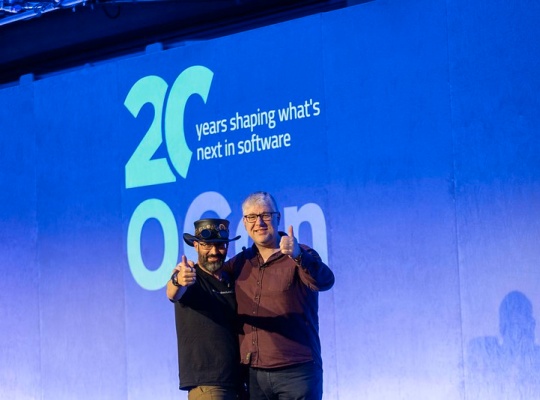
Smarter Prompts, Not Bigger Ones: Engineering Context That Works
Big context windows feel like the easy answer, but Baruch Sadogursky and Patrick Debois argue otherwise in their session, "The Right 300 Tokens Beat 100k Noisy Ones." They show why stuffed prompts drag coding agents down, then offer practical fixes like lazy-loaded skills and externalized memory banks. It is a grounded, useful take for engineering leaders wrestling with agentic workflows.

Brex lets real agent behavior shape smarter AI security policies
Brex stopped trying to police AI agents with SDK-level rules and started watching what those agents actually do. Its open-source proxy, CrabTrap, sits between every agent and every network request, using an LLM-as-a-judge to make enforcement decisions in real time. The insight is simple: the transport layer is an underused enforcement point. By bootstrapping policies from observed traffic instead of writing them from scratch, Brex found that governance gets sharper as agents get more capable.