LLM
LLM at Beyond Market Intelligence is a file of 161 stories. The newest of them: “Smarter Prompts, Not Bigger Ones: Engineering Context That Works”, “Three Teams, One Problem: LLMs Fill GraphQL Mock Gaps”, and “Capital One's open-weight models power a scalable multi-agent AI platform”. Big context windows feel like the easy answer, but Baruch Sadogursky and Patrick Debois argue otherwise in their session, "The Right 300 Tokens Beat 100k Noisy Ones." They show why stuffed prompts drag coding agents… Three teams are now solving the same problem in different ways. Acme AI is the next-generation, AI-powered spreadsheet platform built to replace Excel and redefine how analysts, data scientists, and enterprise teams work… The list below is every LLM story on Beyond Market Intelligence, newest first.
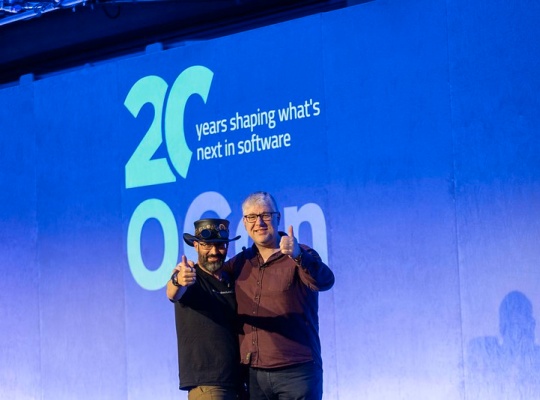
Smarter Prompts, Not Bigger Ones: Engineering Context That Works
Big context windows feel like the easy answer, but Baruch Sadogursky and Patrick Debois argue otherwise in their session, "The Right 300 Tokens Beat 100k Noisy Ones." They show why stuffed prompts drag coding agents down, then offer practical fixes like lazy-loaded skills and externalized memory banks. It is a grounded, useful take for engineering leaders wrestling with agentic workflows.

Three Teams, One Problem: LLMs Fill GraphQL Mock Gaps
Three teams are now solving the same problem in different ways. Expedia Group open-sourced mockql-rs, a Rust CLI that fills @mock-annotated GraphQL fields with LLM-generated data at request time. It follows Airbnb's @generateMock from April and a GraphQL Foundation RFC opened in February. The catch: two use the same directive name with incompatible semantics. That is a coordination gap worth watching. For more on how these models reason structurally, see our piece on paragraph structure in token space.

Capital One's open-weight models power a scalable multi-agent AI platform
Capital One isn't waiting for a better off-the-shelf model. At VB Transform 2026, Kel Vanee described how the bank built a multi-agent platform by deeply customizing open-weight models with proprietary data, treating that data as an advantage no frontier model can match. The approach scales beyond one use case, lifting performance across the portfolio. It's a practical blueprint for financial services, and for readers exploring how AI agents handle complex workflows, our related piece on bridging retrieval and action offers a useful parallel.

Route easy queries around the model to cut latency and cost
Every question in an enterprise RAG pipeline doesn't deserve a full model call. The pipeline from Article 9 proves that simple keyword matches can skip the LLM entirely, saving about two seconds per query. That's not a small win; it's a direct cut to latency and cost without sacrificing accuracy. Buying faster hardware isn't the only answer. Routing easy questions around the model is smarter. For more on questioning AI's assumptions, check out "Verify Your AI's Understanding: A Simple Check for Tax Season."

Watermarks reveal who's using AI tools in ways they shouldn't
Some Claude users are angry that Anthropic's new watermarking will expose their workplace or classroom use of the AI. Is that a travesty? Not really. If you're relying on a tool in ways you feel you must hide, the discomfort is worth examining. The system flags AI-generated text, not your intent. That tension matters. For more on navigating AI's ethical gray zones, our piece "Talking to My AI Clone Taught Me to Question the Tech" offers a useful parallel.

Explore how local AI turns images into structured data with Gemma 4
Gemma 4 and Ollama bring image inputs and structured outputs together in a local setup, and that combination is worth exploring. It's a practical step toward multimodal workflows without relying on cloud dependencies. The process feels more accessible than you might expect, which is exactly the kind of progress that matters. If you're curious about how these pieces fit, this guide walks through it clearly.
One team's sprint proves what AI agents can achieve for your workflows.
Three OpenAI engineers just shipped a million lines of code. That's not a headline; it's a starting point. For you, the real work begins with a ten-hour agent run. This story is about scale, but more importantly, it's about what happens when you stop wrestling spreadsheets and let AI handle the heavy lifting. We're not here to sell you hype, just a smarter way forward.
When Evaluations Fail, Trust in Automation Grows, Not Shrinks
Confidence in automated agent evaluation surged this July, nearly tripling to 13% across 108 enterprises – a shift largely driven by those yet to experience a “false-confidence” failure. Critically, the failure rate of agents passing evaluations but then causing customer issues remained unchanged at just under half. While trust is rising, enterprises are simultaneously increasing investment in human review workflows, hedging against evaluations that don’t always reflect real-world outcomes.

Testing Local LLMs Against a 90-Tool Personal Assistant
Twenty-seven production tasks. Two local models. One hardware upgrade. That is the experiment at the heart of this piece, and the results are telling. The question is not whether local AI can match Claude feature-for-feature, but what it truly takes to replace the brain behind a 90-tool personal agent. The answer, unsurprisingly, is nuanced. For anyone questioning their own AI dependencies, this is a grounded, practical read.
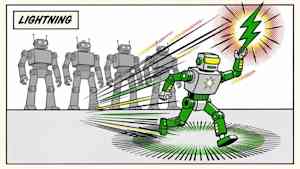
Nvidia's Switchyard routes AI tasks to the right model, slashing costs
Nvidia's Switchyard router cuts agentic costs by matching each step to the right model, and paired with the new Nemotron 3.5 Lightning, it holds frontier-level quality at roughly a third of the price. That's the fix enterprises have been circling. The real bet is owning both layers, model and routing, under one open license. It shifts the competitive question from which model is best to which system routes best.

How Brex secures AI agents by observing the network, not the code
"Agents" is a terrible name, and Brex's CEO says so. At VB Transform 2026, Pedro Franceschi argued that the industry needs a mindset shift from vague terminology to concrete roles, like a virtual employee. Brex's security team initially balked at deploying agents, so the company built CrabTrap, a network-level proxy that assumes the agent is compromised and monitors traffic. It's a pragmatic blueprint for enterprise security. For more on how AI systems navigate complexity, explore our related coverage on paragraph structure.
AI reviews exposed: when depth meets surface in peer feedback
The review process felt misaligned with its own purpose. One reviewer even broke double blindness during discussion, revealing LLM-generated specifics they never mentioned initially, nor did they engage with rebuttals. That undermines trust. Low clarity scores stung because reviewers struggled with established notation, a problem an LLM could have resolved if prompted. This isn't about replacing judgment; it's about using the tool to close knowledge gaps.

The browser is the new frontline. Why security hasn't caught up.
The browser has become the enterprise's central operating environment, yet most security architecture still guards the device instead of the session where work, and attacks, actually happen. That gap is growing urgent as AI-assisted hacking accelerates. CloudMosa's Shioupyn Shen argues for a fundamental shift: isolate execution in the cloud, keeping risky code away from endpoints entirely. It's a bet on prevention over detection, and one worth exploring. For more on how AI reshapes foundational tech, see our piece on how LLMs navigate token space.

When your document says "see Section 7.2," AI can now follow the link.
A "see Section 7.2" answer is a dead end, not a destination. When a retrieval system points elsewhere instead of answering directly, the pipeline breaks trust. This piece tackles that exact failure with a loop-based fix: fetch the linked context, then return the real answer. It's a practical, human-centered solution for a frustrating problem. We appreciate the focus on user outcomes over technical spectacle. For more on how LLMs handle structure, explore *Exploring Paragraph Structure: How LLMs Navigate Token Space*.

Build AI workflows that survive production without slowing your experiments
Every AI workflow faces a quiet tension. Production durability demands persisting every step, so a crash or deploy doesn't erase progress. But that same safety net weighs down the fast, throwaway loop you need to judge an LLM's output. Mateus Moury's pattern tackles this head-on, separating the two concerns instead of forcing a compromise. It's a practical framework for teams tired of choosing between resilience and speed. For more on AI's practical edges, our guide to distributed training offers a useful parallel.

Spotting AI Text: Simple Cues and the Math Behind Them
You don't need a model to spot AI-generated text. Research-backed cues reveal LLM output, and the mathematical intuition behind *why* those signals hold up is also explained. That's the kind of practical clarity that empowers you to trust what you read. It's not about paranoia, it's about precision. For more on how AI shapes content creation, explore the related discussion on transforming open LLMs into classifiers.

Recover a PDF's hidden outline with typography and deterministic loops.
A PDF's outline is often hidden in plain sight, buried in the typography of its body text. Six deterministic signals on span-level formatting can surface heading candidates, with one bounded loop validating the real ones. It is a practical, grounded approach to document structure, and it earns its place in the RAG pipeline. For readers exploring how LLMs handle paragraph structure, our related guide on token space offers a useful complement.
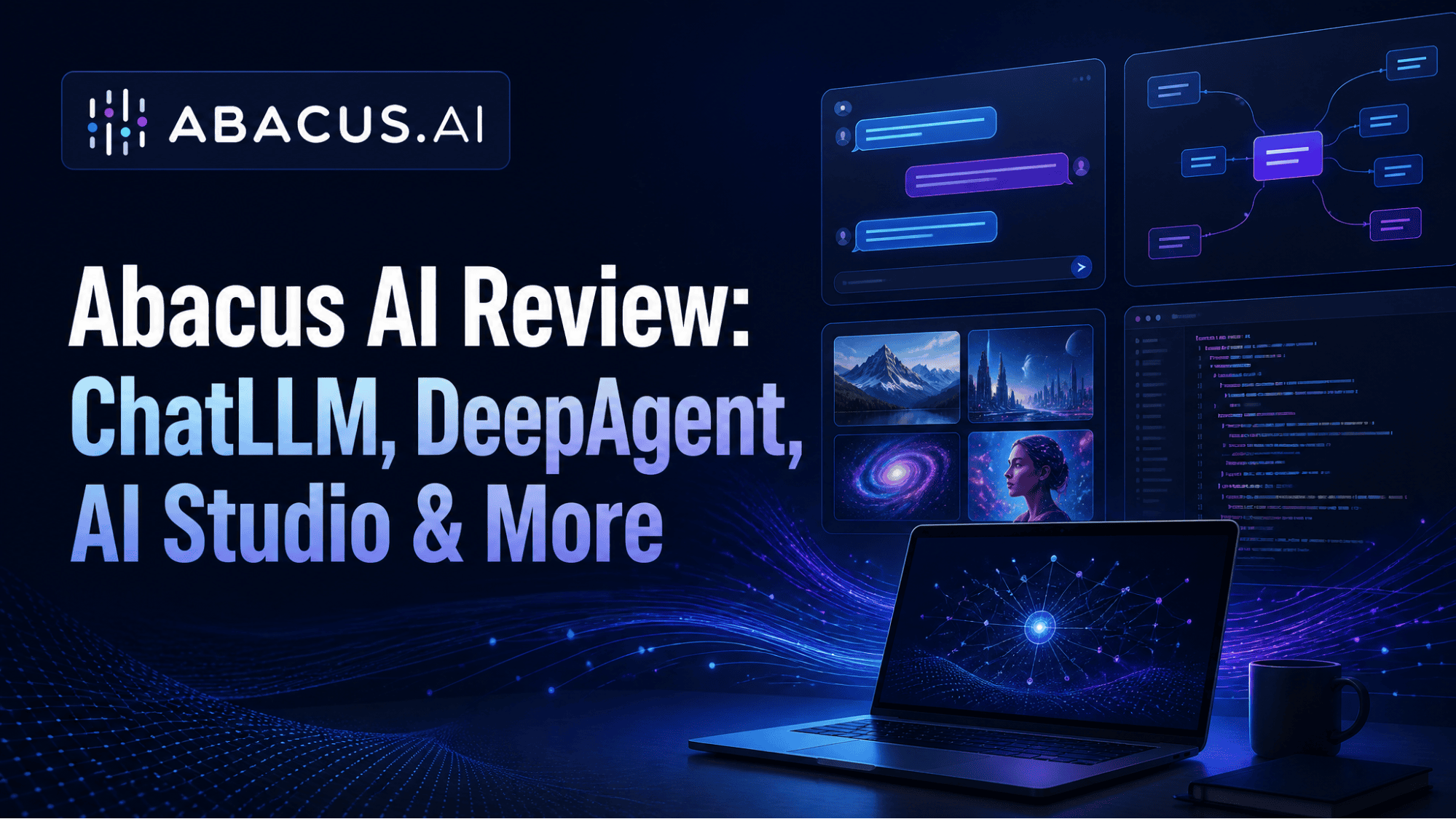
Explore Abacus AI's unified ecosystem for smarter, simpler workflows.
Abacus AI isn't just another AI toolkit; it's a serious answer to the chaos of juggling multiple subscriptions. This review breaks down how its ecosystem, from ChatLLM to DeepAgent, consolidates over 100 models and a full developer suite into one workflow. We're impressed by the focus on cost-effectiveness for teams, and the depth here invites real exploration. For a broader perspective on how AI tackles complex problems, our piece on AI Models Complete Turing's Codebreaking Legacy offers a fascinating parallel.
When AI Remixes Research Papers, Originality Becomes a Question of Trust
A paper assembled from favored sources, with the gaps and commented-out lines stitched together by an LLM, is being submitted as novel work. It clears syntactic overlap checks because the text is technically new. This is not a clever hack; it is a direct assault on the integrity of academic review. A researcher is gaming a system built on trust. We are calling this out. It is time to confront how AI is enabling a collapse in research ethics.
When peer reviews chase perfect control, they miss the real insight.
LLM-assisted peer review has a hidden cost: it can drown authors in speculative critiques. A recent discussion highlights two recurring issues. First, LLMs excel at listing uncontrolled variables, but they fail to weigh whether those variables actually threaten the paper's core conclusion. Second, their feedback often drifts into vague, field-level abstractions instead of concrete methodological comparisons. This shifts the burden onto authors to debunk endless hypotheticals. The real skill isn't generating critiques; it's filtering them.

Three Layers That Define Every RAG System You Build
Every RAG system stands on three engineering layers, each stacked on a single LLM call: the prompt that makes the call, the context that fills the model's window, and the loop that decides when the next call fires and when it stops. Knowing which layer you are on is half the battle in building and debugging. This breakdown keeps things practical and grounded. For deeper exploration of where AI understanding gets murky, our piece on verifying your AI's understanding offers a timely companion.
Explore How Legacy Systems Hide Simple Problems Behind Complex AI
The pattern is unmistakable: organizations hire for AI sophistication when their real need is data hygiene. The author sees it clearly, and they are right. It is not a talent gap. It is a readiness gap. Talented engineers are being pointed at problems that do not need agents or vector databases yet. They need clean pipelines and honest documentation. That is less glamorous work, but it is the work that matters. Before chasing the next framework, master the basics.

Build a free local CLI agent with Python and Ollama from scratch
Building a CLI agent from scratch sounds like a focused challenge, and this guide takes you through it using Python and Ollama without spending a dime. It's a practical, hands-on approach for anyone tired of clicking through menus when a command line could do the work faster. The steps are clear enough to follow, yet they leave room for your own tinkering.

When to choose GraphRAG over vector search for deeper insights
Forget the hype about GraphRAG being a universal upgrade. The evidence is clear: it's a specialized tool, not a replacement for standard retrieval. Microsoft's own research shows it crushes vector RAG on global, sensemaking questions, winning up to 83% of comparisons, but on simple fact lookups, the two are effectively tied. The real takeaway isn't about choosing sides. It's about building a router that sends each query to the method it deserves. That's how you get the gains without paying for indexing you don't need.