LLM
LLM at Beyond Market Intelligence is a file of 161 stories. The newest of them: “The invisible risk that makes prompt injection a real priority”, “OpenAI's product chief on agents, UX, and what's next for AI tools”, and “Explore how Kimi K3 makes powerful AI more accessible and affordable.”. The expert vote and the incident record are two witnesses telling different stories about the same risk. OpenAI's head of product, Thibault Sottiaux, sees a world finally ready for agents, and that's worth paying attention to. Acme AI is the next-generation, AI-powered spreadsheet platform built to replace Excel and redefine how analysts, data scientists, and enterprise teams work… The list below is every LLM story on Beyond Market Intelligence, newest first.

The invisible risk that makes prompt injection a real priority
The expert vote and the incident record are two witnesses telling different stories about the same risk. Prompt injection holds the top spot on the OWASP list, yet it lands at No. 12 in the public record. That gap is not a measurement failure. It is a visibility problem. The attack leaves no CVE behind. Build your controls around your own exposure, and treat the ranking as a map, not a mandate.

OpenAI's product chief on agents, UX, and what's next for AI tools
OpenAI's head of product, Thibault Sottiaux, sees a world finally ready for agents, and that's worth paying attention to. In this interview, he gets practical about UX and what it means to report directly to Greg Brockman, grounding the agent hype in real workflow decisions. It's a grounded take from someone shaping the tools we'll actually use. For a more personal angle on AI's limits, you might try "Talking to My AI Clone Taught Me to Question the Tech."
Explore how Kimi K3 makes powerful AI more accessible and affordable.
A 2.8-trillion-parameter model that only activates a fraction of its weights per token sounds like a paradox, but that's exactly what makes Kimi K3 interesting. Moonshot AI built it with a Mixture-of-Experts architecture to keep inference costs down while pushing coding and agentic performance. It's a practical alternative to proprietary systems, especially when you weigh open weights against near-frontier capability. We think that trade-off is worth exploring.

When Milliseconds Matter: Teaching LLMs to Forget on Purpose
Most LLM runtimes treat memory as an endless resource, but this one treats it as a deadline. It refuses admission rather than miss a 33ms robot control cycle, evicting KV cache by meaning instead of age, all in hand-written CUDA. That's a sharp rebuke to the bloat most of us accept. It's a focused, practical stand for precision, and it makes you wonder what else we're letting slip.
Compact AI runs 400 tokens per second on a laptop CPU with 60 MB
A 250M parameter model that runs at 400 tokens per second on a laptop CPU, no GPU required, is a practical statement about efficiency. The 60 MB deployment, achieved through sub-2-bit quantization, and the 1-bit disk cache for long context are the technical details that matter here. The developer trained it on 30B tokens and built a vocabulary from fixed 512-bit codes, which is an unusual choice that shows in the WordSim-353 scores.
Exploring transparent AI watermarking through a practical, educational lens
Watermarking isn't about visible markers or injected ads. It's a subtle statistical fingerprint woven into how a model picks its tokens, invisible to the reader but detectable by design. This developer took that concept and built a minimal, educational version of SynthID-Text, simplifying parts to keep the core idea clear. It's a smart, hands-on way to demystify a topic that's about to shape every AI response you see. If you're curious how provenance might work quietly behind the scenes, this is a solid starting point.

From Demo to Production: Structuring a Reliable Backend for Your AI Agent
Turning a demo LangGraph agent into something that can actually hold onto real booking data is where the practical work begins. Building a proper backend for that transition is a useful look at moving from proof-of-concept to something dependable. The focus stays on structure and persistence, not hype. For readers interested in how AI handles complexity at a deeper level, our piece on paragraph structure in LLMs offers a complementary perspective worth exploring.

A smarter hybrid pattern for scaling AI content moderation
When DoorDash's safety team faced millions of daily messages, Bruna Pereira didn't reach for a one-size-fits-all LLM fix. Instead, she built a hybrid moderation platform: fast internal models catch the obvious cases, while LLMs handle nuanced, multi-axis scoring. No-code workflows and backtesting keep it practical. It's a smart pattern that cut incidents without breaking the bank. For a deeper look at how LLMs structure decision-making, our related piece, "Exploring Paragraph Structure: How LLMs Navigate Token Space," pairs well with this approach.
Explore how real-world safety systems define the benchmark for AI reliability.
A flight controller for a 300-passenger jet. A braking system for a bullet train. A reactor protection system for millions of people. These are the benchmarks that matter. The argument that ML systems should prove themselves in safety critical systems is direct and compelling. It cuts through the noise of test sets and simulations that fail outside the lab. It is a high bar, but that is the point. It would demand real-world performance, not just promising metrics.

Nvidia's simple math cuts costly recomputation across AI models
Swapping models mid-session has always meant paying the full prefill tax again, until now. Nvidia's researchers found that a simple linear mapping can transfer a KV cache between compatible models, bypassing the expensive recomputation that bogs down multi-LLM agentic workflows. The math is refreshingly direct, not a heavyweight neural network. On tested pairs, this approach runs up to 25 times faster while keeping nearly all accuracy. It's a practical fix for a costly bottleneck, and it points toward leaner long-horizon AI systems.
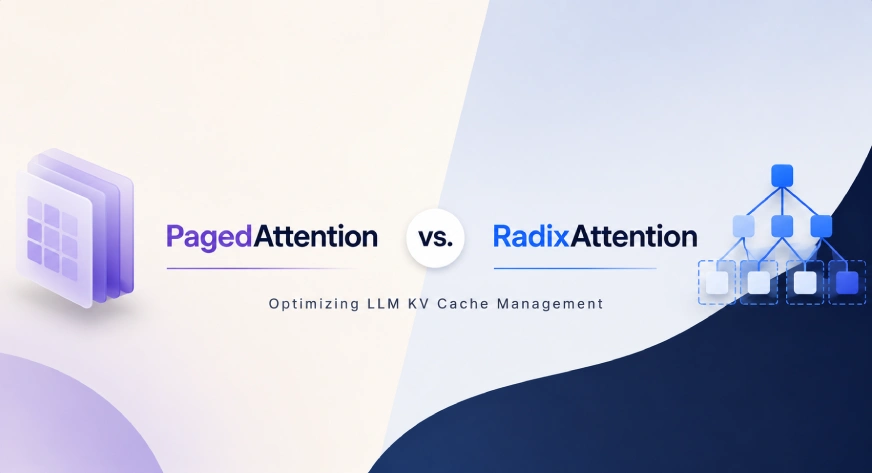
Unlocking LLM Performance Through Smarter Memory Management
KV cache memory can quietly decide whether an LLM deployment thrives or stalls. PagedAttention tackles fragmentation with smarter allocation, while RadixAttention targets prefix reuse. Both cut the GPU strain that limits concurrency and throughput. What stands out is how practical these optimizations feel. Production latency improves without demanding new hardware. For readers exploring how context shapes model behavior, our piece on agentic context learning pairs well with this discussion. It is a useful next step for understanding what makes modern LLMs efficient beyond raw architecture.

When an AI judge agrees with itself, trust becomes the question
When an LLM judge keeps agreeing with itself, the feedback loop feels reassuring. It isn't. This story follows a production incident where a model's self-approval masked real flaws, exposing a quiet danger in relying on AI to evaluate AI. It's a practical look at trusting your tools, not blindly. For anyone wrestling with similar doubts, the related piece on questioning your AI's understanding offers a useful parallel. Blind agreement is comfortable; genuine verification takes more work.

Turn a single Slack message into an AI agent team that works for you.
Typing a message to spin up an entire team of AI agents, each with its own avatar, skills, and memory, sounds like the kind of thing that usually takes weeks of engineering. NanoClaw's new Slack integration makes it a single prompt. More importantly, it keeps the infrastructure on your hardware, so your data stays yours. This is how persistent, self-hosted digital coworkers become practical. If you're wrestling with how LLMs handle structure, our piece on paragraph navigation is worth a look.

Fine-Tune Large Language Models for Real-World Results
Fine-tuning an LLM often feels like stepping into a black box, but this guide opens it up. It walks you through the entire process, from preparing data to deployment, with a clear focus on practical, real-world application. We appreciate how it cuts through the complexity, giving you a path to follow rather than abstract theory. If you are curious about the broader challenges of training these models, our related piece on distributed algorithms is a useful next step.

TrueForge gives developers more control over AI agents without the cost burden
TrueForge enters a crowded field with a straightforward pitch: more control, lower cost. TrueFoundry's open-source harness, released under the MIT License, reports task completion costs 30% to 75% below Anthropic's managed offering, depending on the model used. That's a concrete claim, and it's backed by a sensible design that trims context waste and treats sandboxes as optional tools. For enterprises tired of choosing between vendor lock-in and operational overhead, TrueForge offers a practical middle path.
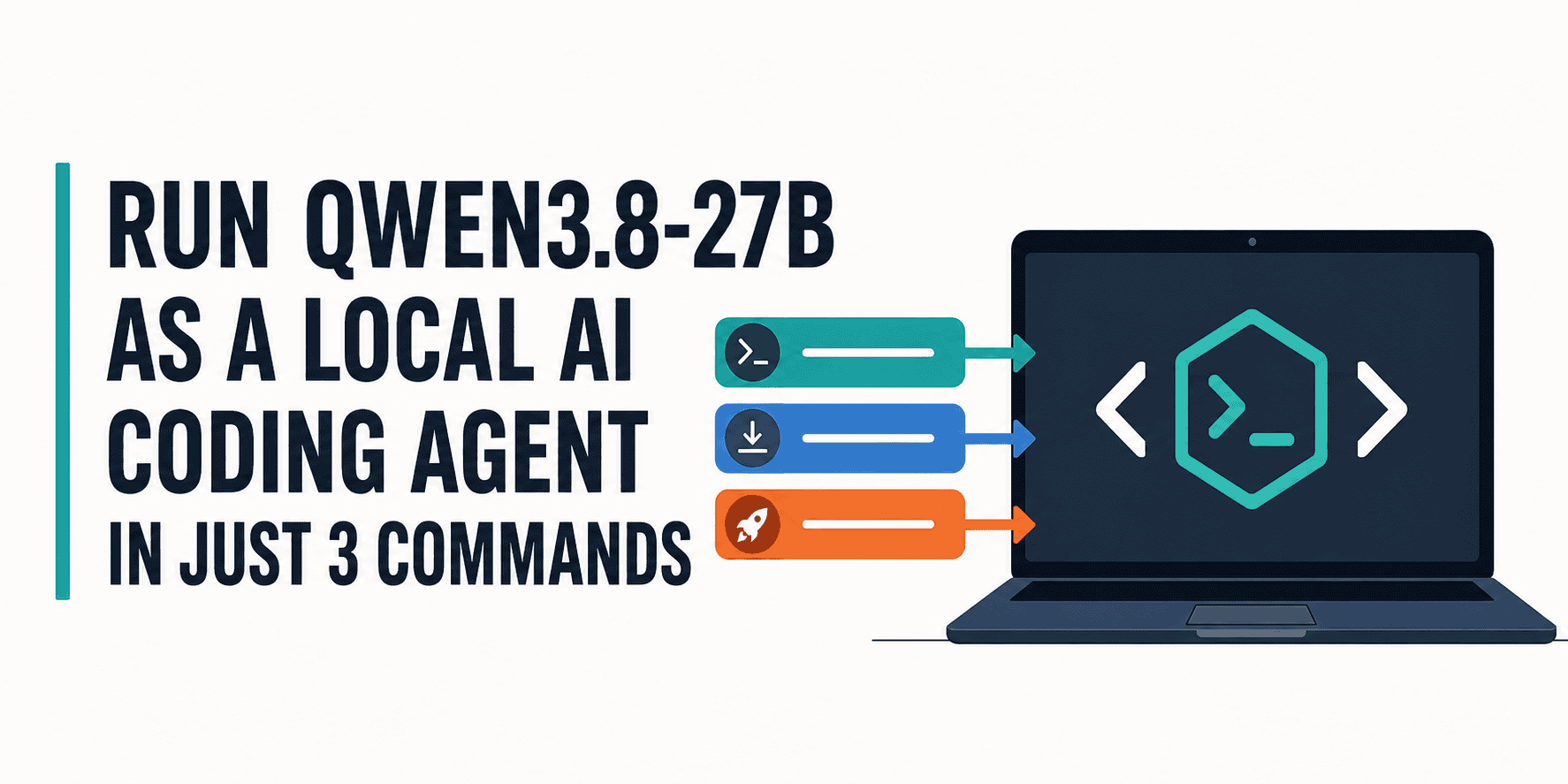
Transform Your Local Coding Workflow with Three Simple Commands
Three commands. That's all it takes to run Qwen3.8-27B as a local AI coding agent, and for anyone tired of juggling cloud dependencies, that simplicity is the point. Download Ollama, pull the model, serve it, then launch with OpenCode. No complex setup, no vague promises, just a workflow that gets you coding faster. It's the kind of practical, no-fuss innovation we like to see.
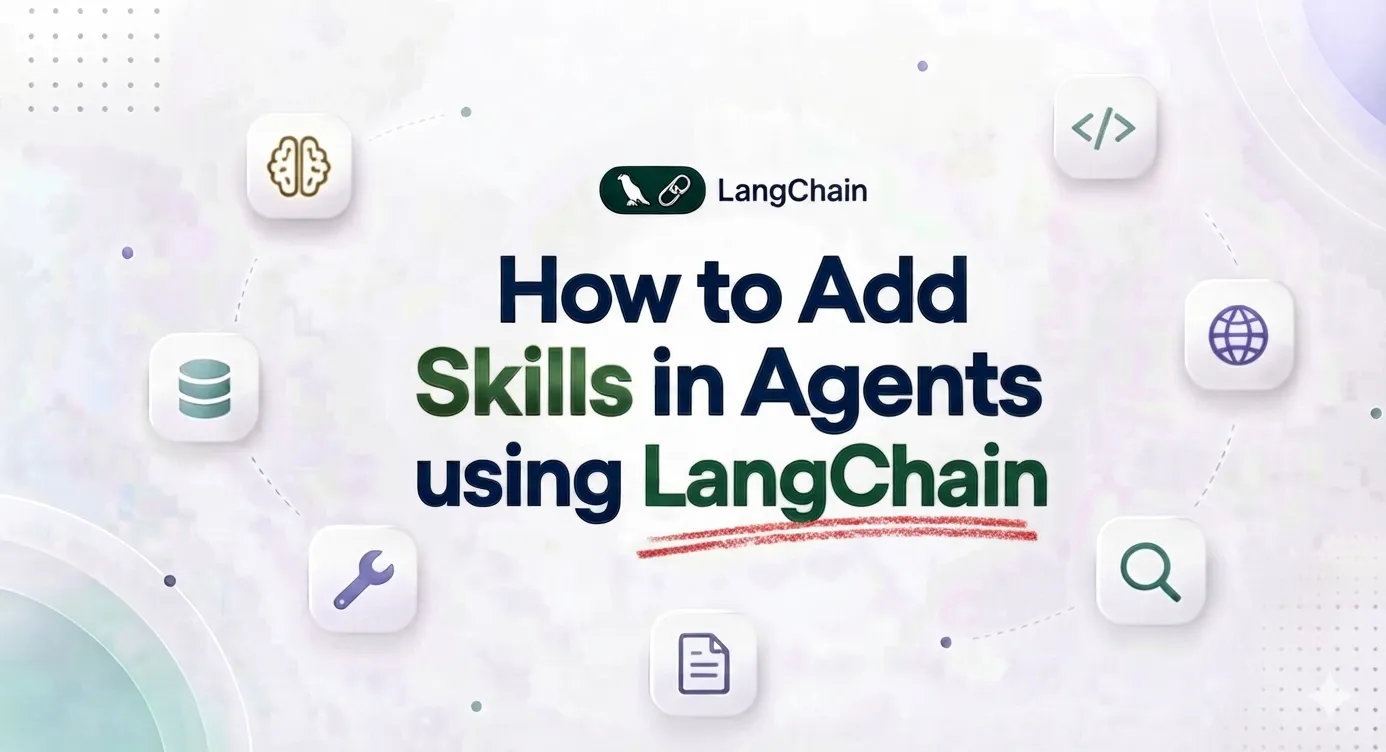
Give your AI agents new skills without retraining the model
Ever wondered how ChatGPT and Gemini pull off PDFs and PowerPoints when an LLM is all they have? The trick isn't a smarter model; it's skills, instructions an agent loads only when needed. That's a clever, accessible idea, and seeing it applied through LangChain makes it feel actionable. We like how this reframes capability as context, not complexity. For a deeper take on how agents learn by editing context rather than weights, check out our piece on Agentic Context Learning. It's a natural next step.

Small Language Models: Practical Power for Everyday Data Tasks
Small language models aren't about doing less. They're about doing the right things closer to home. Yes, they have limits, and those limits are real. But when you plan for them, these compact models handle surprisingly broad operational tasks without the cloud, without the cost, and without losing your data. That's not a compromise. That's a strategy. For a deeper look at how structure shapes model behavior, our piece on paragraph structure pairs well with this practical guide.

When benchmarks meet reality, AI agents still have room to grow.
DeepSeek's V4 Flash tops leaderboards and earns developer praise, but real-world agent work tells a different story. In testing across eight harnesses and 240 runs, only 129 passed, just six of 30 complex workflows succeeded everywhere. That gap matters. Raw capability isn't enough when tool configuration, caching, and retries shape outcomes. Meanwhile, price hikes of up to 1,100% complicate the value equation. The model still undercuts rivals, but the real test is orchestration, not benchmarks. Enterprises should measure cost per completed workflow, not per token.

When AI Sounds Confident, Verify It Knows the Answer
Arun Mishra's eval harness exposed a flaw that should worry any team shipping LLM-assisted tools: the model was most confident precisely when it was most wrong. Qualitative review caught nothing because the explanations sounded authoritative. That is the trap. We test for fluency when correctness is what matters. Mishra's approach, measuring accuracy against synthetic ground truth, reveals the gap between plausible and correct. It is tedious work, but skipping it means deploying tools that fail quietly.

How AI watermarking works and what it means for your code
Anthropic has finally pulled back the curtain on how Claude's watermarking will actually function, and the details matter. The system isn't just a simple tag; it's a subtle layer woven into the model's output, designed to survive edits and alterations. For code, the implications are particularly interesting, since even reformatted or translated snippets should retain their marker. This transparency is a welcome step. It feels less like a gimmick and more like a practical tool for accountability.
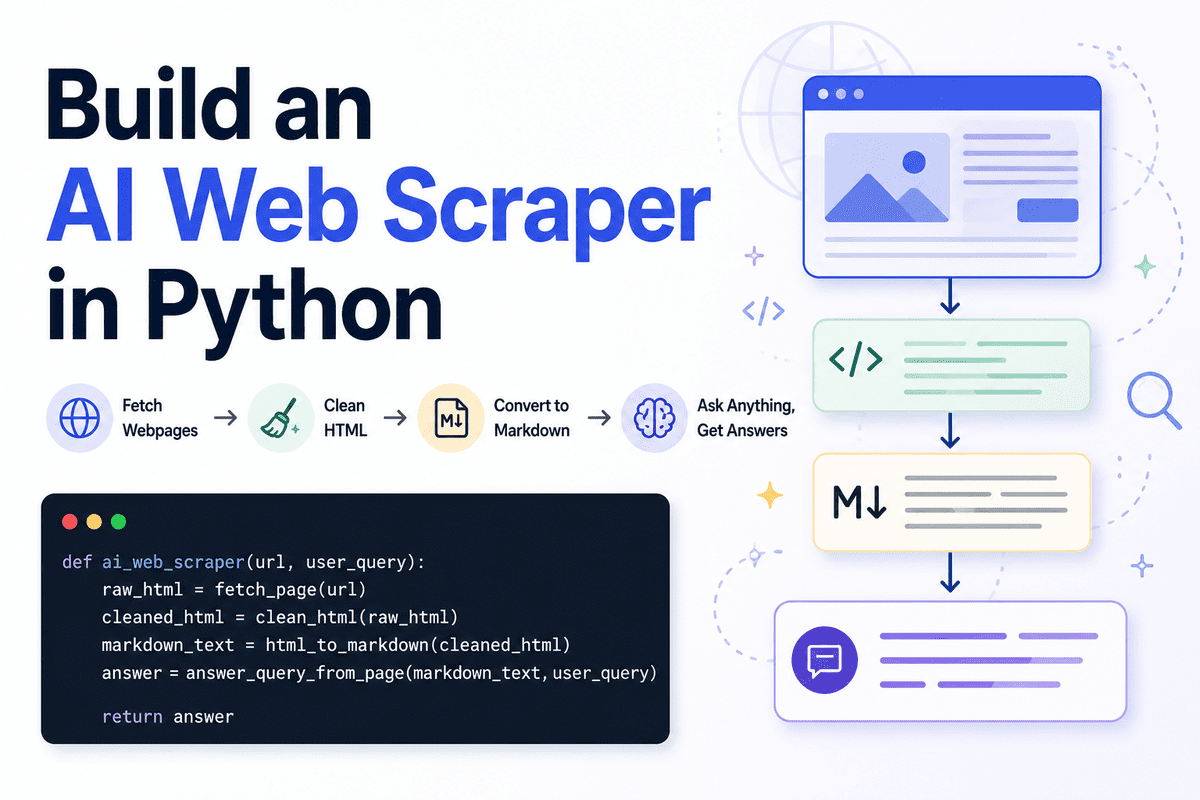
Turn Web Pages into Smart Q&A Engines with AI
Most tutorials make web scraping sound harder than it needs to be. This one strips away the noise: clean the HTML, convert it to Markdown, and let an LLM answer focused questions. The payoff is real, especially when you want answers without burning through tokens on messy page structures. It's a practical, no-nonsense approach that respects your time and your budget. If you're tired of wrestling with raw scraped data, this method feels like a quiet win.

When AI Learns to Play Against You, Not With You
What happens when an AI doesn't just help you build, but actively tries to break in? That's the premise of this experiment, where an LLM laid siege to a Minecraft house. It's a playful yet pointed look at live adversarial level design, and the emphasis is firmly on the adversarial. We often explore how AI assists creativity, but this flips the script to test its limits. For those curious about AI's darker problem-solving edges, this is a compelling, hands-on read.

Understanding hidden image artifacts to improve AI editing outcomes
A faint, cloudy mottling appears in smooth areas after repeated generative edits, walls, skin, backgrounds. At first, it looks like ordinary noise, but this user's testing suggests otherwise. Shifting the image by 20 pixels changes the artifact, and two independently generated "black" images share a structured, canvas-locked pattern with high correlation. That points to something reproducible in the pipeline, not random chance. The working hypothesis, that editing accumulates a weak, fixed signal until it surfaces visually, deserves attention.