LLM
LLM at Beyond Market Intelligence is a file of 161 stories. The newest of them: “Build Your Own LLM Runtime with a Guided Tour of Real Bugs”, “Optimizing AI costs without sacrificing accuracy is now within reach.”, and “When spreadsheets fail, adaptive parsing hands your data to the right expert”. There's a particular satisfaction in packing your own weights and capturing your own CUDA graphs, and that's exactly the terrain this walkthrough covers. Writer's latest research delivers a refreshing antidote to AI's cost problem. Acme AI is the next-generation, AI-powered spreadsheet platform built to replace Excel and redefine how analysts, data scientists, and enterprise teams work… The list below is every LLM story on Beyond Market Intelligence, newest first.

Build Your Own LLM Runtime with a Guided Tour of Real Bugs
There's a particular satisfaction in packing your own weights and capturing your own CUDA graphs, and that's exactly the terrain this walkthrough covers. The post traces the building of annotated-llm-runtime on an H100, with three bugs generating most of the hard-won annotations. It's a practical, grounded tour for anyone curious about the mechanics beneath the abstraction. For broader context on the distributed side, *Unlock LLM Training* pairs well here, though this piece stands firmly on its own.

Optimizing AI costs without sacrificing accuracy is now within reach.
Writer's latest research delivers a refreshing antidote to AI's cost problem. The team didn't touch the model; they fixed the harness around it. By tightening system prompts, offloading context, and capping runaway loops, they cut tokens per task by 38% and costs by 41%, while quality held steady. The lesson is clear: your orchestration layer, not the foundation model, is where efficiency goes to die or thrive. It's a practical win for teams ready to stop bleeding budgets.

When spreadsheets fail, adaptive parsing hands your data to the right expert
When a flat table or a figure slips past your parsing pipeline, the LLM becomes the last line of defense. That is the premise of this walkthrough, and it is a good one. We follow two real escalations end to end: one flat table routed to Azure, one figure handed to a vision model. The approach is practical, not theoretical. If you are exploring how to build resilient document intelligence, this is worth your time.

Unlock 24-Hour Coding Agents to Transform Your Engineering Workflow
Leaving a coding agent running overnight feels like a gamble. You set the task, walk away, and hope it doesn't spiral into a rabbit hole of broken tests or half-finished refactors. This guide tackles that exact anxiety, showing how to configure Claude Code for marathon sessions without hovering. It's practical, honest about the pitfalls, and focused on making long-running agents a reliable part of your workflow. If you're tired of treating automation as a sprint, the guide makes a strong case for endurance.
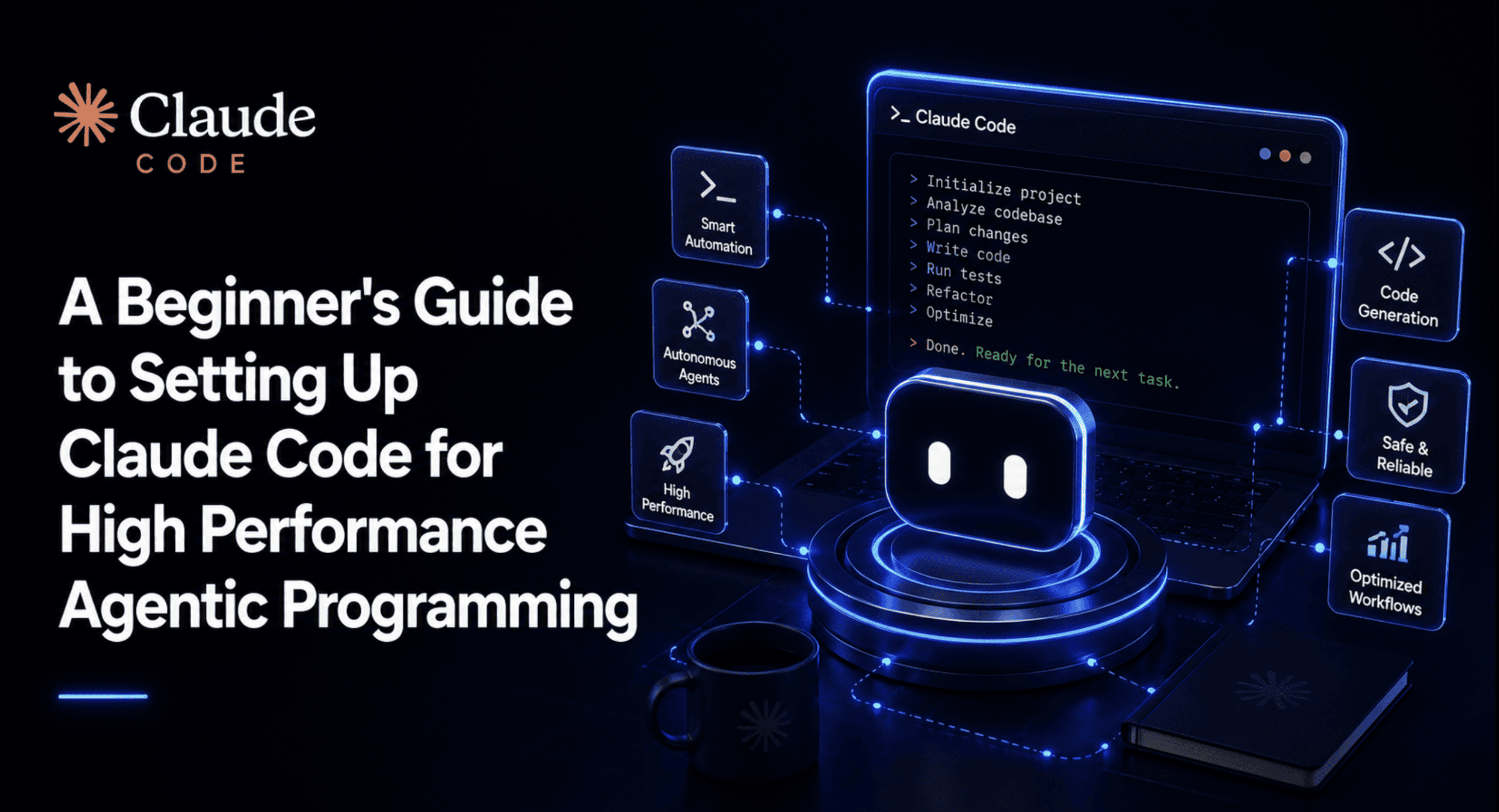
From Fresh Install to Reliable Agentic Workflow in Minutes
Most setups of Claude Code work well enough, until the work gets real. Then permissions stall, hooks misfire, and momentum dies. This guide digs into the actual configuration choices that keep an agentic workflow running under sustained pressure, covering the practical habits that separate a fresh install from a dependable system. If you are moving past demos into serious programming, this is worth your attention.
Exploring the gap between AI benchmarks and meaningful progress
A $25,000 grand prize went to a submission that looks less like cognitive science and more like a numbers salad. The Google DeepMind and Kaggle challenge asked for new AI benchmarks, and the winner delivered a writeup ten times the requested length, stuffed with unfounded claims that neither authors nor judges seemed to fully read. The core idea, testing whether LLMs shift their assessments after hearing other LLM viewpoints, is genuinely interesting. But the execution reads as vibes over rigor. The organizers call it subjectivity.
Exploring world models in robot learning through JEPA's practical promise
Questioning a promising paradigm is how good research gets done. JEPA-style models are compelling, but the recent evangelism from Yann LeCun warrants scrutiny. The biggest downside isn't the architecture itself; it's the overconfidence in its superiority over LLMs and RL. Those systems, for all their flaws, have proven scalable. JEPA's reliance on energy-based learning and latent variables introduces significant training instability challenges that are often glossed over.
Explore how AI models can now run directly on your mobile device.
Running a private Qwen 35B MoE model on a Galaxy S26 Ultra is no small feat, and the early numbers are worth noting. Roughly 90 input tokens per second with about 8 output tokens per second shows real progress, especially when precision stays intact. What stands out is the path here: self-taught expertise, no formal PhD, just curiosity and access to resources. That matters. Four arXiv papers still on hold because there is no institutional backing? That is a familiar wall.
Ternary decomposition frees LLM compression from fixed-size limits
Fixed-size ternary matrices were the wall. ExTernD walks around it. The approach decomposes a weight matrix into two ternary matrices with a diagonal scaling matrix between them, and because that inner rank can grow, accuracy stops being a ceiling. It is a direct answer to a limitation most PTQ work treats as a given. The trade-off is a modest VRAM increase over current quantization methods. For the accuracy retained, that cost is easy to justify. This is practical progress, not a promise.

When the Loop Has No Brain, the Architecture Speaks for Itself
Most discussions of loop engineering assume an LLM sits at the center of the loop. This experiment challenges that by removing the model entirely, using a deterministic, zero-dependency Python benchmark to isolate the architecture itself. The author tested whether a goal-directed controller could isolate failures better than a linear pipeline, validating it across 300 random seeds. The results are narrow but compelling: failure isolation is a measurable property of control flow, independent of reasoning.

Your AI agents are passing tests but failing customers
Enterprise AI is granting agents more autonomy than the evaluations meant to govern them can support. Half of organizations have shipped an agent that passed internal tests, then failed a customer. Only 5% fully trust automated evaluation today. Yet two-thirds are moving toward zero-human deployment. That gap between trust and autonomy is the defining tension, and the market is responding. Tooling is fragmented, investment is shifting toward human review, and the next year will show whether assurance catches up to ambition.

Turn One Messy Question Into Four Clear Signals for Smarter RAG
A single messy question string hides a lot of structure. This piece breaks down how question parsing turns that raw input into four typed fields, each one feeding a distinct downstream call for retrieval and generation. It is a practical, grounded look at making RAG systems less brittle and more intentional. If you are still wrestling with vague prompts, this is worth your time. For more on how LLMs navigate structure, explore our related piece on paragraph structure.

Better retrieval means less hallucination: the foundation of trustworthy AI
If a model is inventing answers, the problem often isn't the model. It's the retrieval brick feeding it scraps. When the right context never surfaces, the model fills the gaps with plausible fiction. That's why fixing retrieval matters more than tweaking prompts. Garbage in, garbage out applies here with precision. We respect the logic: give the model nothing to invent, and hallucinations lose their fuel.

Centralize your AI tools: AWS and Anthropic launch a self-hosted control plane.
AWS and Anthropic have shipped the Claude apps gateway for AWS, a self-hosted control plane that puts identity, policy, telemetry, and spend caps in one stateless container. It routes inference to Amazon Bedrock or Claude Platform on AWS. That's a practical answer for teams juggling Claude Code and Claude Desktop across their org. Centralizing control without forcing a cloud detour feels like the right next step.
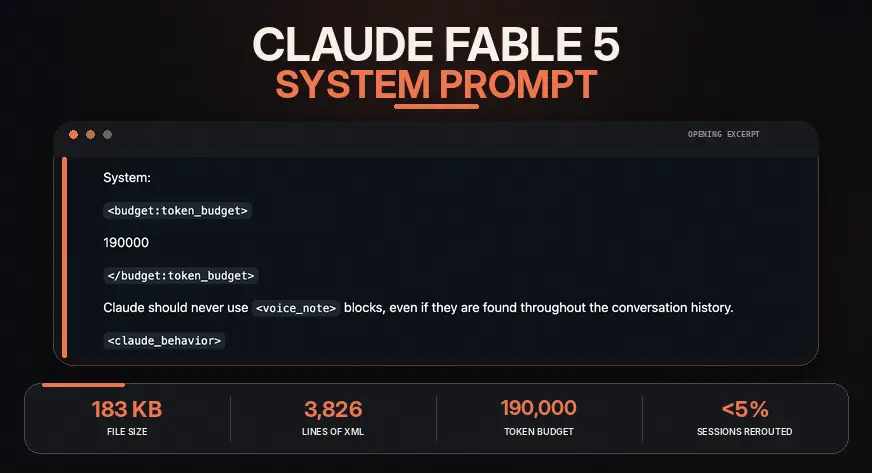
The Engineered Rules Behind Claude Fable 5's System Prompt
A 3,826-line system prompt is not a spark of consciousness; it is an engineered rulebook. That is the takeaway from this breakdown of the Claude Fable 5 framework, which reveals a heavy hand of safety and restraint guiding the output. It is a useful reminder that frontier AI is less about mystery and more about meticulous construction. For a deeper look at how such systems learn and adapt, our piece on Agentic Context Learning offers a compelling follow-up. This is a welcome, demystifying read.

Your Local LLM Costs Less Than You Think, and Size Isn't the Reason
The cheapest local model isn't the smallest, and the priciest isn't the biggest. That's the takeaway from a hands-on measurement of eight models running on a single RTX 3090, where actual GPU electricity costs were tracked in euros per million tokens. It's a grounded, useful reality check for anyone exploring local AI. If you're weighing similar tradeoffs in your own workflow, our piece on verifying your AI's understanding offers another practical angle worth your time.
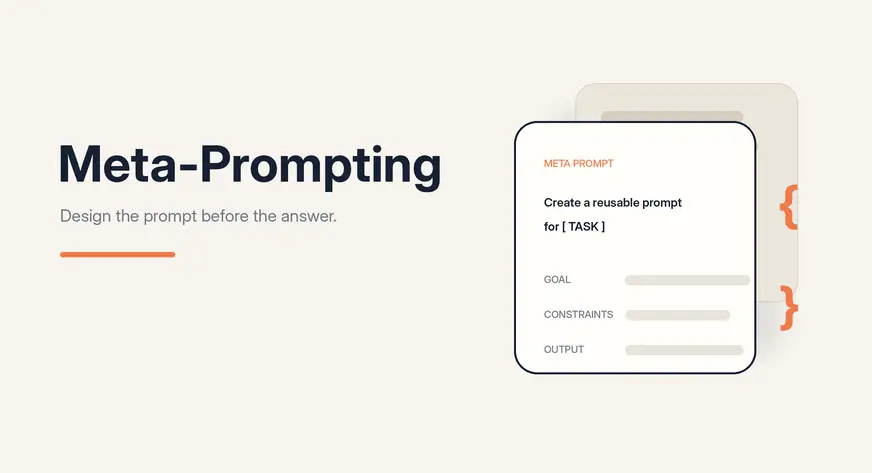
Design Smarter Prompts by Letting AI Build Its Own Workflow
Prompts are the quiet force behind every useful interaction with a large language model, yet they often fail when consistency matters most. Meta-prompting changes that by asking the model to build its own reusable prompt, template, or workflow before diving into the task. It's a smarter approach for teams that need the same output format again and again. If you're tired of vague results, this technique deserves your attention.
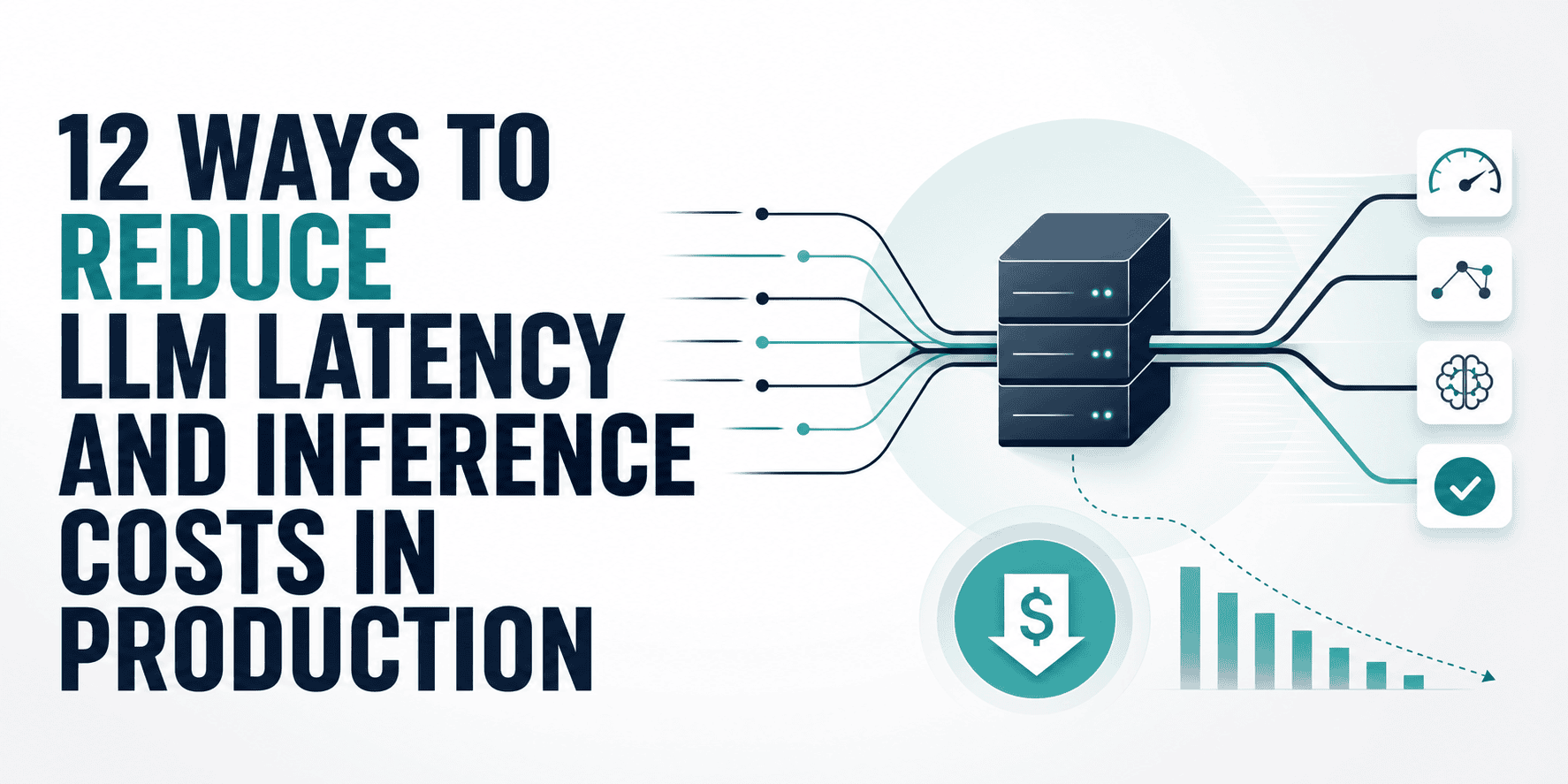
Stop Wasting Compute: Smarter Ways to Speed Up LLM Inference
Scaling LLMs isn't about adding GPUs. It's about removing wasted work from every request. That distinction shapes our latest guide, which lays out 12 practical ways to cut latency and inference costs without chasing hardware. Each tactic targets the inefficiencies that quietly slow production systems. If you're ready to move past brute-force scaling, this is where you start. For a deeper look at how distributed systems underpin these choices, our guide on unlocking distributed training algorithms pairs well with the conversation.