LLMs
86 stories filed under LLMs on Beyond Market Intelligence. The newest of them: “From network training to deployment: finding the right fit for AI expertise”, “The Real Cost of Choosing Speed Over Skill in AI Research”, and “Stats prep is the blind spot experienced data scientists ignore”. A PhD and years of model training don't automatically make you the best person in the room. The pressure to publish or perish is pushing researchers toward a tempting shortcut: letting AI generate entire papers from start to finish. Acme AI is the next-generation, AI-powered spreadsheet platform built to replace Excel and redefine how analysts, data scientists, and enterprise teams work… The list below is every LLMs story on Beyond Market Intelligence, newest first.
From network training to deployment: finding the right fit for AI expertise
A PhD and years of model training don't automatically make you the best person in the room. One engineer's honest reflection on moving from training networks to deploying them at a FAANG company captures this well. They admit their ideas rarely outperformed peers, then watched LLMs get so competent that returning to research feels pointless. Deployment, though, runs on empirical, tribal knowledge that AI can't replicate. That's a compelling reason to stay.
The Real Cost of Choosing Speed Over Skill in AI Research
The pressure to publish or perish is pushing researchers toward a tempting shortcut: letting AI generate entire papers from start to finish. One researcher describes the painful dilemma, already holding two human-crafted studies seeking publication, yet feeling the pull to "just vibe" a third with Claude. But choosing speed over skill comes with a real cost to personal development. As our recent coverage of "When AI Slop Floods Top-Tier Conference Reviews" shows, the academic community is already drowning in work that prioritizes quantity over substance.
Stats prep is the blind spot experienced data scientists ignore
Forgetting the formula for a confidence interval mid-interview isn't a knowledge gap, it's a recall problem. Experienced data scientists overindex on leetcode and ML, assuming stats fluency will carry itself. It won't. The fix isn't more breadth; it's structured, deliberate coverage of the fundamentals you haven't touched since grad school. LLMs help, but they loop. Pair them with targeted drilling and you'll turn those blank moments into crisp answers. If you're rebuilding your prep approach, exploring causal model selection can sharpen the same muscle.

Explore how LLMs fit into recommender systems with Kim Falk's new guide
Adding an LLM to a recommender system sounds promising until you ask whether the complexity is actually justified. Kim Falk's new guide treats recommendation as a full pipeline, not a single trick, examining where LLMs earn their place in candidate generation, reranking, and signal extraction. The real question isn't whether the system works. It's whether the improvement justifies the cost. For deeper context on the operational challenges, our related article "Taming AI's Real-World Demands: Agents, Evals, and Rising Token Costs" explores similar trade-offs in production.
From telecom to AI: navigating the next step in your research journey
Four hundred cold emails. One hundred applications. Zero traction. This researcher has the technical depth, RL, LLMs, post-training, even CUDA, but the walls are real: location and university brand are blocking doors that merit should open. A second Master's abroad is one path, but it's not the only one. Explore industry roles where demonstrated output outweighs pedigree, or target labs that value remote collaboration. The signal is clear: adapt the approach, not the ambition.

TypeSafe's Jev hits $7.5B valuation by outpacing LLMs with fewer tokens
Jev's $7.5 billion valuation is impressive, but what truly grabs our attention is the claim behind it: TypeSafe says Jev works faster and uses far fewer tokens than LLMs. That efficiency explains why both individual users and large corporations are excited. It suggests a smarter approach to AI, not just a bigger one. For a deeper look at how decision-first models prevent risky AI actions, see our related article on that topic.
Small models trained from scratch are outperforming standard LLMs: here's how
Small models trained from scratch are quietly outperforming standard LLMs on targeted tasks, and the architecture behind them deserves attention. The Universal Transformer replaces stacked layers with recurrent loops that refine token representations through shared computation, a simpler approach that scales with depth rather than parameter count. What's striking is that these models don't need internet-scale pre-training to win. The real question is whether frontier labs have already folded these enhancements into production systems, or if this research remains ahead of its time.
Build AI from the ground up with 523 hands-on lessons, now in portable books
Five hundred twenty-three lessons, twenty phases, zero libraries hiding the math. That is what AI Engineering from Scratch offers: a ground-up path from linear algebra through transformers and production serving, now packaged as six portable EPUB and PDF volumes. The code stays stdlib-first, so every backprop step is visible rather than abstracted away. This month also brings the interface and lessons to eight languages, with CI checking each lesson's tests and repairing broken datasets and links.
Exploring Smarter Paths to Text Clustering With Large Language Models
Traditional clustering methods like K-means and DBSCAN often reduce documents to word-by-word matching, leaving procedural similarities undiscovered. That is the exact gap this researcher is targeting by turning to large language models for text clustering. It is a practical reframing of an old problem, and the ambition is clear: group documents by meaning, not just vocabulary. For anyone wrestling with messy, template-heavy datasets, this exploration feels timely. It may not promise perfection, but it points toward a smarter path worth watching.

Smart Graph Decisions at Scale: Where TypeSafe Jev Meets LLM Reasoning
High-frequency graph decisions demand speed and consistency, not just clever prompting. TypeSafe Jev delivers that calibrated, System One approach, while LLMs handle the synthesis and open-ended reasoning where they excel. It is a practical division of labor that finally makes GraphRAG scalable. For readers tracking how these models handle structure and long-form generation, the related piece on paragraph structure in token space offers a useful complement.

Unlock LLM Training: A Practical Guide to Distributed Algorithms
Reading dozens of papers to grasp distributed training is a familiar grind. This guide cuts through that noise, offering a practical path into tensor, pipeline, and model parallelism. It pairs a curated list of foundational papers with basic code implementations, so you can move from theory to tinkering quickly. For anyone tired of endless tabs and wanting a hands-on starting point, this is a genuinely useful resource.

Jev vs LLMs: Evaluating AI for Practical Decision-Making
Spreadsheets have long forced a choice between speed and judgment. In a new test, TypeSafe AI's Jev tackled 3,080 classification tasks, and the results are worth your attention. The comparison focuses on accuracy, latency, calibration, and confidence, asking whether a dedicated tool can serve as a practical decision layer where LLMs might falter. It is a grounded, useful evaluation. For those exploring how AI systems handle reasoning under pressure, this pairs well with our guide to distributed training algorithms.

Unlock AI on Your Glasses: PrismML’s Innovation Powers Smarter Devices
Wearing your computing power on your face is one thing. Putting open-weight AI directly on those devices is another. PrismML's push toward on-device models means your glasses could soon process data without leaning on the cloud. It's a smarter use of hardware you already own. For a deeper look at how such systems handle the heavy lifting behind the scenes, our guide to distributed algorithms pairs well with this. Expect less dependence on servers and more speed where it matters.
Transforming LLM Efficiency: A DSP-Inspired Semantic Vocoder Approach
The idea of treating text like an audio signal is a sharp pivot. By splitting generation into a slow-rate planner and a fast-rate vocoder, this work tackles the inefficiency where predicting every token costs the same compute, regardless of its weight in meaning. The TinyStories results are compelling, showing faster convergence. However, the conditioning over-reliance is a real bottleneck. When the base model leans on semantic hashes, grammar suffers. This is a thoughtful exploration of a genuine problem.

Architecting AI-Powered Mobile UIs: Speed, Delight, and Scalability
Latency can make or break a mobile AI experience, and Balakrishnan Ramdoss knows it. In his latest piece, he gets down to the practical work of architecting production-grade, AI-powered conversational apps. He breaks down how to tackle model response times head-on, using server-driven UI and Backend-for-Frontend patterns to render dynamic, multi-modal interfaces on the fly. It's a grounded look at optimizing prompts for UI selection and weaving in on-device AI for that privacy-first, low-latency edge.
Accelerate Local LLM Learning: A New Prototype for Faster Fact Correction
Watching a toddler learn taught Kavanutz something about AI. Jayce, his new prototype, skips the heavy lifting of RAG pipelines and fine-tuning entirely. Instead, it shifts raw context vectors across a fixed pool of 4,048 prototype slots, correcting mistakes in real time. The benchmarks are telling: faster updates, better sample efficiency on sequential tests, and a strict memory ceiling. It's a lean, framework-free proof of concept built on NumPy and Java.

When AI Misleads, Human Judgment Must Lead
A military operation nearly triggered by AI hallucination is a stark reminder that large language models carry uncertainty we cannot afford to ignore. A GovAI research scholar rightly warns that service members must understand this inherent unpredictability. The stakes are too high for blind trust in generated outputs. For those building or deploying these systems, grasping the fundamentals of how they function is essential. Our practical guide, "Unlock LLM Training: A Practical Guide to Distributed Algorithms," offers a grounded starting point for that deeper understanding.
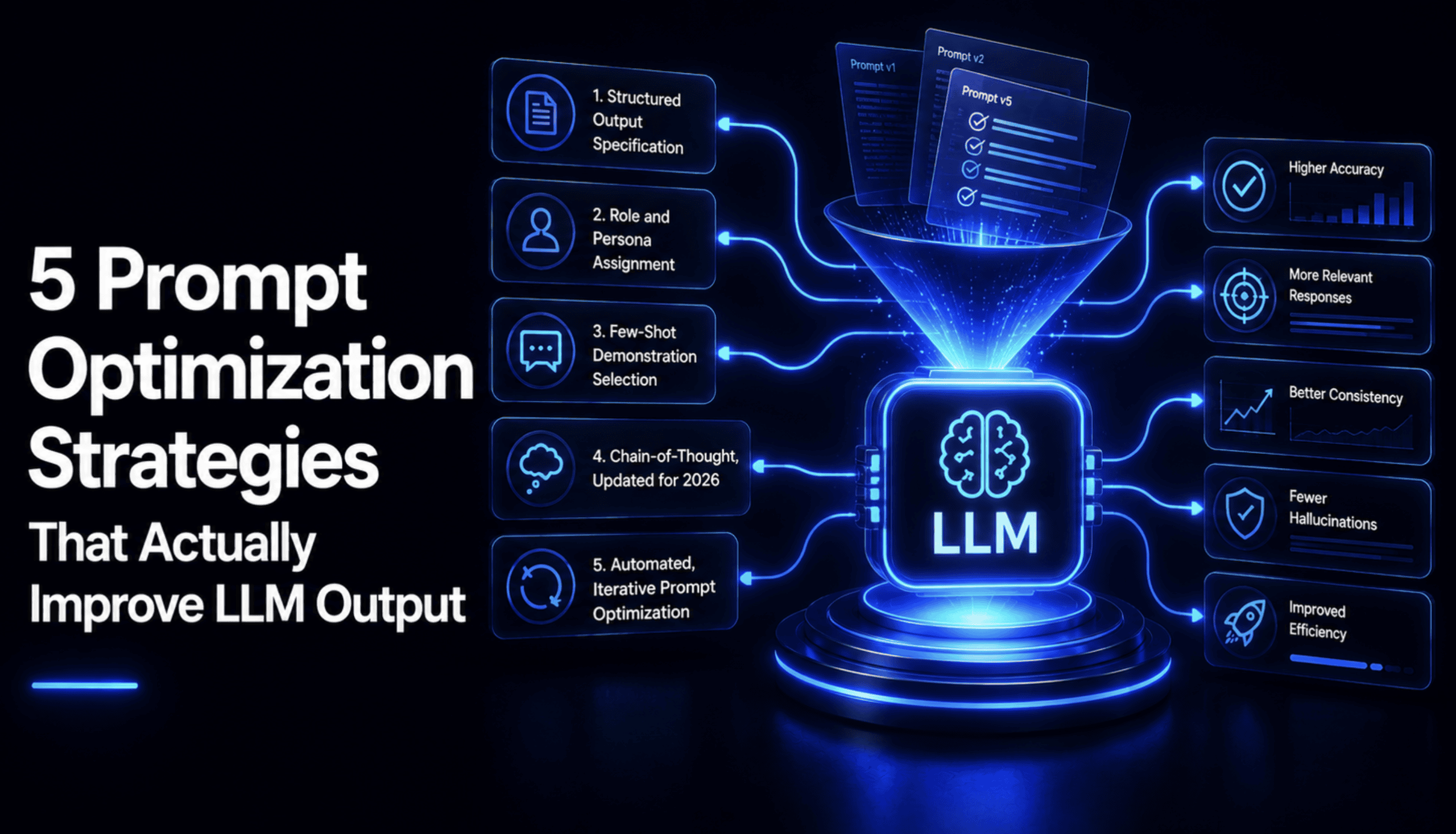
Five Strategies to Sharpen Your Prompts for Better LLM Results
Struggling to get consistent, high-quality responses from your LLM? You're not alone. The difference between vague answers and sharp insights often comes down to how you ask. This piece breaks down five practical strategies, from few-shot prompting to chain-of-thought, that genuinely move the needle. It's about making structured outputs feel natural, not forced. For a deeper look at the underlying mechanics, our guide to distributed training is a solid companion. Ready to refine your approach? Let's get into it.
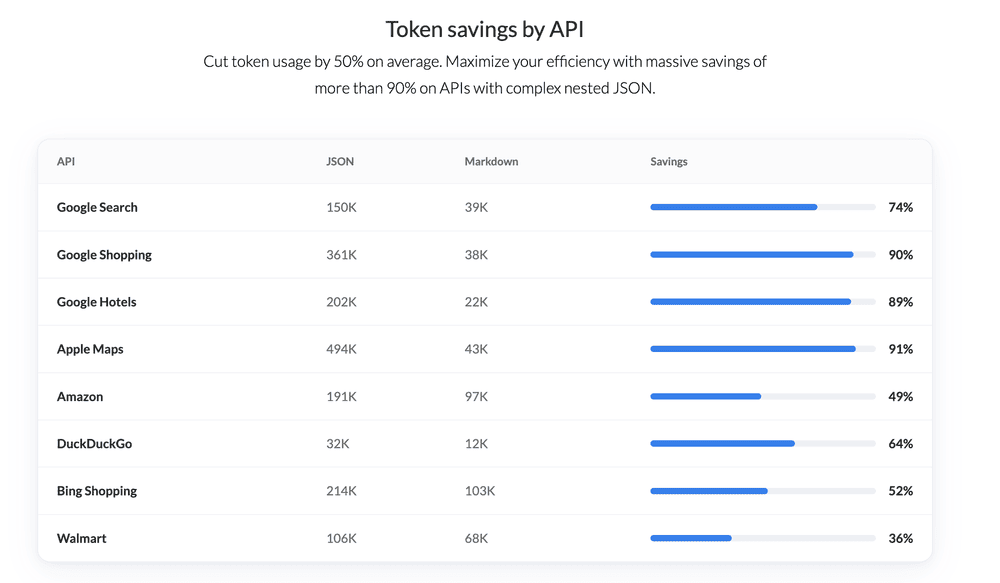
Reduce Search Result Tokens by 74% with Smarter Data Structuring
A single search result can quietly consume thousands of tokens, and that weight adds up fast when you're paying for every call. SerpApi's Markdown output tackles this directly, trimming usage by up to 74% by stripping away the noise and keeping only what matters. That's a meaningful reduction in context-window overhead and agent costs. It's the kind of practical efficiency that pairs well with the broader optimization thinking in our guide to distributed training.

LLMs prove strategic reasoning on Go, with room to grow.
GoBench puts large language models to a properly hard test: 9x9 Go against a ladder of KataGo opponents, from random to superhuman. The results are telling. GPT-6 Astra max lands at 2500 Elo, while the best KataGo sits at 4400, and even with coding tools and two hours of prep, Codex with Astra reaches only 3560. That gap matters. The benchmark's strong correlation with ARC-AGI 2 (r=0.83) suggests it is measuring genuine reasoning, not memorization. It is a refreshingly unsaturated evaluation.

Discover five free GitHub courses to build practical AI skills
Microsoft's GitHub is quietly becoming one of the best free launchpads for data science and AI skills. These five courses cut through the noise, covering everything from machine learning fundamentals to generative AI, LLMs, RAG, and fine-tuning. What stands out is how practical the path feels, you are not just reading about concepts, you are building toward AI agents. If you are ready to move beyond theory, this is a solid starting point.

Own Your Decisions: Auditable AI with DMN and Agent Skills
Enterprise AI has a trust problem. When models return different answers to the same question, high-stakes decisions become risky. Alex Porcelli tackles this head-on in his presentation, showing how DMN decision models bring determinism back into agentic architectures. By pairing them with LLMs and NeMo guardrails, he gives business leaders ownership of decision logic while engineers keep governance intact. It's a practical path to accountability, not just another framework.
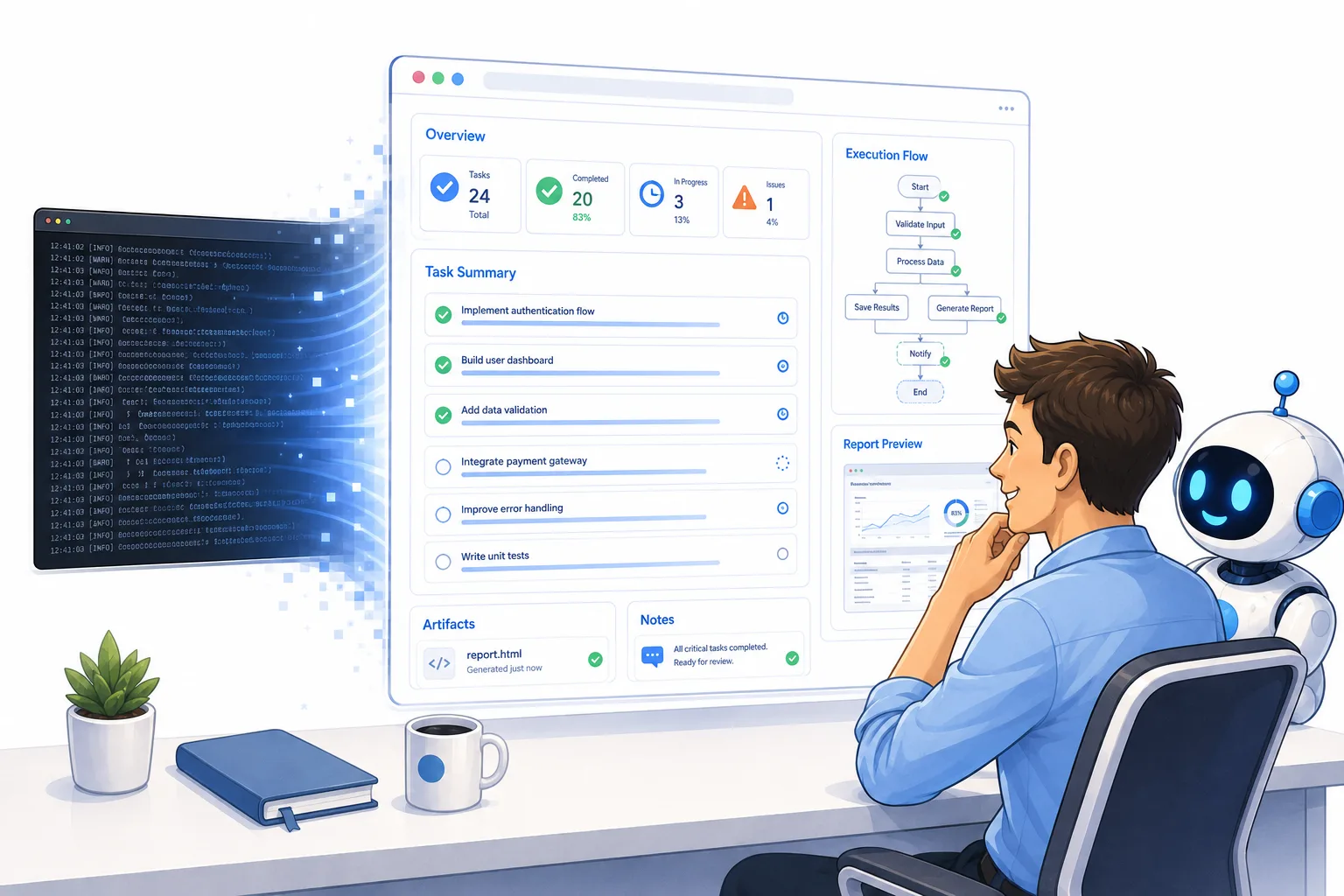
Code Smarter by Clarifying Intent with AI Agents
Tired of repeating yourself to Claude Code, only to watch it misinterpret your intent? This guide cuts through the noise, showing you how to communicate with your coding agents in a way that actually gets results. It's not about more prompts, but sharper ones. For a deeper dive into how AI handles complex tasks, explore the Forrester Function piece. Your workflow deserves better than guesswork.

Explore how GPT-6 turns raw data into actionable insight without the complexity.
GPT-6 is here, and its benchmark results are hard to ignore. On ARC-AGI-3, it scores around 60% without a harness, a figure that climbs significantly when one is applied. President Greg Brockman's pre-launch comment that we may now be in the AGI era feels less like hype and more like a statement of direction. That raises a practical question we should sit with: if models outperform human baselines on tests like GDPval-AA v2, why are knowledge workers still employed?