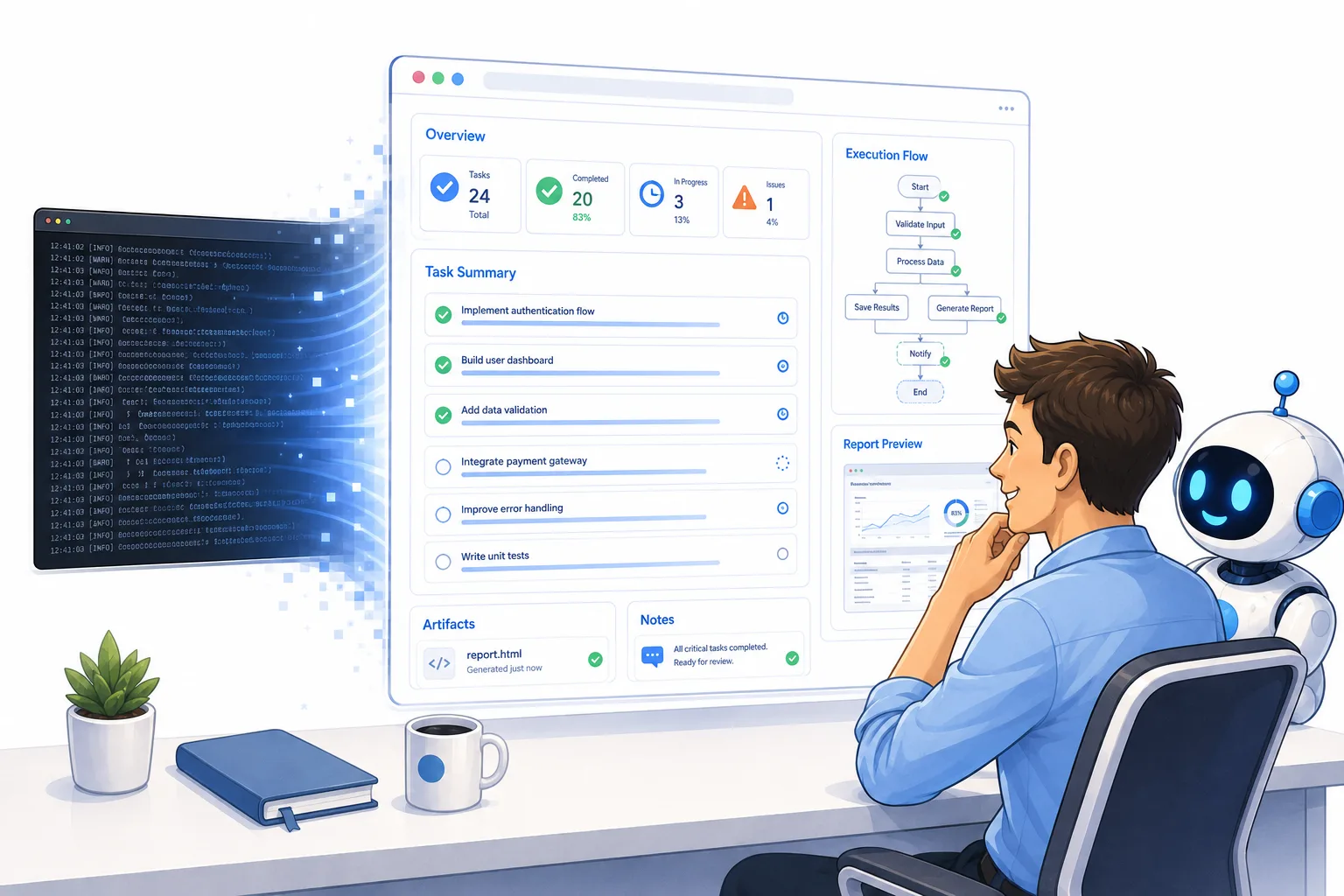
The promise of a 5x improvement in communication with coding agents sounds like the kind of headline that usually deserves skepticism. But the core insight here is not about typing faster or writing better prompts. It is about understanding that your intent, as the human architect, is the variable that matters most. When you delegate a task to a tool like Claude Code, you are no longer just writing code; you are managing a relationship based on clarity. This focus on intent aligns with a broader trend we are seeing across the AI-native landscape: the bottleneck is rarely the model's capability and almost always the precision of the human's directive.
This is a theme that resonates deeply with the work we have been following, particularly in the piece on Exploring Real-World Computer Vision: Deployments, Edge Models, and Current Challenges. Even the most sophisticated vision models fail without a clear understanding of the deployment constraints and the problem you are trying to solve. The same logic applies to conversational coding. You can have a powerful engine, but if you cannot articulate the edge case or the performance requirement in a way the agent understands, you will get a technically correct solution to the wrong problem. The skill is not in knowing the syntax; it is in framing the context so the agent can navigate the solution space effectively.
What we find most compelling is the quiet shift in responsibility it places on the user. It is easy to blame the tool when a refactor breaks or a function behaves unexpectedly. But by investing time in communicating the *why* behind a change, not just the *what*, you can dramatically reduce the iteration loop. This is a more demanding, yet ultimately more empowering, way to work. It forces you to be a better systems thinker. For our readers who are already exploring the mathematical foundations of machine learning, such as those who read about the Explore the Forrester Function: Beyond Mathematics, a Tool for Machine Learning, this is a natural extension. Just as you must understand the properties of a function before you can optimize it, you must understand the structure of your instructions before you can reliably direct an agent.
Our take is that this is less about a specific prompt hack and more about a fundamental change in workflow design. If you are looking to scale your output, the question is not "How do I get the AI to do more?" but rather "How do I make my intent less ambiguous?" The practical takeaway is direct: treat your next interaction with a coding agent as a design problem. Write a brief for it as you would for a senior engineer, including the non-functional requirements and the acceptance criteria. We would tell a reader who asked us that the single most effective habit is to always state what you are *not* trying to do. This forces the agent to discard irrelevant paths and focus on the core objective, often revealing assumptions you did not know you had. That discipline, more than any model update, is where the real gains in efficiency will come from. Watch for the moment you stop phrasing requests and start defining outcomes; that is when the 5x claim starts to feel like an understatement.