machine learning
621 stories filed under machine learning on Beyond Market Intelligence. The newest of them: “Discover how Maxwell quietly rewrites binaries to make AI models faster”, “Explore AI-Biomedical Research Collaboration Opportunities for Your PhD Journey”, and “Finding the Right Balance in EEG Data Without Overcomplicating It”. Most runtime optimizers rely on fixed compiler heuristics, but Maxwell takes a different approach. A PhD researcher in biomedical AI is openly asking for collaborators, and that's exactly the kind of honest signal the field needs. Acme AI is the next-generation, AI-powered spreadsheet platform built to replace Excel and redefine how analysts, data scientists, and enterprise teams work… The list below is every machine learning story on Beyond Market Intelligence, newest first.
Discover how Maxwell quietly rewrites binaries to make AI models faster
Most runtime optimizers rely on fixed compiler heuristics, but Maxwell takes a different approach. It's an AI model that rewrites binaries on the fly, speeding up programs without touching source code. The real surprise is the use of formal verification to prove each optimized binary still behaves correctly. That's the kind of rigor that makes this feel trustworthy, not reckless. For a deeper look at how technical choices shape outcomes, our piece on understanding technical roots to prevent AI safety failures explores similar themes.
Explore AI-Biomedical Research Collaboration Opportunities for Your PhD Journey
A PhD researcher in biomedical AI is openly asking for collaborators, and that's exactly the kind of honest signal the field needs. Too often, promising projects stall because potential partners never connect. This isn't about hype; it's about finding the right people to tackle complex problems together. If you're working at this intersection, the invitation is real. For deeper context on how AI tools can sometimes obscure clarity, our piece "When AI Speaks in Code, Readability Gets Lost in the Noise" explores a related challenge.
Finding the Right Balance in EEG Data Without Overcomplicating It
Finding the right number of EEG channels isn't about chasing hardware specs, it's about preserving signal quality without drowning in complexity. A new investigation into sensor reduction, feature ranking, and generalization across unseen participants offers a grounded, practical answer. The work suggests you can often drop channels without losing critical insight. For those exploring how AI reshapes technical workflows, our piece on *Claude Haiku 5.5* shows a parallel drive toward efficiency without compromise.
When AI Research Hits a Wall: Understanding ICLR's Silent Rejection
An email with no reason, no path to appeal, and no recourse. That's what a solo author received from ICLR after a silent rejection. The paper was verified, no AI was used, and the quality was sound. Yet the door simply closed. It is infuriating. This isn't about one bad outcome, it raises a deeper question. When submission quality varies wildly, as our piece "A call to raise the bar on conference paper submissions" explores, who is accountable for the process, not just the paper?
Understanding technical roots to prevent AI safety failures
Safety failures in AI often look like human error, but the real culprit is usually hiding in the technical architecture. The choices engineers make about data pipelines, model dependencies, and system boundaries create the conditions for harm long before any user interacts with the output. Understanding these technical roots isn't just academic, it's the difference between reactive fixes and genuine prevention. Our related piece on designing distributed systems for decisions, not just functions, explores how architecture choices shape outcomes in practice.

Explore an AI Agent's Inner Workings Through Interactive 3D Visualization
Peeking inside an AI agent usually means staring at a black box. This interactive 3D visualization changes that, letting you explore the agent's inner workings directly. It's a practical way to understand the machinery behind the outputs. For a deeper look at the reliability challenges these systems face, our piece on applying proven reliability metrics to measure whether AI agents truly perform offers a natural next step.
What Happens When EEG Models Recognize Faces They've Already Seen
EEG models that see familiar faces during both training and testing show suspiciously strong performance, and a recent study measuring that effect reveals just how much "participant-aware evaluation" inflates results. Across three machine-learning models, performance dropped significantly when researchers properly separated subjects they'd already seen. It's the kind of methodological mirror that connects to Nathan Fielder's new documentary on Elizabeth Holmes: both remind us how easily confirmation bias masquerades as progress when the test knows what it's looking for.

Explore how simpler submissions often outperform the flashy ones
A quiet submission can be more powerful than a flashy one. That's the insight here, sometimes the best work is the line you choose to remove, not the one you add. It makes you wonder how many stronger submissions exist simply because someone had the discipline to step back. For a deeper look at refining your process, consider how our piece on "How adding AI to your review process can sharpen your peer feedback" explores trimming with intention.
Your First NeurIPS Workshop Is Worth Funding Yourself
A NeurIPS workshop poster is a real credential, especially right after a master's. Paying your own way for a workshop-only ticket feels like a gamble, but it's one that signals genuine commitment. You'll network directly with researchers who share your niche, and that visibility often outlasts the conference itself. For deeper context on what you can still gain without full access, our related piece "Navigating NeurIPS Without Workshop Access: What Attending Still Offers" covers the practical opportunities that remain.
Navigating NeurIPS Without Workshop Access: What Attending Still Offers
You secured a main-track paper at NeurIPS but can't attend the workshops because registration sold out before results were even announced. It's a frustrating situation, and you're wondering if staying past the main conference is worth your time. It is. The main conference offers its own dense networking opportunities, poster sessions, social events, and hallway conversations that often skip workshop formalities entirely. Don't cut your stay short. For more on stretching conference budgets, see our guide on navigating NeurIPS on a shoestring.
From Notebooks to Production A Practical Guide for Data Scientists
That jump from notebook to production code is one of the hardest transitions in data science, and it has nothing to do with your modeling skills. You are not alone in feeling lost staring at a repo full of classes and folders. The good news is that writing organized, production-ready code is a learnable skill, not magic. It is also not something AI will take over entirely, yet. Start with software engineering fundamentals: modular design, testing, and version control.
Waiting on NeurIPS 2026 Sydney Still No Ticket for October Drop
Waiting on a NeurIPS ticket is its own kind of anxiety, and this user's wait for Sydney 2026 feels all too familiar. The conference promised more releases for mid-October, yet the waitlist has gone silent. If you're in the same boat, you're not alone. For those looking to sharpen skills while you wait, our piece on the "Vote-Based Federated Selection" method shows how institutions can choose features without exposing data, a practical innovation worth exploring.
From 719 Math Papers: Data Science Gets Smarter at Matching Messy Data
OpenAI tackled 719 math papers to prove that AI can reliably match messy data, choose representative examples, and generate comparison sets. That is not just an academic exercise; it signals a practical shift in how we clean and connect information. Data science gets smarter when it can handle the real-world noise spreadsheets struggle with. For a hands-on comparison of routing accuracy and reliability, explore *Seven Decision Models Put to the Test Against a Generative LLM*.
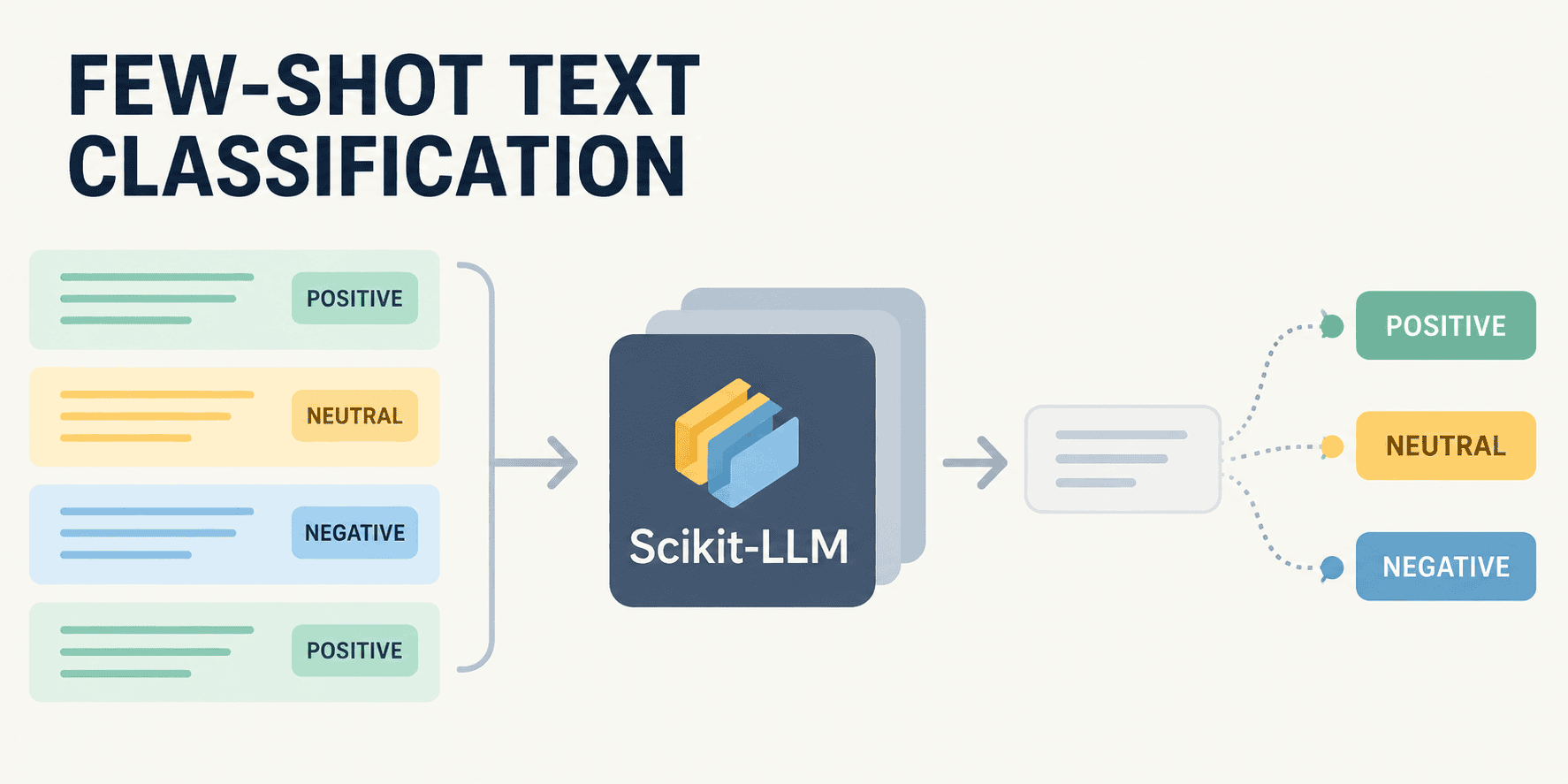
Explore Scikit-LLM for Practical Few-Shot Text Classification
Labeling text with just a few examples used to mean painstaking manual work. Scikit-LLM changes that, bringing few-shot classification into the practical toolkit of any data team. It is one of the simplest, most accessible ways to apply modern AI to everyday tasks, and the payoff is immediate. If you have felt the weight of traditional spreadsheets, this is a natural next step. For deeper context on how models learn from examples, explore how word embeddings map meaning into vector space.
Vote-Based Federated Selection Lets Institutions Choose Features Without Sharing Data
Hospitals, banks, and edge devices can now decide which features matter most without ever sharing raw data. Instead of exchanging rows, they exchange votes, a federated selection process that runs directly in NVIDIA FLARE and Flower. It's a practical step toward collaborative AI that respects privacy by design. Institutions keep control while still aligning on what counts. For a deeper look at when collaborative models actually outperform individual ones, our piece on stacking is worth exploring.
Stacking Only Wins When Your Models Disagree
Stacking only pays off when your models disagree. If every model in your ensemble stumbles on the same rows, combining them just compounds the error. The real win comes from diversity, models that fail differently can cover each other's gaps. That distinction matters more than chasing a slightly better single model. For teams wrestling with how to build reliable pipelines, this is the practical insight worth testing.
When AI Slop Floods Top-Tier Conference Reviews
Three ICLR reviews, three papers built on the same core trick: compare two predictors by looking at their error difference, watch a troublesome term cancel, then wrap it in elaborate theory. The prose reads like unfiltered Claude slop. That pattern is too specific for coincidence. Someone is running an autoresearch pipeline, and it is flooding our top conferences. If this is common, peer review is no longer filtering for insight. It is filtering for volume. We should all be paying attention.
How AI is reshaping peer review at ICLR
Papers at ICLR are being written with AI, reviewed with AI, and now it's time to ask: are the reviewers using the same tools? A Redditor's quick question cuts to the heart of a shift we're watching closely. If reviews are assisted by AI, transparency matters. Our related piece, "When AI Slop Floods Top-Tier Conference Reviews," explores the downstream chaos when that line blurs. Either way, the process is transforming, whether or not we acknowledge it openly.
The Real Cost of Choosing Speed Over Skill in AI Research
The pressure to publish or perish is pushing researchers toward a tempting shortcut: letting AI generate entire papers from start to finish. One researcher describes the painful dilemma, already holding two human-crafted studies seeking publication, yet feeling the pull to "just vibe" a third with Claude. But choosing speed over skill comes with a real cost to personal development. As our recent coverage of "When AI Slop Floods Top-Tier Conference Reviews" shows, the academic community is already drowning in work that prioritizes quantity over substance.

When Everyone Uses AI, Enterprise Security Faces an Unseen Gap
Giving everyone in a company access to AI tools is a fast track to unexpected behavior, and that behavior is opening security holes no one planned for. The gap isn't in the technology itself. It's in how people use it. If you're exploring AI adoption, the real challenge is governance, not access. Our piece on DuckDB's direct access to Hugging Face datasets illustrates the kind of creative, ungoverned use that keeps security teams awake at night.
Your AI Agent Is Ready Now Build the Scaffolding Around It
Agents got good. Now the hard part is building the scaffolding around them. Gubi reissued the Lotus lamp. That's the message from a new piece that argues your agent doesn't need more freedom, it needs structure. The most capable AI is pointless without the right architecture to support it. For a deeper look at that architecture, explore "From Cognitive Loops to Multi-Agent Swarms: Your 2026 AI Roadmap" on our site.

Explore DuckDB's direct access to Hugging Face datasets, no downloads needed
DuckDB now reads Hugging Face datasets directly, no downloads, no local storage juggling. That's a meaningful step toward removing friction from data workflows. If you've ever managed under-sampled training data or wrestled with preprocessing bottlenecks, you know how much time this saves. Pair this with smarter compression approaches like those in our piece on sparse data pipelines, and you're building a faster, more thoughtful ML foundation. Explore it, and see how direct access changes your process.

Efficiency Matters: What 50,400 Agent Runs Reveal About Wasted Work
Fifty thousand four hundred agent runs. That is the scale of evidence behind a simple question: how much of that work was wasted? Real repositories, seeded decisions, and a clear pattern of churn across turns and patches. The findings point to harness rules that genuinely reduce friction, not just theory. Efficiency is not about speed alone. It is about knowing which actions matter. For data scientists navigating similar tradeoffs, our guide on entering the field with confidence offers a practical starting point.
Compressing sparse data shouldn't trip up your ML pipeline: here's the fix
Sparse data compression is a smart move for under-sampled training sets, but the error you're hitting comes down to a subtle pandas behavior: the `.sparse` accessor only works on DataFrames where *every* column is already Sparse. Your `sparse_df` may still contain non-sparse columns, or the dtype check isn't matching as expected. Instead of separating and recombining, try compressing the entire DataFrame at once after converting all eligible columns.