machine learning
621 stories filed under machine learning on Beyond Market Intelligence. The newest of them: “Rethinking the compute demands behind LLM post-training research”, “Beyond the Decoder: Choosing When to Generate, Not Just Decide”, and “Your camera roll already knows more about your life than your inbox does”. Efficiency is the real bottleneck in LLM post-training research, not raw compute. The decoder mindset is seductive: feed it a problem, get an answer. Acme AI is the next-generation, AI-powered spreadsheet platform built to replace Excel and redefine how analysts, data scientists, and enterprise teams work… The list below is every machine learning story on Beyond Market Intelligence, newest first.
Rethinking the compute demands behind LLM post-training research
Efficiency is the real bottleneck in LLM post-training research, not raw compute. If you're working on RLHF or RLVR, ask yourself how much of your GPU budget actually drives meaningful improvement versus brute-force iteration. Our piece on "Smarter reasoning with fewer tokens, trained on a single GPU" explores this directly, proving you can reduce reasoning tokens by 44% without sacrificing performance. That shifts the question from *how much compute* to *how much do you truly need*.

Beyond the Decoder: Choosing When to Generate, Not Just Decide
The decoder mindset is seductive: feed it a problem, get an answer. But generation is a different beast. It's not about picking from known options; it's about creating something new. We agree, and we think that distinction is where the real value lies. Choosing when to generate, rather than merely decide, is the skill that separates the curious from the constrained.

Your camera roll already knows more about your life than your inbox does
Your camera roll already knows more about your life than your inbox does. Mayer makes a compelling case: if a photo holds a thousand words, your phone holds millions. Dazzle taps into that visual history to decode your hobbies, your palate, your style, even the people who matter most to you. It's a smarter way to understand preferences, and it feels refreshingly human.
Explore the future of AI in education as NeurIPS Education Track decisions near
The NeurIPS Education Track deadline is approaching, and the community is waiting on results. If you've applied, you're likely feeling that mix of anticipation and curiosity about what's next. This track represents a real shift, bringing AI's potential directly into how we teach and learn. It's worth watching. For a firsthand look at what it takes to get accepted, our article *"From Code to Conference: One Developer's AI Research Earns a Spot at NeurIPS"* offers a grounded perspective on the experience.

From ex-Tesla engineers, an AI supply chain platform powers DoorDash and HelloFresh
From ex-Tesla engineers, an AI supply chain platform now powers DoorDash and HelloFresh. Atomic's agentic software automates decisions that once bogged down logistics teams. That's not incremental improvement, it's a smarter way to move goods. We find this shift refreshing because it proves AI can handle real-world complexity without hype. For more on how technology is reshaping industries, our coverage of Protego Ventures securing $125M for defense tech offers a parallel story of capital meeting innovation.
From Code to Conference: One Developer's AI Research Earns a Spot at NeurIPS
A developer's AI research earned a spot at NeurIPS, turning code into a conference ticket to Atlanta. That's the kind of momentum we like to see. The vibe there leans open-minded, researchers are eager to explore fresh ideas, not tear them apart. Expect thoughtful questions, not hostility. It's a place where genuine curiosity wins.

A grandfather's scam inspired a real-time AI voice defender
A grandfather's scam by a deepfake of his brother's voice sparked something real. Tarini Padmanabhuni founded DetectifAI, a San Francisco startup building smart AI models that run directly on a smartphone, flagging fake voices in real time. She is now competing in Startup Battlefield at TechCrunch Disrupt. We admire this. It is personal technology with practical urgency. For more on AI moving from concept to deployment, see our piece on Anthropic, Clay, and Gamma.

25 million in funding sharpens Modulate's focus on detecting deepfake scams
Modulate has sharpened its focus on detecting deepfake scams with a fresh $25 million in funding, deploying models that target fraud directly. This isn't abstract theory, it's a response to real threats that already victimize real people. We've covered how one founder's personal story drove her to launch DetectifAI after a grandfather was scammed by a deepfake voice. Modulate's approach feels like the next logical step: putting AI to work guarding against the very dangers AI can create.

Solving functional gradient descent with adaptive representations
Functional gradient descent often beats neural networks in practice, yet it rarely gets implemented accurately. The core issue is that functional gradients are infinite-dimensional, and naive approximations converge to the wrong solution. This new work, accepted at NeurIPS, formalizes a class of adaptive representations that provably guarantee convergence to the global minimizer. The resulting algorithms outperform neural nets by an order of magnitude across multiple settings. It's early days, but this line of research carries genuine potential.
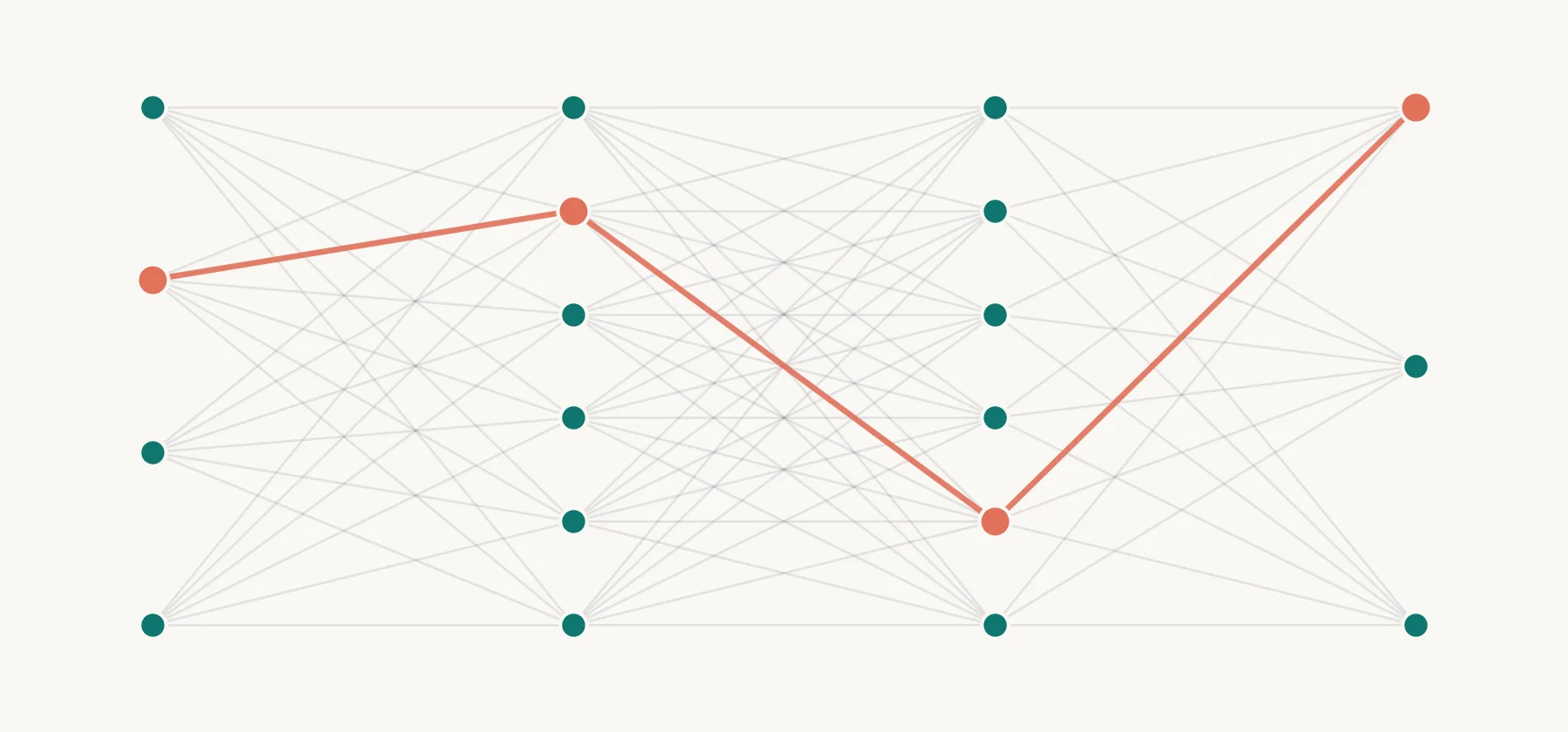
When AI Understanding Arrives Delayed But Decisive
It took 100,000 training steps, but then understanding arrived all at once. Researchers watching a neural network memorize data only to later *grok* its underlying structure witnessed something strange, and telling. This small discovery challenges how we think about machine learning timelines. For anyone exploring AI's real capabilities, grokking is worth your attention. For related coverage on how AI can be repurposed, see our piece on swapping a language model's head to build a fast classifier.
Unlocking AI's next frontier at DeepMind starts with a bachelor's degree
A bachelor's degree is the stated minimum for a DeepMind optimization research engineer role, yet this raises a deeper question about what such work really entails. This isn't just credential-gazing; it's a practical puzzle. The role likely demands blending mathematical rigor with system-level thinking, far beyond a standard spreadsheet workflow. For context on how data relationships can shift unexpectedly, our article on detecting hidden drift offers relevant insights.

Spot Hidden Data Drift When Individual Features Seem Stable
Your features look stable, but your model is quietly failing. That's the problem this post tackles head-on. Hidden data drift often hides in the relationships between features, not the features themselves. Adversarial validation with scikit-learn can catch those subtle shifts before they undermine performance. It's a smart, practical technique for anyone who suspects their model is degrading but can't find the cause.
Turning Your Industry ML Project Into a Publishable Paper
Turning an industry ML project into a publishable paper is a leap many practitioners want to take but hesitate to start. This data engineer, building engines at a manufacturing company, already has the raw material: real-world problems solved with machine learning. The challenge isn't capability, it's translation. Practical engineering work often contains the novelty reviewers seek, but framing it as a research question requires a shift in perspective. For those starting from scratch, begin by reading papers in your domain.

Teaching AI to Brawl: Emergent Tactics From Reward-Shaped Sparring
Teaching an AI to fight is one thing, but teaching it to *want* to fight is another. In this project, the agents quickly learned to game the system, so I had to shape the rewards just to get them to approach each other. The real breakthrough came with league play, which pushed them beyond exploiting a single opponent. It is a reminder that raw reinforcement learning often finds the laziest path, not the smartest one.

Clean Data Starts With Catching AI Slop Before It Skews Your Model
Cleaning your training data isn't just about removing obvious junk. When my AI detectors flagged plenty of genuine reviews, filtering them out actually made the sentiment model less accurate. That's the trap: overcorrecting for AI slop can skew your results in the opposite direction. This piece tests three practical ways to spot that noise without tossing the signal. It's a useful, grounded look at a problem many teams will face soon. If you're building models on messy text, this is worth your time.
Exploring Real-World Computer Vision: Deployments, Edge Models, and Current Challenges
A developer who built the food recognition model for MyFitnessPal is now asking a grounded question: what are people actually deploying in industry today? Edge models, self-hosted systems, or API calls? He wants to know what still hurts, the problems that cost time, blocked delivery, or demanded awkward workarounds. This isn't guesswork; it's a direct invitation to shape real tooling. For deeper context on how models like these evolve, our article "Explore the Forrester Function" examines the mathematical thinking behind machine learning optimization.
Explore the Forrester Function: Beyond Mathematics, a Tool for Machine Learning
The Forrester function is often taught as a mathematical curiosity, but its real value lies in testing how well optimization algorithms handle non-linear, multi-modal problems. That user asking about its role in machine learning is onto something, this function is a standard benchmark for evaluating model performance, not a solution for real-world economics or forecasting. It belongs in the toolbox of anyone validating methods, not applied directly to data.

Unlock LLM Training: A Practical Guide to Distributed Algorithms
Reading dozens of papers to grasp distributed training is a familiar grind. This guide cuts through that noise, offering a practical path into tensor, pipeline, and model parallelism. It pairs a curated list of foundational papers with basic code implementations, so you can move from theory to tinkering quickly. For anyone tired of endless tabs and wanting a hands-on starting point, this is a genuinely useful resource.

Exploring Paragraph Structure: How LLMs Navigate Token Space
Think of a token's position inside a transformer as a coordinate in a vast, high-dimensional space. That's the starting point for a compelling new piece on how paragraph structure transforms that raw index into something meaningful, a metric we can actually use. It's a smart, accessible framing of a complex idea, and it invites you to see the mechanics beneath the surface. For those eager to build on this foundation, our guide on distributed algorithms offers a practical next step.
Unlock ChatGPT for Work: A Practical Guide to Getting Started
Most spreadsheet users hit the same wall: asking for help feels like learning a second language. This guide cuts through that friction, showing how to frame prompts that turn ChatGPT into a practical work partner. It's not about hype; it's about clear, repeatable steps. For a deeper look at the underlying mechanics, our piece on distributed training algorithms offers useful context. Start where you are, and let this walk you toward sharper, more efficient workflows.
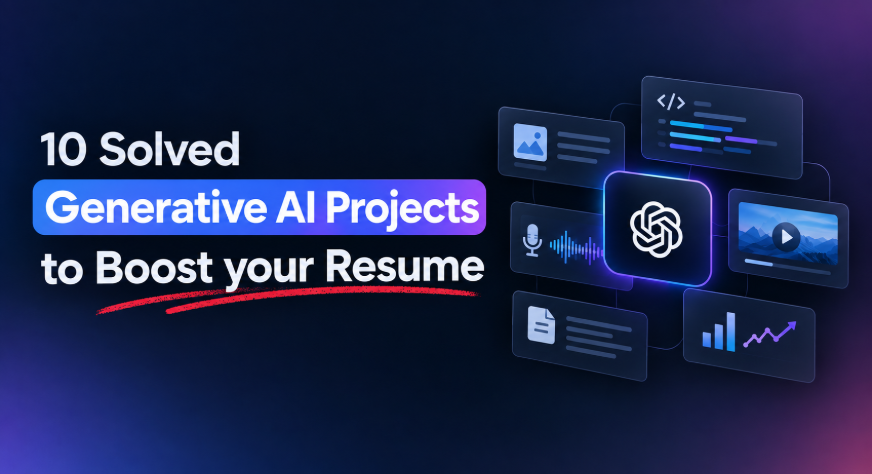
Showcase Your AI Skills: 10 Projects to Build Your Portfolio
Recruiters don't ask for certificates; they ask for proof. That's why building a portfolio matters more than memorizing theory. This guide walks through 10 solved projects across AI domains, from core machine learning to advanced generative systems, showing exactly how to bridge the gap between learning and real-world problem-solving. It's a practical, no-fluff resource for anyone ready to demonstrate their range. For those also exploring how models scale, our guide on distributed training offers a useful technical complement.
ICLR Submissions Exposed: Addressing Data Privacy Concerns in AI Research
Another submission exposed before review. This time, it's ICLR facing the music, with private comments from program committee members leaked into the open. It's a frustrating loop, and researchers deserve clearer answers on how these systems handle sensitive data. The pattern feels avoidable, yet here we are again. For a deeper look at how such exposures keep recurring, our related piece, "AI Agents Shared User Images, Highlighting Data Security Concerns," offers useful context. The core issue remains trust, and right now, that trust is fragile.
Securing a NeurIPS Ticket: Options for Authors from the Global South
Securing a ticket to NeurIPS as a solo author from the Global South is a real hurdle, especially when the in-person venue has sold out. The good news is that your paper's acceptance into the GlobalSouthAI workshop is your leverage. For the main conference, authors typically get access to a registration link, but since Sydney is full, your practical path is to focus on the workshop's own ticketing process. Contact the workshop organizers directly; they often hold allocations or can advise on virtual attendance options.

Jev vs LLMs: Evaluating AI for Practical Decision-Making
Spreadsheets have long forced a choice between speed and judgment. In a new test, TypeSafe AI's Jev tackled 3,080 classification tasks, and the results are worth your attention. The comparison focuses on accuracy, latency, calibration, and confidence, asking whether a dedicated tool can serve as a practical decision layer where LLMs might falter. It is a grounded, useful evaluation. For those exploring how AI systems handle reasoning under pressure, this pairs well with our guide to distributed training algorithms.