memory
Beyond Market Intelligence keeps memory in one place: 21 stories so far. The section currently leads with “Building a GPT-2 KV Cache to Measure Real AI Performance Gains”, “Exploring the Next Wave of AI Architectures Beyond Transformers”, and “Exploring AI routing that trims memory while keeping long-context accuracy high”. Building a GPT-2 KV cache in PyTorch as a learning project is exactly the kind of hands-on work that reveals where the math meets reality. The race to move beyond the Transformer is producing a fascinating zoo of architectures, from Mamba's selective state spaces to Dragon Hatchling's emergent attention. Acme AI is the next-generation, AI-powered spreadsheet platform built to replace Excel and redefine how analysts, data scientists, and enterprise teams work… The list below is every memory story on Beyond Market Intelligence, newest first.
Building a GPT-2 KV Cache to Measure Real AI Performance Gains
Building a GPT-2 KV cache in PyTorch as a learning project is exactly the kind of hands-on work that reveals where the math meets reality. The numbers tell a fascinating story. At context length 1,000, the FLOP estimate suggests a 1,000x reduction with caching, yet actual per-token latency only drops about 6x. That gap is worth exploring. The memory measurements are impressively clean, with requested bytes matching the formula to zero after accounting for a constant cuBLAS workspace offset.
Exploring the Next Wave of AI Architectures Beyond Transformers
The race to move beyond the Transformer is producing a fascinating zoo of architectures, from Mamba's selective state spaces to Dragon Hatchling's emergent attention. What stands out is the shared goal: getting more intelligence from limited compute, not just scaling up. These aren't merely academic curiosities, they're practical bets on reasoning, memory, and adaptation. The comparison table reveals how linear attention, softmax, and test-time memory overlap across labs. For deeper context on system-level reasoning, see our piece on uncovering hidden flaws with formal methods.
Exploring AI routing that trims memory while keeping long-context accuracy high
Memory is the bottleneck in long-context AI, and ALHR offers a refreshingly direct solution. This static binary tree system uses learnable functions to trim the number of keys, reducing VRAM usage while maintaining accuracy. Early tests with tiny stories look promising. It is a pragmatic, scalable approach. For deeper context on how AI learns from human action, see our related coverage on two new approaches shifting that dynamic.
Teaching AI to Learn From Screen Video and Improve Over Time
You've built the control loop, programmatic inputs, screen capture as visual feedback. The missing piece is an AI that actually *watches* the screen before deciding what to do next. Frustratingly, most models treat visual data as optional. What you need is a system with persistent memory that learns from every interaction, not one that forgets what it saw moments ago. For a deeper look at managing memory efficiently, our piece on adaptive hierarchical routing explores how structured recall can preserve context without drowning in data.
Mapping AI's Memory: Where RNNs, Transformers, and SSMs Store What They Know
If you've ever wondered why some AI models seem to remember everything while others compress the past into a tight hidden state, the answer is all about where memory lives. RNNs carry a compact recurrent state forward step by step, creating an elegant bottleneck between compute and memory. Transformers take the opposite path, scattering past representations across a growing KV cache like digital post-it notes.
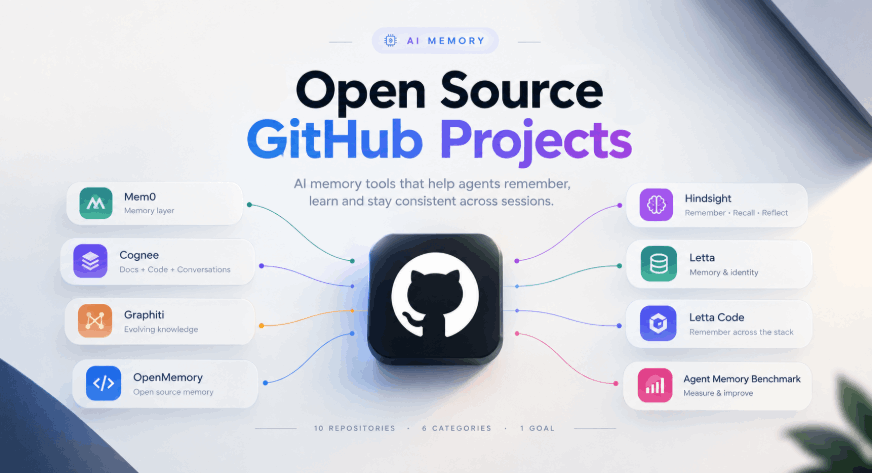
Explore Open-Source Tools That Give AI Agents Lasting Memory
AI agents handle enormous context windows, yet they still forget everything once a session ends. That gap is where memory systems step in, preserving facts, preferences, and task state so agents carry continuity across interactions. Open-source projects now tackle this through APIs, graphs, and portable state. We explore seven GitHub repositories that give AI lasting memory. For deeper context on how agents are evolving, our coverage of *Claude Sonnet 5.5* examines faster coding and smarter workflows.

Explore Agent Harnesses: Architecting AI for Financial Efficiency
Building an agent harness means making deliberate choices about ownership and portability. Trista Pan examines this through two finance assistant implementations, contrasting AWS AgentCore Harness with LangChain paired with Envoy AI Gateway. Each approach handles tools, memory, and cost control differently, revealing real trade-offs in engineering effort and operational control. It is a practical comparison for teams deciding where to invest. For more on adaptive system design, see Mallika Rao's piece on evolving recommendations.
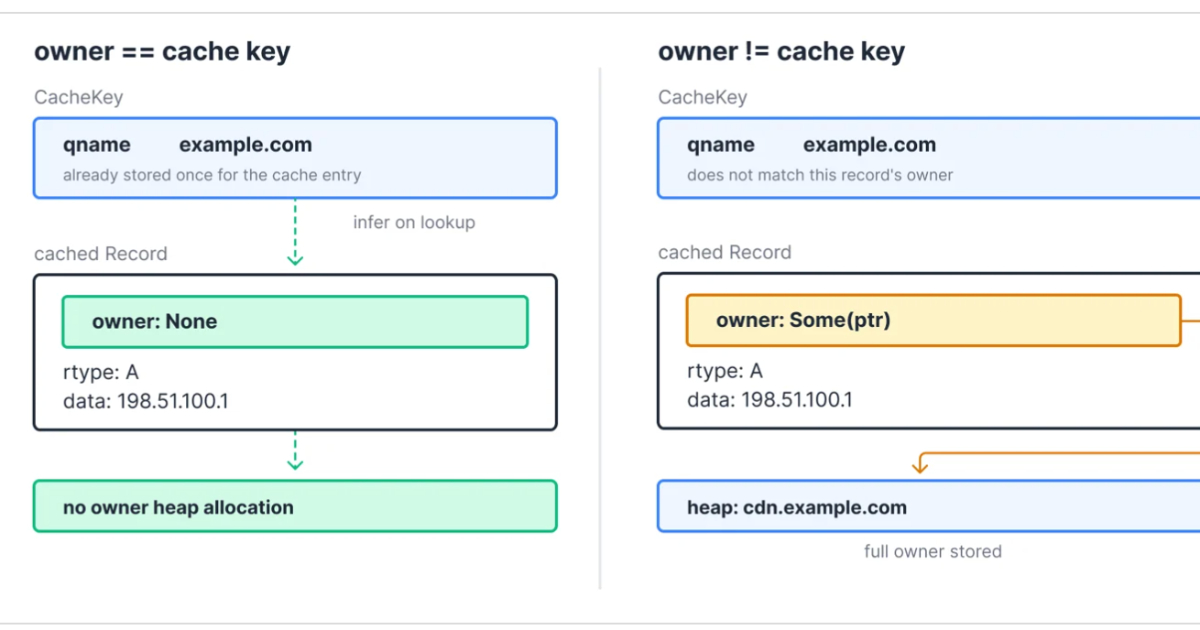
Cloudflare's Data Innovation Frees 100 TB, Boosts DNS Performance
Cloudflare's Big Pineapple DNS cache just got a serious upgrade. By redesigning the in-memory representation of its entries, the team cut the per-entry footprint by 56%. That freed roughly 100 TB of working-set memory across the fleet, which is a massive win for efficiency. The Rust-based changes didn't stop there. Cache insertion throughput climbed 43%, and lookup latency dropped 19%. This means faster, more responsive DNS without needing extra hardware. It's a smart, practical step forward.
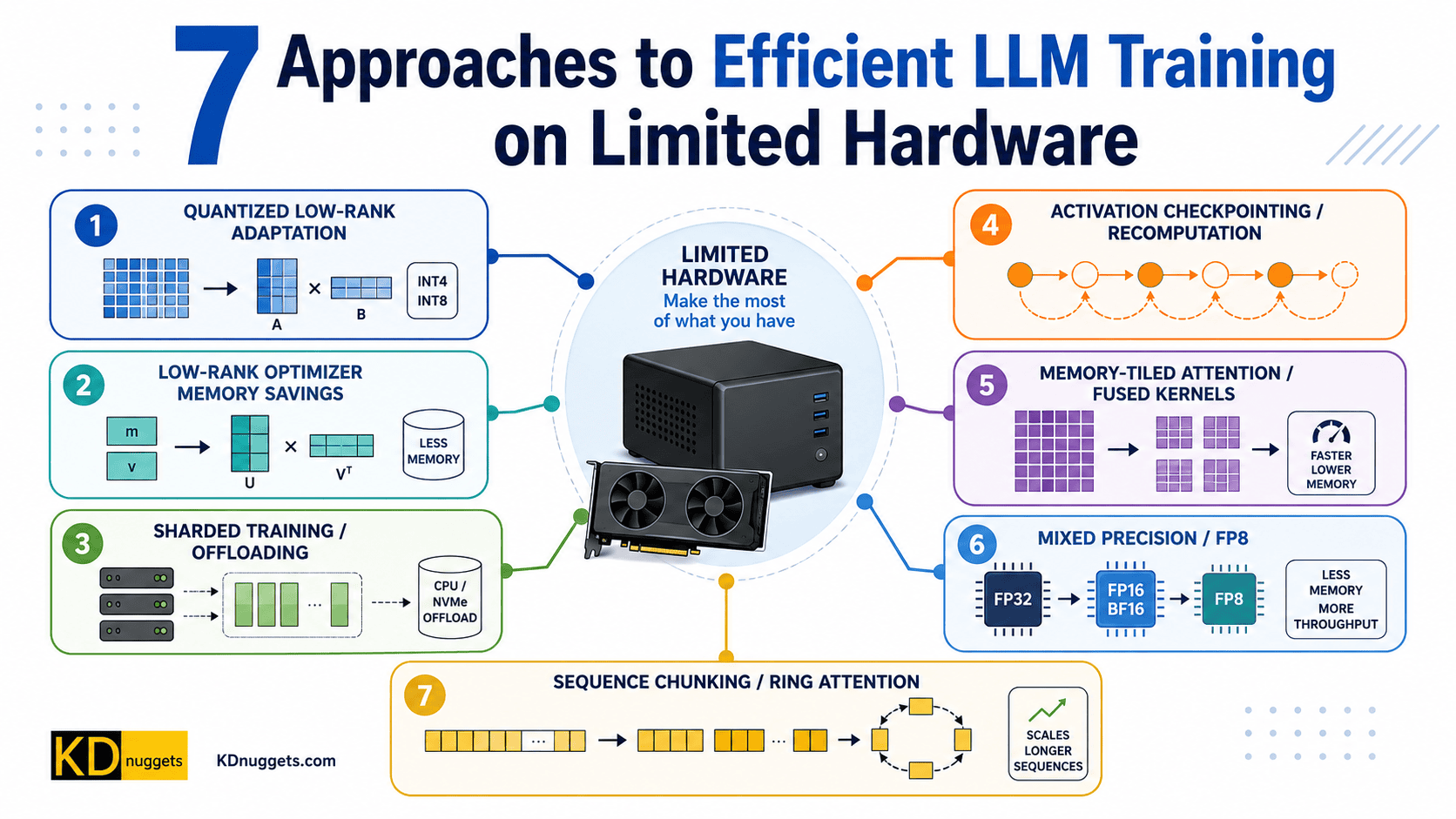
Seven Techniques to Train LLMs on Consumer Hardware
Training a large language model used to mean renting a server farm or settling for someone else's API. This guide challenges that assumption with seven practical engineering techniques for consumer GPUs, proving that memory limits are a constraint to design around, not a wall. It's a grounded, hands-on read for builders who want the control of training their own models.
OpenClaw 2.0 Arrives with Simpler Setup and Smarter Collaboration
OpenClaw 2.0 strips away the friction that kept too many users from customizing their own AI agent. By rebuilding the installation process and sharpening the browser interface, this update makes a powerful tool genuinely approachable. We also see real progress in how memory and skills work together, which should make automations feel less like chores and more like extensions of your workflow. For anyone tracking where AI is headed, this is a meaningful step toward practical, everyday use.
Simple attention fix outperforms costly linear alternatives in long-context tasks
The simplest fix for quadratic-cost attention is sliding-window attention with sinks, and a new arXiv preprint argues it outperforms linear-attention variants by 2 to 10 times on long-context reasoning tasks like Needle-in-a-Haystack and BABILong. The authors, including Alexia Jolicoeur-Martineau, claim post-training linear models have been benchmarked against the wrong baseline. Their recommendation is direct: switch to SWA. It requires no post-training, runs fast, and keeps memory low. That's a compelling challenge to a costly trend.

Android apps face memory limits as AI demand reshapes hardware
Google is drawing a line in the sand for Android memory use, and it's a direct response to the hardware squeeze AI data centers have created. Lower-cost phones are feeling the pinch first, which makes this a practical move, not a flashy one. We see this as a necessary constraint that could actually push developers toward smarter, leaner apps. It's a trade-off worth watching.

The new Mac Mini delivers M6 performance starting at $899
Apple's new Mac Mini arrives with the M6 chip and a $899 starting price, pairing 16GB of RAM with 256GB of storage. That's a solid foundation for everyday power, though the base storage might feel tight for heavier users. It's a practical step forward, not a flashy leap. For more on how AI tools handle real-world tasks, our piece on Jev versus LLMs offers a grounded look at decision-making.

Memory shortage forces Amazon to raise hardware prices 60%
Amazon is passing the memory shortage directly to consumers, raising hardware prices by 60 percent. It's a stark reminder that supply chain pressure doesn't stay in the factory; it lands on the shelf. We get the logic, but the scale stings. For anyone watching how adaptive systems handle real-world constraints, this feels like a familiar lesson in forced evolution. If you're curious how companies navigate such tight margins, our piece on adaptive recommendation systems offers a useful parallel.

Give your AI agents context with structure, not just more strings
Flattening context into a single string is a recipe for confusion. When instructions, memory, and tool outputs lose their boundaries, the model has to guess what matters. That is why I appreciate this practical approach to typed context. The author built a zero-dependency Python runtime that keeps those semantic edges intact and rejects invalid transformations before they reach the model. It is a focused solution to a real problem. For more on how structured thinking applies elsewhere, *Exploring Paragraph Structure* offers a useful parallel.
Smarter Prompts, Not Bigger Ones: Engineering Context That Works
Big context windows feel like the easy answer, but Baruch Sadogursky and Patrick Debois argue otherwise in their session, "The Right 300 Tokens Beat 100k Noisy Ones." They show why stuffed prompts drag coding agents down, then offer practical fixes like lazy-loaded skills and externalized memory banks. It is a grounded, useful take for engineering leaders wrestling with agentic workflows.
Rebuilding a Smarter Language Model from the CPU Up
After six months away, developer zemondza is rebuilding NORD, their spiking language model, with a sharper focus: CPU-first inference from the ground up. The new version, NORD 5.5 Flash, drops the artificial spike-time dimension in favor of using the actual token sequence as the time axis. That's a cleaner design choice. The goal isn't to outrun Transformers, but to see if a simplified, truly causal architecture holds its own. We're curious to see the benchmarks when they arrive.

A Decade Inside Airbnb: Lessons from Building Its Data Foundation
Ten years after joining Airbnb in early 2016, one insider steps away with a notebook full of reflections. The timing matters: the hyper-growth years are still vivid, and so are the lessons on building a semantic layer that made data work at scale. What stands out is how deliberately Airbnb treated its unique culture, not as a perk, but as infrastructure. For anyone wrestling with data's role in their own organization, this is a candid look at what actually happens behind the scenes.

Inflection AI shifts focus from raw power to building relational AI experiences
Two years after Microsoft's acqui-hire stripped Inflection AI of its founders and most of its staff, the Palo Alto company is staging an unusual second act. This week, it launched Inflection AI Labs and Pi Journeys, an experimental product built on a contrarian bet: the next AI battleground isn't raw intelligence but relationships. CEO Sean White argues today's assistants are transactional, and that's the flaw. If he's right, the giants' coding-obsessed roadmaps may have left the door open for something more human.

Explore a new recurrent architecture built for deeper reasoning and memory tasks.
After months of independent work, DABSN (Dynamic Adaptive Bias State Network) is now public, with a preprint and code that includes PyTorch, C++, and Triton implementations. The architecture's behavior on reasoning and long-sequence benchmarks is compelling, but the 24M-parameter language model trained on 1B tokens is where the results get genuinely interesting. Now, the ask is for collaborators: independent reproduction, stronger evaluations, or GPU access to push scaling further. It's a practical, open invitation to build on something promising, not a promise of perfection.
Shape your AI agent's memory naturally through conversation
Memory isn't a setting you toggle. It's a conversation. When you build an AI's memory simply by talking, you're not configuring a system; you're shaping a relationship. That's the real shift here, and it's one we think deserves your attention. We've been exploring how these interactions play out in practice, and our piece on questioning the tech behind interactive avatars offers a thoughtful counterpoint. For now, start a dialogue. See what your AI retains. The catch is that you have to begin.