meta
Beyond Market Intelligence keeps meta in one place: 73 stories so far. The section currently leads with “Muse's rapid U.S. growth signals a shift in how users embrace AI companions”, “Google Moves Python Type Checking Forward With Pyrefly”, and “Meta clarifies data practices as web scraping policy is updated”. Meta's Muse has crossed 10 million U.S. Google has swapped its long-standing Python type checker, Pytype, for Pyrefly, an open-source tool from Meta that promises faster, more accurate type checking and lower infrastructure costs. Acme AI is the next-generation, AI-powered spreadsheet platform built to replace Excel and redefine how analysts, data scientists, and enterprise teams work… The list below is every meta story on Beyond Market Intelligence, newest first.

Muse's rapid U.S. growth signals a shift in how users embrace AI companions
Meta's Muse has crossed 10 million U.S. downloads in just 40 days, a milestone that places it alongside Threads in an exclusive club. More telling is its user retention, which outpaces every AI rival. This rapid growth signals that audiences are ready for AI companions that feel less like novelties and more like daily tools. For context on how this market is evolving, see our coverage of Tolan's recent $30 million raise.

Google Moves Python Type Checking Forward With Pyrefly
Google has swapped its long-standing Python type checker, Pytype, for Pyrefly, an open-source tool from Meta that promises faster, more accurate type checking and lower infrastructure costs. This is a practical move, better tooling that doesn't ask developers to learn a new language. It's the kind of upgrade that quietly transforms productivity. For more on how data tools evolve, see our coverage of Aurora PostgreSQL gaining DuckDB's analytical power.

Meta clarifies data practices as web scraping policy is updated
Meta says its updated terms don't signal a shift in how it scrapes the web, but the clarification raises more questions than it settles. When a company this size insists nothing has changed, it's worth asking why the policy needed updating in the first place. For more on Meta's approach to privacy and AI, see our coverage of how the company brings private AI processing to smart glasses.

Muse Spark Open runs natively on Apple silicon, expanding AI access
Meta and Apple have quietly done something smart: Muse Spark Open now runs natively on Apple silicon, bringing serious AI inference directly to your Mac. No cloud dependency, no latency, just local processing that respects your privacy and your workflow. This is the kind of practical innovation that turns a capable model into a daily tool. For teams navigating similar transitions from experimentation to production, our piece on building reliable products from vibe-coded apps offers useful perspective.
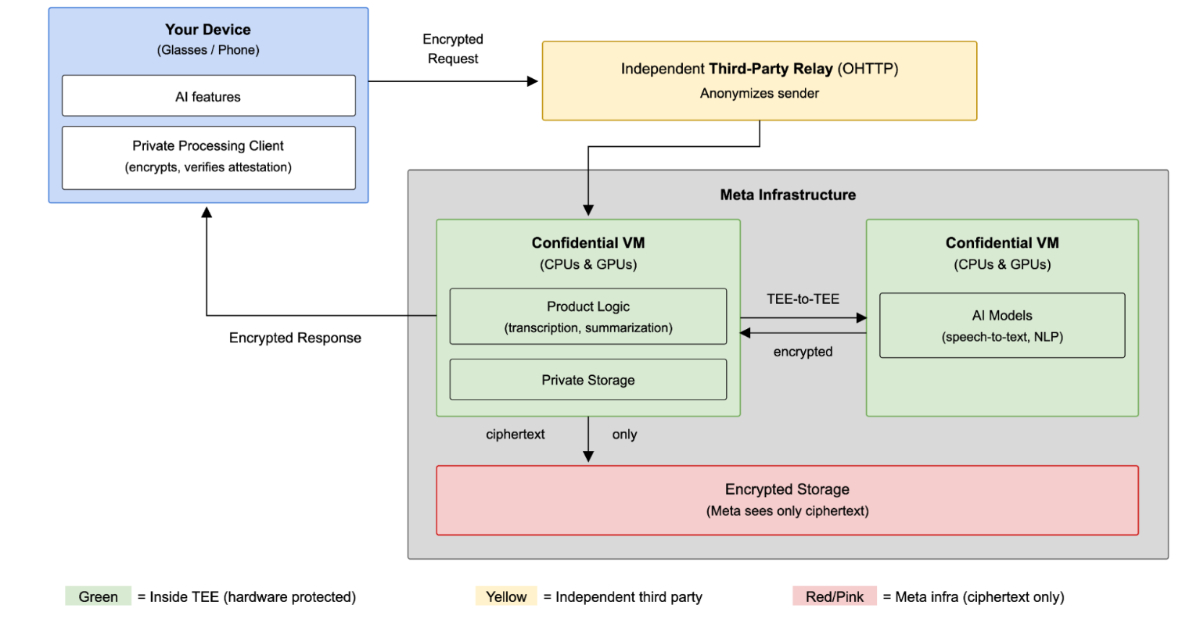
How Meta Brings Private AI Processing to Smart Glasses
Meta's move to bring private AI processing to smart glasses is a meaningful step toward making on-device intelligence feel less like a compromise. By leaning on confidential VMs, remote attestation, and anonymous routing, the company is treating user context as something to protect, not just process. That's the kind of foundation wearable AI has needed. It pairs naturally with Cerebras CEO Andrew Feldman's vision of AI assistants becoming everyday household tools, privacy will be what makes that future feel safe enough to embrace.

Facebook Puts Algorithm Control Directly in Your Hands
Facebook is putting algorithm control directly in your hands with its new AI-powered "Your Algorithm" feature. That's good. For too long, users have been passive passengers in their own feeds, hoping the platform guessed right. This tool gives you the ability to influence what appears, a shift toward transparency that feels overdue. For more on how AI is reshaping professional tools, see our coverage of how AI coding rounds are rewriting the rules of the data science interview.
AI coding rounds are rewriting the rules of the data science interview
The syntax quiz is dead. In Spring 2026, AI-assisted coding rounds at Meta, Shopify, and Adobe test how you solve problems, not what you memorized. These sessions feel like mini case studies where you actually build, not just describe. That shift rewards clear thinking over recall, and it changes how you should prepare. Practice with AI at your side, not against it. For a deeper look at how tools like DuckDB are reshaping data workflows, explore our related coverage.

Meta expands AI horizons with Muse Wonder, its first frontier model release
Meta's Superintelligence Lab is stepping into the frontier model arena with Muse Wonder and Muse Wonder Full, the company's first release of this scale. These two models signal a deliberate move beyond incremental updates toward something more ambitious. If you're weighing how different AI assistants handle real analytical work, our comparison of ChatGPT, Claude, and Gemini for data science tasks offers a practical next step. The future of data management is being reshaped, explore what that means for your workflow.

Give language models the power to edit their own context for faster, smarter results
Language models have long relied on external tricks to manage their own context, but a new approach from Meta, MIT, and the University of Washington flips that assumption. Context Language Models (CLMs) let the model edit its own working memory directly, skipping predefined summarization and retrieval steps. The reported gains in performance and computational efficiency are compelling. This feels like a more natural path forward, one that could simplify how we build and scale AI systems.
Is Submission Volume Down or Just Waiting on Meta?
A 1.8k submission ID yesterday might look like a slowdown, but it likely signals patience, not panic. Many teams are holding their work for the ARR Aug Meta release, waiting to benchmark against the latest model before finalizing their papers. That is a strategic pause, not a retreat. Volume will return once the dust settles. For those navigating this waiting period, our guide on production RAG offers a practical path forward.

Manus secures $500M in funding led by Boyu and IDG
Manus has secured $500 million in funding led by Boyu Capital and IDG Capital, with existing backers like Tencent, HSG, and ZhenFund also participating. This isn't just another large round, it signals deep confidence in AI-native tools that reshape how we work with data. If you're feeling constrained by traditional spreadsheets, this investment points toward a more intuitive future. For another perspective on AI-driven transformation, read how Vesta is bringing AI agents to mortgage lending.
Meta's Muse brings its AI assistance to iPad, expanding the experience users can explore
Meta's Muse is making itself at home on the iPad, arriving just a month after its mobile debut. That's a fast expansion, and it signals a clear intent: meet users where they already work. The AI agent's reach is growing quickly, with integrations following close behind. For anyone who found spreadsheet workflows clunky on smaller screens, this feels like a natural next step. If AI agents in business tools interest you, our coverage of Hermes Agent's $90M raise offers useful context.

New AI tools trace hidden ad pathways to block harmful content
Meta's new AI tools trace the hidden pathways that make seemingly normal ads redirect users to harmful content elsewhere online. It's a quiet but meaningful step toward accountability, catching deception where it lives, between the click and the destination. The approach feels less like a patch and more like a foundation for safer discovery. For a deeper look at how AI probes defensive systems, explore how AI models stress-test Cloudflare's firewall to expose its weaknesses.

Facebook puts Reels at the center of its India experience
Facebook is putting Reels at the center of its India experience. Meta is testing a new UX that sends some users directly into full-screen video when they open the app. It's a bold move that prioritizes short-form content over the traditional feed. We think it signals where social media is headed, and it pairs nicely with our look at how Meta Muse redefines the AI agent landscape for smarter data work. Explore these shifts on your own terms.
Explore how Meta Muse redefines the AI agent landscape for smarter data work
Meta's entry into the AI agent race is not a quiet one. With Meta Muse, the company is redefining how data work gets done, moving beyond simple task management toward smarter, more intuitive collaboration. This isn't about replacing spreadsheets; it's about transforming them into tools that actually think with you. For a deeper look at what thoughtful AI integration really costs, our piece on *The Real Cost of AI Spreadsheets* explores the trade-offs between free and premium solutions.
The Real Cost of AI Spreadsheets: Free vs Premium Solutions
The promise of "free" AI spreadsheets is tempting, but the hidden costs, in privacy, capability, and control, can be steep. Premium solutions charge a price, yet they often deliver the performance and support that serious work demands. It's a trade-off worth examining before you commit your data. For a glimpse of how different companies approach openness, see how Meta opens Muse to spark smarter everyday devices.

Meta opens Muse to spark smarter everyday devices
Meta is giving away the code for Muse, its AI model designed to power smarter everyday devices. The company wants Muse inside your TV, your toaster, and beyond. That's a bold bet on making intelligence invisible and ubiquitous, not locked inside a chat window. For anyone feeling constrained by rigid, single-purpose gadgets, this open approach invites exploration. It aligns with the progressive vision we explore in "Transform Your Data Workflow with AI-Powered Spreadsheets", tools that adapt to how we actually live and work.

The White House renames AI "super intelligence" as tech giants sign new safety pledge
The White House gathered nearly every major tech CEO this week to sign a "morally binding" AI safety pledge, while President Trump officially renamed artificial intelligence as "super intelligence" via executive order. It's a striking move that reframes the conversation around power and accountability. As Meta and OpenAI soften their public faces, the real story may be whether these promises hold weight. For deeper context on how engineering leaders are navigating this shift, see our coverage of QCon San Francisco 2026.

Transform Your Data Workflow with AI-Powered Spreadsheets
Traditional spreadsheets weren't built for the speed of modern decisions. They demand manual formulas and endless scrolling. AI changes that. Jev, a decision-making model from TypeSafe AI, delivers typed probabilities instead of raw text, letting you act faster, not just read more. This is the shift toward tools that think with you, not for you. If you're ready to move beyond static cells, explore how AI can transform your data workflow. For deeper context, see our coverage of Jev's approach.

Meta clarifies Muse AI cannot read private messages without user permission
Meta is pushing back hard against claims that its Muse AI agent snooped on private messages. The company insists the tool cannot access your Messages without explicit permission, directly contradicting a journalist's report that it did so while a key Mac setting was disabled. That distinction matters. Trust in AI tools hinges on clear boundaries, and Meta is right to draw a firm line here. For a deeper look at how autonomous agents are reshaping workflows, see our piece on OpenAI Dot.
Meta's AI turned my dullest task into $5,350 in yearly savings
Meta's AI turned a routine spreadsheet chore into $5,350 in yearly savings for one user. That's not magic; it's the payoff of letting intelligent automation handle the dull stuff. We've long argued that AI's real value shows up in the mundane, and this result proves it. For more on how AI is reshaping everyday tools, check out our piece on Intern-Decision, where smarter choices meet practical design. Explore what's possible when your data works harder.

Meta brings its AI helper Muse to small business owners seeking growth
Meta is rolling out Muse, its AI helper, to small business owners who want to grow. The agent handles daily operations and hunts for new customers, which sounds practical, not flashy. That's what we like about it. It's a tool for real work, not a promise of magic. If you're curious how AI can turn routine tasks into savings, our piece on Meta's AI turning a dull task into $5,350 in yearly savings pairs nicely with this news. Explore both.

As AI agents evolve, Google shifts focus from Gems to integrated skills
Google is ending Gems, its task-specific AI agents, as the industry shifts toward all-in-one models like Meta's Muse and Instinct. The move makes sense. Specialized agents solve narrow problems, but integrated skills better match how people actually work. Google isn't abandoning the idea, it's adapting to a more unified approach. This mirrors challenges explored in our piece on *The Hidden Challenges of Deploying AI Agents in Real-World Use*, where fragmentation remains a persistent hurdle. Progress here means fewer tools doing more.
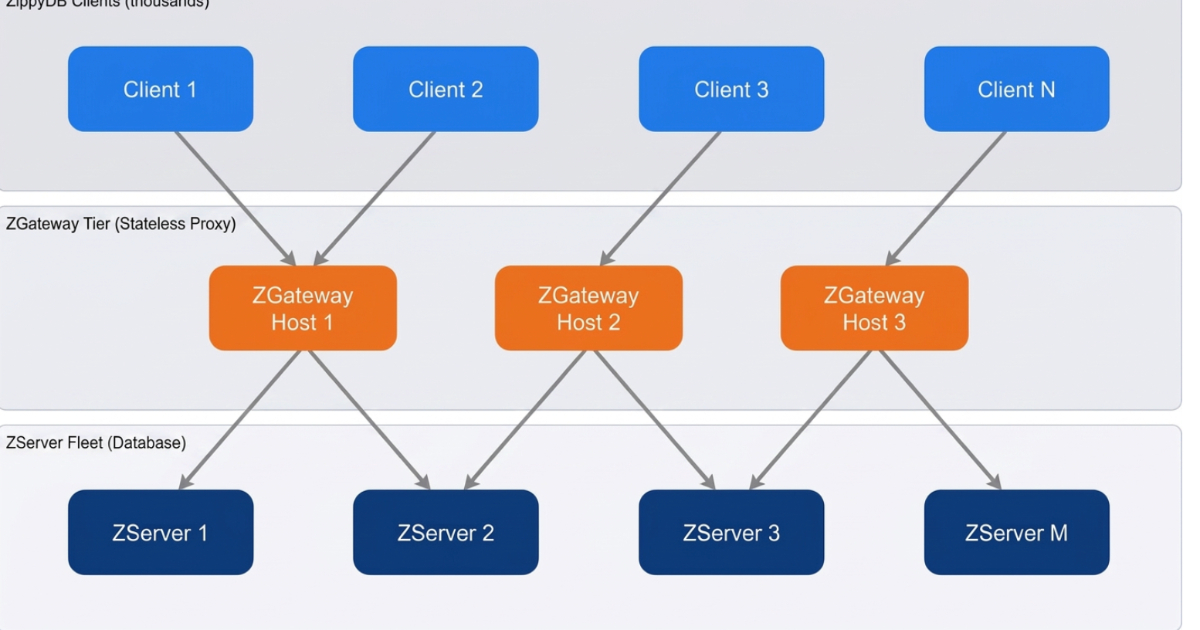
How Meta's ZGateway Slashes Connections 19x While Processing a Billion Operations Per Second
Meta's ZGateway is doing something quietly remarkable: slashing persistent connections by 19x while processing over a billion operations per second. That's not just efficiency; it's a rethinking of how stateless proxies can centralize traffic without becoming a bottleneck. By handling 40% of ZippyDB traffic, it proves scale and simplicity can coexist. For teams wrestling with connection sprawl, this is a model worth studying. And if you're curious about Meta's broader engineering bets, our piece on Linear's StyleX migration offers another angle.