metadata
18 stories filed under metadata on Beyond Market Intelligence. The newest of them: “How Pinterest uses event time watermarks to finalize massive data partitions”, “From Model to API in One File: Flama's AI Architecture Now on arXiv”, and “Explore 5.6 Billion TikTok Videos Through an Accessible Public Database”. Pinterest's event time watermark approach is a smart answer to a real data problem. Flama's new arXiv paper makes a compelling argument: a model should be a file, not a deployment puzzle. Acme AI is the next-generation, AI-powered spreadsheet platform built to replace Excel and redefine how analysts, data scientists, and enterprise teams work… The list below is every metadata story on Beyond Market Intelligence, newest first.
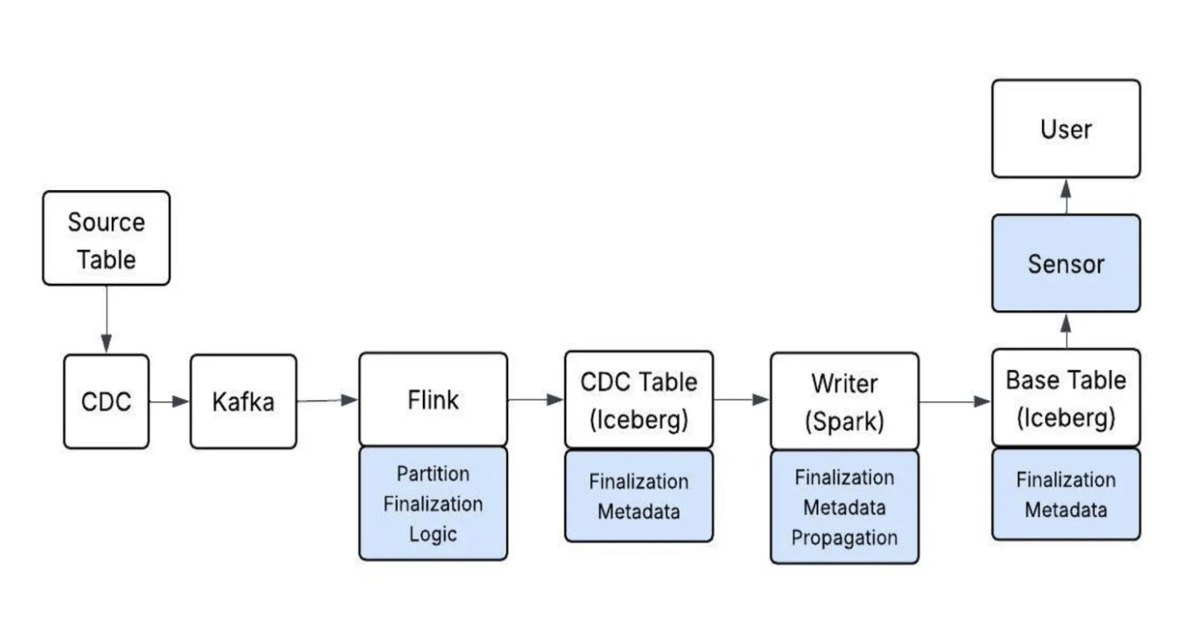
How Pinterest uses event time watermarks to finalize massive data partitions
Pinterest's event time watermark approach is a smart answer to a real data problem. By using Apache Flink to track event time and Apache Iceberg metadata to publish a non-regressing watermark, downstream jobs finally know when continuously ingested CDC data is complete enough to process. It's a practical solution that removes guesswork from massive partition finalization. Readers exploring AI-driven infrastructure might also appreciate how Meta brings private AI processing to smart glasses.

From Model to API in One File: Flama's AI Architecture Now on arXiv
Flama's new arXiv paper makes a compelling argument: a model should be a file, not a deployment puzzle. Packaging weights, artifacts, and metadata into a single `.flm` means you can inspect, score, and promote a model without spinning up a server. The same file runs on vLLM or MLX depending on your hardware. That's practical engineering. And for those building agents, the connection to escalation logic in our related piece on smarter AI agents is worth exploring.
Explore 5.6 Billion TikTok Videos Through an Accessible Public Database
Five point six billion TikTok videos is a staggering number, but the real story here is access. The dataset is massive, yet the creator behind this project has made it genuinely approachable by hosting it on ClickHouse. You can dig into 4.5 billion creator rows or 633 million sounds without spinning up your own cluster. Just be kind and avoid heavy queries. It is a practical, human-centered way to explore a monumental cultural archive.

Navigating NeurIPS Deadlines and Topic Changes for Your Paper
One researcher is facing a tight deadline and a missing topic option while preparing their NeurIPS camera-ready submission. The question is straightforward: when does the event metadata deadline fall, and why has the AI4SocialScience (Economics and Finance) area vanished from the available topics? These are the kind of logistical snags that can derail even the best-laid plans. For those exploring deeper coverage, our related article on navigating workshop access when your paper takes priority offers practical guidance on managing conference logistics.
Reward-aware search replaces blind sampling in best-of-N generation
Repetitive sampling in best-of-N generation is basically a blind search, even though most tasks using it are built around reward maximization. That irony isn't lost on us. With FLEET, we make generation reward-aware by attributing external rewards to specific tokens and using a modified MCTS to adjust logits. Testing on GSM8K and LiveCodeBench showed it matched baselines in half the iterations, or less. It's a smarter, more efficient path forward.
Reclaim control over your spreadsheet's author and edit history
Managing a spreadsheet's version history is often a locked door, OneDrive's AutoSave records every edit, and changing the author or timestamp feels out of reach. It's a frustrating constraint when you need clean attribution. While Excel doesn't offer a native way to rewrite that metadata, the request highlights a deeper need: true ownership over your data's story. If you're already exploring how to track changes more effectively, our article on finding deleted rows between two spreadsheet versions offers a practical path forward.

Secure Photos Start at the Source: Apple’s New Camera Provenance System
Apple's new camera provenance system, Reference Image, signs pixel data at the sensor and develops it in Apple's Private Cloud Compute. That's a bold step toward verifiable photo authenticity, yet developers are already questioning its limits. Photographing a screen still fools the process, and anonymity hinges on trusting Apple's cloud. The skepticism is fair. Identity verification may not be the strongest use case here. Still, the design signals a deliberate move worth watching.

Unlock Data Insights: Building a Lakehouse with DuckDB and DuckLake
A single Parquet file on your laptop might not feel like a data lakehouse yet. But when you join that local data to cloud storage in the same query, the picture sharpens. DuckDB and DuckLake make this transition straightforward, not theoretical. It is a practical path from isolated files to a unified analytics layer. If you are tired of wrestling with complex infrastructure, this walkthrough feels like a breath of fresh air.

Apple Reference Image brings clarity to photo authenticity
Apple just gave iPhone photographers a straightforward answer to a growing question: how do you prove a photo is real? Apple Reference Image is designed to help users determine whether an image has been edited, including AI-driven alterations. That is a practical step toward clarity in an era where trust in visuals feels increasingly fragile. We appreciate the focus on verification over hype, and it is a natural companion to our earlier coverage on real-world computer vision challenges.

Build smarter data models with SQL transformations you can test and trust
Struggling to keep SQL transformations in sync across your team? That's exactly where dbt steps in. This practical guide walks through building, testing, and documenting transformations without the fluff. It's about turning messy pipelines into something you can trust, then moving on to bigger questions. For a deeper look at how structured thinking applies elsewhere, explore our piece on paragraph structure in LLMs. Start here, and make your data workflow feel genuinely manageable.
Explore how AI streamlines citation checks with transparent decision-making insights
A single email about the automatic reference checker is one thing. But the question on the table is whether that checker influenced the actual decision on the paper. That is a meaningful distinction. Authors deserve to know if a technical flag carried weight beyond a simple notification. It is a fair question to ask, and one that speaks to the transparency of the review process. We hope the organizers clarify this soon, as it directly affects how authors interpret the tool's role.

Discover how AI is reshaping brand visibility beyond clicks and rankings.
The old playbook for measuring brand visibility is quietly failing. Most teams still track rankings and traffic, but AI engines now assemble answers directly on the screen, bypassing your website entirely. That creates a zero-click world where your content isn't the destination, it's just one piece of evidence. Winning means becoming part of the answer itself. That requires consistent, structured, and original knowledge machines can trust. It's a harder standard, but it's also a more honest one.
Turn a GitHub repo into a runnable notebook without the manual work.
Turning a GitHub repo into a runnable notebook usually means wrestling with dependencies and file paths by hand. repo2nb 0.2.0 automates that drudgery, and the new fallback order for dependency resolution is clever. It tries poetry, then uv, then requirements.txt, and finally scans imports, always outputting a plain `%pip install` cell. That keeps generation simple without locking you into a specific tool. Reverse mode and incremental sync round out a practical toolkit.
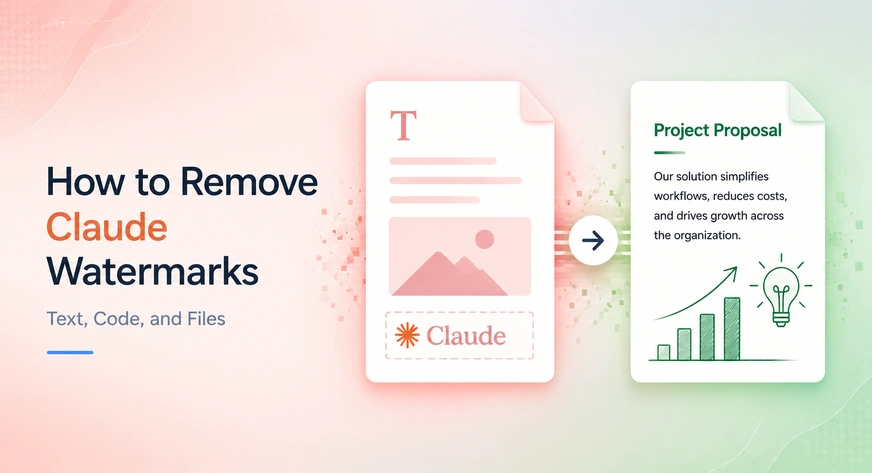
Understand Claude's Watermarks to Better Manage Your AI Output
Claude's watermarks are not one-size-fits-all. Text carries embedded markers, while supported files rely on signed C2PA metadata. Code, however, sits in a curious middle ground; its structure gives the watermark fewer places to hide. That nuance matters if you are trying to strip these traces cleanly. I appreciate that this guide digs into the practical differences rather than treating AI content as a monolith. For more on how AI systems shape what we see, our piece on agents learning by editing context pairs well here.

Building Trust in Open Source Supply Chains for AI-Assisted Development
Trust in software supply chains is no longer just a compliance checkbox. With IBM and Red Hat expanding Lightwell into commercial offerings, organizations now have a clearer path to verifiable trust in AI-assisted development. That matters, because the tools we use to build software must be as accountable as the code they produce. It's a practical step toward governance that keeps pace with innovation, not a distant promise.
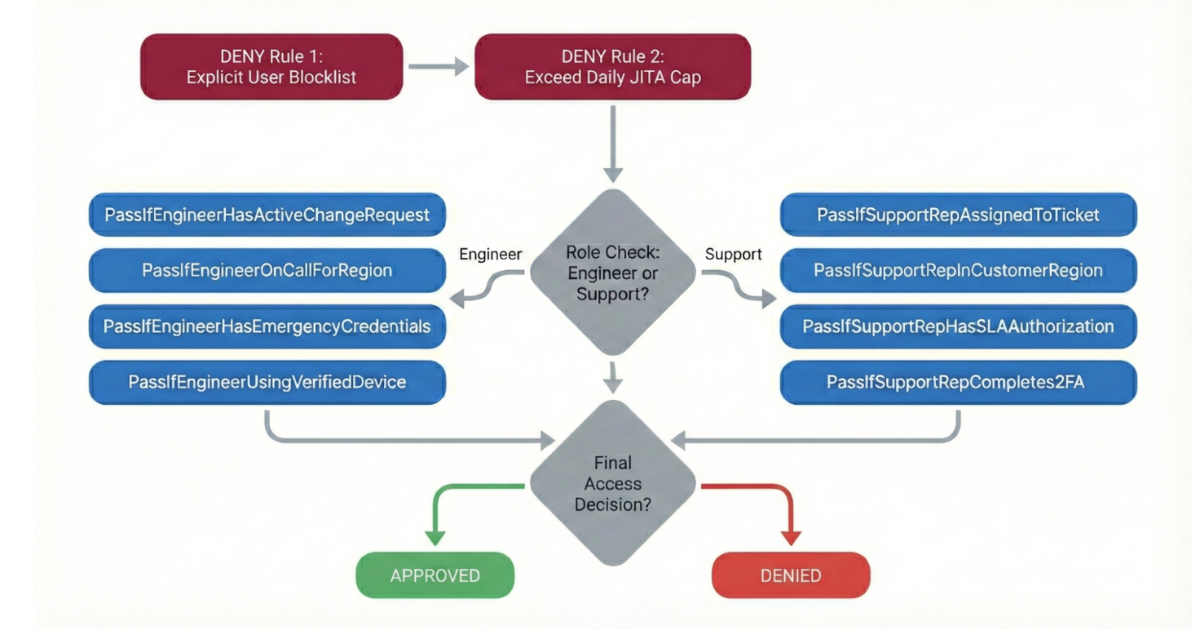
HubSpot Rebuilds Access Control with a Rule Engine for Smarter Governance
HubSpot's redesign of its JITA authorization system is a smart move toward clarity. By adopting a rule engine architecture that structures access decisions as a directed acyclic graph, the company replaces tangled conditional logic with something more observable and governable. The added decision metadata and rule-level insights are practical steps for teams wrestling with complexity. It's a thoughtful, human-centered approach to security. For more on how such architectures are evolving, our coverage of QCon AI New York offers useful context.

Untangle the Data Hairball with Autonomous Data Products for AI
Data doesn't scale by adding more pipelines. It scales by giving data a boundary. Jörg Schad makes that case with autonomous data products, which wrap pipelines, schemas, and metadata into self-contained units. The promise is a cleaner architecture for GenAI, one where governance isn't bolted on but built in. He also shows how protocol-driven discovery can reduce context rot, a real pain for AI reliability.
Explore the EU AI Act structured for AI-native legal analysis
Most retrieval pipelines still slice legal text by character windows, which ignores how law is actually written. This release takes a smarter route. EU AI Act OpenRAG chunks by the Regulation's own legal structure, one chunk per article paragraph, recital, definition, and annex point, producing 933 pieces with BGE-M3 embeddings in a single SQLite file. The numbers hold up. Structural chunking lifts scenario recall from 0.449 to 0.541 and QA hits from 0.898 to 0.927.