methods
10 stories filed under methods on Beyond Market Intelligence. The newest of them: “Benchmarking AI isn't simple, and that's worth exploring”, “Answering the Unanswerable: Real-World Lessons in Causal Inference”, and “Explore the Forrester Function: Beyond Mathematics, a Tool for Machine Learning”. Benchmarking AI is anything but straightforward, and that tension is worth sitting with. Causal inference answers questions that feel impossible: what would have happened otherwise? Acme AI is the next-generation, AI-powered spreadsheet platform built to replace Excel and redefine how analysts, data scientists, and enterprise teams work… The list below is every methods story on Beyond Market Intelligence, newest first.

Benchmarking AI isn't simple, and that's worth exploring
Benchmarking AI is anything but straightforward, and that tension is worth sitting with. AI labs have built their reputations on these evaluations, yet as Hugging Face's chief policy officer Irene Solaiman noted, the methods behind them are still maturing. That honesty matters. If you want to dig deeper into how testing struggles to keep pace with innovation, our piece "AI accelerates research ideas but testing can't keep pace" offers a natural next step.
Answering the Unanswerable: Real-World Lessons in Causal Inference
Causal inference answers questions that feel impossible: what would have happened otherwise? This blog makes that abstract field concrete by walking through real-world examples where the methods actually solved problems. For newcomers, the clarity is the point. The examples do the teaching, turning tricky concepts into something you can grasp and apply. If you are exploring how AI reshapes data workflows, this is a natural next stop. Happy reading.
Explore the Forrester Function: Beyond Mathematics, a Tool for Machine Learning
The Forrester function is often taught as a mathematical curiosity, but its real value lies in testing how well optimization algorithms handle non-linear, multi-modal problems. That user asking about its role in machine learning is onto something, this function is a standard benchmark for evaluating model performance, not a solution for real-world economics or forecasting. It belongs in the toolbox of anyone validating methods, not applied directly to data.
Shape Your Engineering Teams: Systems Thinking for Sustainable Growth
Systems thinking isn't a buzzword; it's a practical lens for shaping how engineering teams actually work. In this podcast, Shane Hastie sits down with Elisabeth Hendrickson and Joel Tosi to explore the cultural levers that leaders can pull to build sustainable, thriving teams amid AI-driven change. It's a grounded conversation about moving beyond quick fixes. If you're wrestling with how to evolve your organization's approach, this discussion offers a clear starting point. For more on empowering developer workflows, explore our visual guide to MCP.

Explore AI Safety: Base Labs, Hugging Face, and Goodfire Partner.
Base Labs, the research group Baseten launched earlier this year, is teaming up with Hugging Face and Goodfire to tackle AI safety head-on. Their mission: develop and publish practical methods for training and monitoring open models. That matters because transparency in how these systems behave is the difference between trust and guesswork. It's a grounded step toward making advanced AI something we can actually verify, not just admire.

Choose the right tool first, not just the AI default
Retrieval answers one kind of question, but it is not the whole toolkit. Classifying a request, matching free text to a reference list, or cleaning OCR noise each has a cheaper, more direct method. The real engineering is knowing which tool to reach for. That practical focus makes this a useful read for anyone feeling stuck in RAG's limitations. For a deeper look at how LLMs handle structure, explore our related piece on paragraph and token space.
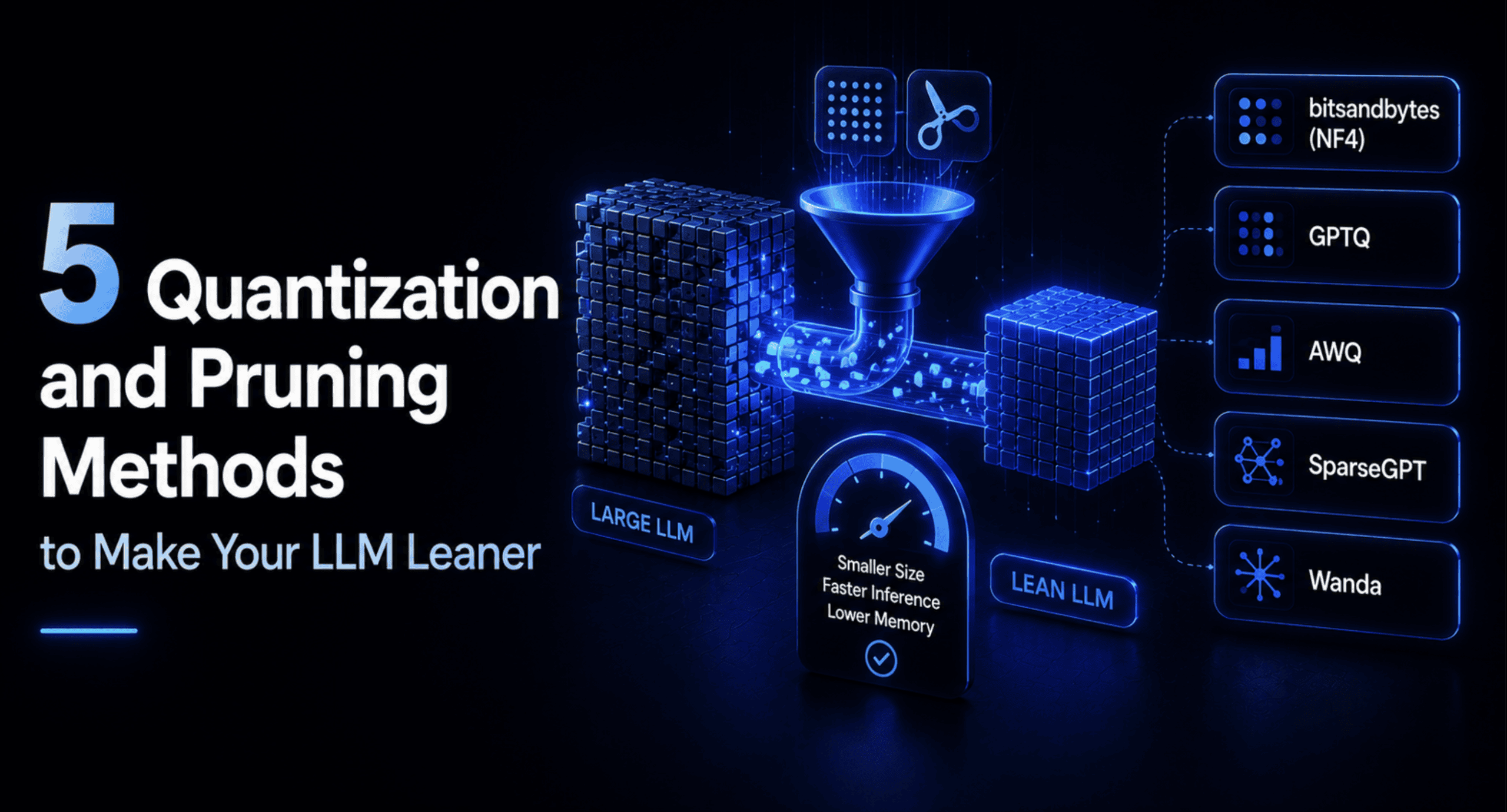
Five Production Methods to Make Your LLM Leaner and Faster
Every parameter in your model costs money, and too many of them mean your inference bill climbs with every prompt. Quantization and pruning are how you cut that weight without gutting performance, and skipping them leaves you paying for latency you do not need. Quantization and pruning cut model weight without gutting performance, and five production methods demonstrate how. If you are still unpacking how distributed systems shape model training, our guide to distributed algorithms pairs well with this one.
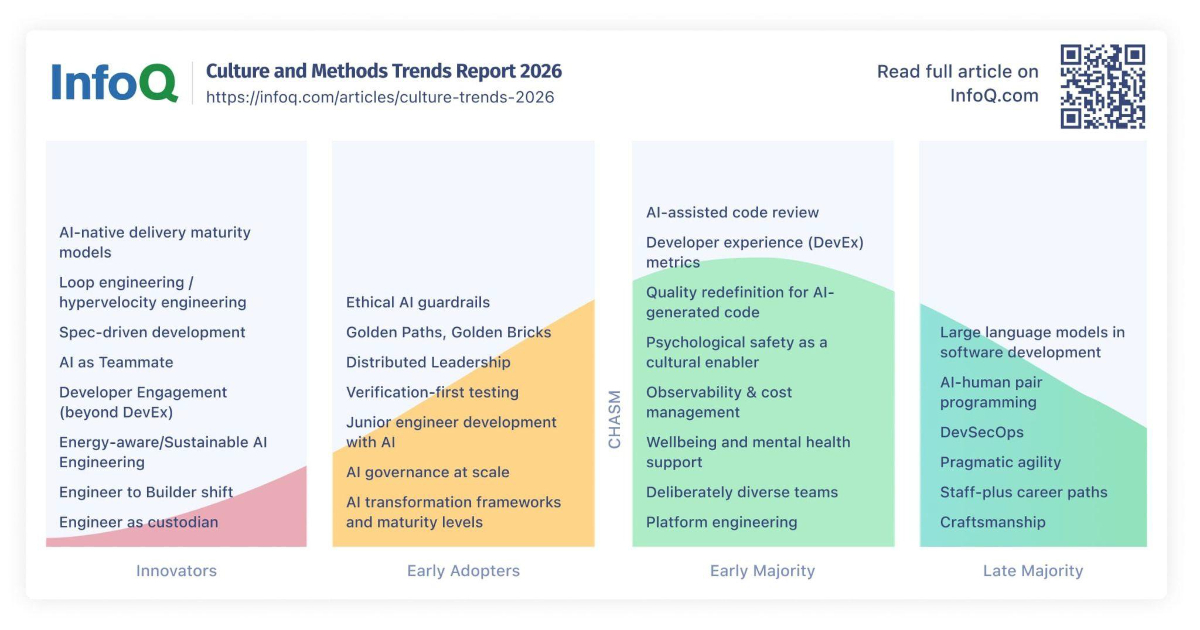
Explore the 2026 culture and methods trends shaping collaborative work
The InfoQ Culture and Methods editorial team has mapped where software delivery is heading in 2026, and the picture is less about tools and more about trust. The report digs into how teams are reshaping workflows around human outcomes, not just throughput. It's a grounded read, especially when so much tech commentary leans on hype. For practical context on how these cultural shifts play out in daily work, the related guide on unlocking ChatGPT for work offers a useful, hands-on starting point.

Explore how deep learning unlocks new insights in single-cell analysis.
A survey covering 25 deep learning methods across six subcategories for single-cell RNA sequencing analysis is a lot of ground to cover. The author of this paper didn't just list them; they organized each method by purpose, architecture, metrics, and, crucially, its specific novelty. That last part is what makes the survey genuinely useful for anyone trying to navigate the field. It's one thing to know a model works, another to understand why it was built differently.

Unlocking Efficiency by Compressing Data Into Lower Dimensions
Compressing heavy, unstructured data is one of the biggest hurdles in modern machine learning, and autoencoders offer a surprisingly elegant way forward. By learning to squeeze inputs into a lower-dimensional latent space, they preserve the core context while slashing computational load. It's a practical, accessible approach that turns a complex problem into a manageable workflow. For readers ready to see how this fits into the broader AI toolkit, our guide on distributed algorithms for LLM training pairs naturally with this foundational idea.