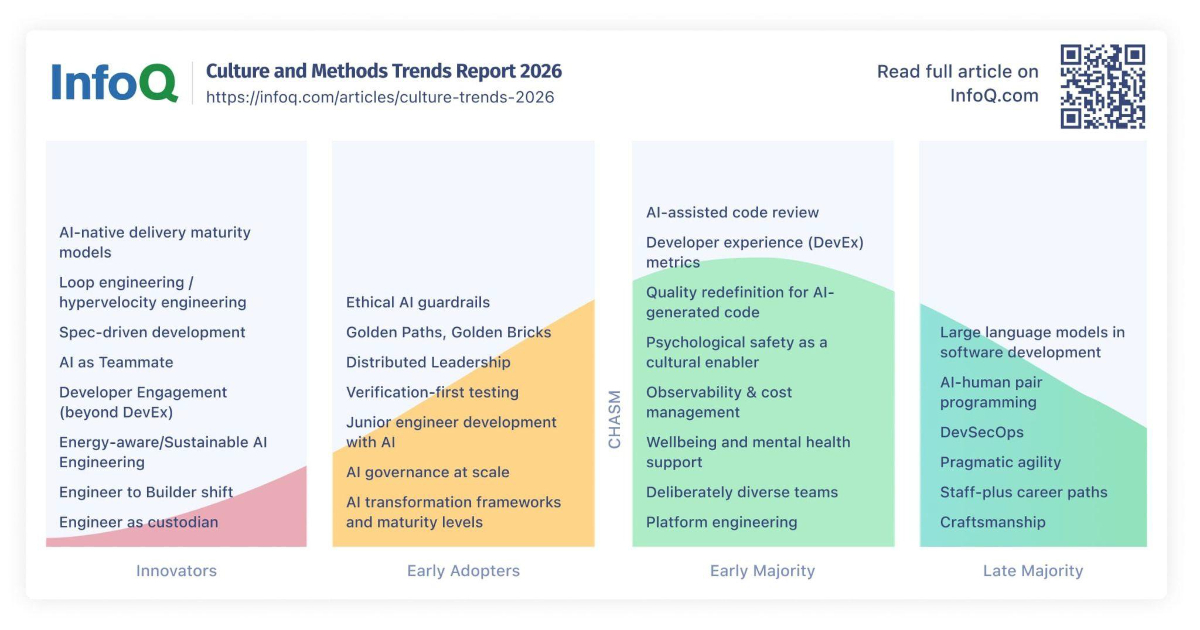
The InfoQ Culture and Methods Trends Report for 2026 lands at a moment when many teams are quietly drowning in their own tooling. The editorial team, including Shane Hastie, Ben Linders, and Vanessa Formicola, has mapped the ongoing and emergent forces shaping how we work. What stands out is not a single breakthrough, but a slow, deliberate move toward simplifying the human side of delivery. If you have spent the last year wrestling with workflow sprawl or trying to make sense of platform engineering promises, this report is worth your attention. It also pairs naturally with practical guides we have published recently, such as this Unlock ChatGPT for Work: A Practical Guide to Getting Started, which shows how small, focused AI adoption beats broad, unfocused experimentation.
Our honest take is that the report affirms what many practitioners have suspected: the bottleneck is rarely technology, and almost always culture. Yet the trends point to something more specific than a generic call for "better collaboration." We see a shift toward treating developer experience as a first-class product, not a perks line item. That means measuring friction, shortening feedback loops, and accepting that AI is not a magic wand. The related piece on Monitor Cypress Tests with Grafana: Persistent Observability for Your Data reinforces this: even the best test automation is only useful when you can see what is happening in production. The same logic applies to culture. You cannot improve what you cannot observe.
For readers, the practical takeaway is to stop chasing novelty and start auditing your current constraints. The report is not telling you to abandon existing methods; it is asking you to question which ceremonies still serve a purpose. In that spirit, we would tell any team leader who asks: pick one pain point, not three. Apply AI where it reduces cognitive load, not where it adds another dashboard. And pay close attention to the tension between speed and sustainability. The conference circuit chatter, such as the debate over NeurIPS 2026: Sydney or Atlanta—Which Conference Destination to Choose?, reveals how much energy we still spend on where to gather and how to share knowledge. That energy matters, but it should not distract from the harder work of aligning incentives inside your organization.
The concrete point to watch is whether these trends translate into real changes in how teams are measured. If the report is correct, we will see fewer "velocity" metrics and more focus on outcomes like recover time and sustained flow. The open question is whether leaders will accept the slower, steadier path to improvement. Our recommendation is direct: use this report as a prompt to run your own small experiment this quarter. Pick a single ritual, remove one layer of approval, and measure the effect on delivery lead time. That is the only way to know if the culture is actually changing. The report gives you the map, but you still have to walk the path.