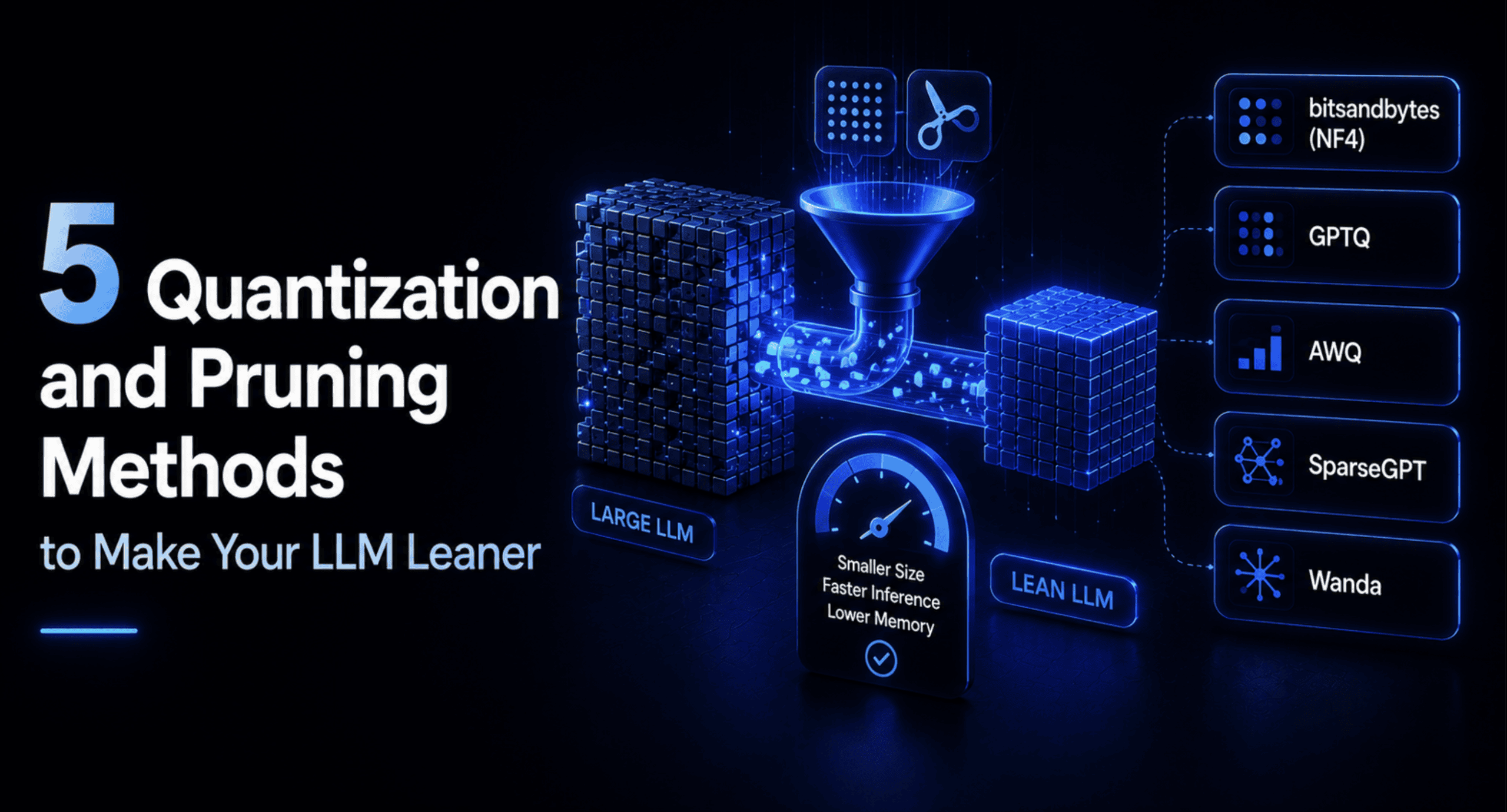
The cost of running large language models is rarely about the model itself. It is about the weight of every parameter you choose to keep. When an article walks through quantization and pruning methods, it is not offering a technical footnote. It is addressing the gap between what a model can do and what a model should cost to operate. For teams that have spent months building around an LLM, the difference between a model that responds in two seconds and one that responds in four hundred milliseconds is not a performance metric. It is a user retention issue.
What stands out about the practical methods is how they reframe the problem. Most teams assume that a smaller model means a less capable one. That assumption is worth challenging. Quantization reduces the precision of the numbers the model uses, which sounds like a downgrade until you realize that most of the precision was never doing any work. Pruning removes weights that contribute almost nothing to the output, which sounds like a risk until you measure how many weights are effectively silent. Skipping these steps costs real money and real latency. We would go further. Skipping them means your competition can offer a faster, cheaper product while you explain to your CFO why the infrastructure bill keeps climbing.
This connects directly to the broader skills conversation we have been tracking. As the requirements for AI and ML roles shift toward software engineering fundamentals, the ability to optimize a model becomes a differentiator. Understanding the tradeoffs in Navigating AI/ML Job Requirements: A Shift in Expected Skills is not just about resume building. It is about being the person who can say, we do not need a bigger GPU, we need to prune the model. And for those coming from a distributed systems background, the parallels in Unlock LLM Training: A Practical Guide to Distributed Algorithms are clear. Scaling out and scaling down are two sides of the same engineering discipline.
Our honest take is this: if you are not running some form of quantization or pruning in production, you are leaving efficiency on the table and paying for it in every single inference. Five methods that people are actually using are presented, which means the techniques have moved past theory and into practice. The risk is not in adopting them. The risk is waiting until your latency metrics force your hand. The teams that treat model efficiency as a first-class engineering concern, not a post-deployment optimization, will ship faster, spend less, and respond to user needs more quickly.
The concrete point to watch is the next time you benchmark a model. Ask what it costs per query, not just what it scores on accuracy. Because the model that performs well but costs too much to run is not a solution. It is a liability with a good benchmark. That is the difference between a model that is lean and one that is just expensive.