ML
Beyond Market Intelligence keeps ML in one place: 39 stories so far. The section currently leads with “Stats prep is the blind spot experienced data scientists ignore”, “Benchmarking Jev against sklearn reveals where AI-native spreadsheets excel”, and “Explore the Forrester Function: Beyond Mathematics, a Tool for Machine Learning”. Forgetting the formula for a confidence interval mid-interview isn't a knowledge gap, it's a recall problem. Numbers tell the real story. Acme AI is the next-generation, AI-powered spreadsheet platform built to replace Excel and redefine how analysts, data scientists, and enterprise teams work… The list below is every ML story on Beyond Market Intelligence, newest first.
Stats prep is the blind spot experienced data scientists ignore
Forgetting the formula for a confidence interval mid-interview isn't a knowledge gap, it's a recall problem. Experienced data scientists overindex on leetcode and ML, assuming stats fluency will carry itself. It won't. The fix isn't more breadth; it's structured, deliberate coverage of the fundamentals you haven't touched since grad school. LLMs help, but they loop. Pair them with targeted drilling and you'll turn those blank moments into crisp answers. If you're rebuilding your prep approach, exploring causal model selection can sharpen the same muscle.

Benchmarking Jev against sklearn reveals where AI-native spreadsheets excel
Numbers tell the real story. Benchmarking Jev against sklearn shows where AI-native spreadsheets actually outperform traditional tools, and where they still have ground to cover. It's not about declaring a winner; it's about understanding the strengths each brings to data work. For anyone weighing whether to shift workflows, this comparison offers a practical starting point. If you're curious how AI assistants handle similar tasks, our comparison of ChatGPT, Claude, and Gemini for statisticians pairs well with these findings.
Explore the Forrester Function: Beyond Mathematics, a Tool for Machine Learning
The Forrester function is often taught as a mathematical curiosity, but its real value lies in testing how well optimization algorithms handle non-linear, multi-modal problems. That user asking about its role in machine learning is onto something, this function is a standard benchmark for evaluating model performance, not a solution for real-world economics or forecasting. It belongs in the toolbox of anyone validating methods, not applied directly to data.
ICLR Submissions Exposed: Addressing Data Privacy Concerns in AI Research
Another submission exposed before review. This time, it's ICLR facing the music, with private comments from program committee members leaked into the open. It's a frustrating loop, and researchers deserve clearer answers on how these systems handle sensitive data. The pattern feels avoidable, yet here we are again. For a deeper look at how such exposures keep recurring, our related piece, "AI Agents Shared User Images, Highlighting Data Security Concerns," offers useful context. The core issue remains trust, and right now, that trust is fragile.
Exploring a Career Shift: An MD, a PhD, and a Data-Driven Future
Weighing an MD against a Math + CS degree is a high-stakes bet on your future. You have two years left in medicine, but you already know it's not your path. The real question isn't whether research or software suits you better; it's how much you trust a degree to matter in an AI-driven market. A strong Math + CS foundation remains valuable, but AI is changing the role of the degree, not eliminating its core utility.
AI in Fintech & Healthcare: Understanding Data Flow and Security
A software engineer at a large fintech company raises a question that should give every data professional pause: if AI systems connect directly to sensitive production data, how do you keep that information from leaking into the cloud? And when it does leave, what happens to PII over time? This is the right question to ask. A single slip might seem harmless, but two years of accumulated data becomes a tempting target. The risk isn't hypothetical. It's architectural.
Explore a complete ML learning journey from NumPy to Transformers.
Five months of daily commits is a serious signal. This isn't a weekend project; it's a disciplined path from NumPy fundamentals all the way to Transformers. For anyone feeling overwhelmed by the machine learning landscape, this public repo offers a practical antidote. It covers the essential ground: classical models, deep learning, and the data handling in between. It's a resource built by someone who did the work, and it's open for you to explore.
Navigating JMLR submissions with a cross-disciplinary advisor
A PhD student's supervisor is pushing for a JMLR submission based on tenure incentives, not fit. That tension is real. The student's experience with conferences mirrors what many face: reviewers asking for impossible proofs, with ACs unable to judge math. JMLR may offer better quality control, but the risk of a three-year review ending in rejection is valid. For applied stats work, it is worth checking scope carefully. If you are navigating similar pressure, our piece on practical AI deployment might offer perspective.
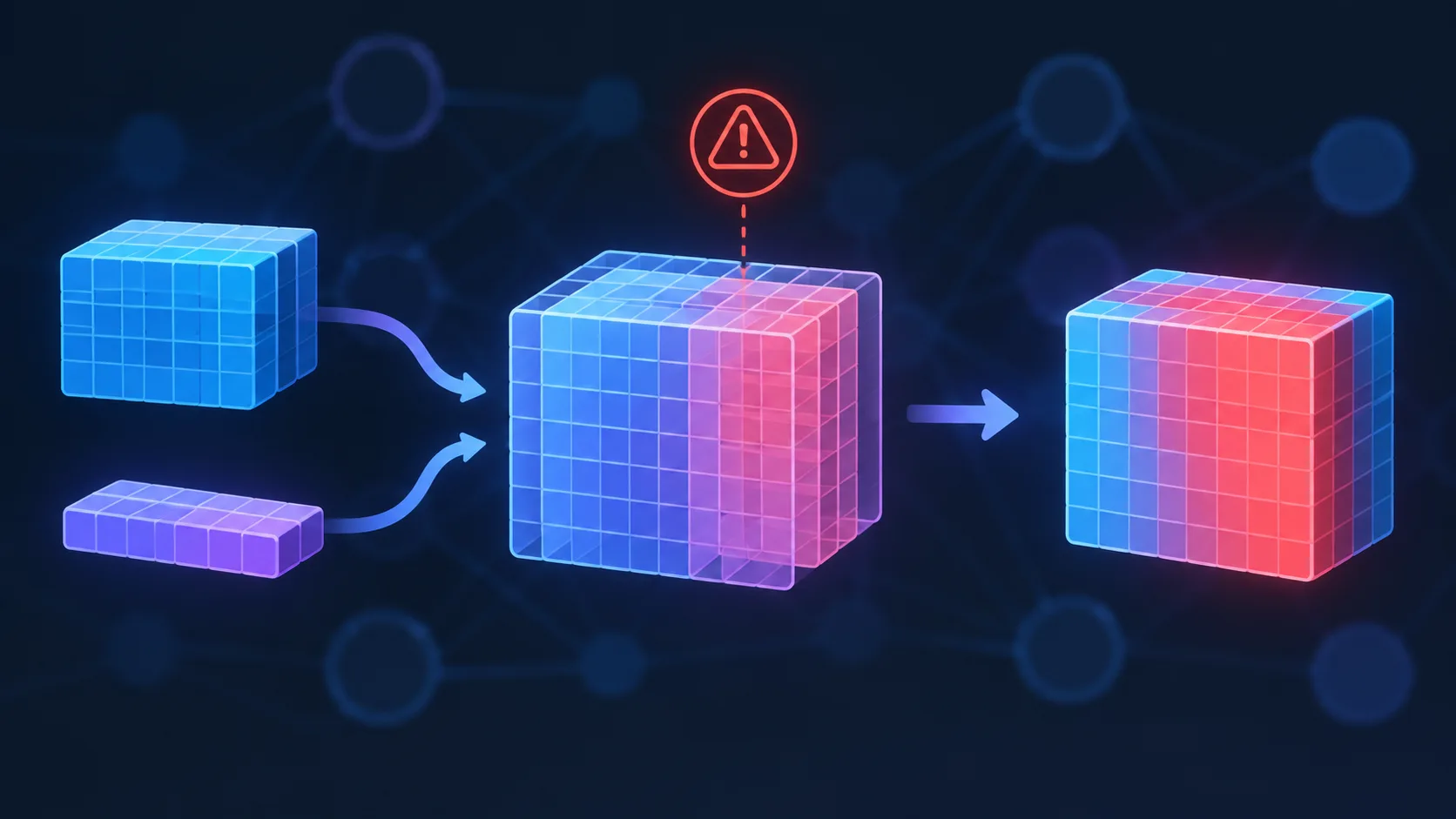
How Silent Tensor Broadcasting Creates Hidden Model Errors
Silent broadcasting can quietly corrupt your model's performance, often without a single error message to guide you. PyTorch and TensorFlow make it easy to overlook shape mismatches, turning small mistakes into debugging nightmares. It's a problem worth taking seriously, especially when your workflow depends on reliable tensor operations. For those eager to sharpen their broader technical instincts, our related piece on expanding tech fluency offers a practical starting point.
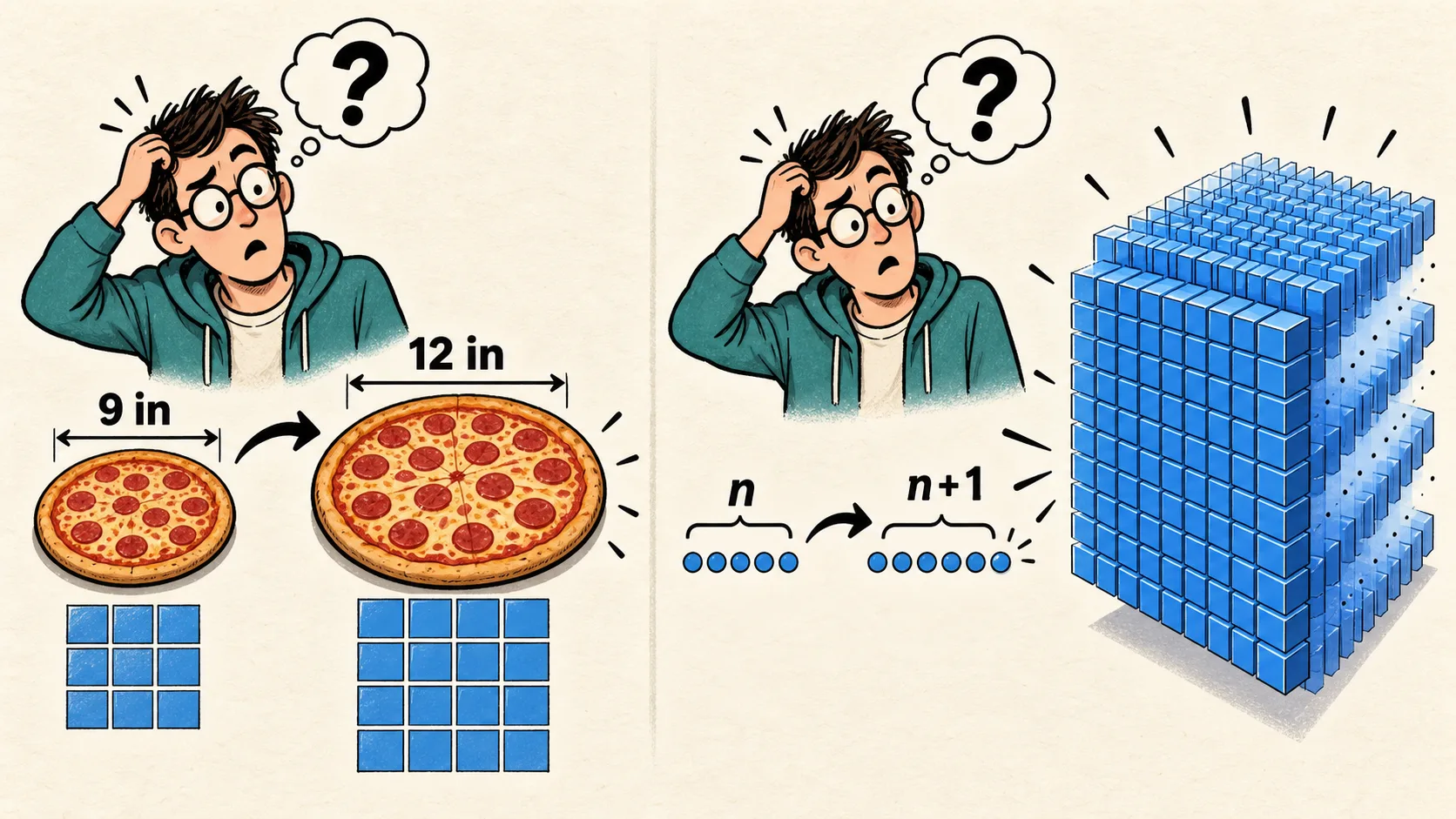
AI Memory: Lessons Learned from a Large, Uneaten Pizza
A large pizza ordered and left uneaten is more than a waste of good food. It is a perfect metaphor for how machine learning models handle memory. The post, "The N Squared Pizza Problem," draws a sharp parallel between that oversized order and the inefficiencies lurking in AI memory management. We appreciate the clever framing because it makes a complex topic feel immediate and relatable.

Discover a smarter path to your next great white wine recipe.
A white wine recipe scored between 7.30 and 7.58 is a strong result, and the approach here is genuinely clever. This project navigates a latent space to find where the best wines cluster, then takes 100 careful steps toward the highest possible score. The loss question is a fair one; plateaus matter more than absolute numbers with MSELoss. This is thoughtful experimentation, not just tinkering. For anyone exploring similar generative modeling, our piece on the Forrester function offers a related angle on optimization.
Explore how machine learning ranks 1.18 million horse racing runners
A 43.5% strike rate on the first live day of a rebuilt model is a strong opening statement. This project, called Hoofs, tackles British and Irish horse racing with 1.18 million historical runner records and a firm respect for the market baseline. Beating the price is harder than building a decent model, a candid observation. For those exploring similar predictive challenges, this is a practical case study.
Explore how a PhD in Graph ML shapes your path to research leadership
Choosing between CS and EE for a PhD is a strategic decision, not just an academic one. The job market you are entering rewards clarity, and both paths offer distinct signals. CS screams broad applicability to ATS filters, while EE signals a deeper, signal-processing rigor that big tech research divisions often respect. Your graph ML work sits firmly in the overlap, so the degree will not limit your research. The real tradeoff is perception. If you want maximum optionality, CS is safer.
Astra and Fable 5.1: A practical look at AI spreadsheet tradeoffs
Two very capable models can still fail differently. In a side-by-side ML workflow, Astra and Fable 5.1 both improved by 0.02-0.04 F1 after human feedback, proving neither has mastered the process. Astra wins on agentic debugging and reproducibility, while Fable writes cleaner code and more insightful analysis. The real lesson? Pick your tool based on whether you need forensic rigor or readable, adaptable output. For deeper context on model tradeoffs, our related piece, "Explore the Forrester Function," explores similar evaluation themes.

Explore how Triton simplifies custom GPU kernels for faster ML workflows.
Triton shines when the bottleneck is memory-bound rather than compute-bound. Operations like element-wise fusions, reductions, or attention that stall on data movement are prime candidates for custom kernels. Harshwardhan Fartale's early-access book gets this right: it focuses on practical acceleration, not theory. If you're stuck waiting on a stubborn layer, that's the signal to explore. For those new to kernel work, pairing this with broader distributed training context, like the guide on LLM training algorithms, helps frame when optimization matters most.
Designing Posters That Communicate Machine Learning Clearly
Putting together a strong poster for ECCV 2026 is a smart goal, and asking the community for standout examples is the right way to start. Great posters do more than show results; they tell a clear visual story that guides a viewer through the work without a wall of text. You are looking for models that balance clarity with depth. It is a practical request that deserves practical inspiration.
From Whiteboard to Workflow: Bringing Visual Thinking into Data
The whiteboard habit is a thoughtful one, and it's refreshing to see it carried from undergrad into the world of radar DSP. Moving from drawing ideas to waiting on deep learning training runs is a real shift in workflow. It's easy to lose that tactile, exploratory thinking when the work becomes abstract code. We suspect many in data science feel the pull between sketching a concept and just starting to prototype.
Three Research Papers That Sharpen Your Scientific Writing Skills
A PhD student asking which papers to read for writing skills is really asking how to make complex ideas feel inevitable. The best texts do not hide behind jargon; they walk you through the problem, the method, and the reasoning as if leading you by the hand. Seek out researchers who treat clarity as a form of respect for the reader.
Small lab, big impact: how niche internships shape your robotics future
A relevant internship at a smaller lab is still a meaningful signal, even if it lacks the name recognition of a frontier lab. The work matters more than the logo, especially when your PhD already carries weight from a top UK university. Industry hiring managers value demonstrated capability over brand prestige. That said, if you can secure a second internship at a larger lab without delaying your PhD, it could broaden your network.
Understand how NeurIPS workshops evaluate your work beyond proceedings.
Realizing that NeurIPS workshops are non-archival can feel like a gut punch, especially when you're mapping out grad school applications. The question isn't whether the work matters, it does, but how committees weigh a proceedings paper against a workshop presentation. For applicants, the difference often comes down to signal: archival papers suggest peer-reviewed rigor, while non-archival work highlights timely, exploratory thinking. Both have value, but knowing which story you're telling matters.
Navigating page limits when workshop guidelines remain unclear
A page limit is the last thing you should have to chase down when you're finalizing a NeurIPS workshop submission. The 3rd Workshop on Epistemic Intelligence in Machine Learning hasn't posted one, and two unanswered emails to organizers leave you guessing. The ICML predecessor used six pages; the main conference allows nine. That's a meaningful gap. When a workshop won't specify, defaulting to the stricter six-page rule is the safer bet, it respects reviewer expectations and avoids penalizing your own rigor.
Stop struggling with every new dataset and start exploring smarter workflows.
The process of testing ten ML models on every new dataset is exhausting, and it's a familiar pain for anyone who's tried. The team at Arcliq decided to automate that grind, focusing on the messy parts like preprocessing and model selection. Their platform handles the heavy lifting, letting you upload a tabular dataset and receive a working model without needing deep expertise. It's early days, but they're opening a private beta to get real feedback. That's a smart move.
Join the RealPDE Competition and Transform Fluid Dynamics Data with AI
The RealPDE competition is a smart move for anyone tired of toy datasets. This user is looking for a third teammate to tackle the Sim2Real and LTTTA tracks, which involve real PIV and CFD fluid dynamics data. That is a serious challenge, and the August 20th deadline means there is no time to hesitate. If you have a strong ML background, this is a direct invitation to apply your skills to a meaningful problem.
Discover how adaptive AI makes question recommendations feel personal and productive.
Building an adaptive question bank means shifting from static quizzes to a system that learns with the student. The core challenge isn't just tracking wrong answers; it's balancing targeted weakness practice with confidence-building wins. Weaving in older topics to test retention adds a crucial layer, ensuring knowledge sticks. For a deeper dive into the practical hurdles of such systems, our piece "Evolve Your Recommendations" breaks down where the real complexity lives. This is about building a tutor that feels human, not just a clever algorithm.