Model Context Protocol
Model Context Protocol on Beyond Market Intelligence: a running collection of 9 stories we have gathered and hand-picked because they are worth your time. Every post here touches on model context protocol in some way — the news, the analysis, the deep dives, and the occasional surprise find. Acme AI is the next-generation, AI-powered spreadsheet platform built to replace Excel and redefine how analysts, data scientists, and enterprise teams work with data. New stories are added to this page as we find them, so check back if you want to keep up with what is happening around model context protocol, or subscribe to the RSS feed to get them as soon as they are published. Browse the collection below, or head back to the homepage to see everything Beyond Market Intelligence is covering right now.
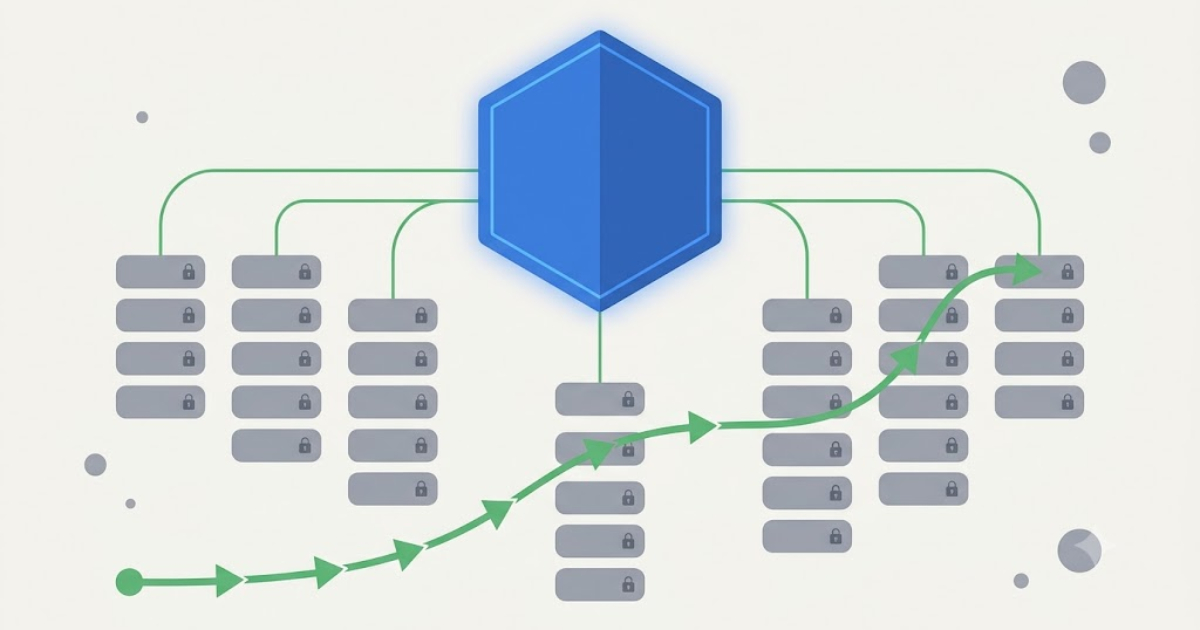
AI Model Context Protocol Adds Centralised Auth for Enterprise
The Model Context Protocol (MCP) team has elevated its Enterprise-Managed Authorisation extension to stable status, streamlining access control for organizations. This key development introduces a centralized authentication method, allowing users to access approved MCP servers with a single sign-in – eliminating per-server consent prompts and creating a seamless experience. This shift empowers enterprises to manage and secure their AI infrastructure more effectively. For those interested in broader resilience strategies, explore Andy Brinkmeyer’s discussion of "Practical Robustness" and building failure-proof systems.

Presentation: Automating the Web With MCP: Infra That Doesn’t Break
Scaling AI agents requires robust, adaptable infrastructure. Paul Klein’s presentation, "Automating the Web With MCP: Infra That Doesn’t Break," tackles the distributed systems challenges of managing cloud-hosted browser environments—particularly the complexities of bursty, stateful, multi-tenant systems and Chromium security. Klein demonstrates how the Model Context Protocol (MCP) unlocks the potential to transform intricate websites into accessible agentic tools, leveraging Firecracker for enhanced security. For deeper insight into the broader AI landscape, explore our recent article, "ChatGPT’s market share slips below 50%."

AWS MCP Server Reaches GA with Full API Coverage and IAM-Based Governance
AWS has announced the general availability of its managed Model Context Protocol (MCP) server, enabling AI coding agents to securely access AWS APIs, documentation, and workflows through a standardized interface. This development enhances the safety and auditability of connecting AI agents to AWS services without compromising security by granting broad credentials. With IAM-based governance, users can now manage permissions effectively. For insights on related technologies, check out "Vision-capable LLMs vs. OCR for long-document QA," where we explore innovative approaches to document processing.

Article: MCP in the Java World: Bringing Architectural Strategy to LLM Integrations
In the evolving landscape of large language model (LLM) integrations, the Model Context Protocol (MCP) Java SDK is pioneering a new architectural strategy for enterprises. This innovative approach defines explicit contracts and utilizes MCP servers as anti-corruption layers, ensuring effective governance and loose coupling within the Java Virtual Machine (JVM) ecosystem. By prioritizing security alignment and operational practices, MCP transforms integrations from fragile to resilient, empowering organizations to navigate the complexities of LLM technology with confidence.

Cloudflare Outlines MCP Architecture as Enterprises Confront Security and Governance Risks
In a landscape increasingly defined by security and governance challenges, Cloudflare has introduced a reference architecture for scaling Model Context Protocol (MCP) deployments within enterprises. This framework emphasizes the importance of centralized governance, robust remote server infrastructure, and effective cost controls as essential components for developing production-ready agent systems. By addressing these critical requirements, Cloudflare aims to empower organizations to navigate the complexities of data management while enhancing their security posture and operational efficiency.
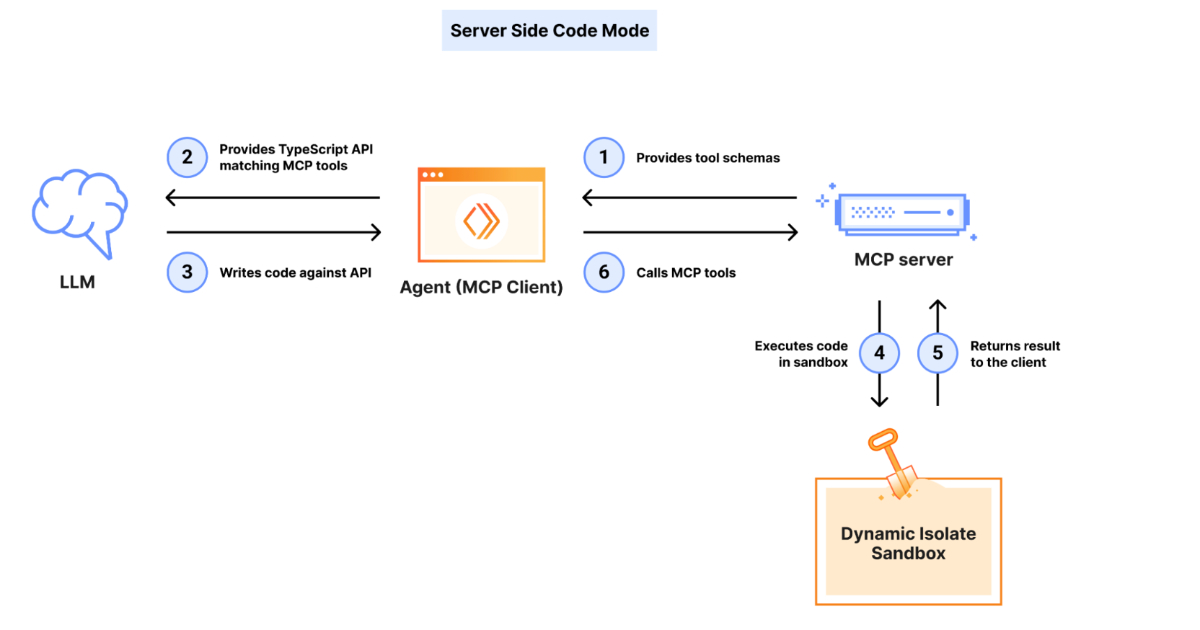
Cloudflare Launches Code Mode MCP Server to Optimize Token Usage for AI Agents
Cloudflare has unveiled its new Model Context Protocol (MCP) server, enhanced by Code Mode, designed to optimize token usage for AI agents. This innovative server minimizes the context footprint across over 2,500 endpoints, streamlining interactions with large APIs. By enhancing multi-API orchestration, Cloudflare ensures a more efficient workflow for developers and AI applications. Furthermore, it offers a secure, code-centric execution environment tailored for large language model agents, empowering users to maximize their API capabilities with ease.
AAIF's MCP Dev Summit: Gateways, gRPC, and Observability Signal Protocol Hardening
The MCP Dev Summit North America 2026, held on April 2-3 at the New York Marriott Marquis, brought together approximately 1,200 attendees to delve into the evolution of the Model Context Protocol. Hosted by the Linux Foundation's Agentic AI Foundation, the summit highlighted key discussions on enterprise adoption, particularly by major players like Amazon and Uber. Focus areas included security, interoperability, and scaling for production, ensuring that participants left equipped to explore innovative solutions in AI-native technologies and enhance their data management strategies.

Google Brings MCP Support to Colab, Enabling Cloud Execution for AI Agents
Google has unveiled the open-source Colab MCP Server, a significant advancement enabling AI agents to interact seamlessly with Google Colab via the Model Context Protocol (MCP). This innovative project bridges the gap between local agent workflows and cloud execution, empowering developers to offload compute-intensive or potentially unsafe tasks from their local machines. By facilitating direct communication between AI agents and cloud resources, Google enhances productivity and streamlines workflows, encouraging users to discover transformative possibilities in their data management practices.
What is the Model Context Protocol (MCP)?
The Model Context Protocol (MCP) is a groundbreaking framework designed to enhance the interaction between artificial intelligence models and their operational environment. By establishing clear parameters and guidelines, the MCP ensures that AI systems can effectively understand and adapt to varying contexts, leading to improved decision-making and performance. This protocol empowers users to leverage AI capabilities more intuitively, fostering a seamless integration of technology into everyday tasks.