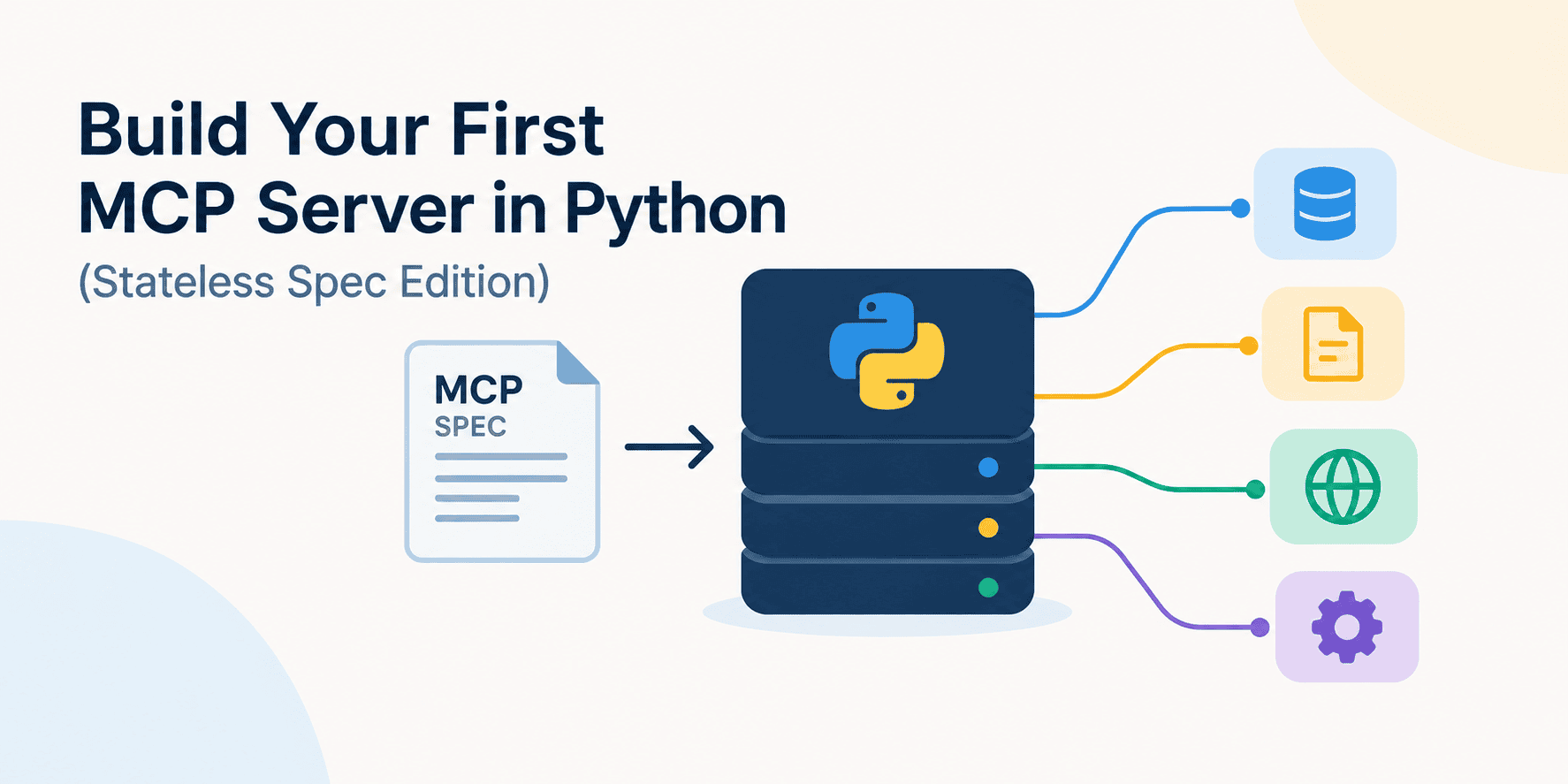
The stateless MCP server is the right answer to a question most teams haven't thought to ask yet: why does every AI integration need to carry baggage? By stripping the Model Context Protocol down to plain HTTP endpoints in Python, this approach removes the stateful overhead that makes so many tool integrations feel heavy. We think it's a meaningful step toward treating AI tools like the stateless services they should be, and it deserves attention from anyone building data workflows today.
For readers already exploring open-source AI tooling, this fits a familiar pattern. You can Build a complete data science stack for free with these open-source AI tools, and a stateless MCP server is a natural companion to that stack. It keeps the focus on the data and the task, not on session management or connection lifecycle. The practical gain is simpler deployment: no persistent state to sync, no memory to clear, no context to reset between requests. That makes it easier to test, easier to scale horizontally, and easier to reason about when something goes wrong. For teams that already run stateless microservices, this is the same discipline applied to AI tooling, and it lowers the barrier to entry noticeably.
The broader lesson here is about accessibility. MCP has been gaining traction, but many examples still assume a level of infrastructure that feels out of reach for solo developers or small teams. A stateless Python server with HTTP endpoints changes that. It turns something that sounds like a systems engineering project into a scripting exercise. That aligns with the spirit of projects like the Explore 5.6 Billion TikTok Videos Through an Accessible Public Database, where the value is in lowering the cost of access. The same logic applies here: if you can expose tools, resources, and prompts over plain HTTP, you make the protocol approachable to a much wider audience. It also means you can plug these endpoints into existing web infrastructure without learning a new transport layer.
One detail worth watching is how this affects debugging. Stateless servers are easier to inspect because every request carries everything it needs. That could make MCP integrations more transparent in production, a quiet win for reliability. The open question is whether the ecosystem embraces this pattern broadly or treats it as a niche. We'd bet on adoption, because the tradeoff is clear: you give up session continuity, and you gain operational simplicity. For most use cases, that is a trade worth making. The takeaway is direct: if you've been putting off MCP because it felt complicated, build the stateless version first. It will teach you the protocol without the overhead, and you'll have a working HTTP endpoint to show for it.