model training
25 stories filed under model training on Beyond Market Intelligence. The newest of them: “From network training to deployment: finding the right fit for AI expertise”, “Train a neural network with 57x fewer parameters using this new PyTorch library”, and “Measure Your Impact HuggingFace Downloads as a Real Metric”. A PhD and years of model training don't automatically make you the best person in the room. MaRN takes a different path to parameter efficiency: instead of training every weight directly, it optimizes a compact latent representation that maps to the full network. Acme AI is the next-generation, AI-powered spreadsheet platform built to replace Excel and redefine how analysts, data scientists, and enterprise teams work… The list below is every model training story on Beyond Market Intelligence, newest first.
From network training to deployment: finding the right fit for AI expertise
A PhD and years of model training don't automatically make you the best person in the room. One engineer's honest reflection on moving from training networks to deploying them at a FAANG company captures this well. They admit their ideas rarely outperformed peers, then watched LLMs get so competent that returning to research feels pointless. Deployment, though, runs on empirical, tribal knowledge that AI can't replicate. That's a compelling reason to stay.
Train a neural network with 57x fewer parameters using this new PyTorch library
MaRN takes a different path to parameter efficiency: instead of training every weight directly, it optimizes a compact latent representation that maps to the full network. The numbers are striking, a 57.7× reduction on an MNIST CNN, but the honesty about trade-offs is what makes this worth attention. Slower training and task-dependent performance are real constraints, not footnotes. For exploratory benchmarks, that transparency matters more than the headline reductions. The library's global and layer-wise mappings give researchers room to test where this approach genuinely fits.
Measure Your Impact HuggingFace Downloads as a Real Metric
Aspiring academics and AI researchers alike are asking whether HuggingFace download counts carry real weight. The short answer: yes, when framed properly. Those numbers reflect actual use by developers who chose your models over alternatives. They aren't bot-driven vanity metrics. For academic job applications, pair the downloads with a brief narrative about who used your work and why. Industry labs pay attention to these numbers too, though they weigh adoption patterns more heavily. Think of it as evidence of utility, not popularity.

Fueling AI Innovation: Snorkel AI Secures $350M Series E
Snorkel AI has raised $350 million in a Series E round, a clear signal that the market is ready for a more practical path to AI development. The seven-year-old startup is betting its future on a data-as-a-service model, which speaks to a core truth: models are only as powerful as the data fueling them. This funding validates that approach. For anyone wrestling with messy datasets, this is worth watching.

Anthropic reveals ongoing AI distillation campaigns from Chinese competitors
Anthropic's new report alleges that China-based AI firms, including Alibaba, Moonshot AI, and DeepSeek, have ramped up distillation attacks in recent months, intensifying as competition heats up. It's a pointed reminder that the race to build better models carries real security costs. Distillation isn't inherently malicious, but persistent, unauthorized scraping of this scale demands attention. For teams navigating AI's practical side, understanding these dynamics matters as much as mastering the underlying algorithms.
Astra and Fable 5.1: A practical look at AI spreadsheet tradeoffs
Two very capable models can still fail differently. In a side-by-side ML workflow, Astra and Fable 5.1 both improved by 0.02-0.04 F1 after human feedback, proving neither has mastered the process. Astra wins on agentic debugging and reproducibility, while Fable writes cleaner code and more insightful analysis. The real lesson? Pick your tool based on whether you need forensic rigor or readable, adaptable output. For deeper context on model tradeoffs, our related piece, "Explore the Forrester Function," explores similar evaluation themes.

Two major newspapers sue AI firms over use of journalism for training.
Two more major newsrooms are taking their fight to OpenAI and Microsoft. The Seattle Times and Newsday now allege their journalism was used to train AI systems without permission. It's a familiar dispute, but the stakes keep climbing as more publishers demand accountability for how their work fuels these models. For anyone watching AI's rapid adoption, this is where the rubber meets the road. If you want to understand how these systems actually learn, explore our piece on real-world computer vision deployments.

AfterQuery's rapid rise to $3.2B shows what focused AI innovation can achieve.
AfterQuery has reportedly become Y Combinator's fastest-ever unicorn, now valued at $3.2 billion. That's a tenfold jump in just five months, following its $30 million Series A at a $300 million valuation in April. The pace is striking, even for AI. It signals real momentum behind the demand for smarter data tools. We're watching a company move quickly, and that's worth exploring. For a closer look at how AI is reshaping core workflows, check out our piece on verifying your AI's understanding.
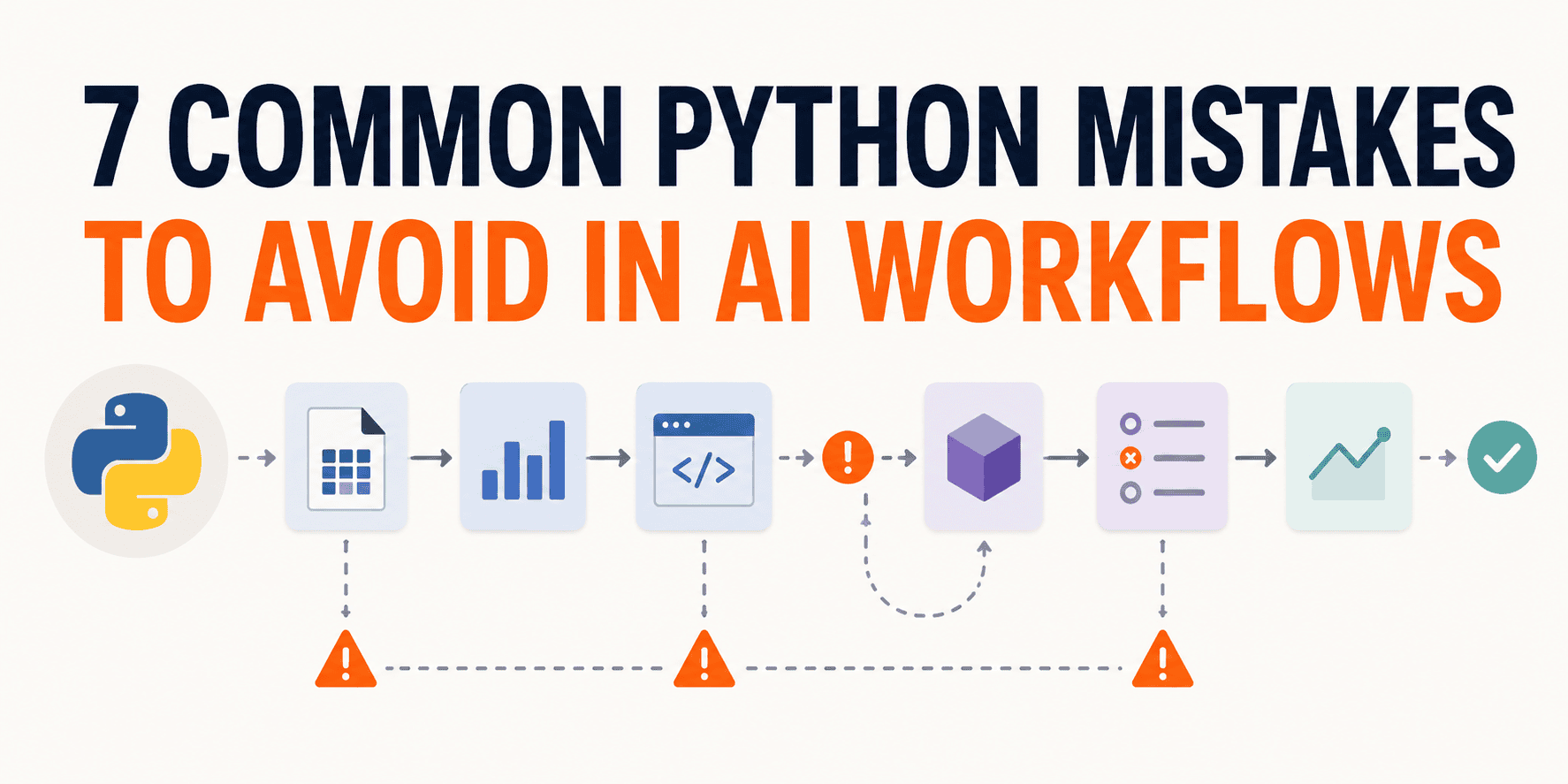
Your Pipeline Ran Clean. Here's Why That Doesn't Mean It Worked.
A clean run feels like a win. But in AI workflows, it's often a mirage. The process executed; that's all. It tells you nothing about what the pipeline actually learned, which rows shaped it, or whether the saved result can be trusted elsewhere. That gap is where real mistakes live. If you're ready to move past surface-level checks, our guide on distributed algorithms offers a natural next step. For now, let's focus on the seven pitfalls that quietly undermine your data's integrity.
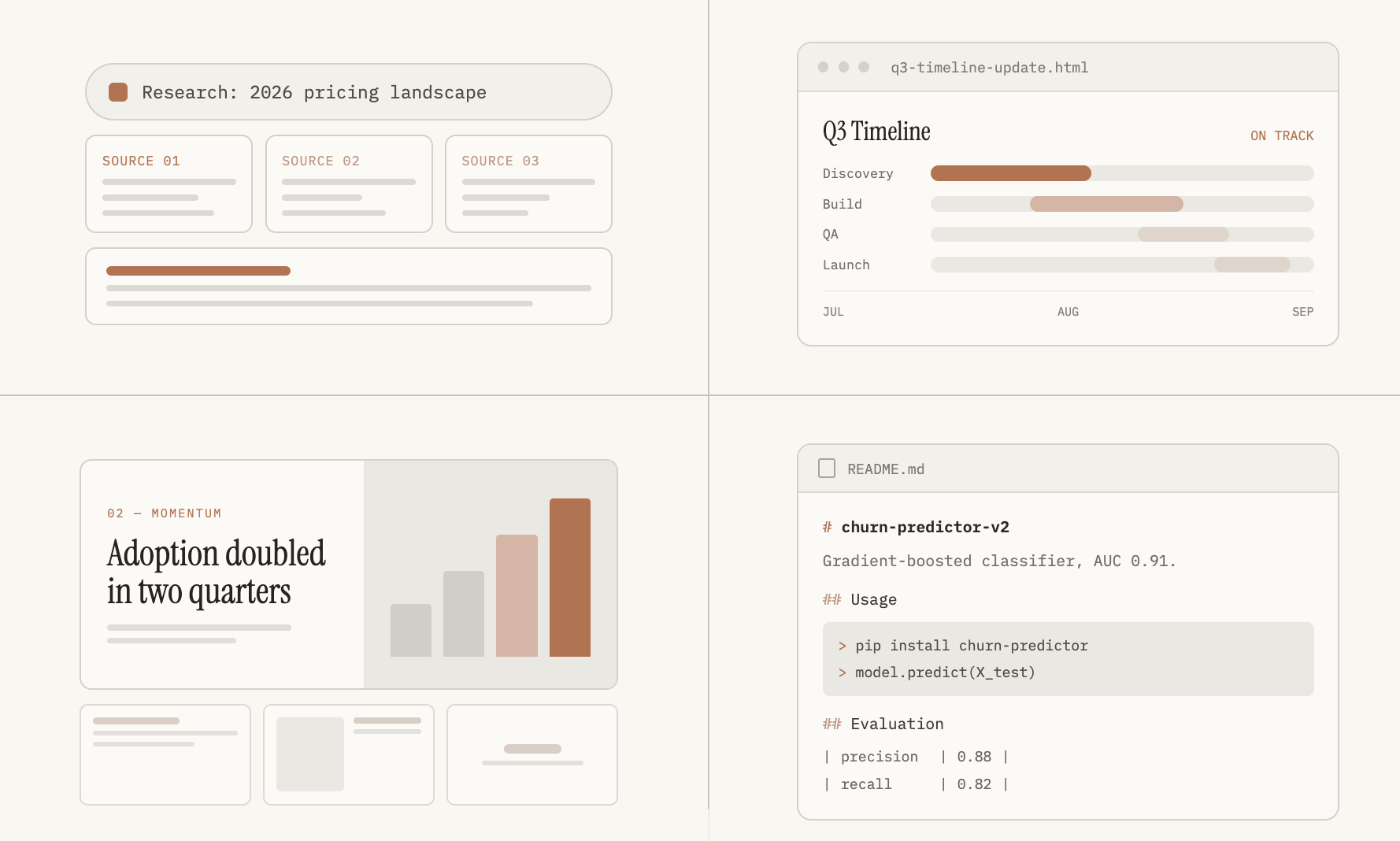
Four data skills to future-proof your workflow in 2026
Spreadsheets have taught us to wrestle with data. Claude skills, on the other hand, are built to help you stop wrestling and start working. This guide breaks down four practical additions to your workflow that keep you ahead of the curve without the hype. It is a grounded, useful read for anyone who wants to stay relevant. If you are also brushing up on the infrastructure side, our guide to distributed algorithms is a solid companion piece.

Meta's Custom AI Chip Targets Smarter, Faster Recommendation Models
Meta's move to build MTIA 300, its first in-house accelerator for ranking and recommendation models, signals a deliberate step beyond compute and into networking. It's a smart evolution for a company that understands how much latency shapes user experience. By owning more of the stack, Meta isn't just chasing efficiency; it's reducing dependence on off-the-shelf parts. That kind of control tends to pay off.

Explore how open models make frontier AI more accessible for everyone.
Frontier AI isn't just for the few anymore. Thomson, an open-weights model built through continual learning on existing open models, shows that meaningful progress is possible without massive budgets. The report demonstrates performance gains comparable to multiple generations of advancement, while preserving stability and reducing the forgetting that plagues narrow adaptation. That's a practical path toward SovereignAI, one that puts ownership within reach of more institutions. It's not about hype; it's about what's achievable with the right stack and a focused approach.
Turn Data Science Concepts into Deployable Workflows with Grok Build
Building a full data science project from scratch can feel overwhelming, but Grok Build and Grok 4.6 turn that chaos into a clear path. You'll move from exploratory analysis to scikit-learn models, then wrap it all in a FastAPI service, test it, and push it to the cloud. It's production-ready, not just a notebook experiment. For those wrestling with how AI models actually scale, our guide on distributed training algorithms pairs well with this workflow.
When Grouping Classes in Multiclass Models Hurts More Than It Helps
Grouping rare classes into a catch-all category like "Other breed" feels practical, but it often forces the model to draw messy boundaries around visually dissimilar samples. That intuition is sound: the hyperplanes get distorted, and the model wastes capacity on artificial splits. Treating the long tail as out-of-distribution detection, as the original poster suggests, is a cleaner approach. Keep the well-represented classes, drop the rest, and let the model focus on meaningful distinctions.
From text to ASCII art, an accessible AI model you can build
Turning a text prompt like "build a cat" into a precise ASCII rendering is a clever twist on generative modeling, and it's exactly the kind of hands-on experiment that deepens your grasp of diffusion. You've got the right foundation from CS229 and CS230, but the leap from standard image generation to symbolic, grid-based output is where the real learning lives. Start with character-level tokenization and a simple U-Net backbone. For guidance, look into DALL-E's discrete VAE work and the original DDPM paper.

Smaller models, bigger returns: why 3B outperforms 70B for your task.
A 3B model can outperform a 70B one on your specific task. That isn't a compromise; it's a strategic choice. For focused pipelines, massive models are often overkill, and their cost is hard to justify. The Hugging Face transformers library and smolLM3 make this accessible, letting you deploy a lean, capable model without the overhead. If you're tired of paying for compute you don't need, this approach is worth exploring.
Why your data collection process matters more than your model
Collecting high-quality speech and egocentric video datasets is rarely about the hardware alone, it is about the messy, human decisions behind every recording. The original poster's point about collection process outweighing model value resonates deeply, consistency in environments, device variability, and annotation drift can quietly undermine even the most ambitious multimodal projects. Privacy and participant compliance add another layer, one that scales poorly. For anyone building toward embodied AI, the real bottleneck is often trust in the data's provenance.

The 47‑Page Blueprint That Reveals What a Frontier Model Really Takes
Kimi K3 doesn't hide behind hype. Its 2.8-trillion-parameter model shipped with 47 pages of open recipe, and reading them reveals a truth we don't often say aloud: most of building a frontier model isn't the model. It's the data, the compute orchestration, the judgment calls. That transparency feels almost radical. For anyone curious how far the field has come, this report is a grounded, human-scale entry point.

Understanding Adam's limits can transform how you train complex models.
Blindly defaulting to Adam without understanding what it's actually doing will cost you. That's the takeaway from a Reddit user whose work in reinforcement learning forced a rethink: Adam still works, but only if you coax it, and its loss "burstiness" can feel maddening. The mathematical intuitions matter. This piece re-covers where Adam fails spectacularly, and for anyone training deep transformers, it's a necessary read. For broader context on model behavior, our related piece on paragraph structure in LLMs is worth exploring.

Waymo's real test begins after the model works
Waymo's evaluation-first approach is the discipline most AI teams are missing. Before any model earns a deployment, its tests must prove maturity, not just performance. That standard, enforced through continuous evaluation and human oversight, is what has carried the company to 220 million rider-only miles with dramatically fewer serious injuries. For enterprises, the lesson is direct: if you cannot measure an agent's edge cases, you are not ready to trust it in production.

Understand Adam's Optimization Dynamics Before Your Model Fails
Vibe coding an import feels efficient until the model quietly misreads your data. That's the trap Adam sets. Treating it as a default fix ignores how its optimization dynamics actually behave, and when they misfire, the failure is anything but subtle. Understanding why it breaks matters more than assuming it works. If you're chasing cleaner inputs, our piece on catching AI slop before it skews your model pairs well with this cautionary read.

When a bug resists fixing, the smartest feature is a new path forward.
For weeks, Runway chased a bug that made AI avatars drift off-center during real-time video generation. The fix wasn't a clever back-end patch, it was a front-end feature that simply re-centered the user's image before generation began. That pivot turned a limitation into a perceived benefit. Ryan Phillips, head of enterprise product at Runway ML, shared this lesson at VB Transform 2026, arguing that even teams building on foundation models rather than training their own can borrow from Runway's disciplined approach to evaluation and iteration.

Explore smarter data labeling by using AI to focus human effort where it matters most.
Human labeling is expensive, and most of it goes into teaching models what they should already learn from less. Using ML active learning to target annotation where it truly matters reduces paying for redundant work. It's a smart, grounded approach for teams feeling the squeeze on time and budget. If you're exploring smarter ways to train models, our guide on distributed algorithms pairs nicely with this mindset.

Yelp streamlines AI model training with a unified, configuration-driven framework
Yelp's new Training Orchestrator replaces those scattered Spark scripts with a configuration-driven, DAG-based model. It's a smart move toward consistency, letting teams focus on what the data should do rather than wrestling with pipeline plumbing. We appreciate the shift from bespoke code to a unified framework. For a deeper look at how such distributed systems operate, our guide, "Unlock LLM Training: A Practical Guide to Distributed Algorithms," pairs well with this story. It's a practical step toward more accessible machine learning operations.