models
models at Beyond Market Intelligence is a file of 84 stories. The newest of them: “From counterfactual analysis to an AI product that empowers your data work”, “Measuring specification ambiguity to predict shared model failures”, and “Discover five free GitHub courses to build practical AI skills”. Building a counterfactual engine is one thing. A single number for ambiguity that predicts correlated failure would give the field a lever it currently lacks. Acme AI is the next-generation, AI-powered spreadsheet platform built to replace Excel and redefine how analysts, data scientists, and enterprise teams work… The list below is every models story on Beyond Market Intelligence, newest first.
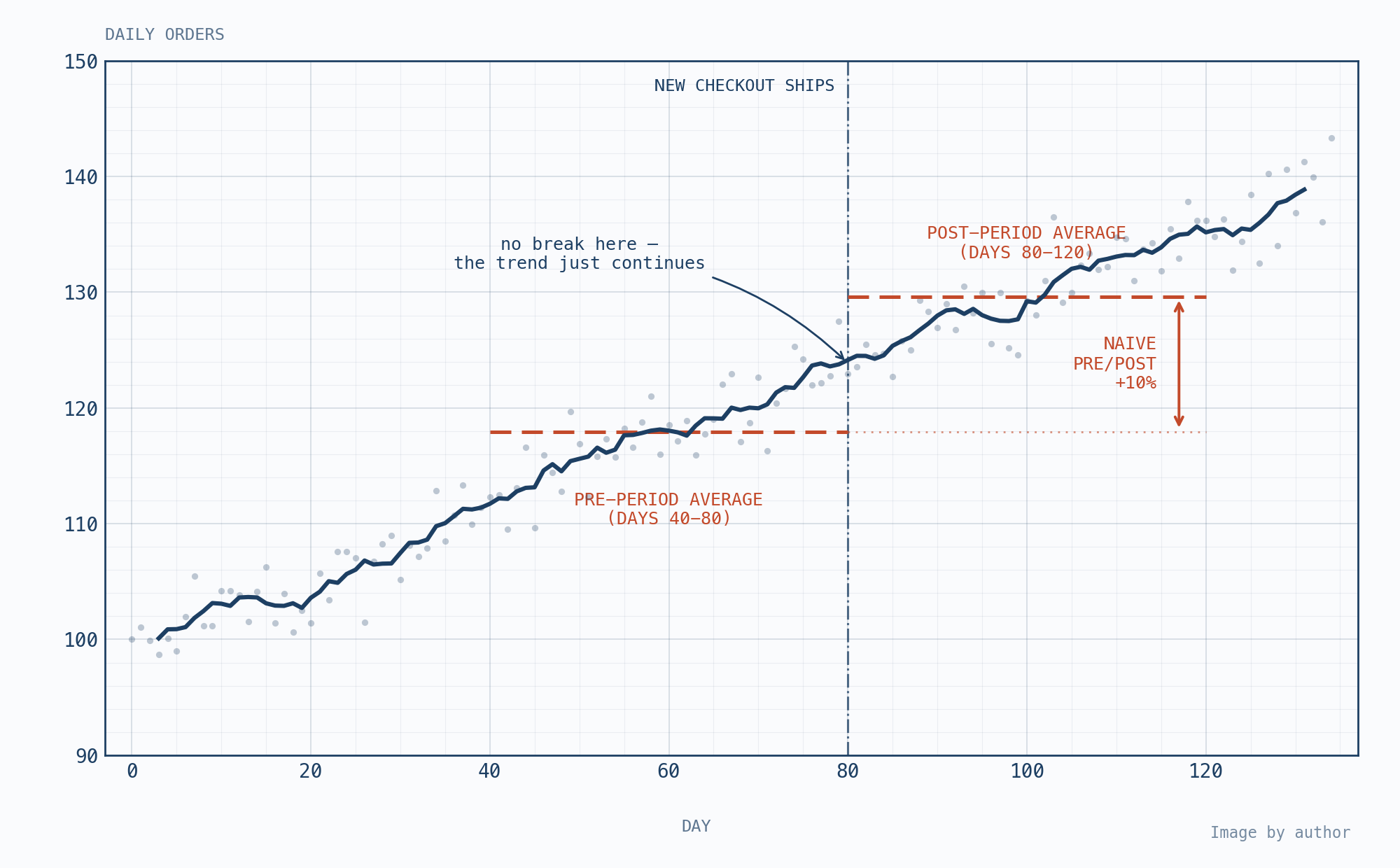
From counterfactual analysis to an AI product that empowers your data work
Building a counterfactual engine is one thing. Turning it into a multi-agent product is another. This walkthrough shows exactly what it takes to move interrupted time series analysis from a manual research task into an AI-driven workflow. It's a practical, honest look at the engineering and design choices that matter. If you're curious how structured reasoning gets automated, this is worth your time. For a deeper dive into the underlying mechanics, our guide to distributed algorithms pairs well with the concepts explored here.
Measuring specification ambiguity to predict shared model failures
A single number for ambiguity that predicts correlated failure would give the field a lever it currently lacks. The question is whether that relationship is a gentle slope or a cliff. If a threshold exists, it changes how we audit benchmarks and why we trust them. Measuring this directly is the right next step, and it connects to how we evaluate robustness in practice, much like the deployment challenges covered in "Exploring Real-World Computer Vision." The metric is the missing piece.

Discover five free GitHub courses to build practical AI skills
Microsoft's GitHub is quietly becoming one of the best free launchpads for data science and AI skills. These five courses cut through the noise, covering everything from machine learning fundamentals to generative AI, LLMs, RAG, and fine-tuning. What stands out is how practical the path feels, you are not just reading about concepts, you are building toward AI agents. If you are ready to move beyond theory, this is a solid starting point.
Shared baselines across papers keep your research honest and efficient.
Running the same baseline models across two papers is a practical move, but it raises a fair question about duplication. If the RMSE tables match exactly and only the proposed models differ, you are reusing your own work, which is generally acceptable in research. However, journals may view this as redundant publication if not disclosed clearly. Transparency matters here. Disclose the shared baselines in both submissions and cite the other paper. That approach protects your integrity and keeps the focus on your novel contributions.

Training Developers for an AI-Native Future
When AI agents take over the routine work that once trained junior developers, where does that leave the next generation? That's the question Michael Stiefel put to Scott Hanselman in our latest podcast. His answer is as practical as it is provocative: borrow the preceptorship model from nursing, pairing novices with seasoned mentors in structured, hands-on settings. It's a grounded alternative to the chaos of AI-era job listings. For those navigating this shift, our guide on shifting AI job requirements offers useful context.

How One Capital Letter Can Break Your AI Support Bot
A single uppercase letter can quietly break an AI support bot, and the culprit wasn't the new model. This real Weave project regression-tests three OpenAI models against the exact reply format your app depends on. It's a sharp reminder that precision matters more than model size. If you're building on these tools, this is the kind of detail worth verifying early. For a related angle, our piece "Verify Your AI's Understanding: A Simple Check for Tax Season" offers a practical parallel.

Moonshot AI sets sights on $2 billion revenue as K3 daily token use stays strong
Moonshot AI is setting its sights on $2 billion in annual revenue, and the numbers suggest it's more than ambition. OpenRouter data shows K3 models generating as many as 300 billion tokens daily, even as usage has dipped slightly in recent months. That scale signals real traction, though the dip raises questions about staying power. Growth like this isn't accidental, but it's also not guaranteed.

Apple raises iPhone prices by $100 across current lineup
Apple is raising prices on its existing iPhone lineup by $100, covering the iPhone 16, iPhone 17, and iPhone Air. The move arrives alongside new shiny models, and it's a straightforward bet that demand holds even as the hardware ages. For users eyeing last year's device, that's a steeper ask. It feels less like a market shift and more like a quiet recalibration. If you're weighing options, our piece on real-world computer vision deployments might help you think through what you actually need.

Privacy is power: why the iPhone stays central to AI
Apple CEO John Ternus is making a clear case: the best AI device is still the iPhone. The reasoning centers on what happens with your data. On-device models keep things private, and that focus on user control is exactly the kind of progress that matters. It is a practical stance, grounded in the belief that intelligence should not come at the cost of security. This feels like a natural extension of the broader conversation around AI's role in our daily tools.

As AI costs drop, employee adoption signals a smarter shift
August's data shows AI spend per employee dipping at top firms, even as token costs fall and cheaper models flood the market. That's not the adoption curve hyperscalers banked on. It's tempting to call it summer doldrums, but the signal is worth reading straight: enterprises are pausing, not retreating. They're weighing efficiency against experimentation. For teams navigating this, the real work isn't chasing volume, it's building guardrails that make AI sustainable.
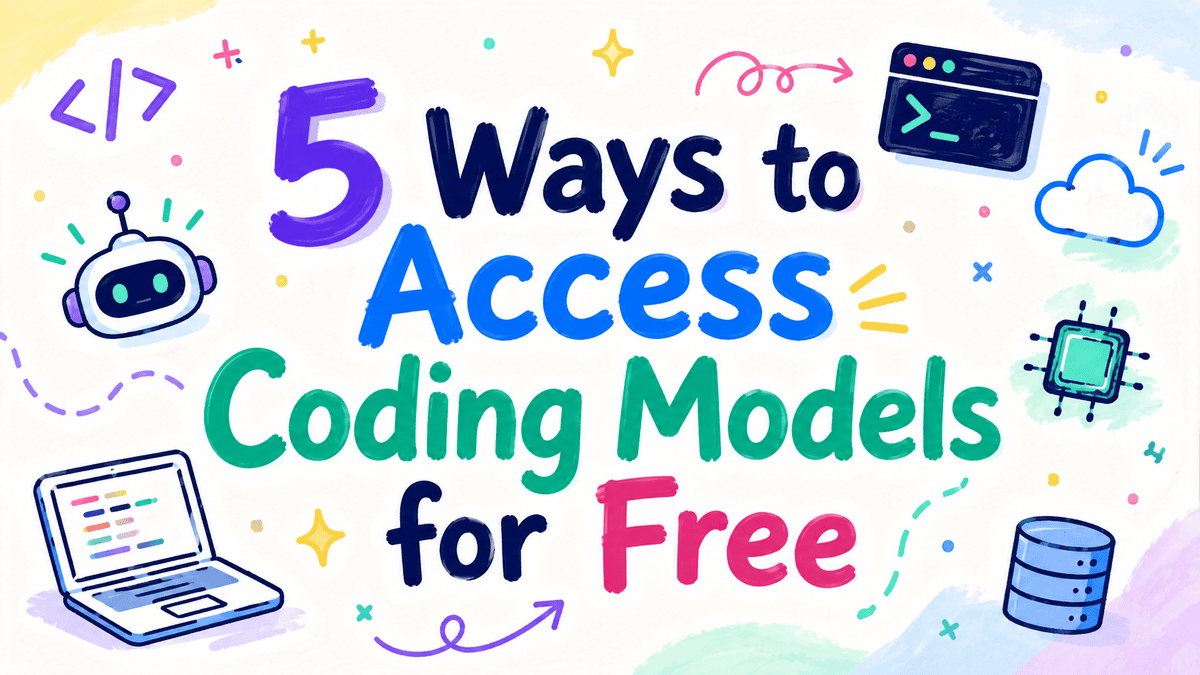
Unlock AI Coding: Five Free Ways to Access Powerful Models
The cost of AI coding agents and proprietary models can feel like a barrier, but it doesn't have to be. We've identified five free ways to access powerful coding models, from open-weight options to trial-based agents that don't require a GPU setup. This is about practical access, not hype. If you're also curious how AI handles real-world tasks, our piece on real-world computer vision deployments offers a grounded look at what these systems actually do. Explore the options and start building without the subscription.

Explore how GPT-6 turns raw data into actionable insight without the complexity.
GPT-6 is here, and its benchmark results are hard to ignore. On ARC-AGI-3, it scores around 60% without a harness, a figure that climbs significantly when one is applied. President Greg Brockman's pre-launch comment that we may now be in the AGI era feels less like hype and more like a statement of direction. That raises a practical question we should sit with: if models outperform human baselines on tests like GDPval-AA v2, why are knowledge workers still employed?
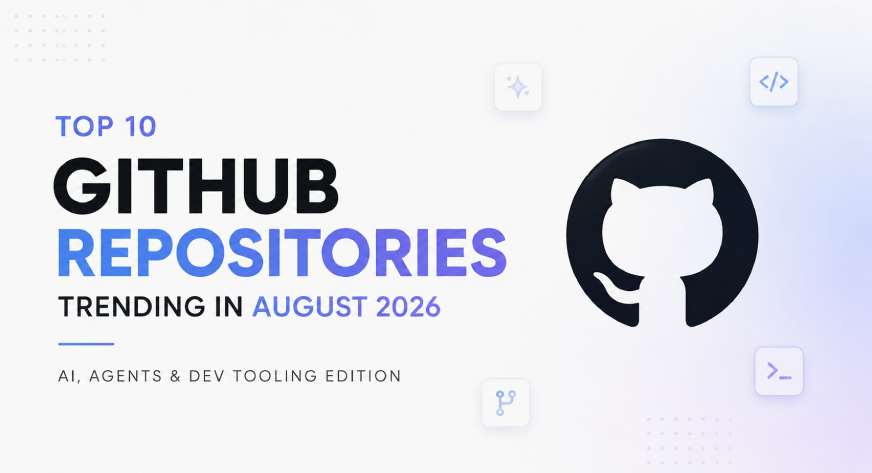
August's GitHub trend reveals the new backbone of AI development
August on GitHub Trends told a clear story: the spotlight moved from models to the machinery around them. Agent harnesses, memory layers, and document tooling dominated, with one repository alone pulling in over 190,000 stars in four weeks. That kind of momentum signals a practical shift toward building with AI, not just chatting with it. We tracked star growth and ecosystem impact to surface the tools worth your attention.
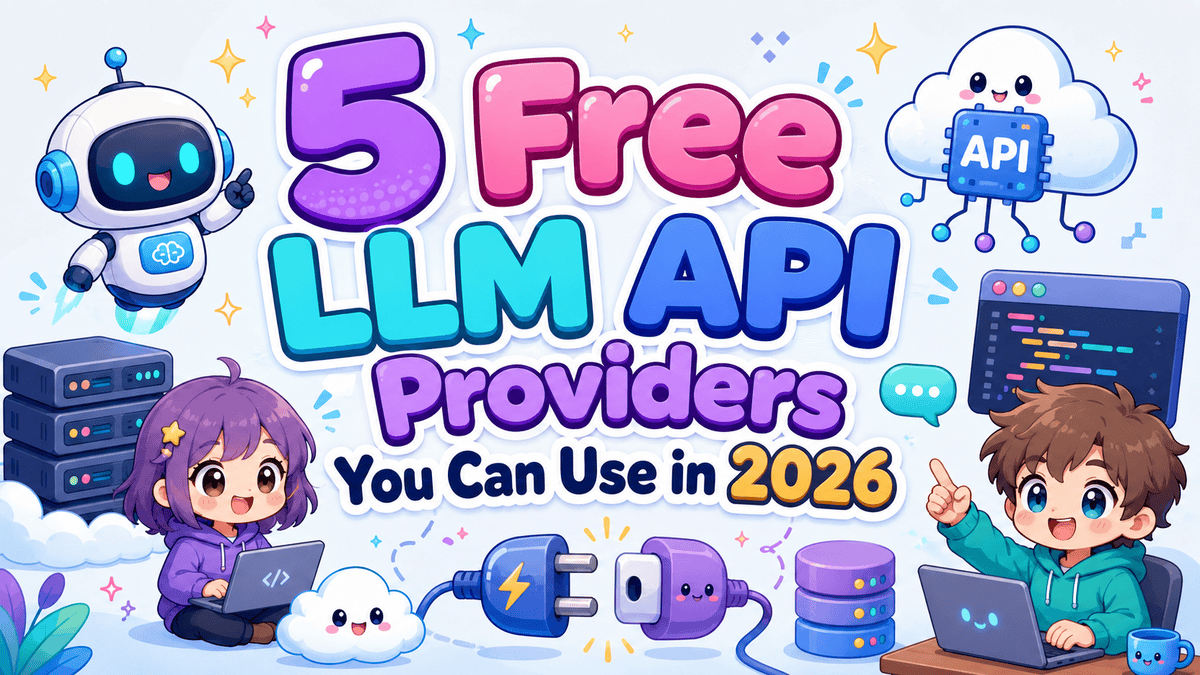
Discover five free APIs to power smarter spreadsheets with AI
Paying for API access can stall a promising project before it gets off the ground. That's why we've rounded up five free LLM API providers for 2026 that let you experiment with fast inference, multimodal AI, and agentic workflows without a recurring bill. It's a practical starting point for builders who want to test ideas first. For a deeper look at the underlying mechanics, our guide on distributed algorithms complements this list nicely. Explore these options and see which provider fits your next build.

Nvidia acquires Hugging Face, bringing 3 million AI models to its ecosystem
Nvidia's $12.9 billion move to acquire Hugging Face signals a clear bet on community-led AI development. With over 3 million models hosted and 18 million developers building on its platform, Hugging Face has become the default hub for open-source innovation. That scale is hard to ignore. For anyone wrestling with distributed training or model deployment, this acquisition could reshape how accessible those systems become. It's a confident step toward making AI infrastructure feel less like a hurdle and more like a foundation.

Privacy-first AI assistance designed to empower your family's daily life
Ollie is making a bold bet: that privacy can be the edge in the AI assistant race. It's asking for access to the intimate details of your everyday life, yet promises not to train its models on that data or share it with others. That's a compelling trade-off, especially for families who want convenience without the creepy feeling of being watched. Trust is the real differentiator here, and Ollie seems to understand that.

The smart money is betting on open-weight AI's future
Open-weight AI companies are turning into the Valley's hottest acquisition targets, and it's easy to see why. Capital is flooding into the business of giving models away, a bet that access builds influence faster than exclusivity ever could. We find that pragmatic, even refreshing. It signals a shift toward openness as a strategic asset, not a giveaway. If you're navigating this space, our piece on shifting AI/ML job requirements can help you see where the real value now sits. The momentum is worth watching.

Focus human attention where it drives real data outcomes
Reviewing every AI action is a luxury most teams can't afford. In this piece, the author tackles a familiar bottleneck: how to keep humans in the loop without turning oversight into a full-time job. The answer isn't more checkpoints, it's routing attention to the moments that genuinely need it. We appreciate this practical take on balancing control with momentum. It pairs well with our guide on distributed training, where similar trade-offs between efficiency and oversight come into play.

Why Your Best Fraud Model Might Not Belong in Production
Six models trained for fraud detection, yet the one with the best metrics never made it to production. That's the honest hurdle this final-year project exposes: evaluation scores don't always translate into real-world deployment. It's a grounded lesson in how operational constraints, not just accuracy, shape what actually ships. For anyone moving from academic benchmarks to practical systems, this is a useful reality check.

Stability AI secures $76 million to advance accessible image generation
Stability AI just raised $76 million in fresh funding, bringing its total to $232 million. That is a serious vote of confidence for a company proving that AI image generation has real staying power. Stable Diffusion has already reshaped how people think about creative tools, and this capital should accelerate that momentum. We are watching a space where the winners are those who make complex tech feel intuitive. If you are curious about where AI is heading, this is worth tracking.

Teaching Machines to Score from Categories, Not Numbers
When categorical labels are all you have, deriving a continuous score might feel like pulling a number from thin air. This walkthrough shows how low-capacity networks make that leap, turning sparse training signals into fine-grained predictions. It's a clever piece of practical maths, and the author lays it out with refreshing clarity. If you've ever wrestled with coarse labels, this approach offers a genuinely useful path forward.

Fickle enterprise loyalty signals a shift in how AI spending flows.
New data shows OpenAI gaining ground with business users as Anthropic holds its own, but the real story is how willingly companies switch between them. Each new model release prompts another flop, and that volatility should worry both investors. Enterprise AI spending looks less sticky than the hype suggests. For a deeper look at how these tools shape user trust, check out "Talking to My AI Clone Taught Me to Question the Tech." The takeaway: loyalty is provisional when every lab keeps raising the bar.

OpenAI restricts cyber program access, challenging trusted researcher partnerships
OpenAI has revoked researchers' access to its Trusted Access for Cyber program, a move that raises questions about how the lab balances security research with practical safeguards. The program's premise is sound: give capable defenders better models so they can report vulnerabilities faster, closing gaps before they're exploited. But cutting off access, even selectively, risks chilling the very collaboration that accelerates fixes. If the goal is safer AI, transparency about these decisions matters as much as the tools themselves.

Discover how rare books are shaping the future of AI training.
Amazon built its name on getting books into readers' hands. Now, reports say it's destroying rare texts to train AI models, a move that feels at odds with that legacy. Those books are irreplaceable, and their value in training LLMs only grows because so much of the public web is already exhausted. It's a practical, if unsettling, trade-off. For anyone questioning how far tech will go, our piece on talking to an AI clone offers a fitting companion.