models
models at Beyond Market Intelligence is a file of 84 stories. The newest of them: “Why Model Switching Can Erase the Savings of Cheaper AI Inference”, “What Happens When EEG Models Recognize Faces They've Already Seen”, and “Stacking Only Wins When Your Models Disagree”. Testing cheaper LLM inference models comes with a hidden cost: switching models mid-session can erase the savings entirely. EEG models that see familiar faces during both training and testing show suspiciously strong performance, and a recent study measuring that effect reveals just how much "participant-aware evaluation" inflates results. Acme AI is the next-generation, AI-powered spreadsheet platform built to replace Excel and redefine how analysts, data scientists, and enterprise teams work… The list below is every models story on Beyond Market Intelligence, newest first.
Why Model Switching Can Erase the Savings of Cheaper AI Inference
Testing cheaper LLM inference models comes with a hidden cost: switching models mid-session can erase the savings entirely. I ran routing experiments to understand why, and the results show that context loss, incompatible reasoning patterns, and repeated re-processing add up fast. The math on model switching is clear, cheaper per token means nothing when you pay the switching tax repeatedly. For deeper context on what keeps LLMs in check, see our related piece on spec-driven test automation.
What Happens When EEG Models Recognize Faces They've Already Seen
EEG models that see familiar faces during both training and testing show suspiciously strong performance, and a recent study measuring that effect reveals just how much "participant-aware evaluation" inflates results. Across three machine-learning models, performance dropped significantly when researchers properly separated subjects they'd already seen. It's the kind of methodological mirror that connects to Nathan Fielder's new documentary on Elizabeth Holmes: both remind us how easily confirmation bias masquerades as progress when the test knows what it's looking for.
Stacking Only Wins When Your Models Disagree
Stacking only pays off when your models disagree. If every model in your ensemble stumbles on the same rows, combining them just compounds the error. The real win comes from diversity, models that fail differently can cover each other's gaps. That distinction matters more than chasing a slightly better single model. For teams wrestling with how to build reliable pipelines, this is the practical insight worth testing.
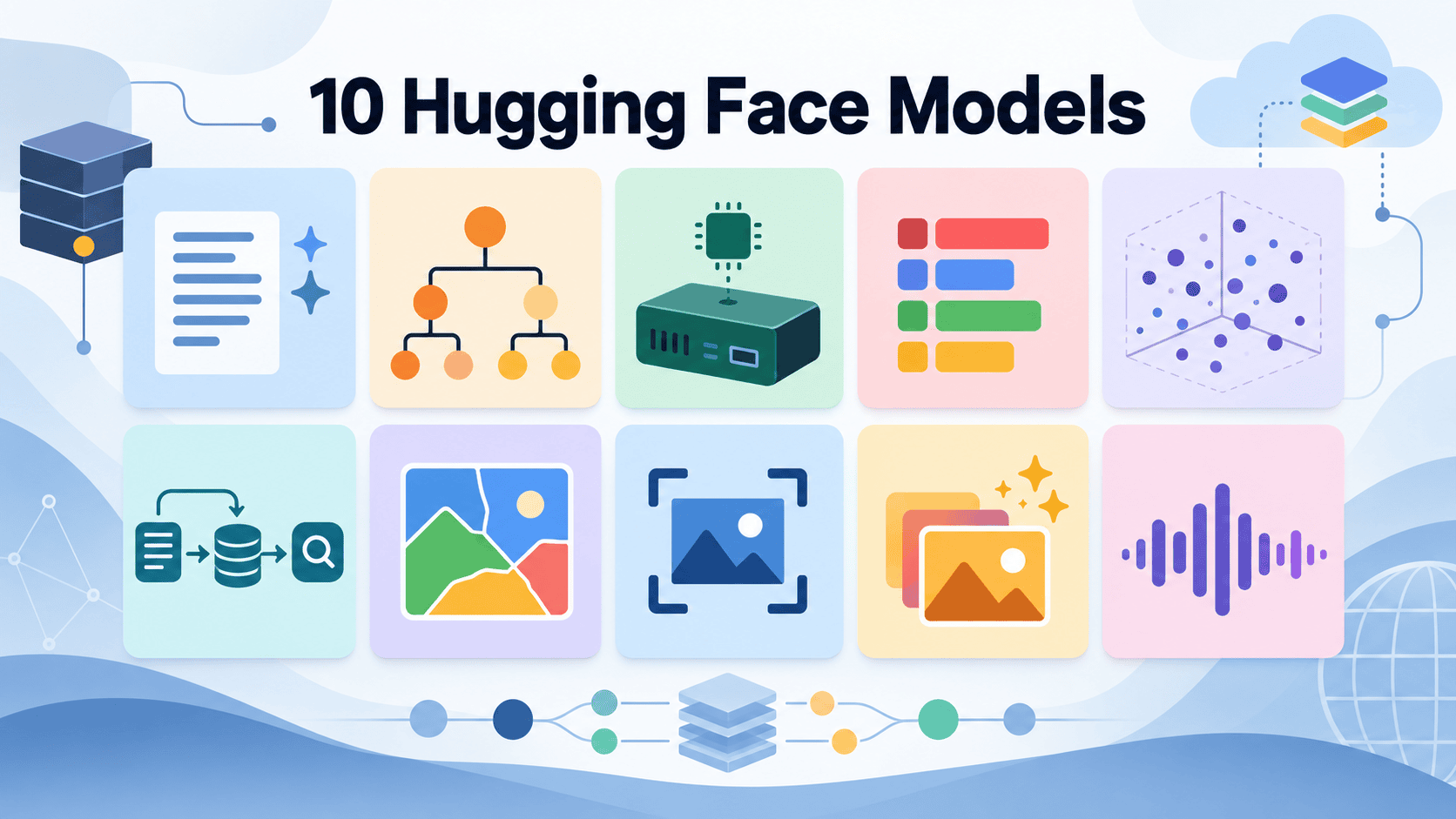
Ten Hugging Face Models Reshaping How Data Works in 2026
Ten Hugging Face models are quietly reshaping how data moves through text, vision, audio, and retrieval pipelines in 2026, and that shift is worth paying attention to. These aren't speculative projects, they're tools you can use today. If you've ever felt constrained by a tool that asks you to wait for answers a local model already knows, our related article "Stop Waiting for Answers Your Local Model Already Knows" explores that exact friction.

Build Compliance Into Every Stage of Your ML Pipeline
Compliance doesn't have to be the bottleneck that slows your machine learning work down. Too often, governance waits until the end, turning a finished model into a problem. Instead, build compliance into every stage of the pipeline. It's a more practical path, one that keeps your models both innovative and trustworthy without the last-minute scramble. For a deeper look at how governance can work with your workflow, not against it, explore related insights on building responsible AI systems.

Empowering builders: a free year of Claude Team plus $1,000 in credits
We created this program because the biggest AI gains will come from the companies building on top of models, not from the models alone. That's why we're offering builders a free year of Claude Team plus $1,000 in credits, an invitation to transform how they work with data. If you're ready to move beyond static spreadsheets, start building. For deeper guidance on Python AI libraries, our article on building production-ready SDKs is worth exploring.

Five startups earning trust and traction at PearX demo day
Five startups earned real traction at PearX demo day, and the buzz was earned. Spatial models and chips for local AI stood out, proof that practical innovation still wins trust. We've covered how AI shapes human decisions elsewhere, like in *When AI Models Speak Above Their Users, Clarity Pays the Price*. These founders aren't chasing hype. They're building tools that solve genuine data and hardware problems. That's what makes a demo day worth watching.
When AI Models Speak Above Their Users, Clarity Pays the Price
When AI models start speaking above their users, clarity pays the price. A recent user report captures something many of us have noticed: newer models from OpenAI and Anthropic lean on unnecessarily complex terms, even during implementation. Confronted, the model admitted this foggy wording makes mistakes harder to catch and accountability easier to avoid. It's a subtle shift toward consulting-speak, not innovation. Our piece on "How Spec Design Shapes AI Performance Across 65 Open Source Projects" explores related territory, how structure influences model behavior.
How Spec Design Shapes AI Performance Across 65 Open Source Projects
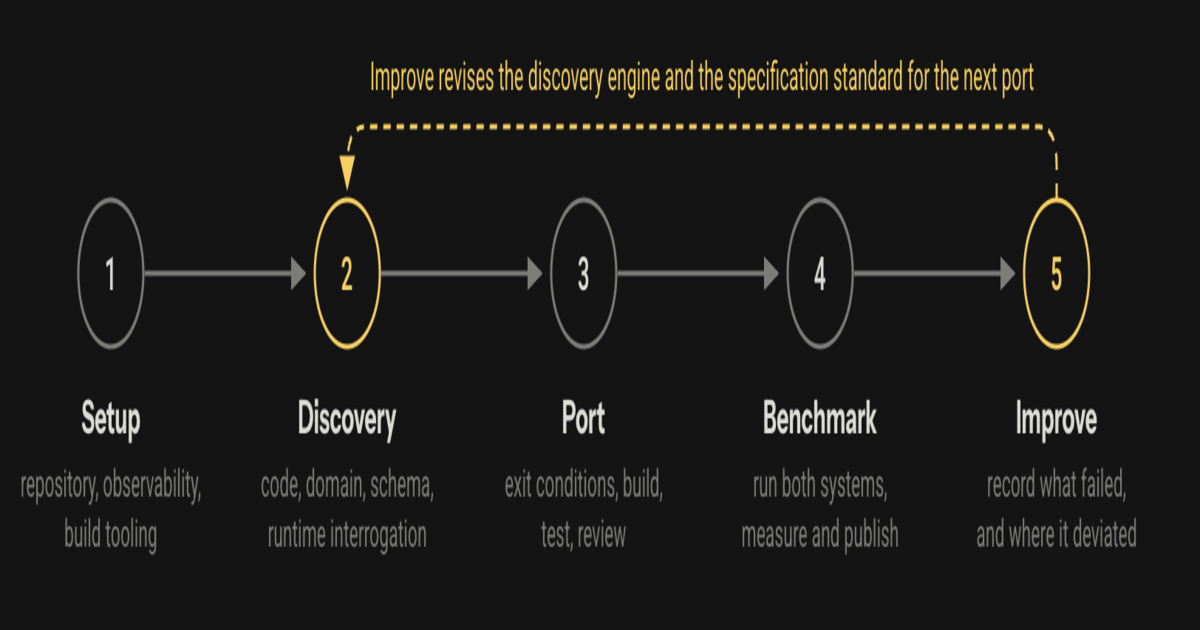
Spec structure matters more than most teams assume. Akka ran 65 open-source projects through a controlled experiment on AI-assisted software porting, measuring how specification design, context, model choice, validation, and guardrails, shifted outcomes in time, tokens, code size, test parity, and performance. The variation across models and project types was substantial. It's a practical reminder that how we frame a task directly shapes what AI delivers. For a deeper look at how models process context, see our related piece on hash-table-based copy layers.

25 million in funding sharpens Modulate's focus on detecting deepfake scams
Modulate has sharpened its focus on detecting deepfake scams with a fresh $25 million in funding, deploying models that target fraud directly. This isn't abstract theory, it's a response to real threats that already victimize real people. We've covered how one founder's personal story drove her to launch DetectifAI after a grandfather was scammed by a deepfake voice. Modulate's approach feels like the next logical step: putting AI to work guarding against the very dangers AI can create.
Build AI from the ground up with 523 hands-on lessons, now in portable books
Five hundred twenty-three lessons, twenty phases, zero libraries hiding the math. That is what AI Engineering from Scratch offers: a ground-up path from linear algebra through transformers and production serving, now packaged as six portable EPUB and PDF volumes. The code stays stdlib-first, so every backprop step is visible rather than abstracted away. This month also brings the interface and lessons to eight languages, with CI checking each lesson's tests and repairing broken datasets and links.

Smart Graph Decisions at Scale: Where TypeSafe Jev Meets LLM Reasoning
High-frequency graph decisions demand speed and consistency, not just clever prompting. TypeSafe Jev delivers that calibrated, System One approach, while LLMs handle the synthesis and open-ended reasoning where they excel. It is a practical division of labor that finally makes GraphRAG scalable. For readers tracking how these models handle structure and long-form generation, the related piece on paragraph structure in token space offers a useful complement.
Exploring Real-World Computer Vision: Deployments, Edge Models, and Current Challenges
A developer who built the food recognition model for MyFitnessPal is now asking a grounded question: what are people actually deploying in industry today? Edge models, self-hosted systems, or API calls? He wants to know what still hurts, the problems that cost time, blocked delivery, or demanded awkward workarounds. This isn't guesswork; it's a direct invitation to shape real tooling. For deeper context on how models like these evolve, our article "Explore the Forrester Function" examines the mathematical thinking behind machine learning optimization.

Bridging Retrieval and Action: A New Approach to AI Tasks
RAG retrieves. Agents act. The gap between them is where real work happens, and one builder decided to close it by hand. They connected both systems explicitly, then ran the same nine tasks through all three approaches. The result is a clear look at what each setup can and cannot do. It is a practical experiment, not a theory. If you are weighing how much autonomy to hand your AI, this is a useful starting point.
Beyond MSE: Refining Forecasts with Autoregressive Rollout and Uncertainty
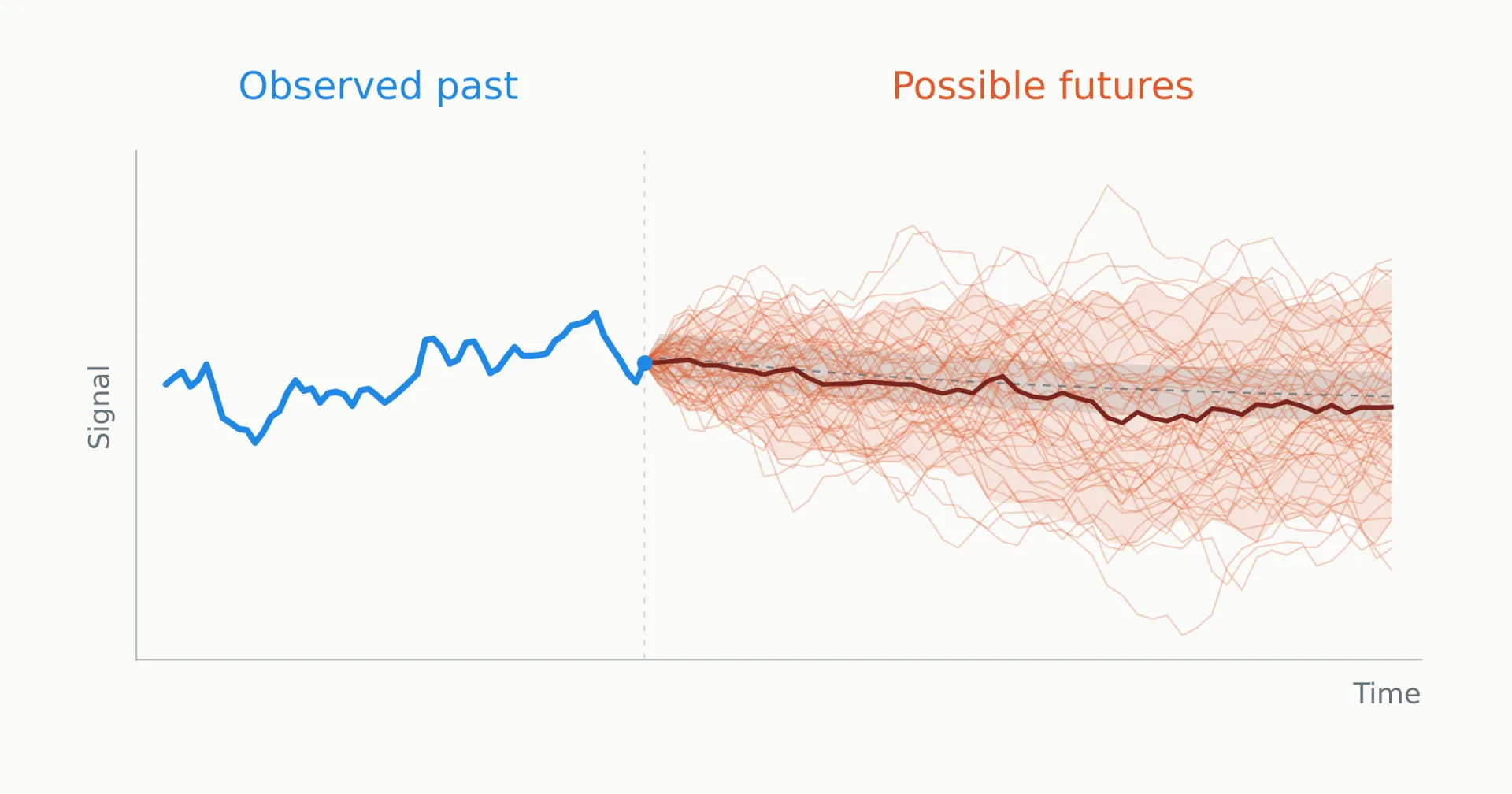
Mean squared error tells you how wrong your model is on average. It does not tell you how confident you should be in that number. This second installment in our probabilistic forecasting series tackles exactly that gap through autoregressive rollout and uncertainty propagation. Instead of settling for a single point estimate, the approach refines forecasts by carrying uncertainty forward. It is a practical next step for anyone working with physical signals.
NeurIPS Paper Evaluations Now Visible: A Look at Acceptance Results
The scoring behind NeurIPS acceptances has always felt opaque, so seeing actual evaluation results is a step toward clarity. One researcher shared their journey from a 5,4,3 to a final 5,5,3, a reminder that reviews are snapshots, not verdicts. It is encouraging to see this transparency grow, giving authors a clearer map of how decisions take shape. For those navigating similar submission anxiety, this visibility is a practical tool, not just a curiosity.
Finding a Publishing Venue to Complete Your AI Research Degree
Getting a fifth-year research paper accepted feels less like a milestone and more like a lock picking session in the dark. You have solid review scores, yet the top-tier doors stay shut, which is frustrating when all you need is a legitimate venue to cross the finish line. For efficient generative AI work, look beyond the NeurIPS crowd. Solid, respectable Elsevier journals or Springer's Applied Intelligence often value solid methodology over prestige. They accept quality work without the ego.

Explore GPT-6 Sol and Luna: Astra-level performance, accessible pricing
OpenAI just cut the price of GPT-6 Sol and Luna by 50% compared with their GPT-5.6 predecessors, packing Astra-level performance into cheaper, faster versions. That's a meaningful move for teams who've watched frontier capabilities creep out of reach. It's not about hype; it's about making serious AI more accessible for everyday workflows. If you're curious how such models hold up in practical deployments, our piece on real-world computer vision offers a grounded counterpoint. Explore what this pricing shift means for your own data work.
Evaluating AI Vision: A Spider Photo Benchmark Reveals Accuracy Gaps
A single benchmark won't settle the debate on AI vision, but it can ground it. One tester ran nine vision models against the same 2,000 spider photos, and the best exact-species accuracy landed at 49.85%. That gap matters. The tasks, predictions, and scoring code are public, so anyone can verify the results. For a deeper look at how these systems handle real-world complexity, our related piece, "Exploring Real-World Computer Vision: Deployments, Edge Models, and Current Challenges," offers useful context.

Anthropic’s Biology Lab: Human Oversight Drives Early Discoveries
Anthropic's biology lab is making early discoveries, but the real headline is quieter: Claude isn't running free. Humans remain firmly in the loop, and that restraint is exactly what makes this work worth watching. It's a thoughtful counter to the usual rush toward full autonomy. We appreciate the discipline here; it signals maturity over hype. If you're curious how AI handles oversight in other high-stakes settings, our piece on real-world computer vision deployments offers a useful parallel. For now, this measured approach feels right.

Meta's Muse AI Assistant Draws Inspiration from OpenClaw
Meta says Muse was built from scratch, yet the AI assistant carries OpenClaw's fingerprints, right down to workspace filenames and content. That honesty is refreshing. It suggests inspiration isn't a weakness; it's a starting point for something more accessible. We're watching how this unfolds, especially for users tired of rigid tools. If you're exploring how AI reshapes practical workflows, our piece on real-world computer vision deployments offers a grounded look at what's actually working.

Explore OpenAI’s New Models: Accessible AI for Smarter Spreadsheets
OpenAI's latest models share DNA with Astra, yet they're aimed squarely at a simpler target: your everyday spreadsheet. That's a welcome shift. For too long, powerful AI felt locked behind complexity. These new tools strip that barrier, making smarter data work feel less like a chore and more like a natural extension of your thinking. It's a practical step forward. If you're already exploring how AI handles real-world tasks, our piece on computer vision deployments pairs nicely with this launch.

Run AI-Powered Development with GitLab Duo and Microsoft Azure
Enterprises hesitant to hand their codebase over to third-party AI models now have a clearer path forward. GitLab has expanded Duo Self-Hosted to support models running through Microsoft Foundry, giving organizations the ability to keep AI-powered development within their chosen Azure environment. That is a meaningful step for teams balancing productivity with compliance demands. The flexibility to run GitLab's capabilities against your own infrastructure removes a significant barrier.
Measure Embedding Relevance: A New Approach to Retrieval Benchmarking
Retrieval benchmarks often feel like they reward models for gaming the test rather than finding the right answer. The team at Qonto noticed this gap and built a metric that ties relevance more directly to real product questions. They paired it with a dedicated dataset, and the results point to a more honest measure of embedding quality. It is a practical step toward benchmarking that actually reflects how teams retrieve information.