OpenRouter
OpenRouter at Beyond Market Intelligence is a file of 8 stories. The newest of them: “Testing 49 LLMs on Nonograms Reveals Where AI Logic Still Falls Short”, “Moonshot AI sets sights on $2 billion revenue as K3 daily token use stays strong”, and “Discover how one free AI model quietly earned developers' trust”. Nonograms look like simple logic puzzles, but they've exposed a sharp limit in how today's best AI models reason. Moonshot AI is setting its sights on $2 billion in annual revenue, and the numbers suggest it's more than ambition. Acme AI is the next-generation, AI-powered spreadsheet platform built to replace Excel and redefine how analysts, data scientists, and enterprise teams work… The list below is every OpenRouter story on Beyond Market Intelligence, newest first.

Testing 49 LLMs on Nonograms Reveals Where AI Logic Still Falls Short
Nonograms look like simple logic puzzles, but they've exposed a sharp limit in how today's best AI models reason. Nonobench tested 49 LLMs on these grid puzzles, giving each model the clues once and letting it fill the full grid in one attempt, no tools, no retries. Solve rates dropped fast as grids grew: 85% on 5x5 puzzles fell to just 20% on 15x15. Even GPT-6 Astra solved all 30 standard puzzles, but on hard mode, Claude Opus 5.

Moonshot AI sets sights on $2 billion revenue as K3 daily token use stays strong
Moonshot AI is setting its sights on $2 billion in annual revenue, and the numbers suggest it's more than ambition. OpenRouter data shows K3 models generating as many as 300 billion tokens daily, even as usage has dipped slightly in recent months. That scale signals real traction, though the dip raises questions about staying power. Growth like this isn't accidental, but it's also not guaranteed.

Discover how one free AI model quietly earned developers' trust
A week ago, a mystery model called Ox Alpha appeared on OpenRouter, one entrant among 400, yet it stood out for being quietly good. Hobbyists pushed trillions of tokens through it daily, sparking a week of speculation. Then Z.ai revealed it was GLM-5.3-Flash, served entirely on Chinese chips. That fact changes the economics. At 57 on the intelligence index for nine cents a task, it forces a hard question: why pay 7.4x more for two extra points? The cost calculus just got sharper.
AI infrastructure deals reveal a new era for startup scale
Stripe's $7.5 billion acquisition of OpenRouter is a bold declaration that the infrastructure behind AI access is now core infrastructure. It signals that the companies routing and managing model traffic are as essential as the models themselves. For founders, this is a clear invitation to build aggressively in that layer. We are living in the age of startups, where capital is flowing toward those who own the pipes.

Stripe's OpenRouter move is about practical AI infrastructure, not hype
When Stripe says it acquired OpenRouter because of "the singularity," that's a headline, not the whole story. The real motive is far more grounded: owning the payment rails for the exploding ecosystem of AI model routing. It's a smart, forward-looking play that prioritizes infrastructure over ideology. This isn't about chasing a sci-fi future. It's about positioning for the practical, messy reality of how AI is deployed today. For a deeper look at the underlying mechanics, our guide to distributed training algorithms offers useful context.

Stripe's reported $7B OpenRouter deal signals a new era for AI payments.
OpenRouter's CEO calls it "Stripe for AI," and Stripe's reported $7B+ acquisition talks suggest that framing is more than ambition. It signals a clear bet on simplifying how AI model access gets paid for. For teams tired of stitching together gateways and billing, this could be the consolidation that makes the ecosystem feel less fragmented. It's a bold move, and one worth watching closely. If you're exploring how AI tools reshape workflows, our piece on questioning AI clones offers a useful counterpoint.

When benchmarks meet reality, AI agents still have room to grow.
DeepSeek's V4 Flash tops leaderboards and earns developer praise, but real-world agent work tells a different story. In testing across eight harnesses and 240 runs, only 129 passed, just six of 30 complex workflows succeeded everywhere. That gap matters. Raw capability isn't enough when tool configuration, caching, and retries shape outcomes. Meanwhile, price hikes of up to 1,100% complicate the value equation. The model still undercuts rivals, but the real test is orchestration, not benchmarks. Enterprises should measure cost per completed workflow, not per token.
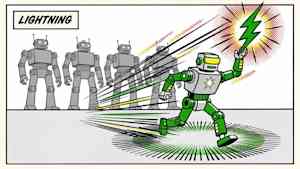
Nvidia's Switchyard routes AI tasks to the right model, slashing costs
Nvidia's Switchyard router cuts agentic costs by matching each step to the right model, and paired with the new Nemotron 3.5 Lightning, it holds frontier-level quality at roughly a third of the price. That's the fix enterprises have been circling. The real bet is owning both layers, model and routing, under one open license. It shifts the competitive question from which model is best to which system routes best.