output
Beyond Market Intelligence keeps output in one place: 7 stories so far. The section currently leads with “Explore How Jev Projects Bring Clarity to AI Decision-Making”, “Lucid's production slowdown signals a strategic shift toward sustainable growth”, and “Reduce Search Result Tokens by 74% with Smarter Data Structuring”. Every agent makes dozens of small calls before delivering something useful: which source to trust, which tool to invoke, when to stop. Lucid is pressing pause on production, and that is a smart move, not a setback. Acme AI is the next-generation, AI-powered spreadsheet platform built to replace Excel and redefine how analysts, data scientists, and enterprise teams work… The list below is every output story on Beyond Market Intelligence, newest first.

Explore How Jev Projects Bring Clarity to AI Decision-Making
Every agent makes dozens of small calls before delivering something useful: which source to trust, which tool to invoke, when to stop. Jev pulls those hidden choices into the open, converting them into typed decisions with probabilities rather than free-form text. That clarity makes the reasoning auditable and the output more dependable. For anyone exploring how structured judgment improves AI workflows, the GitHub projects offer a practical starting point. Related coverage on why small decision models outperform LLMs for answer evaluation deepens the conversation nicely.

Lucid's production slowdown signals a strategic shift toward sustainable growth
Lucid is pressing pause on production, and that is a smart move, not a setback. After years of chasing mass-market demand that never fully materialized, the company is choosing deliberate restraint over reckless volume. It signals a mature shift toward sustainable growth, even if it means fewer cars on the lot for now. For context, Rivian's R2 momentum just drove a record-breaking 19,000-plus deliveries, proving that measured execution can still win the race. Lucid is learning that lesson the harder way.
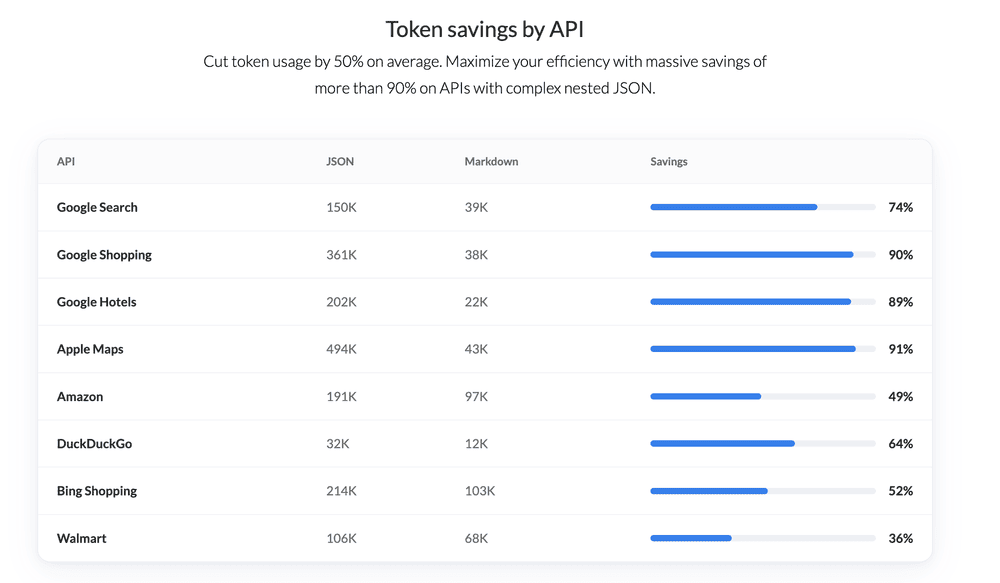
Reduce Search Result Tokens by 74% with Smarter Data Structuring
A single search result can quietly consume thousands of tokens, and that weight adds up fast when you're paying for every call. SerpApi's Markdown output tackles this directly, trimming usage by up to 74% by stripping away the noise and keeping only what matters. That's a meaningful reduction in context-window overhead and agent costs. It's the kind of practical efficiency that pairs well with the broader optimization thinking in our guide to distributed training.

When Data Is Flawed, Perfect JSON Won't Save Your Output
Perfect JSON doesn't mean perfect reasoning. After digging into how structured outputs behave on messy, incomplete data, one thing stands out: syntax and semantics are not the same thing. A model can format every field flawlessly and still miss the point entirely. That gap matters. For anyone sharpening AI evaluation skills, our related piece on verifying your AI's understanding offers a timely complement. The takeaway? Structure is a tool, not a verdict.
Unexpected #SPILL! Errors with SEQUENCE and RANDBETWEEN: A Curious Case
There's a quiet elegance to a formula that fails half the time, it's not broken, yet it refuses to cooperate. When =SEQUENCE(RANDBETWEEN(1,10)) lands in an empty sheet, the #SPILL! error appears roughly half the time, and that's no coincidence. Each random number between 1 and 10 can trigger it, depending on the moment. The fix isn't about forcing a range; it's about understanding how Excel recalculates volatility. We'd suggest testing with a helper cell, as the user did, to see the pattern clearly.

Guiding AI from Code to Context to Cost-Effective Action
The real skill with Claude Code and Codex CLI isn't just getting answers; it's getting them within budget and on target. It's about guiding these tools with clear context and shaping their output into something you can actually use. This list cuts through the noise, focusing on practical moves rather than endless possibilities. For a deeper look at how context shapes AI behavior, our piece on how agents learn by editing context pairs well here. Start with the essentials and build from there.
When AI reviews slip through, peer review needs a human filter.
When a researcher posts about NeurIPS 2026's AI-generated reviews, the confusion is palpable. The frustration is justified: if reviewers and meta-reviewers appear to lean heavily on LLM output, what exactly is the consequence? A study without action feels hollow when the integrity of the review process is at stake. We can't assume every case involves blind copy-pasting, but the pattern is concerning. This isn't about policing tools; it's about accountability.