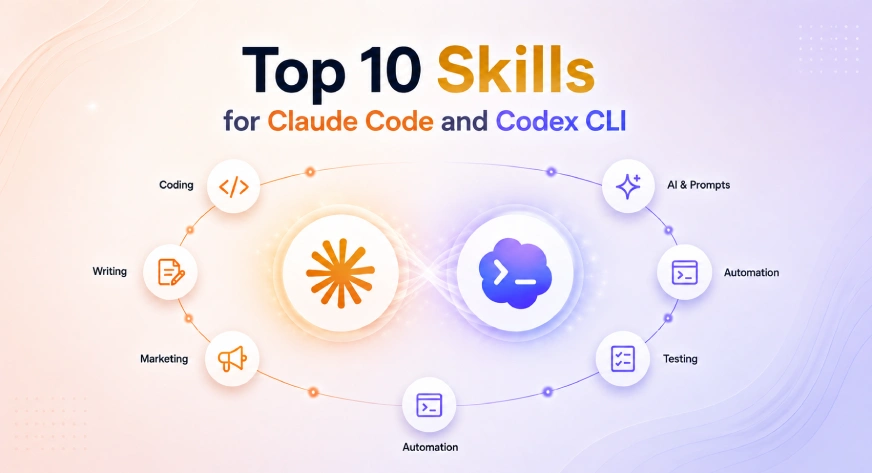
The most useful thing you can learn about working with AI code assistants isn't a better prompt. It's the discipline to frame the problem before you ask, and the judgment to verify what comes back. Analytics Vidhya's list of top skills for Claude Code and Codex CLI lands on exactly that point: the real skill isn't getting AI to answer, but getting it to answer within your budget and against your actual requirements. That distinction matters, because it shifts the conversation away from model capabilities and toward your own working habits.
We've spent the last year watching people treat these tools as oracle-like autocomplete. They paste a vague request, get a confident block of code, and run it without asking whether it fits the system's constraints or the team's style. The skills in this piece push back on that reflex. They're about context, constraints, and turning raw output into something you can ship. That's a more demanding standard, and it's the right one. It also connects to something we explored recently in Explore how AI agents learn by editing context, not model weights, where the emphasis is on how agents improve by refining the context they operate within. The same principle applies on your end: the quality of the context you provide is the single largest lever on the quality of the output.
There's a human dimension here too. When we talk about "guiding with clear context," we're really talking about communication. You have to know what you want, what you don't want, and how to say it in a way that a model can act on. That's not a technical skill; it's an editorial one. It's the same muscle you use when reviewing a teammate's work or writing a sharp ticket. And it's worth remembering that the model doesn't care about your deadlines. It won't push back if your request is ambiguous or your acceptance criteria are missing. That burden is yours. This is where we'd point you to Talking to My AI Clone Taught Me to Question the Tech, which makes a similar point from a different angle: the more fluent the AI becomes, the more you have to question what it's producing and why you asked for it in the first place.
What we appreciate about this particular list is that it doesn't pretend you can skip the boring parts. You still need to define your budget, state your constraints, and verify the output. The tools haven't removed that work; they've made it more important. If you're using Claude Code or Codex CLI and feeling like you're not getting the value you expected, the problem probably isn't the model. It's that you haven't given it a fair chance to be wrong in useful ways. Start smaller. Write a precise context block. Test one function before asking for the whole module. The specific takeaway we'd offer: treat your first interaction with the tool as a negotiation, not a command. You set the boundaries, you define what "done" looks like, and you hold the line when the output drifts. That's the skill that separates people who use these tools well from people who just use them.