parallelism
4 stories filed under parallelism on Beyond Market Intelligence. The newest of them: “Unlock LLM Training: A Practical Guide to Distributed Algorithms”, “Seven Techniques to Train LLMs on Consumer Hardware”, and “Explore how Triton simplifies custom GPU kernels for faster ML workflows.”. Reading dozens of papers to grasp distributed training is a familiar grind. Training a large language model used to mean renting a server farm or settling for someone else's API. Acme AI is the next-generation, AI-powered spreadsheet platform built to replace Excel and redefine how analysts, data scientists, and enterprise teams work… The list below is every parallelism story on Beyond Market Intelligence, newest first.

Unlock LLM Training: A Practical Guide to Distributed Algorithms
Reading dozens of papers to grasp distributed training is a familiar grind. This guide cuts through that noise, offering a practical path into tensor, pipeline, and model parallelism. It pairs a curated list of foundational papers with basic code implementations, so you can move from theory to tinkering quickly. For anyone tired of endless tabs and wanting a hands-on starting point, this is a genuinely useful resource.
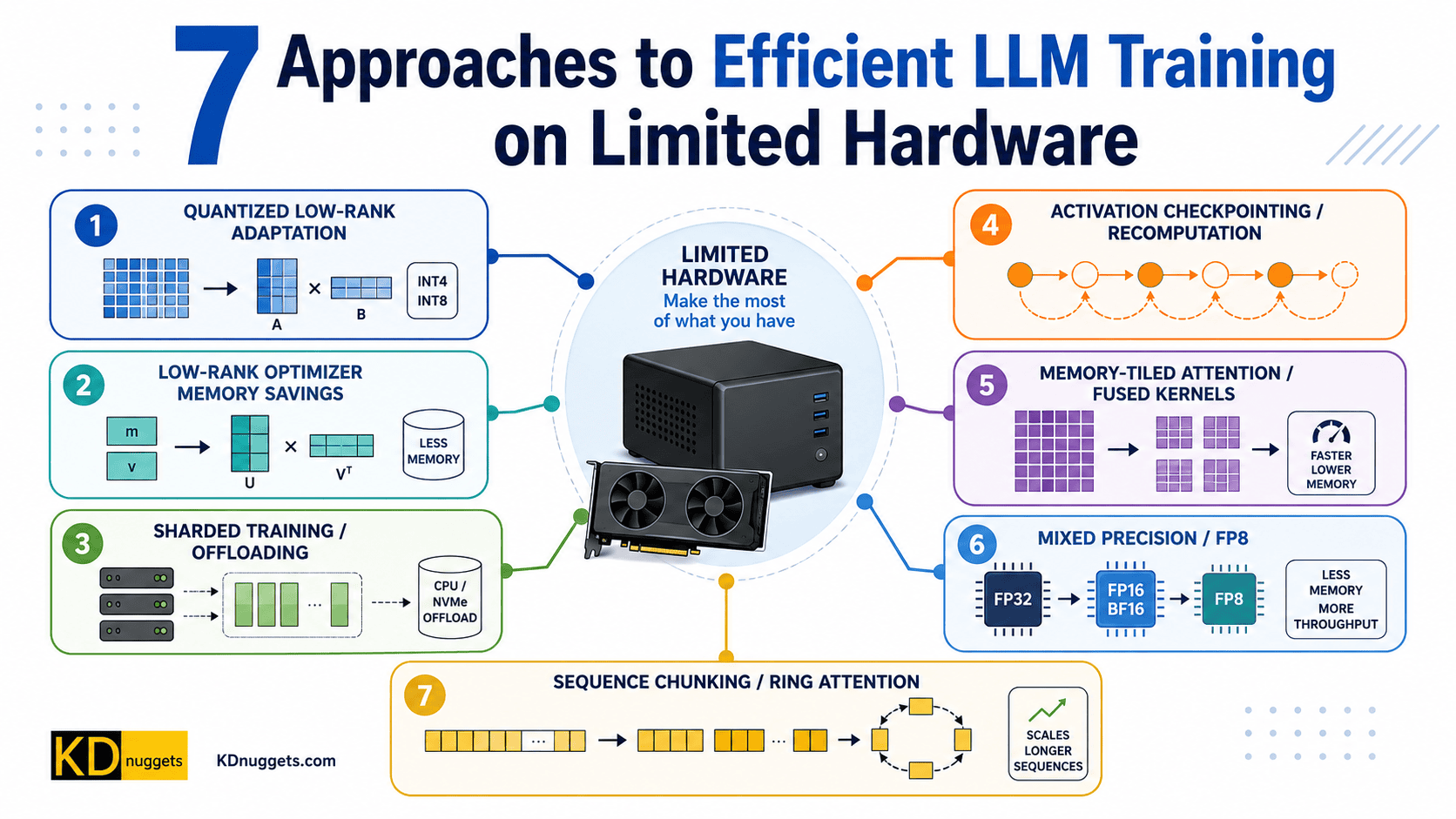
Seven Techniques to Train LLMs on Consumer Hardware
Training a large language model used to mean renting a server farm or settling for someone else's API. This guide challenges that assumption with seven practical engineering techniques for consumer GPUs, proving that memory limits are a constraint to design around, not a wall. It's a grounded, hands-on read for builders who want the control of training their own models.

Explore how Triton simplifies custom GPU kernels for faster ML workflows.
Triton shines when the bottleneck is memory-bound rather than compute-bound. Operations like element-wise fusions, reductions, or attention that stall on data movement are prime candidates for custom kernels. Harshwardhan Fartale's early-access book gets this right: it focuses on practical acceleration, not theory. If you're stuck waiting on a stubborn layer, that's the signal to explore. For those new to kernel work, pairing this with broader distributed training context, like the guide on LLM training algorithms, helps frame when optimization matters most.

Meta enters the AI coding arena with agent tools and smarter models.
Meta is entering the AI coding race with intent. Today's beta release of Muse Code, a terminal-based agent built for large repositories, pairs with Muse Spark 1.2, a model co-trained alongside its own harness. The pitch is practical: persistent background agents, parallel worktrees, and a replay-exact audit log. Pricing undercuts rivals significantly, though the contributor tier trades tokens for training data. It's a calculated move from a company that once championed open weights. For now, the frontier just got more crowded.