performance
performance at Beyond Market Intelligence is a file of 135 stories. The newest of them: “Finding the Right Compute for Your AI Inference Workloads”, “Explore cost-effective vector search with on-disk ANN indexes like DiskANN”, and “Explore the tools and training shaping the future of agentic AI.”. Sourcing compute for inference workloads is a puzzle most teams know well, and this post gets straight to the point. RAM is the ceiling that most vector search budgets hit first. Acme AI is the next-generation, AI-powered spreadsheet platform built to replace Excel and redefine how analysts, data scientists, and enterprise teams work… The list below is every performance story on Beyond Market Intelligence, newest first.
Finding the Right Compute for Your AI Inference Workloads
Sourcing compute for inference workloads is a puzzle most teams know well, and this post gets straight to the point. The ask for real experiences with services like RunPod or Vast.ai is smart; those pain points are where practical answers live. It's a grounded way to cut through the noise. We appreciate the directness here, and the survey feels like a natural next step for anyone who's been there.

Explore cost-effective vector search with on-disk ANN indexes like DiskANN
RAM is the ceiling that most vector search budgets hit first. When that ceiling gets too expensive, the conversation shifts to disk. The real trade-offs between in-memory HNSW and on-disk options like SPANN and DiskANN are walked through, giving a practical lens on latency versus storage cost. It's a grounded look at architecting infrastructure that scales without breaking the bank. For a deeper dive into system-level choices, our piece on adaptive recommendation systems offers a useful parallel.

Explore the tools and training shaping the future of agentic AI.
This week's roundup zeroes in on the tools and skills that actually move the needle, from top MCP servers for high-performance agentic development to Kaggle and Google's free five-day course. It's a practical lineup, and we appreciate that. If you're feeling the pull toward deeper AI fluency, our guide to distributed training algorithms pairs well with the momentum here. Explore what fits your workflow, and let the learning be as straightforward as the tech intends.

Two AI coding agents face off in a practical head-to-head test
For months, Claude Code has been the default terminal coding agent, but Grok Build's beta arrival on May 14, 2026, changes that dynamic. I ran both through identical prompts on the same real-world tasks to see which genuinely delivers. The results are practical, not theoretical. If you are weighing your options, this comparison cuts through the noise. And for a deeper look at how AI agents refine their approach, check out our piece on Agentic Context Learning.

When Scaling AI Agents, Small CPU Tasks Become Big Bottlenecks
We scaled to hundreds of LLM agents and watched our system crawl. The culprit wasn't the models. It was the hidden cost of asynchronous design, where tiny CPU tasks quietly piled up until they became the bottleneck. This story is a practical look at that tradeoff, and it pairs well with our guide on distributed algorithms if you want the deeper mechanics. The takeaway is simple: more agents mean more overhead, and ignoring it slows everything down.

React Compiler Moves to Rust for Faster Builds and Smoother Upgrades
Meta has moved the React Compiler into its main repository as a Rust port, and the payoff is hard to ignore: up to 50% faster compilation without touching the public API. That's a practical win for developers who want speed without relearning their tooling. The memoization happens automatically, which is the kind of quiet efficiency that adds up. It's a smart, grounded step toward tighter Rust-based integration.

Build Your Own LLM Runtime with a Guided Tour of Real Bugs
There's a particular satisfaction in packing your own weights and capturing your own CUDA graphs, and that's exactly the terrain this walkthrough covers. The post traces the building of annotated-llm-runtime on an H100, with three bugs generating most of the hard-won annotations. It's a practical, grounded tour for anyone curious about the mechanics beneath the abstraction. For broader context on the distributed side, *Unlock LLM Training* pairs well here, though this piece stands firmly on its own.

Rspack 2.0 delivers faster builds with a leaner, modern ESM core.
Rspack 2.0 strips away the weight of legacy dependencies to focus on what modern JavaScript needs: a pure ESM core. ByteDance's team delivered measurable build-time gains, with npm downloads now clearing 5 million weekly, a sign developers feel the difference. The improved static analysis and RSC support point to a tool built for today's workflows, not yesterday's assumptions. For a deeper look at how performance-focused tooling evolves, our piece on compiling TypeScript to native code offers a useful contrast.

Google expands Gemini lineup while leaving its Pro future unclear
Google's latest model drop brings three new Gemini options, yet the missing 3.5 Pro continues to raise questions about its AI roadmap. Shipping Flash, Flash-Lite, and a cyber-focused variant signals a commitment to speed and accessibility, but the flagship gap feels like a deliberate pause. We think that is worth watching closely. If you are exploring how these models handle distributed training, our guide to LLM algorithms offers useful context. For now, the strategy seems focused on practical tools over headline-grabbing power.
Beyond language: How JEPA aims to close the gap between answering and doing
LeCun's point lands well: an LLM can describe the physical world without truly modeling it. That gap between explaining and doing is the real challenge. His push for JEPA as a path forward is compelling, but it raises a fair question. Are we chasing an architectural fix, or just hoping for a magic bullet that isn't in our toolbox yet? It's a worthwhile tension to explore. For more on how AI handles understanding, check out "Verify Your AI's Understanding: A Simple Check for Tax Season."

Discover what it's like to rely on a luxury AI agent daily
Dropping $6,880 on a phone is a bold statement, and Vertu's latest AI agent makes that price tag feel justified, or at least intriguing. This luxury foldable isn't just about polish; it's about how well the AI actually handles daily workflows, battery endurance, and security under real-world pressure. We put it to the test, and the results are compelling.
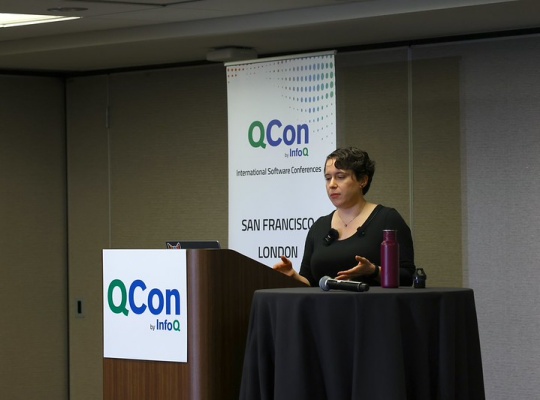
How Rust's compile-time safety reshaped our thinking on delivery speed
Rust's borrow checker often gets framed as a barrier, but Ruth Linehan's talk flips that assumption. She shows how migrating high-performance caching services from Kotlin to Rust actually shortens the developer feedback loop, turning compile-time safety into a daily advantage. It's a practical look at how the language reshapes delivery velocity, not just runtime performance. For those exploring how modern infrastructure choices ripple outward, this pairs well with our coverage of Perplexity's move to CobbleDB.

Smarter Traffic Management and Greater Efficiency with Linkerd 2.20
Linkerd 2.20 lands with sharper traffic management and meaningful efficiency gains, reinforcing why the CNCF-graduated service mesh remains a compelling lightweight choice for Kubernetes networking. The updates feel purposeful, targeting performance and observability without adding unnecessary complexity. For teams tired of wrestling with heavier meshes, this release invites a simpler path forward. If adaptive systems intrigue you, Mallika Rao's insights on real-world recommendations pair well with this momentum. Explore Linkerd's latest strides, and see how smarter routing can lighten your operational load.

Your Local LLM Costs Less Than You Think, and Size Isn't the Reason
The cheapest local model isn't the smallest, and the priciest isn't the biggest. That's the takeaway from a hands-on measurement of eight models running on a single RTX 3090, where actual GPU electricity costs were tracked in euros per million tokens. It's a grounded, useful reality check for anyone exploring local AI. If you're weighing similar tradeoffs in your own workflow, our piece on verifying your AI's understanding offers another practical angle worth your time.
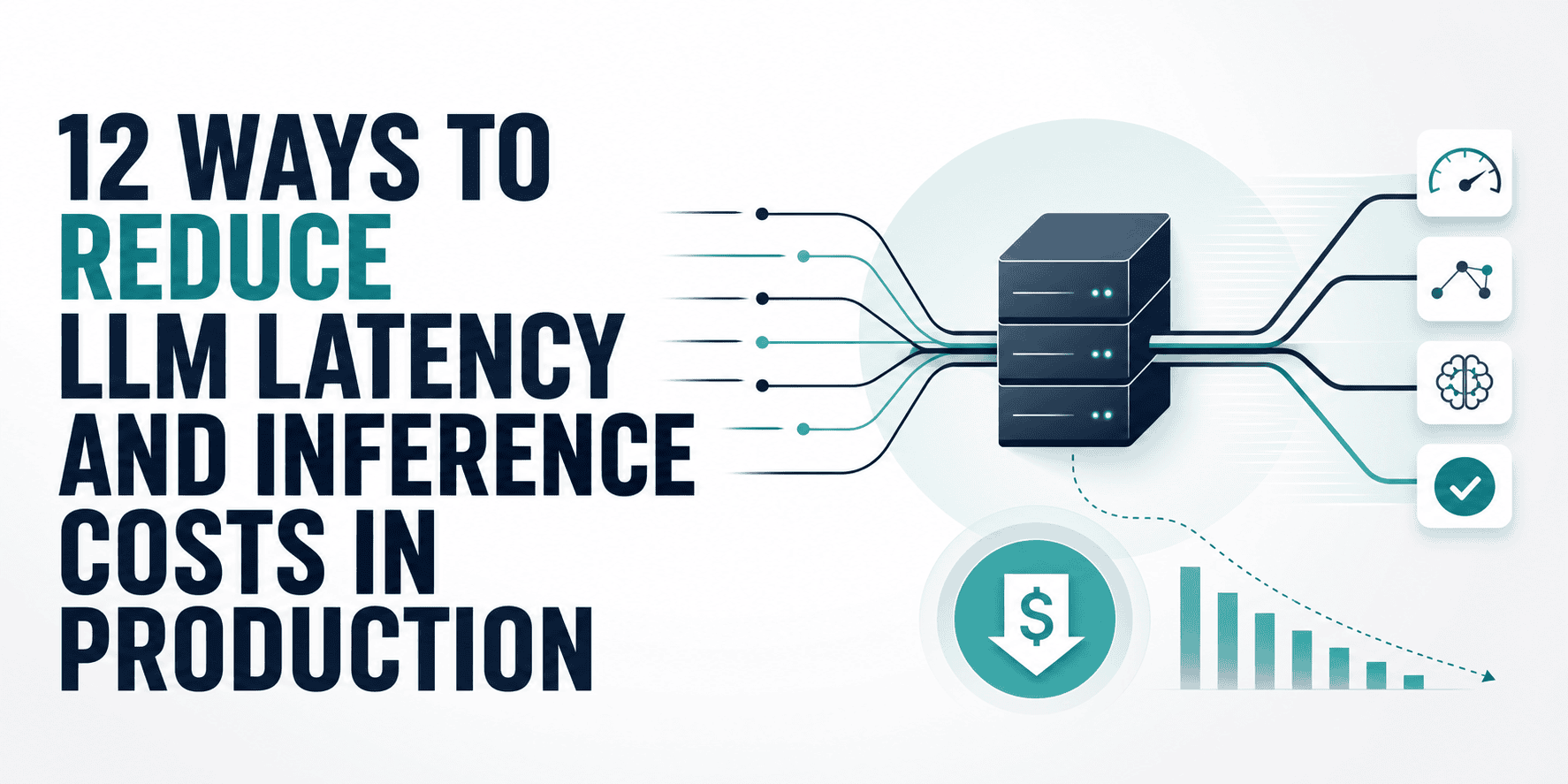
Stop Wasting Compute: Smarter Ways to Speed Up LLM Inference
Scaling LLMs isn't about adding GPUs. It's about removing wasted work from every request. That distinction shapes our latest guide, which lays out 12 practical ways to cut latency and inference costs without chasing hardware. Each tactic targets the inefficiencies that quietly slow production systems. If you're ready to move past brute-force scaling, this is where you start. For a deeper look at how distributed systems underpin these choices, our guide on unlocking distributed training algorithms pairs well with the conversation.