product development
Beyond Market Intelligence keeps product development in one place: 13 stories so far. The section currently leads with “Learning from failure is how great products are built”, “Epic hits pause on new features to prioritize fixing patient data security gaps”, and “From counterfactual analysis to an AI product that empowers your data work”. Panay's point lands with real weight: failure isn't a dead end in product building, it's part of the path. Epic is pressing pause on new features to prioritize fixing security gaps in its MyChart patient data system. For the next several weeks, Acme AI is the next-generation, AI-powered spreadsheet platform built to replace Excel and redefine how analysts, data scientists, and enterprise teams work… The list below is every product development story on Beyond Market Intelligence, newest first.

Learning from failure is how great products are built
Panay's point lands with real weight: failure isn't a dead end in product building, it's part of the path. Even catastrophic missteps can be recovered from, provided teams treat them as raw material for learning rather than reasons to retreat. That mindset separates organizations that stagnate from those that iterate toward something genuinely useful. For a deeper look at how leaders embrace this approach, our coverage of Figma opening its platform to agents is worth exploring.

Epic hits pause on new features to prioritize fixing patient data security gaps
Epic is pressing pause on new features to prioritize fixing security gaps in its MyChart patient data system. For the next several weeks,
From counterfactual analysis to an AI product that empowers your data work
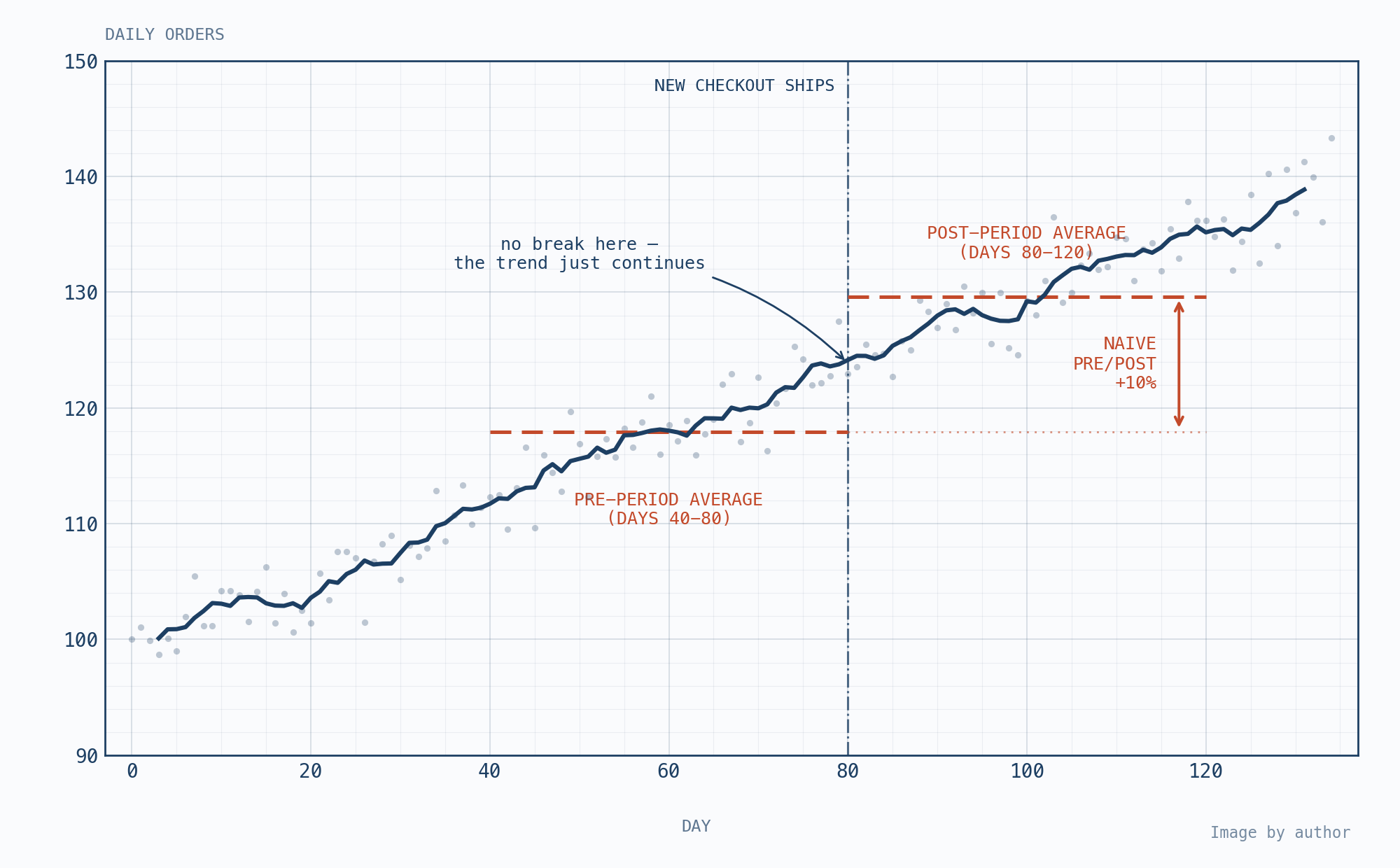
Building a counterfactual engine is one thing. Turning it into a multi-agent product is another. This walkthrough shows exactly what it takes to move interrupted time series analysis from a manual research task into an AI-driven workflow. It's a practical, honest look at the engineering and design choices that matter. If you're curious how structured reasoning gets automated, this is worth your time. For a deeper dive into the underlying mechanics, our guide to distributed algorithms pairs well with the concepts explored here.

Learning from AI's missteps to build more resilient data tools
Apple's Siri kept missing its own deadlines, and OpenAI's messy "super app" launch never found its footing. They now sit in the AI graveyard, a running list of projects and startups that didn't make it. That list is worth studying, not for schadenfreude, but for clarity. Building AI is hard, and shipping it well is harder. If you want to understand why some efforts stumble while others scale, start here.

Stop Misreading Your Data How Confidence Intervals Shape Decisions
Most of us assume that a 95% confidence interval means there's a 95% chance the true value lies within it. That's the illusion. This piece unpacks that confusion, clarifying how frequentist intervals and Bayesian credible intervals answer fundamentally different questions. It's a sharp, practical warning: misuse these tools, and you'll distort product decisions. For those eager to keep sharpening analytical instincts, the discussion pairs well with insights from our piece on adaptive systems, where similar precision matters in recommendation design.

Wonderful secures $550M to accelerate product development and meet growing demand
Wonderful just closed a $550 million Series C that more than doubles its valuation to $5B in under six months. That kind of acceleration signals real market appetite, not hype. The company plans to channel the funding into faster product development, expanding its FDE teams, and keeping up with demand. It's a decisive move for a team clearly focused on scale. For context on how AI-native momentum is reshaping investment, our piece on the $5.75B surge in AI-native companies is worth a look.

AI apps should adapt to you, not the other way around
Gemini's branding problem isn't about the tech; it's about the homework. Consumer AI apps keep forcing us to learn their architecture before we can do anything useful. That's the wrong entry point. We should be exploring what the tool can do for us, not studying its blueprint. A product that demands a manual isn't accessible; it's a barrier. If you've been frustrated by that learning curve, you're not alone.

Explore how Airbnb uses AI to make search more intuitive
Airbnb is putting AI to work where it matters most: shipping features faster. The company is testing a new AI-powered search experience with a toggle, a small but telling step toward making discovery feel less like a chore and more like a conversation. It's a practical move, not a flashy one, and that's why it works. For anyone juggling complex tools, this kind of iterative approach resonates.

AI tools help Google patch more Chrome bugs in a single month
Google says AI helped it fix more Chrome bugs in June than in the prior two years combined. That is a striking signal, not just about volume, but about how quickly large language models are reshaping the mundane work of security. For two years, experts have warned this day was coming. It is here. The shift is practical, not theoretical. If you are curious how AI is changing the tools you rely on daily, this is worth exploring.

AI empowers creators to build more apps with less friction
Mark Zuckerberg says AI is making it dramatically easier to build and launch consumer apps, and Meta is betting on that momentum with more products on the way. The recent wave spans Facebook Groups, Marketplace sellers, Instagram, and gaming, so this isn't a distant ambition; it's happening now. That kind of speed is worth paying attention to, especially when it reshapes how everyday tools work.

Simile secures $200M to expand synthetic data for smarter AI tools
Five months after its $100M Series A, Simile has closed a $200M round at a $2B valuation, cementing its place in the fast-moving AI unicorn club. That pace says something about the demand for synthetic users. We're watching a company that turns data generation into a scalable tool, not a novelty. For those still wrestling with what AI can truly do, our piece on training an AI clone offers a grounded counterpoint.

Recursive Superintelligence invests $410 million in compute to automate product development
Recursive Superintelligence just committed $410 million to Amazon for compute, and that number says more about their strategy than any product roadmap could. By steering what would traditionally go toward headcount and operations straight into infrastructure, they're betting that self-improving AI can automate its own development. It's a bold wager on a future where the company scales with algorithms, not armies. For anyone wrestling with how far AI can genuinely take over complex work, this deal reframes the question.

Discover how Light brings color and affordability to the flip phone revival.
Kaiwei Tang helped create the Motorola Razr, so when he says the flip phone is relevant again, it's worth listening. Light's new device is colorful and cheap, a refreshingly straightforward take on a familiar form. It's not about nostalgia for its own sake; it's about proving that simplicity still has a place. We're curious to see if this resonates beyond the novelty. For more on how minimal tech is gaining traction, check out "Focus on Essentials: A Smartphone Alternative for Intentional Living."