production AI
6 stories filed under production AI on Beyond Market Intelligence. The newest of them: “QCon London 2027 Maps 15 Tracks for Smarter AI and Engineering at Scale”, “Building Trust into AI: Secure Architecture for Enterprise Agents”, and “Building trusted AI for regulated industries at global scale”. QCon London 2027 is shaping up to be a serious map of what's next. Taking an AI agent from prototype to production is where the real test begins. Acme AI is the next-generation, AI-powered spreadsheet platform built to replace Excel and redefine how analysts, data scientists, and enterprise teams work… The list below is every production AI story on Beyond Market Intelligence, newest first.
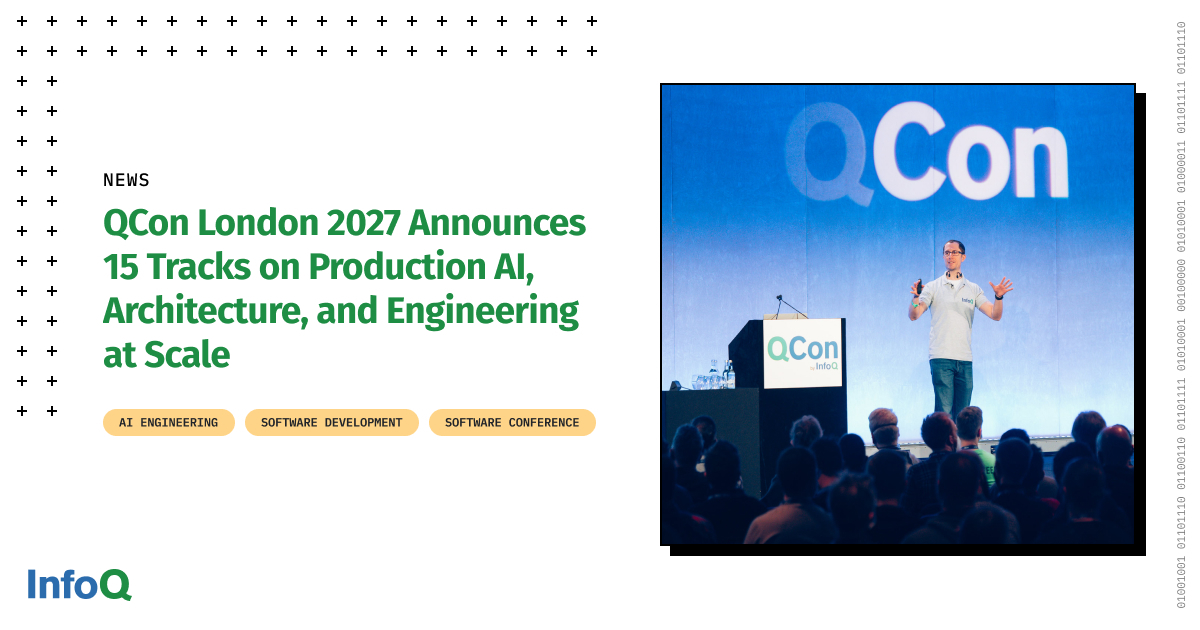
QCon London 2027 Maps 15 Tracks for Smarter AI and Engineering at Scale
QCon London 2027 is shaping up to be a serious map of what's next. With 15 tracks spanning agent evaluation, guardrails, AI-era architecture, and the messy reality of distributed-system debugging, the program doesn't just celebrate scale; it confronts it. For teams wrestling with modern data platforms or Staff+ leadership, this is a practical guide to building smarter. And if you're curious how routing fits into that picture, our related piece on the Jev approach offers a useful counterpoint.

Building Trust into AI: Secure Architecture for Enterprise Agents
Taking an AI agent from prototype to production is where the real test begins. This piece tackles the often-messy transition head-on, focusing on the responsible AI, security, and governance layers that keep enterprise deployments safe. It's a grounded look at building trust into the architecture itself, not bolting it on later. For those wrestling with similar scaling challenges, it pairs well with our broader coverage on agentic workflows. We appreciate the clarity here, as it makes a complex subject feel genuinely approachable.

Building trusted AI for regulated industries at global scale
Building production-ready AI in healthcare isn't just about getting the model right, it's about engineering trust from the ground up. Heidi, an Australian-founded AI Care Partner, proves this by automating clinical documentation across 190 countries, handling 2.7 million patient interactions weekly. The company's success rests on infrastructure decisions made years ago, prioritizing data residency, auditability, and safety by default. As CTO Yu Liu puts it, trust is architectural.
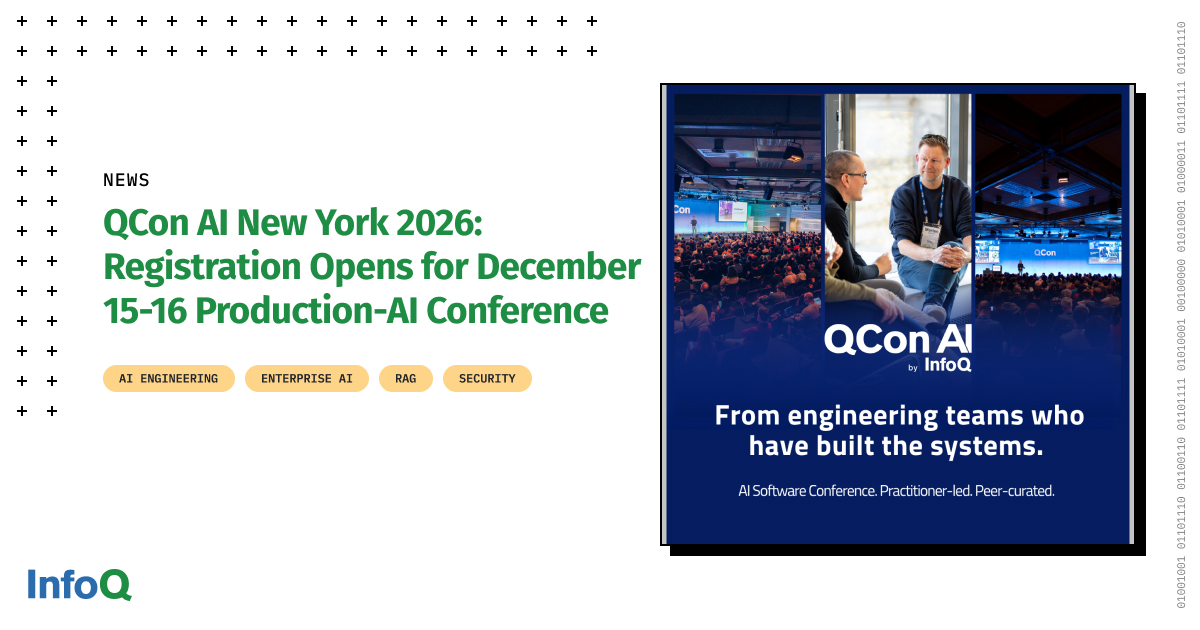
Explore AI in production at QCon New York this December.
Registration for QCon AI New York 2026 is open, with the conference set for December 15-16 at The Westin Jersey City Newport. Six tracks on production AI will be chaired by Eder Ignatowicz, alongside Faye Zhang and Wes Reisz. First sessions land in August, with the full program arriving by November. For teams wrestling with what AI actually demands in practice, this event feels timely.
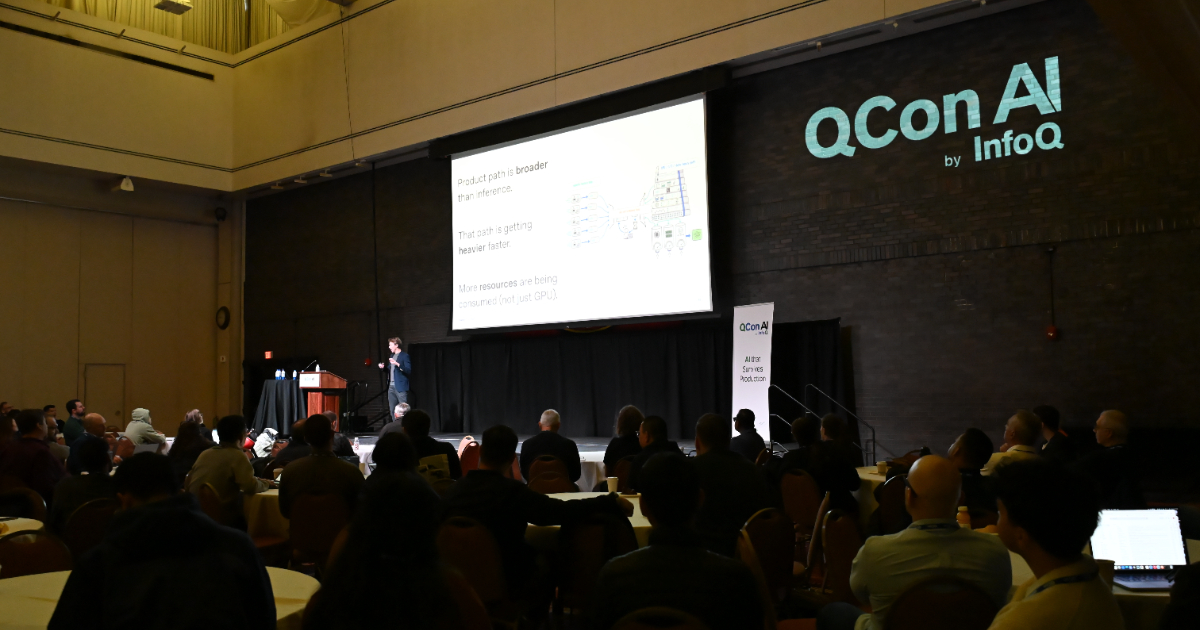
From Prompts to Platforms: Building the Infrastructure for Production AI
The operational reality of AI agents is finally taking center stage, and QCon AI Boston 2026 is where that conversation sharpens. The focus has shifted from what prompts can do to how we build dependable systems around them. We're talking about serious infrastructure: managing context effectively and wrapping agents in a security harness that keeps them safe in production. This is the unglamorous, essential work of making AI actually usable.

Open models are reshaping where enterprise AI actually runs
Hugging Face CEO Clem Delangue sees the AI race shifting ground. Enterprises are increasingly choosing open models for cost, accessibility, and ownership, not because frontier tech lacks dazzle, but because production reality demands control. That raises a fair question: does the latest benchmark matter if most real-world AI runs on open alternatives? I think the answer is nuanced, and it's worth exploring how these choices play out in practice.