projects
15 stories filed under projects on Beyond Market Intelligence. The newest of them: “Navigating EMNLP Presentation Details: When to Seek Clarification”, “Build the Engines Behind Fast LLMs With These Hands-On Projects”, and “From Data Scientist to Research Engineer: Does a Master's Degree Matter?”. Presenting at EMNLP Main is a major milestone, but discovering your presentation details are missing from Underline is understandably frustrating. Latency defines the LLM experience, and the fastest way to understand it is to build it yourself. Acme AI is the next-generation, AI-powered spreadsheet platform built to replace Excel and redefine how analysts, data scientists, and enterprise teams work… The list below is every projects story on Beyond Market Intelligence, newest first.
Navigating EMNLP Presentation Details: When to Seek Clarification
Presenting at EMNLP Main is a major milestone, but discovering your presentation details are missing from Underline is understandably frustrating. If your submission page shows "no presentations yet" while others have their times listed, this is likely a system sync delay rather than an error. Contacting the organizers for clarification is the right move, it's always better to verify than to assume. For more on navigating conference logistics, see our coverage of the NeurIPS 2026 Sydney registration wait.

Build the Engines Behind Fast LLMs With These Hands-On Projects
Latency defines the LLM experience, and the fastest way to understand it is to build it yourself. These hands-on projects move past theory, putting you behind the engine to see exactly where speed is won and lost. It is direct, practical work that transforms abstract performance concepts into tangible skill. If you are also curious about rethinking core learning methods, our exploration of physics-inspired approaches without backpropagation pairs naturally with this builder's mindset.
From Data Scientist to Research Engineer: Does a Master's Degree Matter?
The numbers don't lie: for roles like Research Engineer or Post-Training Applied Scientist, a Master's degree appears in roughly half of job listings, while a BS alone hovers around 22 to 30 percent. That doesn't mean the door is closed, it means your portfolio needs to speak louder than a diploma. Projects still matter, especially when paired with conference papers or published work.
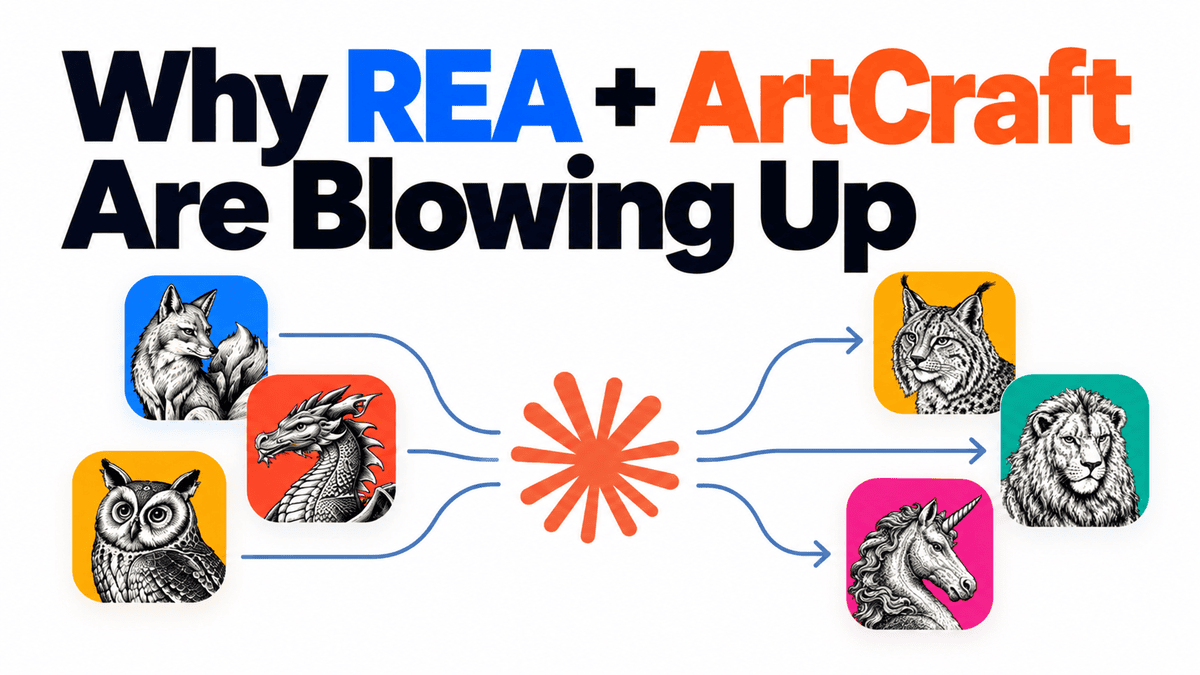
How AI is empowering developers to rebuild familiar software from scratch
Projects like REA and ArtCraft are proving that AI can do more than automate tasks, it can help developers rebuild familiar software from scratch. By reverse-engineering tools like Adobe and Microsoft products without original source code, these projects are rethinking what's possible in software creation. It's a practical, empowering shift. For a deeper look at how AI is reshaping long-term strategy, see our coverage of "Architects Must Rethink Long-Term Strategy for an AI‑Driven Era."
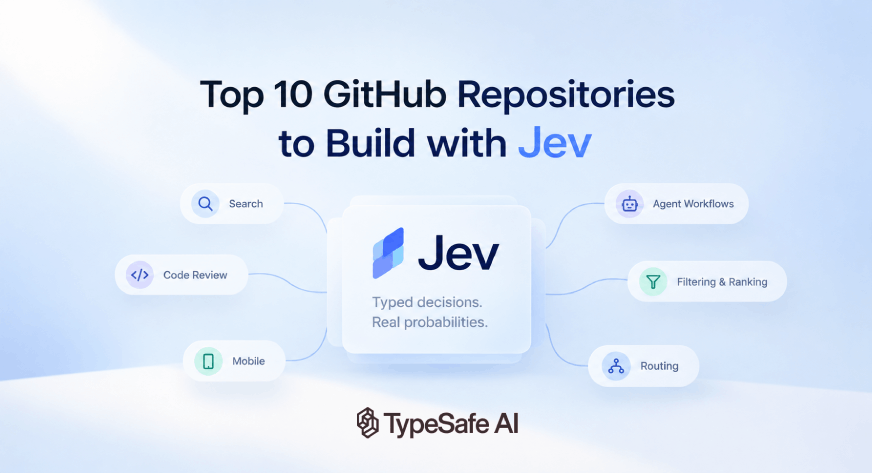
Explore How Jev Projects Bring Clarity to AI Decision-Making
Every agent makes dozens of small calls before delivering something useful: which source to trust, which tool to invoke, when to stop. Jev pulls those hidden choices into the open, converting them into typed decisions with probabilities rather than free-form text. That clarity makes the reasoning auditable and the output more dependable. For anyone exploring how structured judgment improves AI workflows, the GitHub projects offer a practical starting point. Related coverage on why small decision models outperform LLMs for answer evaluation deepens the conversation nicely.
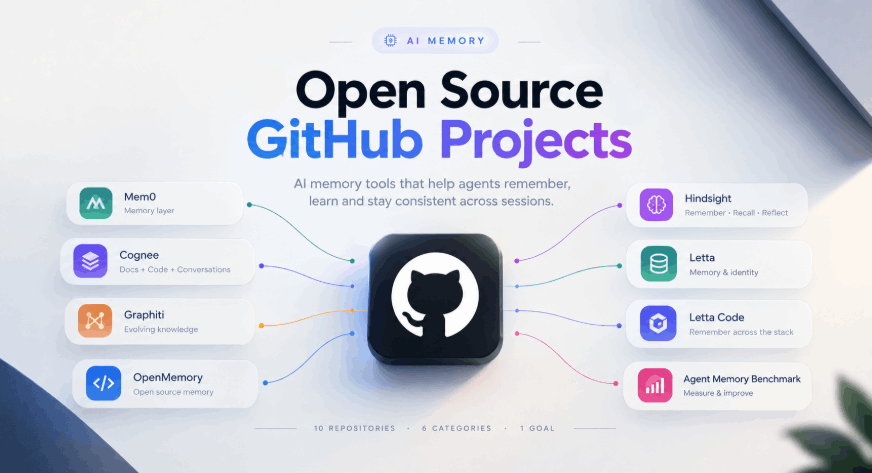
Explore Open-Source Tools That Give AI Agents Lasting Memory
AI agents handle enormous context windows, yet they still forget everything once a session ends. That gap is where memory systems step in, preserving facts, preferences, and task state so agents carry continuity across interactions. Open-source projects now tackle this through APIs, graphs, and portable state. We explore seven GitHub repositories that give AI lasting memory. For deeper context on how agents are evolving, our coverage of *Claude Sonnet 5.5* examines faster coding and smarter workflows.
Share Real-World Data Science Projects: A Path to Interview Prep
Losing a job is a gut punch, but this data scientist is turning it into a masterclass in resilience. Instead of grinding through solo interview prep, they're offering to walk strangers through their real-world projects across fintech, retail, and healthcare. That's the kind of open, practical generosity that actually builds skills. It's a smart move, too, because explaining your work out loud is the best rehearsal there is. If you're prepping for a data role, this is a low-pressure way to learn.

Learning from AI's missteps to build more resilient data tools
Apple's Siri kept missing its own deadlines, and OpenAI's messy "super app" launch never found its footing. They now sit in the AI graveyard, a running list of projects and startups that didn't make it. That list is worth studying, not for schadenfreude, but for clarity. Building AI is hard, and shipping it well is harder. If you want to understand why some efforts stumble while others scale, start here.

Claude now remembers your preferences across every conversation
Claude Cowork no longer makes you repeat yourself. Anthropic is rolling out shared memory across chat and Cowork, so the context you provide in one place carries into the other. That means less time re-explaining project details and more time letting the work flow. It is a practical step toward tools that actually listen. For more on where AI interactions can get complicated, our piece "Talking to My AI Clone Taught Me to Question the Tech" offers a useful counterpoint.
Freedom to explore your PhD path when you're ready to drive your own research
A PhD is a marathon of self-direction, but even the most independent researcher needs a compass. This setup offers total freedom, which sounds liberating, yet the near-total absence of feedback creates a real risk of drifting. For the right person, it is a dream; for others, it is a lonely trap. The choice hinges on whether you thrive on isolation or require a mentor's voice to sharpen your thinking. For more on navigating complex systems, explore our piece on unlocking LLM training.
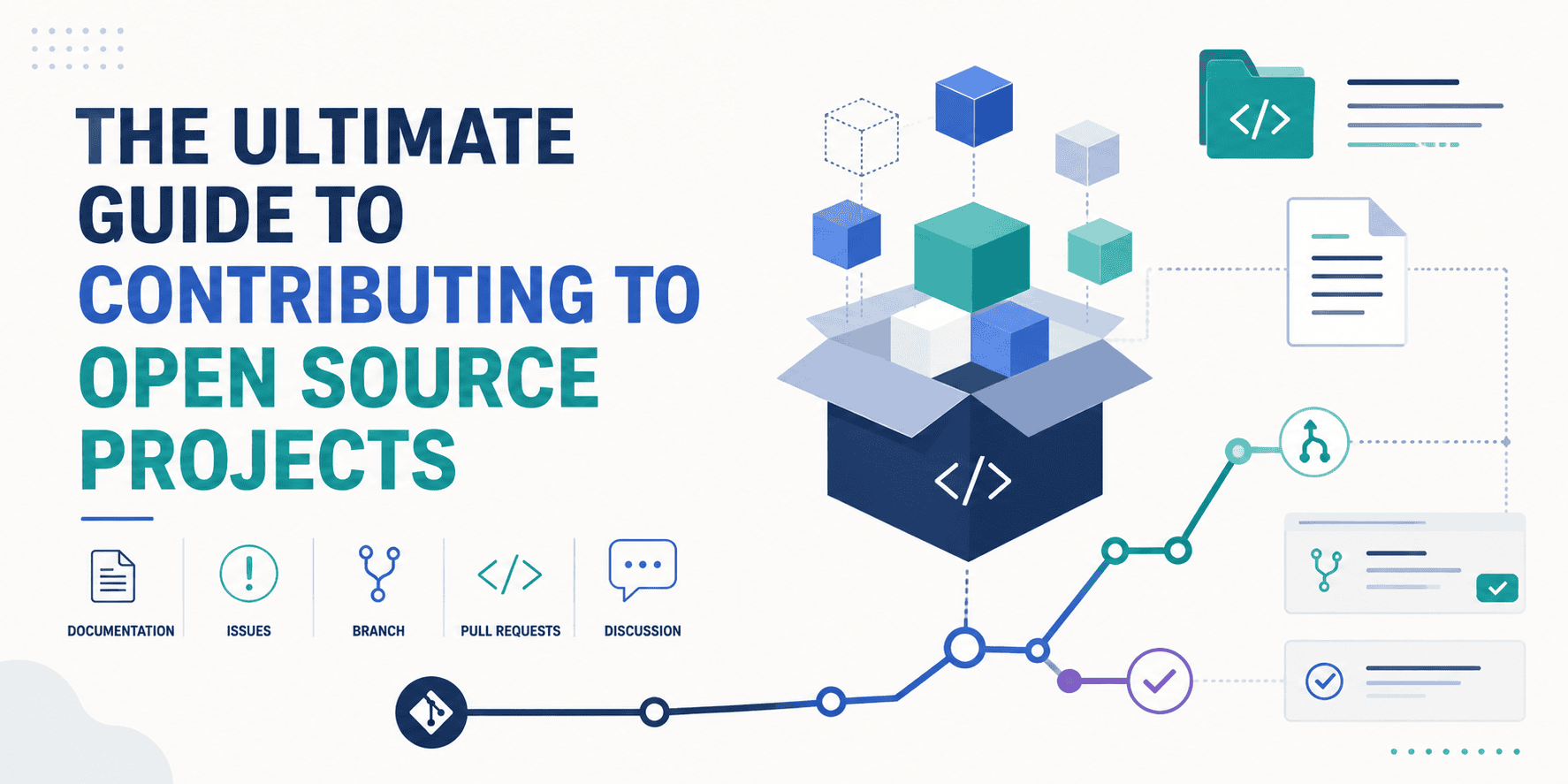
How to Contribute to Open Source Projects With Confidence and Clarity
Open source contributions often stall before they start, usually because the first commit feels like the hardest step. This guide cuts through the guesswork, showing you how to identify projects where maintainers actually respond, master the exact git workflow, and turn a single pull request into a lasting presence. It is a practical map for getting your first real contribution merged.

Taxpayers absorb $4B cost as offshore wind leases are abandoned
The Trump administration has now spent nearly $4 billion to convince developers to abandon 12 offshore wind leases, with the latest buyout costing taxpayers $1.2 billion. That is a striking sum for walking away from clean energy infrastructure. It signals a deliberate retreat from a sector that many saw as central to the grid's future. For those tracking how policy shapes technology adoption, this is a stark example of momentum lost.
Find Your Next AI Project and Contribute with Purpose
Finding your footing in deep learning takes more than coursework; it takes real-world reps. This user gets that. Their offer to join an active project shows a practical understanding that skills grow fastest when they're tested collaboratively. It's a smart, humble approach. For anyone building AI/ML systems, a contributor who is both eager and self-aware is a rare asset. We hope they find the right team. For more on tackling complex data challenges, exploring the Forrester function might be a useful next step.

From Patience to Impact: 8.5 Years of Machine Learning Insights
Eight and a half years in machine learning teaches you that the models are the easy part. The real work is patience, optimism, discipline, and learning to trust the people building with you. This reflection from Towards Data Science doesn't oversell the wins; it sits in the messy, human reality of the craft. If you are early in your own path, this is a grounding read. And for another angle on structured thinking, explore the Forrester function piece we published alongside it.

Cascade secures $3.5M to help construction firms win more projects
Cascade has raised $3.5 million in seed funding, with backing from a16z Speedrun, Ada Ventures, and Snowball VC. The construction industry is ready for a smarter way to find and win projects, and this investment points toward that shift. We see real potential here, especially as AI tools become more accessible across sectors. For context on how AI-native infrastructure is reshaping other industries, our piece on Nscale's recent funding offers a useful parallel. Explore what this means for firms ready to modernize their approach.