pytorch
pytorch at Beyond Market Intelligence is a file of 28 stories. The newest of them: “Google and Amazon give PyTorch developers a new path beyond Nvidia GPUs”, “From naive GEMM to FlashAttention: a free code-first GPU kernel series”, and “Amazon challenges Nvidia's AI grip with new tool for alternative chips”. Google and Amazon have both now released tools that let PyTorch developers move their applications beyond Nvidia GPUs. Most GPU kernel tutorials treat optimization as a black art. Acme AI is the next-generation, AI-powered spreadsheet platform built to replace Excel and redefine how analysts, data scientists, and enterprise teams work… The list below is every pytorch story on Beyond Market Intelligence, newest first.

Google and Amazon give PyTorch developers a new path beyond Nvidia GPUs
Google and Amazon have both now released tools that let PyTorch developers move their applications beyond Nvidia GPUs. That is a meaningful step toward a more open AI infrastructure. For teams feeling locked into a single hardware path, this opens real flexibility. It is a practical shift, not a marketing promise. And it connects to a broader trend we are tracking: in our piece on Muse's rapid growth, we explore how users are embracing AI on their own terms.
From naive GEMM to FlashAttention: a free code-first GPU kernel series
Most GPU kernel tutorials treat optimization as a black art. This series opens it up. The insight that performance is a data-movement problem first, compute second, reframes everything. Building FlashAttention from scratch, where tiling avoids writing the full attention matrix to memory, is a perfect worked example. The 44-session roadmap covers GEMM through Hopper architecture, with live profiling at every step. If you write production kernels, this is the kind of resource worth contributing feedback to.

Amazon challenges Nvidia's AI grip with new tool for alternative chips
Amazon is taking direct aim at Nvidia's dominance in AI, and the weapon of choice is PyTorch. By offering a new tool that lets developers run their apps on alternative chips, including Amazon's own, the company is trying to break the hardware lock-in that has made Nvidia essential. It is a smart, practical move. For a deeper look at how AI models actually run at the kernel level, our series *From naive GEMM to FlashAttention* offers a free, code-first guide.
Building a GPT-2 KV Cache to Measure Real AI Performance Gains
Building a GPT-2 KV cache in PyTorch as a learning project is exactly the kind of hands-on work that reveals where the math meets reality. The numbers tell a fascinating story. At context length 1,000, the FLOP estimate suggests a 1,000x reduction with caching, yet actual per-token latency only drops about 6x. That gap is worth exploring. The memory measurements are impressively clean, with requested bytes matching the formula to zero after accounting for a constant cuBLAS workspace offset.

Explore a new open-source library standardizing 3D point cloud models with PyTorch
Point cloud models have long been trapped inside research codebases with custom build steps and shifting checkpoints. Torch-pointcloud changes that. It wraps multiple architectures, PointNet++, KPConv, Point Transformer v3, and more, behind a single `create_model()` factory, reusing core components like KNN and FPS rather than reinventing them. Weights are on Hugging Face, installation uses pre-built wheels, and benchmarks match original metrics. It is still alpha, but the goal is a library you can actually `pip install` and trust.
Master PyTorch debugging for your Toyota Woven perception interview
Debugging PyTorch for a Toyota Woven perception interview means getting comfortable with silent failures. Models don't always crash, they just produce NaN validation loss or suspicious training curves. Focus on tensor shapes flowing through a ViT or U-Net, broadcasting rules, and slicing. Know why your loop breaks. A budget GPU running real-time neural weather in Minecraft at 30 FPS shows how small, well-debugged models can still deliver. That's the level of precision they expect. Trace every dimension.

Can a 414K-parameter transformer learn to steer a flock?
A 414,000-parameter transformer, trained on 12 simulated birds, learned to steer a flock with R² above 0.99, and then flew 50 birds it had never seen. The three classic boid rules were readable from its hidden states using a linear probe. That is a remarkably clean result for a model written from scratch and trained on a laptop CPU. It suggests something worth exploring: how much intelligence is actually hiding in simple attention mechanisms, and what else they might learn to simulate.
When AI Writes Faster CUDA Kernels Than PyTorch, Benchmarks Decide
AI agents are now writing CUDA kernels that beat PyTorch on speed, but proving those gains are real is the harder problem. I tested them on an NVIDIA DGX Spark and found that benchmark design matters as much as the code itself. When the hype machine sells you AI at every turn, a clear-eyed test like this cuts through the noise. For more on staying grounded, see our related piece on keeping your judgment amid the AI sales pitch.

Two AI copies keep drones and cloud in sync with 94% less data
Two tiny AI models, one on a drone and one in the cloud, now stay perfectly synchronized using 94% less data. No constant streaming required. This beginner-friendly PyTorch tutorial shows how it works, making remote machine communication far more efficient. It's a practical step toward smarter, lighter data management. For another take on prediction from the ground up, see our coverage of the world model built from scratch to forecast human behavior.
Recover Blood Flow from 40 Noisy Readings with a PyTorch PINN
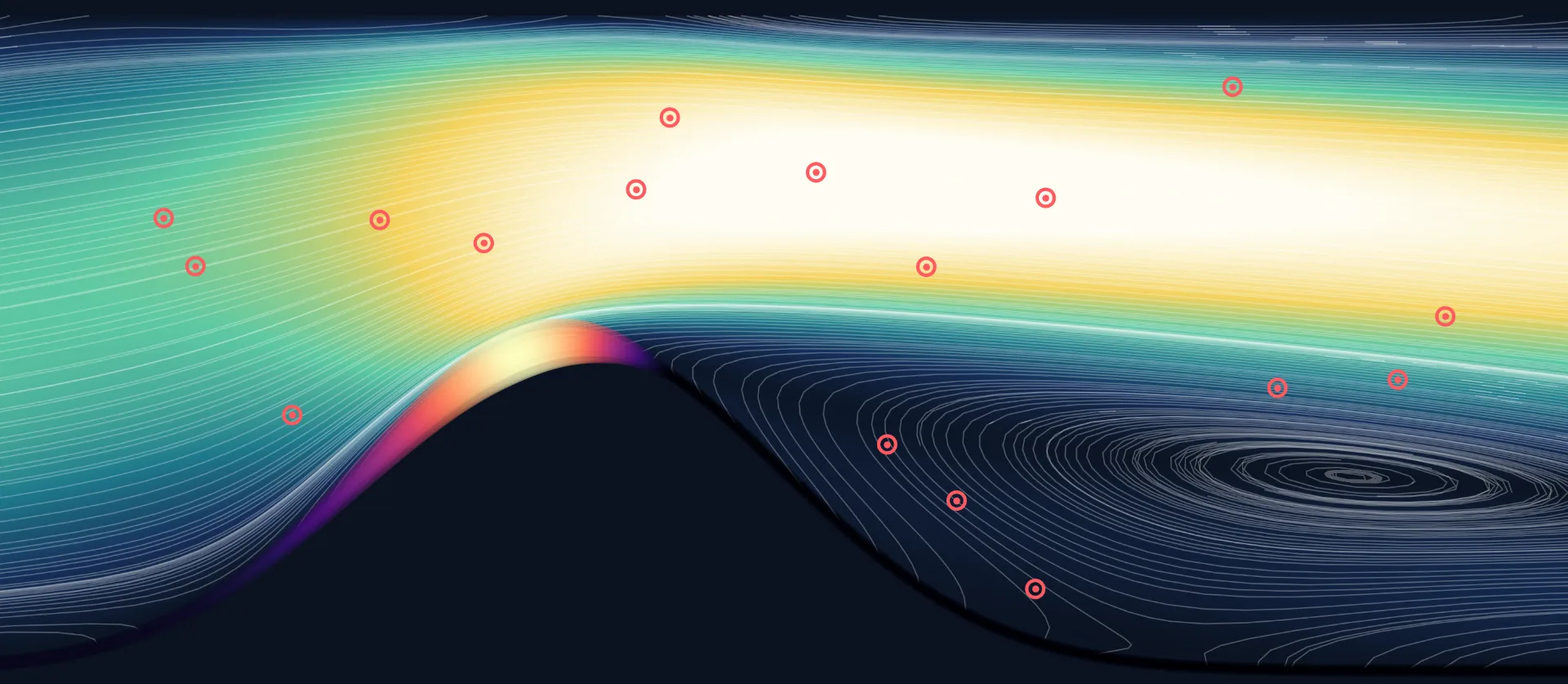
Forty noisy measurements. One narrowed artery. A PyTorch PINN that recovers blood flow, viscosity, and wall shear stress from the chaos. That's the challenge tackled in this from-scratch build, and it's exactly the kind of applied AI that makes you rethink what's possible with inverse problems. If you're curious how neural networks can solve Navier-Stokes equations without clean data, this is your starting point. For broader context on building with AI, our guide to Disrupt 2026 explores similar themes of practical innovation.
Transforming LLM Efficiency: A DSP-Inspired Semantic Vocoder Approach
The idea of treating text like an audio signal is a sharp pivot. By splitting generation into a slow-rate planner and a fast-rate vocoder, this work tackles the inefficiency where predicting every token costs the same compute, regardless of its weight in meaning. The TinyStories results are compelling, showing faster convergence. However, the conditioning over-reliance is a real bottleneck. When the base model leans on semantic hashes, grammar suffers. This is a thoughtful exploration of a genuine problem.

Explore how LARA makes frozen LLMs adaptable with lightweight modular behaviors
Most post-training work assumes you must bolt new weights onto a model. LARA challenges that by training small, low-rank residual adapters at selected layers, leaving the frozen LLM untouched. The result is a library where behaviors like coding, maths, or medical reasoning are separate, lightweight files. You can load them, blend them, or route them per token. The Mixture of Behaviors demo shows a single model switching between Hemingway and Fitzgerald styles. It is practical, modular research.
How Silent Tensor Broadcasting Creates Hidden Model Errors
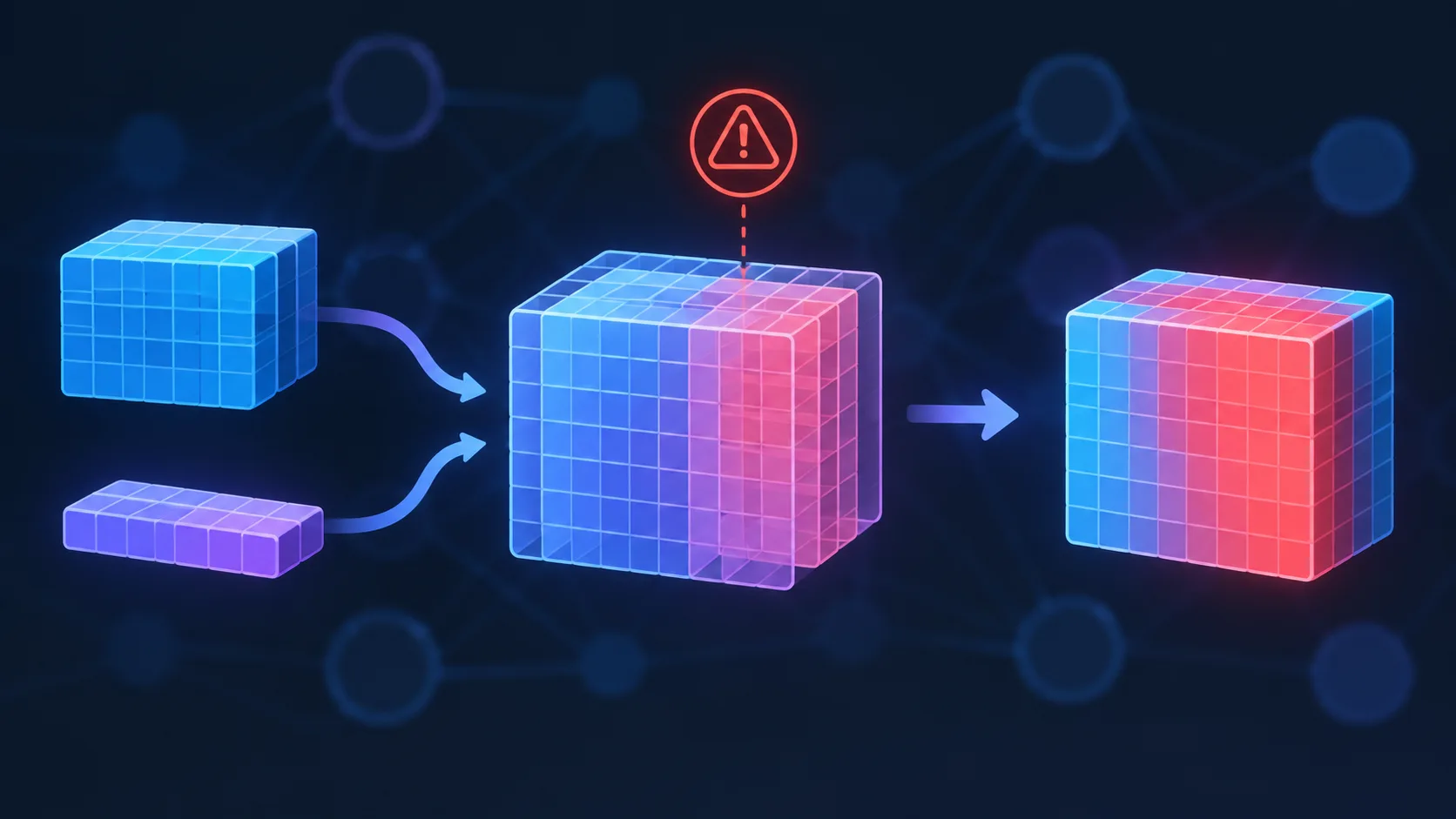
Silent broadcasting can quietly corrupt your model's performance, often without a single error message to guide you. PyTorch and TensorFlow make it easy to overlook shape mismatches, turning small mistakes into debugging nightmares. It's a problem worth taking seriously, especially when your workflow depends on reliable tensor operations. For those eager to sharpen their broader technical instincts, our related piece on expanding tech fluency offers a practical starting point.

Discover a smarter path to your next great white wine recipe.
A white wine recipe scored between 7.30 and 7.58 is a strong result, and the approach here is genuinely clever. This project navigates a latent space to find where the best wines cluster, then takes 100 careful steps toward the highest possible score. The loss question is a fair one; plateaus matter more than absolute numbers with MSELoss. This is thoughtful experimentation, not just tinkering. For anyone exploring similar generative modeling, our piece on the Forrester function offers a related angle on optimization.
Discover How Predictive Coding Networks Achieve Near-Perfect Accuracy at Speed
Backpropagation has dominated deep learning for decades, but Deepity makes a compelling case that it's not the only path forward. This C++ library's Predictive Coding Networks hit 97.73% on MNIST in under a minute, edging close to PyTorch's 98.27% while offering biological plausibility and continual learning potential. The trick lies in algorithmic caching and recent feedback alignment research, closing the performance gap on CPU.
Catch costly PyTorch bugs before they waste your GPU hours
Torch-preflight is the kind of tool PyTorch developers didn't know they needed until they saw it. The author spent years watching simple mistakes, like forgetting `zero_grad()` or holding onto autograd graphs, burn GPU hours. Instead of waiting for failures, this linter reads your code without importing or executing it, catching those bugs upfront. With 13 rules and VRAM estimation that lands within 4% of measured peaks, it's practical and honest.

Train smarter by isolating data reuse bias in gradient descent.
Training a neural network until the training error vanishes while the test error stagnates is a familiar frustration. *Decoupled Descent* frames this as data reuse bias, isolating it with full-batch gradient descent on Gaussian mixture models. By applying approximate message passing corrections, the method guarantees that training and test errors asymptotically align at every iterate. It's a theory paper, so large-scale models remain a stretch, but the certificate it offers is a thoughtful step toward principled stopping.

Meta brings agentic AI to local machines with open source Muse Glimmer
Meta is putting its weight behind open source again. Today marks the release of Muse Glimmer, a 30-billion-parameter model designed to run autonomous AI agents directly on high-end consumer hardware. It's a meaningful step toward moving agentic workloads off the cloud and onto local machines, but the license is the real headline. Glimmer arrives under Apache 2.0, a permissive standard with no usage restrictions. For developers, that means freedom to modify, deploy, and commercialize without legal friction. The weights are available now.
Train an ImageNet classifier on an Android phone with 500K parameters.
Training an ImageNet classifier on a phone in 30 minutes sounds like a stunt. It's not. This is a practical exercise in constraint-driven engineering. The MLP's 4.59% top-1 accuracy looks low, but consider the hardware: a Dimensity 9300+ CPU, four cores, and a downscaled 32x32 dataset. The choice to skip CNNs for stability and speed is honest, not defensive. We respect that pragmatism.

Adapting Vision Models to Any Image Size with Spatial Pyramid Pooling
Fixed-size inputs have long been the quiet bottleneck in computer vision, and SPP-Net finally removes that constraint. This walkthrough breaks down how Spatial Pyramid Pooling lets CNNs accept any image dimension, then pairs the theory with a from-scratch PyTorch implementation. It's a practical, grounded look at a genuine shift in flexibility. If you're tired of resizing your data to fit a model's demands, this one's worth your time.
Explore how learned routing simplifies sparse attention for modern data workflows.
Monodratic takes a fresh angle on sparse attention by learning where to look, not just when. An independent researcher, its product-hash routing assigns source blocks to bounded posting lists after RoPE, letting queries probe product addresses, rerank candidates, and run exact causal softmax over a fixed remote set plus local blocks. The results are compelling: 99.35% mean accuracy on associative recall, with all 768/768 recovered when forcing the target block under the same budget. It is synthetic and PyTorch-based, yet the scaling exponent near 1.
Rethink your AI strategy for real competitive advantage
Most teams race to build bigger models or chase flashier features, yet they overlook the real advantage: how they frame the problem itself. In this piece, we explore why competing on raw capability misses the point. Instead, focus on what your data actually needs, not what the hype demands. It's a practical reframe. If you're questioning how deeply to trust AI outputs, our piece on verifying your AI's understanding offers a timely companion. The path forward is simpler than the noise suggests.

How an open ecosystem made advanced AI more accessible
A single open-source ecosystem quietly became the backbone of modern AI, turning what once felt like a specialist's game into something any curious developer can explore. It's not about hype; it's about access. This post breaks down how that Python foundation made state-of-the-art tools feel approachable, and why that shift matters for how we build. If you're weighing what this means for your own workflow, you might also appreciate "Talking to My AI Clone Taught Me to Question the Tech," which offers a grounded counterpoint.
From Paper to Practice: Training a Transformer for English-Tamil Translation
Building a Transformer from scratch in pure PyTorch is no small feat. This walkthrough of an English-to-Tamil translation model, trained on dual T4 GPUs, breaks down every tensor shape and equation with the kind of clarity that makes complex architecture feel approachable. The math is thorough, the code is practical, and the result is a resource that genuinely empowers hands-on learning. For anyone ready to move beyond theory, this is a solid next step.