Renato Losio
18 stories filed under Renato Losio on Beyond Market Intelligence. The newest of them: “AWS Opens File Mover Express to Simplify Large S3 Transfers”, “Google's PageBreak agent quietly caught over 500 vulnerabilities by testing exploits live”, and “Cloudflare opens web search to AI developers with new API gateway”. Large file transfers to Amazon S3 just got a more practical option. Google's PageBreak agent quietly caught over 500 vulnerabilities by testing exploits live against running applications. Acme AI is the next-generation, AI-powered spreadsheet platform built to replace Excel and redefine how analysts, data scientists, and enterprise teams work… The list below is every Renato Losio story on Beyond Market Intelligence, newest first.

AWS Opens File Mover Express to Simplify Large S3 Transfers
Large file transfers to Amazon S3 just got a more practical option. AWS released File Mover Express, an open-source application under Apache 2.0, supporting parallel transfers, automatic performance tuning, retries, pause and resume, and file integrity verification across macOS, Windows, and Linux. This feels like a genuine attempt to remove friction from a common workflow. For deeper context on AWS's strategic capacity moves, see our coverage of how AWS Cloud Capacity is booked through 2027.

Google's PageBreak agent quietly caught over 500 vulnerabilities by testing exploits live
Google's PageBreak agent quietly caught over 500 vulnerabilities by testing exploits live against running applications. Since January, this AI-powered security tool has used Gemini models to autonomously investigate and confirm XSS flaws before reporting them. It's a practical, grounded approach to security, one that prioritizes proof over prediction. For a deeper look at the kinds of bugs that evade even rigorous validation, see our related piece on "The Four Data Flaws That Slip Past Every Validation Check."

Cloudflare opens web search to AI developers with new API gateway
Cloudflare just made web search accessible to AI developers through a new beta API gateway. It's a practical move: unified logging, access controls, and billing, plus support for bring-your-own-provider keys. Developers can tap into this via REST APIs or Cloudflare Workers without overhauling their stack. For deeper context on Cloudflare's infrastructure bets, our coverage of the Quicksilver speed unlock for Workers KV is worth exploring. This is about removing friction, not adding hype.

PingCAP Cyberattack Exposes Customer Data and Source Code
PingCAP confirmed unauthorized access to its internal systems, with the FulcrumSec extortion group stealing 10.6 TB of data. That haul includes TiDB Cloud control-plane records, customer SQL statements, API keys, and 413 private source-code repositories. This breach exposes how deeply connected source code and customer data have become. For a deeper look at how AI is reshaping developer security, see our coverage of "A 40% Speed Gain: How AI Optimized a Developer Toolkit Overnight."

Stream Node.js apps on AWS Lambda with concurrent requests and response streaming
Stream Node.js apps on AWS Lambda with concurrent requests and response streaming. That's the headline from Renato Losio, and it signals a practical shift for developers who have felt constrained by traditional serverless limitations. Lambda Web Functions, supporting frameworks like Express and Hono, make cloud-native web applications more accessible without compromising performance. It's a thoughtful evolution, not hype. For deeper context on serverless innovation, explore our coverage of CSIRO's Serverless Beacon, which applies similar architectural thinking to genomic queries.

AWS Agent Pinpoints Cloud Fixes Before You Deploy
AWS's Well-Architected Agent preview points to a smarter path forward for cloud teams: catch issues before they reach production. By analyzing environments against established best practices, it surfaces prioritized fixes across cost, security, performance, and reliability, then suggests remediation steps. Reviewing infrastructure-as-code pre-deployment is especially practical, shifting quality checks earlier in the workflow. For those exploring how such agents reason, our interactive 3D visualization of an AI agent's inner workings offers a useful companion perspective.

Explore How AI Agents Unlock Hidden Insights in Compiled Binaries
Reverse Engineer Anything has amassed over 200,000 GitHub stars for a reason: it connects coding agents like Claude Code directly to reverse-engineering tools such as Ghidra and IDA. This lets developers inspect compiled binaries, trace function calls, and uncover exactly how applications implement specific features. AI agents unlock hidden insights buried in code we can no longer read. For a deeper look at where rule-based checks fail, see our related piece on verification gaps.

Cloudflare Clef gives AI agents a sharper decision-making model
Cloudflare's Clef takes a different path for AI agents: instead of generating open-ended text, it picks between predefined options. That's a sharper fit for decision-making tasks where precision matters more than prose. The 9B and 27B open-weight models, along with a platform for task-specific tuning, give developers room to adapt. It's a practical step forward, not a flashy one. For more on how AI models are being tested in the wild, our piece on Cloudflare's firewall stress-tests pairs nicely with this.

Cloudflare's new CLI opens the door for AI agents to command its services
Cloudflare's new open-beta CLI, called cf, is built for a future where AI agents work alongside developers. Written in TypeScript, it offers structured output and command discovery that make Cloudflare's APIs more accessible. This is a practical step toward letting autonomous systems manage infrastructure directly. It also complements our coverage of an autonomous AI fleet probing Alibaba's map service, showing how agent-driven tools are reshaping what's possible in cloud operations.

AI Agents Shrink the Window for Open Source Vulnerability Fixes
The window between a vulnerability being disclosed and someone exploiting it is shrinking fast. Anil Madhavapeddy shows how AI agents can turn public clues about software flaws into working exploits, putting pressure on traditional disclosure embargoes in open source. Faster patching and release processes aren't optional anymore, they're essential. This connects to our coverage of how Apple is tightening macOS data access as AI agents reshape security risks. The message is clear: the old timelines no longer hold.

From Ops Data to Action: How AI Makes Production Systems Understandable
Production systems have long been black boxes, spitting out data without context. This panel, featuring Michael Hausenblas, Sujana Sooreddy, Noam Levi, and Renato Losio, shows how AI changes that, turning operational data into actionable insights for incident response. It's a practical look at making systems more understandable through automation and new architectural practices. For a deeper dive into AI transforming workflows, see our related article on AI-powered spreadsheets.

Aurora DSQL now enforces data integrity with foreign key support
Aurora DSQL's new foreign key support closes a gap that was blocking adoption for many teams. This isn't a small update, enforcing referential integrity directly in the database, with CASCADE and SET NULL actions, makes the platform feel more mature. It's the kind of practical improvement that turns a promising tool into a dependable one. For those exploring how modern infrastructure choices impact performance, Cloudflare's experience with EmDash offers a related look at moving beyond legacy systems.
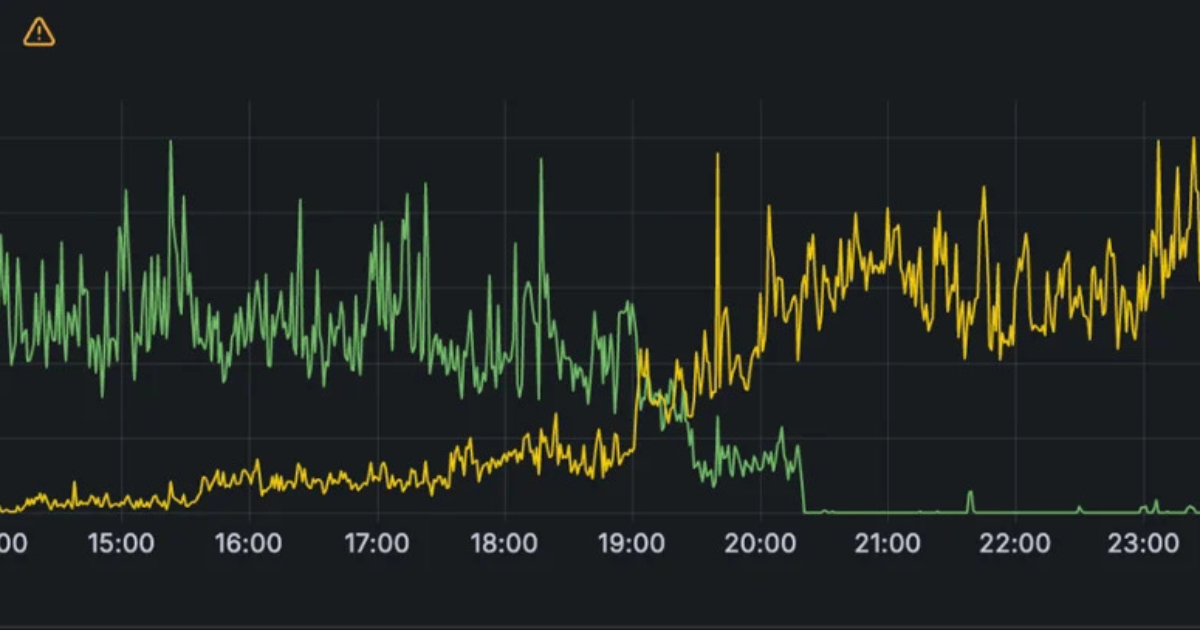
Cloudflare's Blog Finds Performance Gains with EmDash, Its New CMS
When Cloudflare moved its blog off WordPress, it didn't just switch platforms; it built its own CMS, EmDash, and open-sourced it. The payoff is clear: the system handles up to 7,000 requests per second while improving caching and performance. That's a practical win for a team managing heavy traffic. It's a reminder that sometimes the best tool is the one you create yourself. For more on how organizations are building internal infrastructure, check out our piece on Perplexity's CobbleDB migration.

S3 Compatible Doesn't Mean Secure: What Neoclouds Miss
S3 compatibility has become the default promise for object storage, but as Wiz's research shows, that promise stops short of security. Examining six popular neoclouds, the team found meaningful gaps compared to Amazon's protections. It's a useful reminder that API familiarity isn't the same as hardened infrastructure. For teams evaluating options, the question isn't just whether it works, but what's actually enforced underneath. If you're weighing storage trade-offs, our piece on Cloudflare's EmDash migration offers a related look at how infrastructure choices carry hidden implications.

DynamoDB Unifies Data and Vector Search Without a Separate Database
DynamoDB now lets developers store embeddings right alongside their application data and run approximate nearest-neighbor queries without spinning up a separate vector database. That's a meaningful simplification for teams building semantic search features. Filtered similarity searches and configurable indexes make it practical, not just theoretical. It's the kind of move that reduces operational overhead while keeping workflows familiar. If you're exploring how far native database capabilities can stretch, this is worth a look.
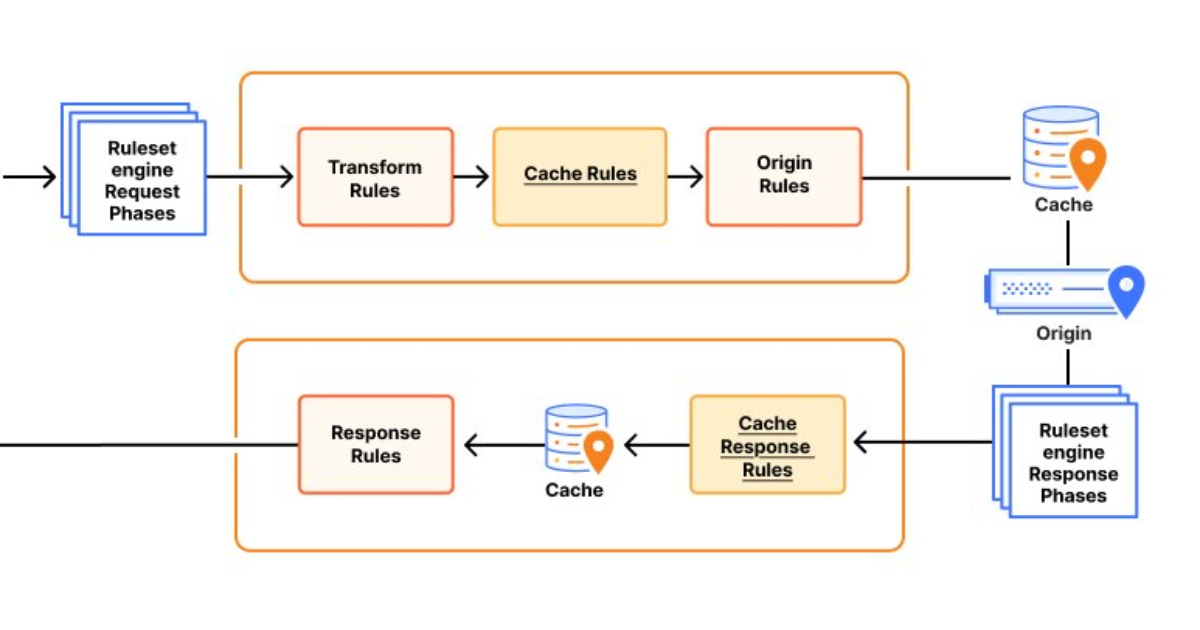
Cloudflare adds response-phase rules for smarter cache control
Cloudflare's new Cache Response Rules add a crucial second phase to its rules engine, evaluating origin responses before they're cached. Previously, Cache Rules only looked at request attributes, leaving response-level control out of reach. This update matters because it gives developers more precise, flexible cache management where it counts. It's a practical step forward, not a flashy overhaul. For deeper performance insights, Cloudflare's own work with EmDash shows the company isn't shy about applying its own innovations to real-world problems.

Cloudflare's Meerkat enables leaderless global coordination with strong consistency.
Cloudflare's new Meerkat service tackles a familiar pain point: coordinating writes across a global network without slowing down. Built on the QuePaxa consensus algorithm, it steps away from Raft's leader-based model, allowing leaderless writes while keeping strong consistency intact. That's a meaningful win for availability where every millisecond counts. For teams wrestling with distributed systems, Meerkat feels like a practical nudge forward. If you're exploring how these patterns apply elsewhere, our guide to distributed algorithms for LLM training offers a useful parallel.

Explore how free sandboxes remove friction from learning AWS
Setting up a sandbox for a workshop used to mean handing over your own AWS account and crossing your fingers. That friction is gone. The AWS Builder Center now provides free, time-limited environments, so developers can learn without watching their credit card or worrying about surprise charges. It is a practical fix for a long-standing community request, and it removes a real barrier to hands-on learning. For anyone exploring new AWS technologies, this makes building and experimenting feel far more accessible.