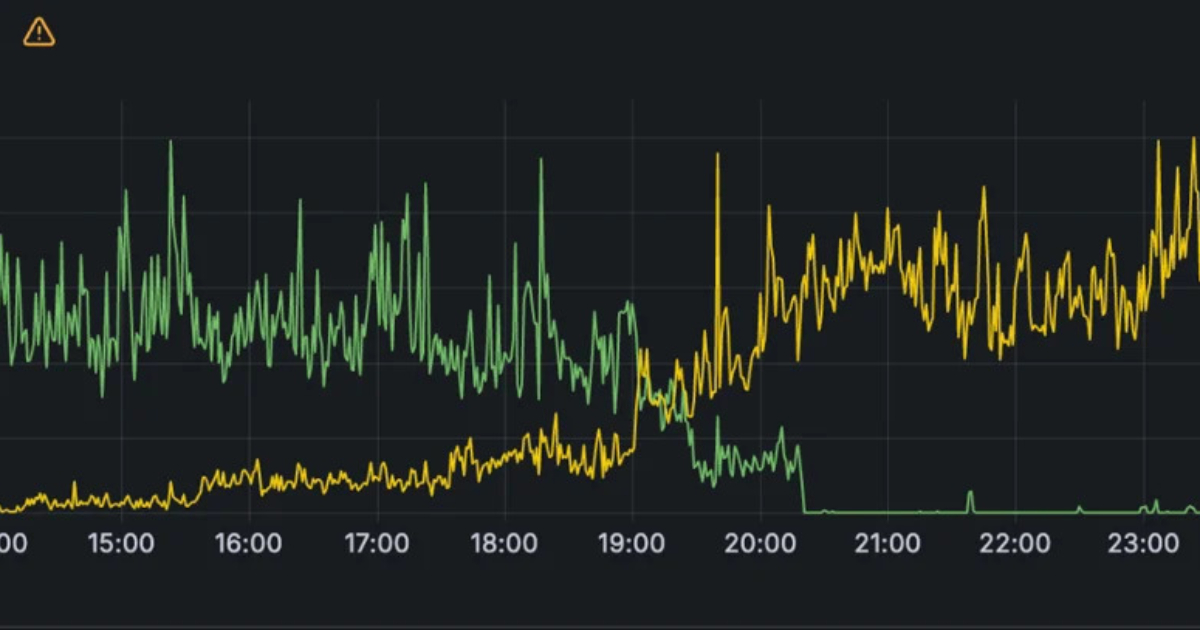
Cloudflare's decision to build and adopt EmDash, its own open source CMS, is less a story about software and more a statement about ownership. The company documented its migration from WordPress to a platform designed internally, engineered specifically for performance and caching, and tested to handle 7,000 requests per second. That number is impressive, but the real signal is in the reasoning. When a company with Cloudflare's infrastructure expertise hits the ceiling of a general-purpose tool, it doesn't complain. It builds. And then it shares the result with everyone else.
This pattern is becoming familiar across the industry, and it's worth paying attention to. We're seeing similar moves elsewhere, like how Anthropic Explores Akamai's Cloud for AI-Native Workloads or how Perplexity Transforms Search with CobbleDB, Achieving 5x Faster Queries. Each of these organizations reached a point where off-the-shelf solutions no longer matched their scale or their specific needs. They didn't wait for a vendor to catch up. They took control. That's the through-line here: the most ambitious teams are no longer just users of technology. They are authors of it.
For our readers, the practical takeaway isn't that you need to build your own CMS tomorrow. That would be missing the point. The takeaway is that performance ceilings are often design ceilings. WordPress is not a bad platform. It's just a general one. And when your core business depends on speed, caching, and the ability to absorb traffic spikes without blinking, a general solution will eventually force you to make compromises. Cloudflare's move suggests that the next competitive advantage isn't a feature set. It's the ability to shape your own tools around your own constraints.
What we would tell a reader who asks about this story is simple: watch what Cloudflare does next with EmDash, not just what it says. The fact that the CMS is open source is significant. It means the barrier to entry for a highly optimized publishing layer just dropped. And if other organizations adopt it, we could see a quiet shift in how content platforms are built, away from monolithic plugins and toward leaner, more intentional architectures. That's the outcome worth tracking.
There is also a cautionary note here, one that applies to every team eyeing a similar path. Building your own tool is not a shortcut. It's a long-term commitment. Cloudflare had the engineering depth to take this on, and even then, it documented the migration openly, which suggests they know others will be watching for lessons. The open question is whether EmDash becomes a foundational piece of infrastructure or a cautionary tale about scope. Given the company's track record, we'd bet on the former, but the real proof will be in how many teams adopt it and what they build on top of it. That's the detail to watch, not the 7,000 requests per second.