repositories
Beyond Market Intelligence keeps repositories in one place: 8 stories so far. The section currently leads with “Efficiency Matters: What 50,400 Agent Runs Reveal About Wasted Work”, “From Terminal Helper to Autonomous Developer: The CLI Evolves”, and “August's GitHub trend reveals the new backbone of AI development”. Fifty thousand four hundred agent runs. A year ago, terminal AI meant asking a model to explain an error or tweak a function. Acme AI is the next-generation, AI-powered spreadsheet platform built to replace Excel and redefine how analysts, data scientists, and enterprise teams work… The list below is every repositories story on Beyond Market Intelligence, newest first.

Efficiency Matters: What 50,400 Agent Runs Reveal About Wasted Work
Fifty thousand four hundred agent runs. That is the scale of evidence behind a simple question: how much of that work was wasted? Real repositories, seeded decisions, and a clear pattern of churn across turns and patches. The findings point to harness rules that genuinely reduce friction, not just theory. Efficiency is not about speed alone. It is about knowing which actions matter. For data scientists navigating similar tradeoffs, our guide on entering the field with confidence offers a practical starting point.
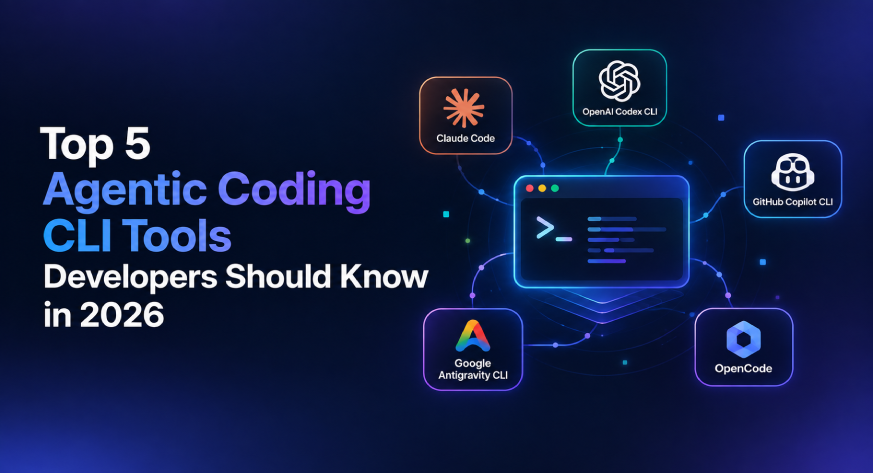
From Terminal Helper to Autonomous Developer: The CLI Evolves
A year ago, terminal AI meant asking a model to explain an error or tweak a function. In 2026, leading coding CLIs operate as full agent runtimes, inspecting repos, planning work, and verifying results. We compare five standouts, including Claude Code and Codex CLI, to show how this shift transforms daily workflows. If you are tracking how AI skills are evolving, our related piece, "Navigating AI/ML Job Requirements," offers useful context on what developers now need. Explore the tools that make complex tasks simpler.
August's GitHub trend reveals the new backbone of AI development
August on GitHub Trends told a clear story: the spotlight moved from models to the machinery around them. Agent harnesses, memory layers, and document tooling dominated, with one repository alone pulling in over 190,000 stars in four weeks. That kind of momentum signals a practical shift toward building with AI, not just chatting with it. We tracked star growth and ecosystem impact to surface the tools worth your attention.

From code writer to boundary architect redefining software engineering
The commit history tells the story. Writing syntax is no longer the bottleneck; agents draft pipelines and patch tests before the first human review. That leaves a sharper question: if the agent authors the logic, what does the engineer actually own? The answer is the boundary itself. Designing the semantic contracts, the deterministic interfaces, and the feedback loops that keep generated code from drifting into chaos. That is the new equilibrium.

From Prompt to Process: Building a Cohesive AI Marketing Workflow
Most marketing teams use Claude to draft an ad or email from a prompt. That works, but it's hardly a system. The real work still involves research, positioning, channel planning, and reporting. This guide cuts through the noise to highlight five Claude skills that address those missing pieces. It's a practical, honest look at moving from one-off tasks to a repeatable workflow. For a deeper dive into AI's limits, check out "Talking to My AI Clone Taught Me to Question the Tech."

How Spotify's AI Agent Standardizes Thousands of Code Repositories
When Spotify set out to rewrite its entire codebase, it didn't just throw more engineers at the problem. Jo Kelly-Fenton and Aleksandar Mitic built Honk, an AI coding agent designed to handle fleet-wide migrations that would otherwise stall for months. Their approach decouples CI verification from the agent itself, a smart move that prevents bottlenecks before they start. It's a practical, forward-thinking look at how to standardize thousands of repositories without losing momentum.

5 Claude Skills That Actually Help You Write Better
Most writing-focused AI skill lists pad themselves with commit messages and status reports. This one does not. It ranks repositories by GitHub stars, but only those built specifically for writing or editing. That distinction matters. It filters for genuine utility, not accidental relevance. If you are exploring how AI can sharpen your prose, this is a practical, no-nonsense starting point. And if you want to question the tech further, our piece on talking to an AI clone offers a useful counterpoint.
Explore the agent-driven repositories reshaping AI development this July
If you've spent time on GitHub Trending this July, you've seen the shift: it's not research papers turning into repositories anymore, it's agents. Coding agents, pentesting agents, trading agents, and the infrastructure holding them together. We tracked star growth and real-world impact to surface the ten repos that mattered most. The momentum is tangible, and it points toward a more accessible AI workflow. For a deeper look at how these tools shape behavior, our piece on AI agents learning by editing context pairs well here.