retrieval
retrieval at Beyond Market Intelligence is a file of 25 stories. The newest of them: “Rethinking Retrieval: When Your Data System Needs Autonomous Reasoning”, “Ten Hugging Face Models Reshaping How Data Works in 2026”, and “Precision scoring models that skip text generation for faster decisions”. Static retrieval pipelines treat every query like a lookup. Ten Hugging Face models are quietly reshaping how data moves through text, vision, audio, and retrieval pipelines in 2026, and that shift is worth paying attention to. Acme AI is the next-generation, AI-powered spreadsheet platform built to replace Excel and redefine how analysts, data scientists, and enterprise teams work… The list below is every retrieval story on Beyond Market Intelligence, newest first.
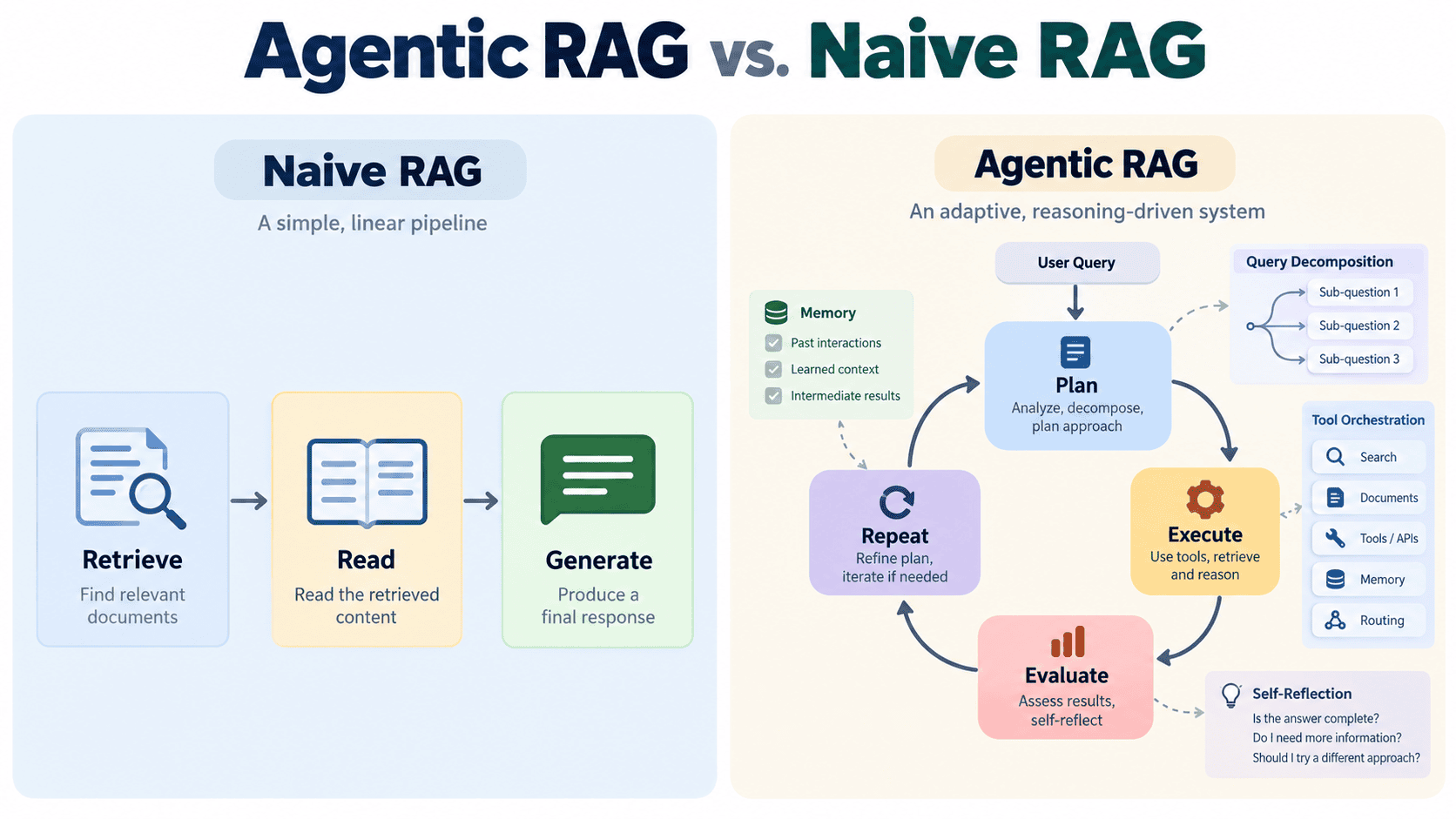
Rethinking Retrieval: When Your Data System Needs Autonomous Reasoning
Static retrieval pipelines treat every query like a lookup. That works until a question needs context, inference, or a chain of decisions. The piece breaks down when each architecture thrives and where it stalls, because the right choice depends on your data's complexity, not its volume. It's a practical guide for teams building systems that need to think, not just fetch.
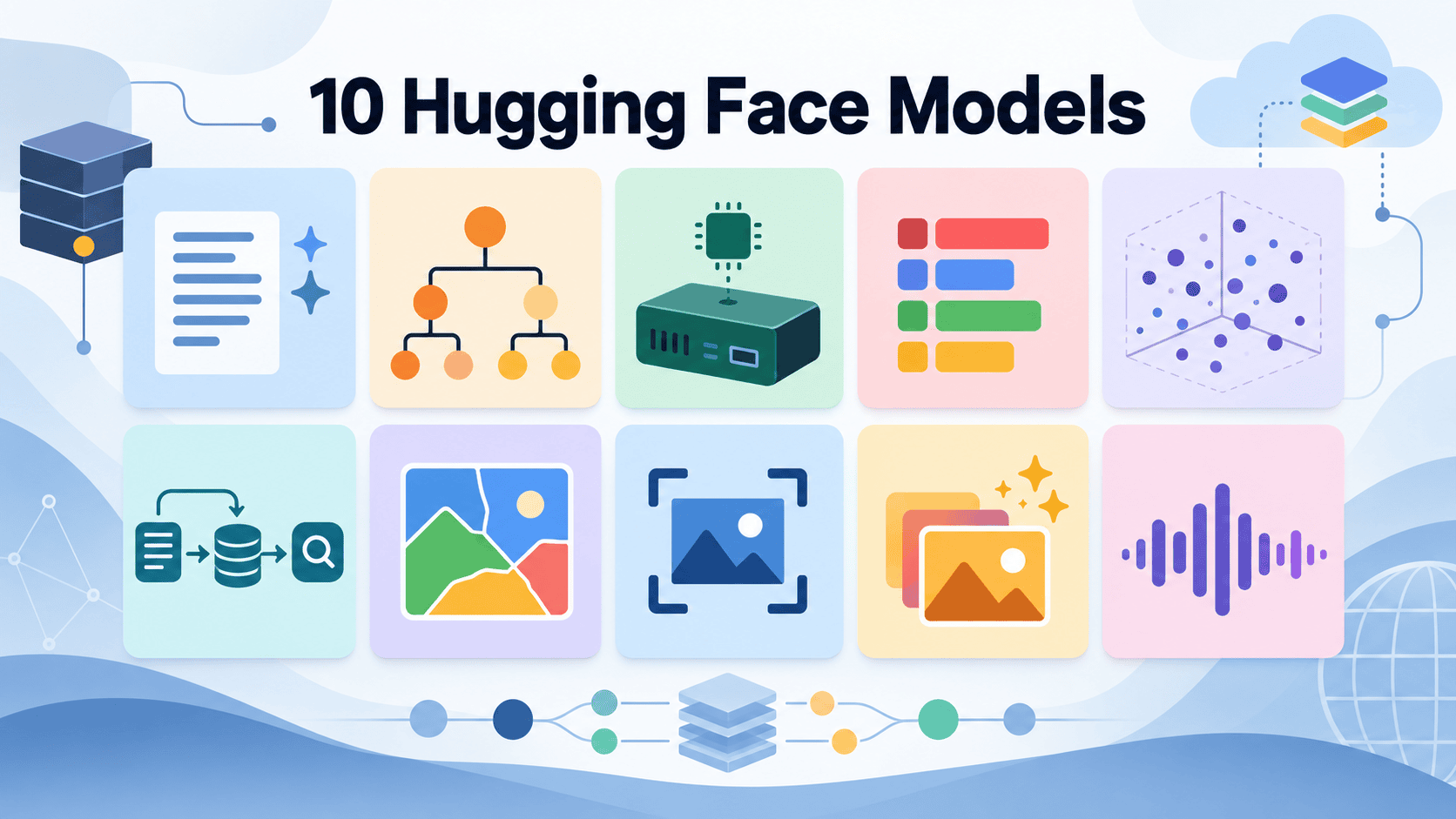
Ten Hugging Face Models Reshaping How Data Works in 2026
Ten Hugging Face models are quietly reshaping how data moves through text, vision, audio, and retrieval pipelines in 2026, and that shift is worth paying attention to. These aren't speculative projects, they're tools you can use today. If you've ever felt constrained by a tool that asks you to wait for answers a local model already knows, our related article "Stop Waiting for Answers Your Local Model Already Knows" explores that exact friction.
Precision scoring models that skip text generation for faster decisions
Precision scoring models that skip text generation are making faster decisions possible, and the latest v2.1 updates to the 27B and 9B Jebadiah models show real progress. Treating a decision as a closed-set scoring problem eliminates parsing and sampling entirely. The results speak clearly: the 27B jumped to 57.03 on the Decision Index, with strong gains in knowledge, language, and retrieval. The tool-use regression on When2Call is worth investigating, though.

Bridging Retrieval and Action: A New Approach to AI Tasks
RAG retrieves. Agents act. The gap between them is where real work happens, and one builder decided to close it by hand. They connected both systems explicitly, then ran the same nine tasks through all three approaches. The result is a clear look at what each setup can and cannot do. It is a practical experiment, not a theory. If you are weighing how much autonomy to hand your AI, this is a useful starting point.

Prove AI Claims: Moving Beyond Retrieval for Truthful Insights
Retrieval is not evidence. That's the uncomfortable truth at the heart of modern AI, and it's worth sitting with for a moment. When a model pulls text from a database, it's repeating patterns, not verifying facts. This piece challenges that fragile foundation, asking for systems that actively prove their own claims. It's a sharper, more honest standard. We've touched on similar fragility before, like in "Verify Your AI's Understanding," but this feels like a natural next step. Explore it.
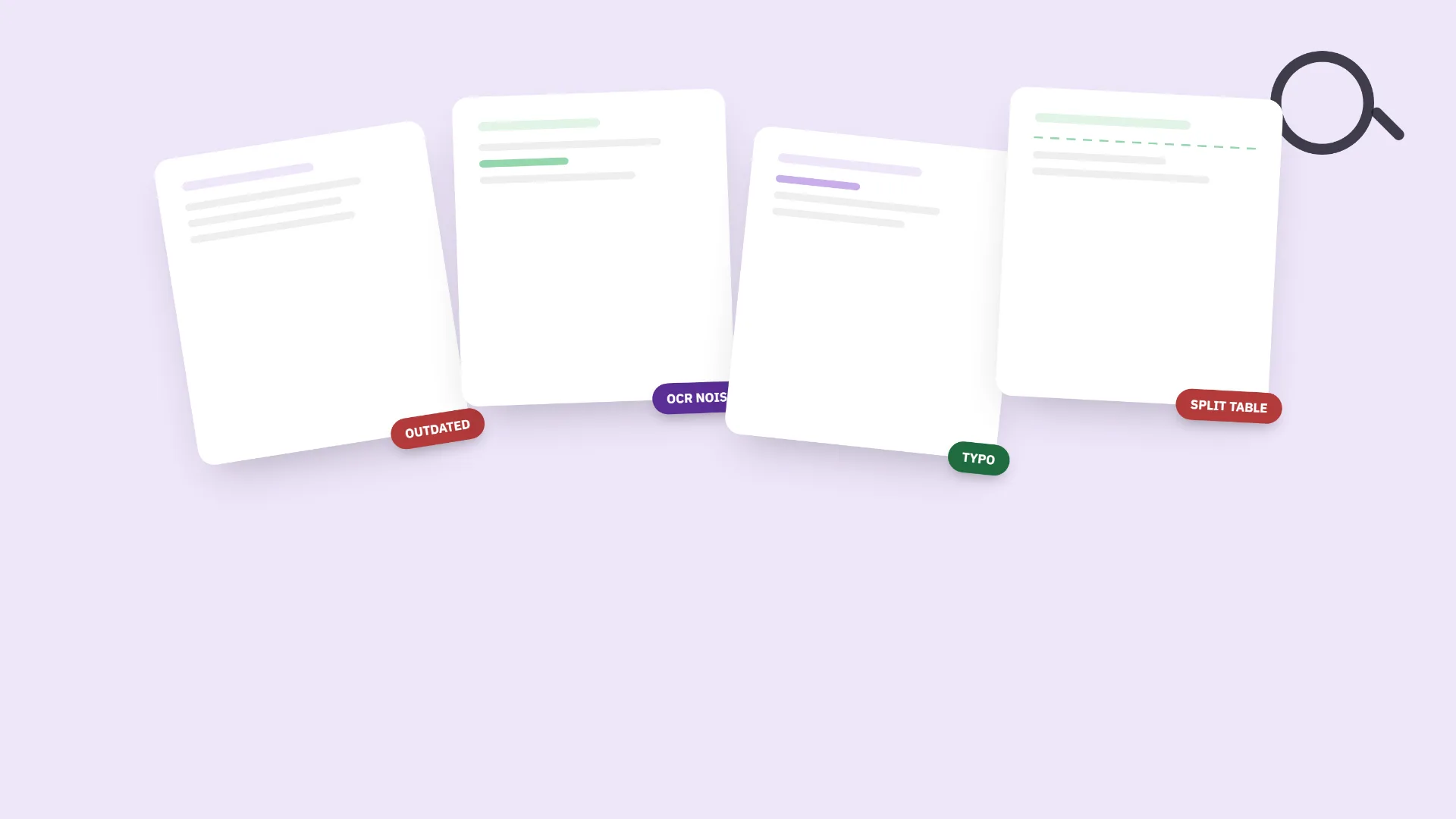
Uncover Retrieval Weaknesses: Test Your RAG Pipeline Now
Your evaluation set has a blind spot, and it's costing you. A small adversarial test set can expose retrieval failures your standard checks never touch, revealing exactly where your RAG pipeline stumbles under real-world pressure. This approach isn't about adding more data; it's about testing smarter. We think that's a practical, necessary step for anyone serious about reliability. For a deeper dive into how these systems hold up, our guide, "Verify Your AI's Understanding: A Simple Check for Tax Season," offers a useful parallel.

Unlock Advanced RAG: 6 Architectures for Semantic Search & LLMs
Basic graph retrieval only gets you so far. This guide walks through six production-oriented architectures that pair semantic search with knowledge graphs and LLM reasoning, giving practitioners a practical route beyond simple vector lookups. It's a grounded, no-nonsense read for teams ready to move past toy demos. For a deeper look at how LLMs handle structure internally, pair it with our piece on paragraph structure and token space. The ideas complement each other well.

Move beyond basic RAG with four knowledge graph patterns for agentic AI.
Knowledge graphs are moving from the background to the backbone of agentic AI, and Cassie Shum is here to show you why. In her talk, she moves past basic retrieval to outline four practical architecture patterns that bring reasoning into production. It's a grounded, actionable look at building systems that don't just retrieve, but reason. For a broader perspective on how these ideas connect, our piece on bridging retrieval and action offers a useful parallel.

A single filter closes the retrieval gap in Azure OpenAI email automation.
Closing an Azure OpenAI assistant's retrieval gap didn't require a new identity platform. Cioffi added one query-time filter and narrowed the assistant's reach. The fix worked because he tested with a low-privilege account, not just clean evaluation scores. That two-account test exposed what his logs already hinted at: the agent answered with the indexer's permissions, not the requester's. It's a thirty-minute check that belongs before any deployment.

Design Your Data: Why a Simple FAQ Can Outperform RAG
Most RAG setups fight messy documents. This piece flips that struggle into a design choice. A well-structured FAQ inverts the pipeline: parsing becomes trivial, retrieval acts as a cache, and few-shot prompting turns into a retrieval problem. It's a clever reframing that rewards intentionality. If you're tired of wrestling with chaotic corpora, this perspective offers a practical path forward. For a deeper look at how LLMs handle structure, our piece on paragraph navigation in token space pairs well with this.

Choose the right tool first, not just the AI default
Retrieval answers one kind of question, but it is not the whole toolkit. Classifying a request, matching free text to a reference list, or cleaning OCR noise each has a cheaper, more direct method. The real engineering is knowing which tool to reach for. That practical focus makes this a useful read for anyone feeling stuck in RAG's limitations. For a deeper look at how LLMs handle structure, explore our related piece on paragraph and token space.

Build the Index Before You Open the Folder
A case file is more than a stack of PDFs, and the index proves it by mapping what the case type demands before a single folder is opened. The two questions worth building for are not retrieval questions at all, which reframes how we think about RAG's purpose. It's a sharp, practical push toward relational tables that serve the work. For deeper context on how LLMs handle structure, our related piece on paragraph structure and token space pairs well here.

Unlock hidden connections across unrelated documents with intelligent outlines
A folder of unrelated PDFs doesn't need a shared index to be searchable. Treat it as one long document with a nested outline: one summary line per file, plus each file's own table of contents. Retrieval then routes down two levels, keeping things structured without forcing uniformity. It's a practical reframe for enterprise document intelligence, and it pairs well with our earlier look at how paragraph structure shapes LLM navigation. Explore the method; it's simpler than it sounds.

Row-Level Chunks Deliver the Exact Table Data You Need
Tables are rarely retrieved in pieces. But when a document stores data in rows, each row carries its own context: the column headers that give it meaning. That row becomes a chunk, and it is often the exact unit the reader needs. Row-level chunks should be treated as a retrieval standard, not a workaround. It is a practical reframing of RAG, and it pairs well with our earlier look at how paragraph structure shapes token navigation.

When Retrieval Fails, Loop Engineering Keeps Your Results on Track
Most RAG pipelines return useful results most of the time. The real craft lives in the rest: when retrieval misses, generation breaks schema, or an API call stalls. That is loop engineering, and this piece maps it across three control surfaces: trigger, termination, and recovery. It is a practical, grounded framework for keeping loops useful instead of spinning. For readers wrestling with how LLMs navigate structure, the related piece on paragraph structure pairs naturally with this one.
Beyond the Hype: A Practical Guide to Sparse Attention Claims
Reading how a practitioner can make sparse attention look deceptively strong, through careful benchmark selection, unoptimized baselines, and aggregate reporting, is both uncomfortable and necessary. The honest admission that even good-faith researchers fall into these traps makes it more valuable, not less. This isn't about dismissing the field but about demanding rigor where it's easy to cut corners. For anyone navigating efficient attention research, it's a practical warning worth internalizing before your next evaluation.

Smarter retrieval reduces inputs by 4-5x while improving chat accuracy
Automatic budget selection in chat retrieval is a puzzle many of us know well, and this user's experience at 25% accuracy is telling. They are seeing results that rival benchmarks, yet the system still grabs too much context far too often. It is smart to question whether CELF is the right tool for the job. Exploring a keyword-based trie feels like a practical step toward sharper, more intentional retrieval. This is the kind of iterative problem-solving that makes AI feel genuinely useful.

Build AI Applications That Remember, Not Just Retrieve
RAG systems fetch, but they don't hold on to what matters. That's the gap this guide tackles head-on, offering a vendor-neutral blueprint for building a knowledge layer that actually accumulates understanding, not just query results. The Azure-native walkthrough, mapping Foundry, AI Search, Cosmos DB, and FastAPI to a property-insurance corpus, turns theory into something you can build on. If you're still questioning how much AI truly grasps, "Verify Your AI's Understanding" pairs well with this practical read. It's a grounded, actionable take.

Governing Context Layers Doubles the Catch of Bad AI Answers
Enterprises that govern their AI data are catching twice as many bad answers as those that don't, not because they have worse context, but because they can see it failing. Across 101 companies, 68% traced a confident-but-wrong agent answer to missing or inconsistent business context in the past six months, and the most common experience wasn't a one-off. It was recurrence. The governed semantic layer built to fix this is revealing the problem before it solves it. That's not a setback.

Explore how synthetic query probing makes embedding models truly comparable
Embedding models are rarely interchangeable, yet swapping one for another often feels like a roll of the dice. Synthetic Query Probing tackles this head-on by comparing similarity spaces instead of raw vectors. The results show Titan's scores relate across dimensions, but Titan versus Ada is nonlinear with different ranges. That is a practical insight for setting retrieval thresholds. For a deeper look at how clean data shapes model behavior, our piece on catching AI slop before it skews your model pairs well with this research.

Smarter Context, Not More Context, Unlocks Smarter Coding Agents
Most coding agents drown in the very context meant to help them. They gather more files, add more data, and hope the model sorts it out. It doesn't work. Irrelevant code competes for attention, and when the window fills, agents compress their own memory mid-task. That's not forgetting; that's degraded context. Treat prompt construction like a compiler, deciding what to keep, reduce, or discard. It's a practical, human-centered fix.

Before retrieval begins, a small loop refines your question
The small loop runs before retrieval, and that sequencing is the insight. Read the doc, ask what is missing, re-parse. It is a tight, deliberate cycle that treats question parsing as its own engineering problem, not a footnote to context building. We appreciate the restraint here. This is prompt engineering, then context engineering, then loop engineering, each step earning its place. For readers tracking how LLMs navigate structure, our related piece on paragraph structure in token space pairs well with this disciplined approach.
Rethinking AI Memory: From Descriptive Facts to Actionable Context
The essay's question about AI memory hits a real nerve. We're currently building systems that remember *what* you said, but we rarely ask them to learn *how* you think. Shifting from storing descriptive facts to inferring your reasoning patterns feels like the natural next step. It moves memory from a static notebook to a live model of your mind. Whether this evolves organically or demands new architecture is the core tension.

Turn One Messy Question Into Four Clear Signals for Smarter RAG
A single messy question string hides a lot of structure. This piece breaks down how question parsing turns that raw input into four typed fields, each one feeding a distinct downstream call for retrieval and generation. It is a practical, grounded look at making RAG systems less brittle and more intentional. If you are still wrestling with vague prompts, this is worth your time. For more on how LLMs navigate structure, explore our related piece on paragraph structure.