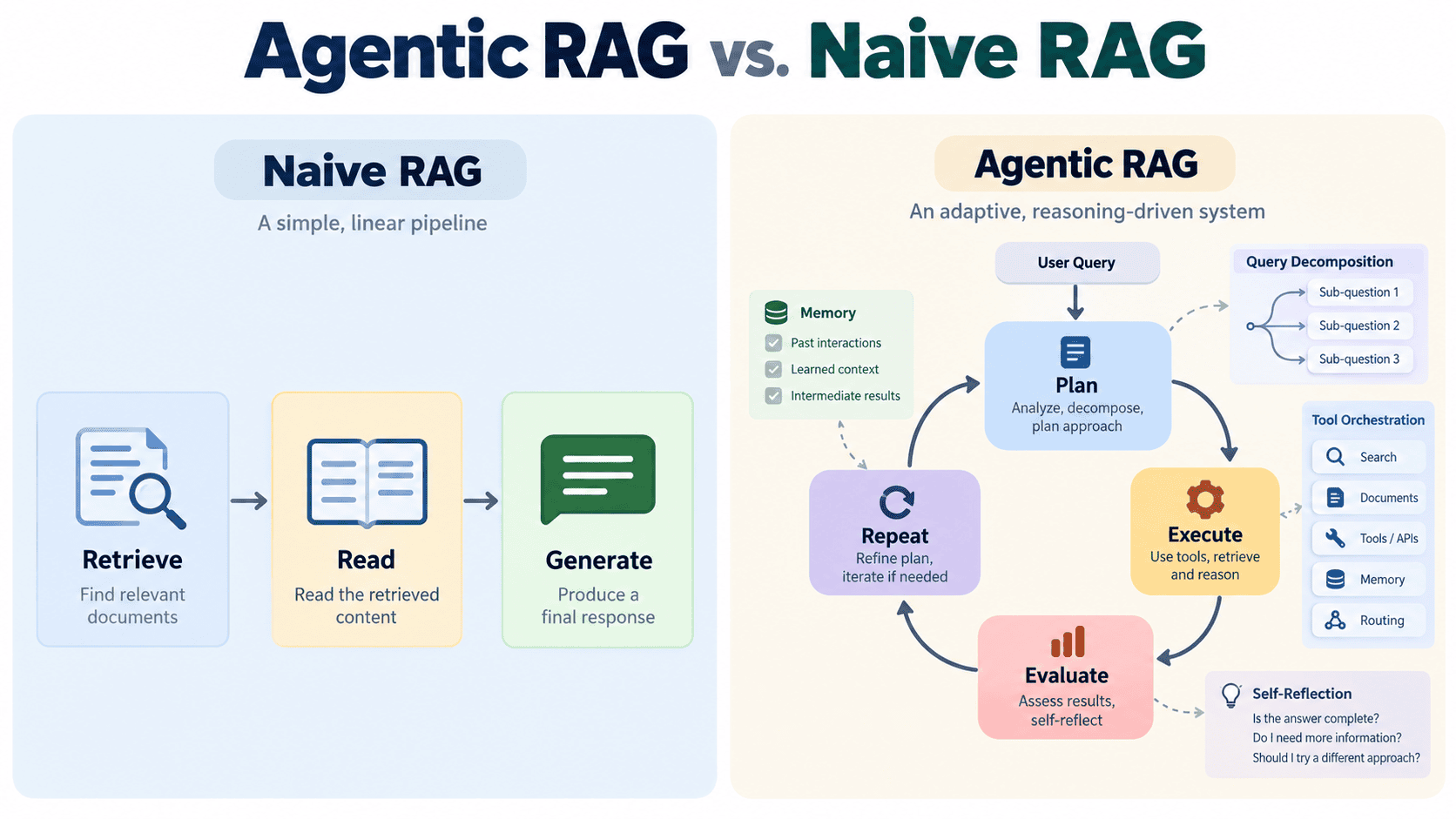
The leap from static data retrieval to autonomous reasoning isn't incremental, it's a fundamental shift in how we think about the systems we trust with our work. For too long, we've accepted that a spreadsheet or a database can only answer what we explicitly ask, returning raw records that still leave us to connect the dots. The story here frames two architectures: one that pulls facts from a vault, and another that can reason across those facts to form conclusions. That difference is the difference between a librarian who hands you a book and a research partner who helps you interpret it. We believe the latter is where our workflows need to go, and the sooner users start evaluating their own systems against this standard, the more productive they'll become.
Consider how most data tools operate today. You query, they retrieve. If you want to know which quarter had the highest customer churn, you pull the numbers and do the math yourself. Static pipelines are fast and reliable, but they assume you already know what to ask. Autonomous reasoning engines change that equation. They don't just fetch rows, they combine, compare, and infer. Instead of asking for a report, you could ask a qualitative question like "Why did engagement drop in March?" and the system would surface correlated metrics, flag anomalies, and present a synthesized answer. This echoes what we've seen in related work: in How adding AI to your review process can sharpen your peer feedback, a single AI step fundamentally altered how reviewers interpret feedback, moving beyond simple aggregation into pattern recognition. The same principle applies here, the architecture determines whether you get raw data or actionable understanding.
The practical decision between these two systems isn't about which is more advanced. It's about what your data actually needs. If your task is generating a monthly sales ledger with fixed columns, a static pipeline is still your friend. But if you are exploring open-ended questions, forecasting trends, or diagnosing irregularities, you need a system that can reason across context without being spoon-fed every join condition. The autonomous approach anticipates connections you haven't yet asked about, much like the ambient AI described in Beyond apps: AI that anticipates your next move without a command, which acts without waiting for explicit instructions. That shift, from command-driven to context-driven, is what makes autonomous reasoning not just faster, but fundamentally different.
Here is the concrete takeaway: start auditing your current retrieval workflows for the friction points where you routinely export data to do your own analysis. Every time you paste query results into a separate tool to calculate a trend, correlate two columns, or identify an outlier, you have identified a candidate for autonomous reasoning. The technology to replace that manual step exists today, and it does not require a massive infrastructure overhaul. The open question is whether your team is ready to trust a system that gives you answers instead of raw records. That trust will define how quickly we move from retrieving data to actually understanding it.