runtime
21 stories filed under runtime on Beyond Market Intelligence. The newest of them: “How AI Helped GitHub Rebuild Its Copilot Engine in 14 Weeks”, “Docker brings AI agent permissions to the CNCF as portable container images”, and “Python Workers Go Live as Questions on Speed and Upstream Support Emerge”. GitHub migrated more than 800,000 lines of Copilot runtime code from TypeScript and Node.js to Rust in about 14.5 weeks, using AI-assisted development to make it happen. Docker is making AI agent permissions as portable as the agents themselves by bringing the Sandbox Kit Specification to the CNCF. Acme AI is the next-generation, AI-powered spreadsheet platform built to replace Excel and redefine how analysts, data scientists, and enterprise teams work… The list below is every runtime story on Beyond Market Intelligence, newest first.

How AI Helped GitHub Rebuild Its Copilot Engine in 14 Weeks
GitHub migrated more than 800,000 lines of Copilot runtime code from TypeScript and Node.js to Rust in about 14.5 weeks, using AI-assisted development to make it happen. The incremental approach leaned on N-API interoperability, automated testing, human review, and 128 pull requests while still shipping releases. That's a disciplined, practical model for large-scale rewrites. For more on how teams are tackling ambitious rebuilds, our piece on Shopify's Checkout Blocks rewrite offers a useful comparison.

Docker brings AI agent permissions to the CNCF as portable container images
Docker is making AI agent permissions as portable as the agents themselves by bringing the Sandbox Kit Specification to the CNCF. This move treats what an AI can access like a container image, something you can pack up and move anywhere. It's a practical step toward trust and flexibility in agentic workflows. For another look at how AI is reshaping practical tools, read our piece on Shopify's Canvas builder.
Python Workers Go Live as Questions on Speed and Upstream Support Emerge
Cloudflare's Python Workers have gone GA, but the launch feels more like an opening act than a headliner. Built on PEP 783 and socket syscalls over the Workers connect API, the announcement conspicuously omits performance figures. That silence is loud. A urllib3 maintainer is already asking who supports the upstream work afterward, and Wasmer's founder wants cold-start numbers, citing about 1.027 seconds from Cloudflare's own blog. These are fair, pointed questions. If you're evaluating this for production, you'll want answers before committing.

Compile TypeScript to Native Code and Transform Your App Performance
Vercel Labs' scriptc takes TypeScript out of the Node.js runtime and compiles it straight to native code. That means faster startup and a lighter memory footprint, though execution speed still lags behind Node. It's experimental, but the direction is compelling for developers who want efficiency without abandoning a familiar language. We're watching this space closely, and if you're curious about similar forward-thinking infrastructure, our piece on Spritely's decentralized architecture is worth a read.

Orchestrate AI Agents: Google Open-Sources AX for Enhanced Efficiency
Google has open-sourced AX, an orchestrator designed to keep autonomous AI agents from idling away resources. By treating agents as stateful actors on its Agent Substrate runtime, AX suspends tasks during downtime and resumes them on demand, trimming latency without sacrificing performance. The control plane's Kubernetes-style primitives make managing agent workloads feel familiar, not foreign. It's a practical step toward efficient, scalable AI operations.

From Two Weeks to One Hour: Grab's Framework Simplifies AI Agent Deployment
Two weeks to one hour. That's the compression Grab achieved by standardizing its AI agent deployment with LLM-Kit, a framework now powering over 500 internal services. This isn't just about speed; it's about centralizing the messy parts of production, from secret handling to runtime tool discovery, so teams can focus on outcomes. We think that's a practical, human-centered approach to scaling intelligence. For a deeper look at how AI understands structure, explore our piece on how LLMs navigate token space. It's a natural next step.
Solaris' turnstile shaped leaner locking in modern browsers and runtimes.
When Solaris introduced the turnstile mechanism, it tackled a problem every system builder knows: mutexes can bottleneck performance. Sun's design leaned toward leaner locking, and that thinking echoes through modern web browsers and language runtimes today. Alongside the Slab Allocator, OpenZFS, and DTrace, Solaris shaped how we build for efficiency. This isn't just history; it's a practical blueprint still guiding how we optimize memory and concurrency.
Explore the Latest Java Ecosystem Updates for Smarter Development
TornadoVM 6.0 arrives as a GA release, and that's worth pausing over. This week's roundup also tracks point releases across JReleaser, LangChain4j, Java Operator SDK, JHipster, Kotlin Toolchain, and Yupiik Fusion, alongside maintenance updates for Micronaut and the GraalVM Development Kit. It's a steady cadence of refinement rather than fanfare. For those exploring how AI connects with Java tooling, our piece on bridging retrieval and action offers a practical angle worth reading.

Give your AI agents context with structure, not just more strings
Flattening context into a single string is a recipe for confusion. When instructions, memory, and tool outputs lose their boundaries, the model has to guess what matters. That is why I appreciate this practical approach to typed context. The author built a zero-dependency Python runtime that keeps those semantic edges intact and rejects invalid transformations before they reach the model. It is a focused solution to a real problem. For more on how structured thinking applies elsewhere, *Exploring Paragraph Structure* offers a useful parallel.

When Milliseconds Matter: Teaching LLMs to Forget on Purpose
Most LLM runtimes treat memory as an endless resource, but this one treats it as a deadline. It refuses admission rather than miss a 33ms robot control cycle, evicting KV cache by meaning instead of age, all in hand-written CUDA. That's a sharp rebuke to the bloat most of us accept. It's a focused, practical stand for precision, and it makes you wonder what else we're letting slip.

Vite+ Beta Unifies the Web Toolchain Into One Simple Command
Vite+ arrives as a unified web toolchain, and that single command approach is exactly what developers have been waiting for. VoidZero's beta combines runtime, package management, and frontend essentials into one streamlined workflow. Hot-reloading, format checking, and testing all live behind that command, which should cut through the usual configuration clutter. It's open source, too, and the team is leaning on community feedback to shape what comes next. For a developer tired of stitching tools together, this feels like a practical step forward.
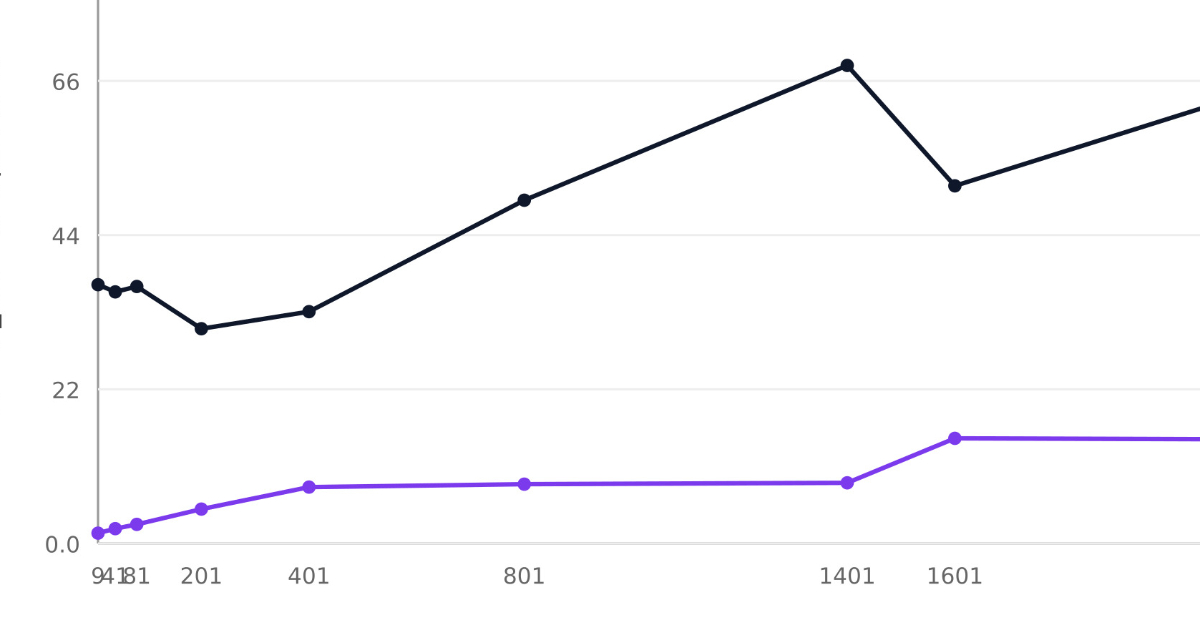
Single runtime outperforms multi-system stacks for live data workloads
Harper is pushing back on the multi-system stack, and the argument is hard to ignore. By keeping application code and data together in a single runtime, the database platform reports notably better performance on live, personalized workloads compared to a Vercel-based setup. Version 5.2 adds a record cache and greater throughput per node. That is a practical step toward less complexity. For readers tracking how modern architectures evolve, our related piece on Cloudflare's CMS migration offers another angle worth exploring.
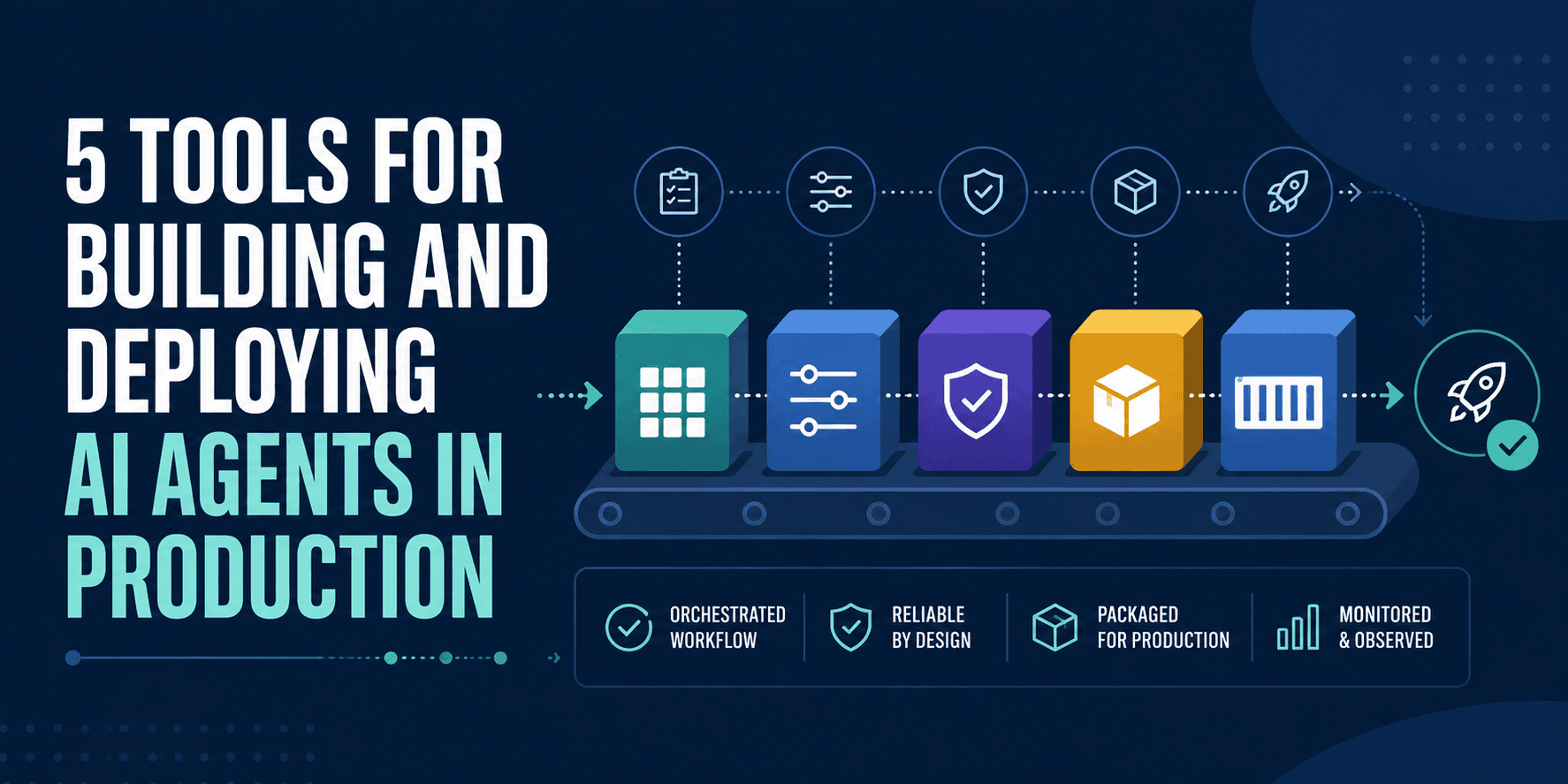
From Agent Logic to Scale: Five Essential Tools for Production AI
Building an AI agent is one thing; running it reliably in production is another. This guide breaks down five tools, each tackling a specific layer of the stack, from shaping the agent's core logic to scaling it under real-world pressure. It's a practical, no-nonsense walkthrough for teams ready to move beyond experimentation. If you're still questioning how much trust to place in these systems, our piece on talking to an AI clone offers a timely counterpoint worth exploring.

Persistent compute gives AI agents the stamina for complex workflows.
Amazon Bedrock AgentCore now gives AI agents persistent compute through runtime instances, a practical upgrade for teams wrestling with long-running workflows. This isn't about flashy demos; it's about infrastructure that finally keeps up with multi-agent coordination without constant hand-holding. We see this as a step toward less friction in complex data tasks, which pairs well with our own exploration of AI's limits, like in "Talking to My AI Clone Taught Me to Question the Tech.
Discover how Fru brings faster random forest performance to Python and R users.
Building a faster random forest isn't just about squeezing out milliseconds; it's about unblocking bigger data work. That's what a colleague and I aimed for with Fru, a Rust-based implementation we just published in Software X. It offers bindings for Python and R, and the performance speaks for itself. In Python, Fru can outpace scikit-learn by several factors, and in some cases, it's hundreds of times faster.

Give AI agents a persistent workspace with Cloudflare's new open-source runtime.
Cloudflare's new open-source runtime, Cloudflare Computer, gives AI agents something closer to a real machine than the usual ephemeral containers. By leaning on Cloudflare isolates, it promises faster, cheaper, and more scalable execution for agentic workloads. That's a meaningful step beyond stateless setups, and it's worth exploring if you're building agents that need persistence. For more on how Cloudflare thinks about performance, their EmDash CMS migration offers a useful parallel. This runtime feels like a practical push toward agents that actually finish the job.

Microsoft's Agent Framework moves from build to governed runtime.
Microsoft's Agent Framework just grew up. At Build 2026, the company shipped a supported runtime with the Agent Harness, GitHub Copilot and Claude Agent SDK connectors, and stable orchestration patterns. Now, with the harness and Foundry Hosted Agents at general availability, the focus shifts from building agents to running them under governance. That is a meaningful transition. For a deeper look at how these pieces fit together, explore our piece on architecting agent harnesses for financial efficiency.

WebAssembly on the JVM unlocks new potential for server-side innovation
WebAssembly is no longer just a browser story, and Andrea Peruffo is here to prove it. His discussion on the JVM traces the technology's journey from simple interpreters to the speed of JIT compilation, making server-side Wasm a practical option for real workloads. What stands out is the focus on production reality, from edge platforms to modular plugins, rather than abstract potential.

Build Your Own LLM Runtime with a Guided Tour of Real Bugs
There's a particular satisfaction in packing your own weights and capturing your own CUDA graphs, and that's exactly the terrain this walkthrough covers. The post traces the building of annotated-llm-runtime on an H100, with three bugs generating most of the hard-won annotations. It's a practical, grounded tour for anyone curious about the mechanics beneath the abstraction. For broader context on the distributed side, *Unlock LLM Training* pairs well here, though this piece stands firmly on its own.

Unlock 24-Hour Coding Agents to Transform Your Engineering Workflow
Leaving a coding agent running overnight feels like a gamble. You set the task, walk away, and hope it doesn't spiral into a rabbit hole of broken tests or half-finished refactors. This guide tackles that exact anxiety, showing how to configure Claude Code for marathon sessions without hovering. It's practical, honest about the pitfalls, and focused on making long-running agents a reliable part of your workflow. If you're tired of treating automation as a sprint, the guide makes a strong case for endurance.
Explore how AI models can now run directly on your mobile device.
Running a private Qwen 35B MoE model on a Galaxy S26 Ultra is no small feat, and the early numbers are worth noting. Roughly 90 input tokens per second with about 8 output tokens per second shows real progress, especially when precision stays intact. What stands out is the path here: self-taught expertise, no formal PhD, just curiosity and access to resources. That matters. Four arXiv papers still on hold because there is no institutional backing? That is a familiar wall.