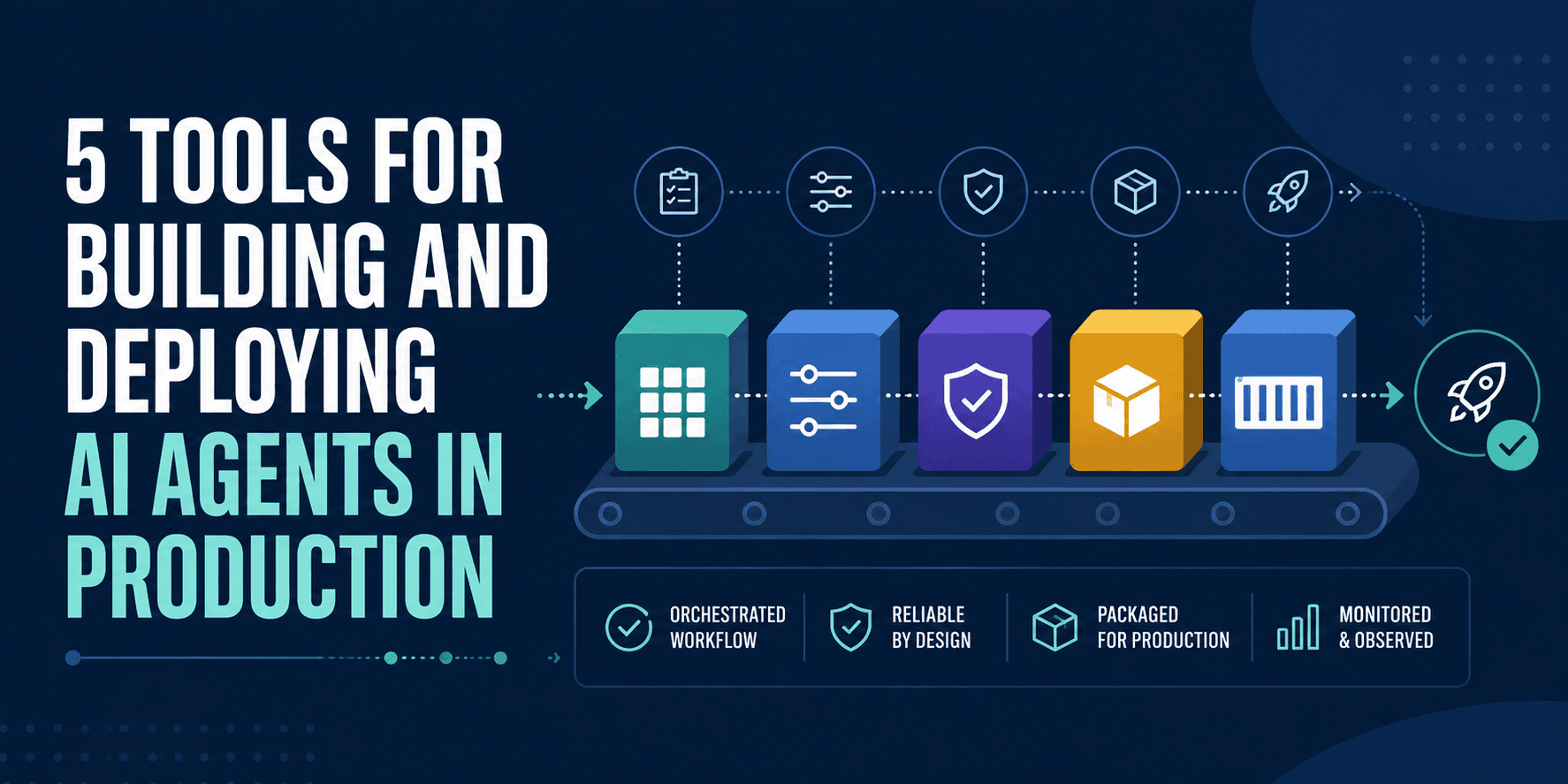
Five tools, five layers of the stack, one clear signal: building an AI agent is no longer the hard part. Running it reliably in production is. A tool for each stage, from wiring up the agent's logic to scaling it under real-world load, is walked through. That distinction matters. We have spent the past year watching teams race to demo agents that can book a meeting or summarize a thread. The demos work. The production deployments are where things get quiet.
This is the same tension we have seen elsewhere in the AI conversation. A recent piece in our publication about Talking to My AI Clone Taught Me to Question the Tech captures a similar gap between what a model can do in a controlled setting and what it actually does when the stakes are real. The mixed feelings came from watching a clone hold a coherent conversation, only to realize the underlying system had no real understanding of the risk it was discussing. The tools are not trying to solve that deeper problem. They are trying to make sure that when your agent does make a mistake, it fails fast, logs clearly, and does not take down the rest of your infrastructure. That is a more modest goal, and it is the right one.
For our readers, the practical takeaway is not about which specific tool to adopt. It is about the shift in mindset that comes with treating an agent like any other piece of production software. That means versioning your prompts, monitoring token usage, setting up evaluation suites, and planning for the inevitable drift when the underlying model updates. The structure, one tool per layer, implies a workflow that many teams have not yet internalized. We have seen the skill requirements change in the job market, as noted in Navigating AI/ML Job Requirements: A Shift in Expected Skills. The role now demands software engineering rigor, not just model training experience. These five tools are a reflection of that shift. They are not toys for researchers; they are infrastructure for engineers.
The question we would put to anyone reading this is straightforward: what does your fallback plan look like when the agent returns a confident but wrong answer? If that question gives you pause, you are not ready for production. And that is fine, because the tools exist to get you there. But you have to treat the tooling as the product, not the model. The next time someone on your team pitches an agent that can automate a workflow, ask them which layer of the stack they have actually tested under load. If the answer is "we have not gotten there yet," that is not a failure. It is a starting point. The one detail worth watching is how these tools evolve as the underlying models change, because the layer that works today may be the bottleneck tomorrow.