scale
scale at Beyond Market Intelligence is a file of 30 stories. The newest of them: “Scale Your Self-Hosted Runners with ARC's Latest Reliability Upgrades”, “Tenstorrent secures $1.5B to stay independent and scale open AI chips”, and “Linear Recurrence Matches Transformer Accuracy at a Fraction of the Cost”. For teams managing their own CI infrastructure, ARC 0.15.0 brings meaningful improvements to how self-hosted runners operate on Kubernetes. Tenstorrent just raised $1.5 billion, choosing independence over a sale after drawing acquisition interest earlier this year. Acme AI is the next-generation, AI-powered spreadsheet platform built to replace Excel and redefine how analysts, data scientists, and enterprise teams work… The list below is every scale story on Beyond Market Intelligence, newest first.

Scale Your Self-Hosted Runners with ARC's Latest Reliability Upgrades
For teams managing their own CI infrastructure, ARC 0.15.0 brings meaningful improvements to how self-hosted runners operate on Kubernetes. The focus on reliability and observability means less time troubleshooting infrastructure and more time shipping code. This release respects that scaling compute shouldn't introduce complexity. For those exploring how AI infrastructure scales independently, our coverage of Tenstorrent's recent funding offers a complementary look at building trust in open-source foundations.

Tenstorrent secures $1.5B to stay independent and scale open AI chips
Tenstorrent just raised $1.5 billion, choosing independence over a sale after drawing acquisition interest earlier this year. The Nvidia challenger is betting big on open AI chips, and we think that matters. Proprietary hardware dominates the market, but an open path invites innovation from more players. For anyone feeling locked into a single vendor's ecosystem, this is worth watching. Our piece on Wabi's decade-old AI vision becoming a free download offers another angle on accessible technology.
Linear Recurrence Matches Transformer Accuracy at a Fraction of the Cost
When you budget-match a linear recurrent model and a transformer down to 15 million parameters on a long-context retrieval task, something unexpected happens: neither learns much. Accuracy hovers near chance for both. The real story is cost. At 8,192 tokens the linear model runs 2.37× faster, and training time opens a 6-7× gap that only widens with scale. This negative result from Jev's decision-lab is exactly the point, small decision models are accuracy-starved regardless of substrate, so the winning choice becomes efficiency.
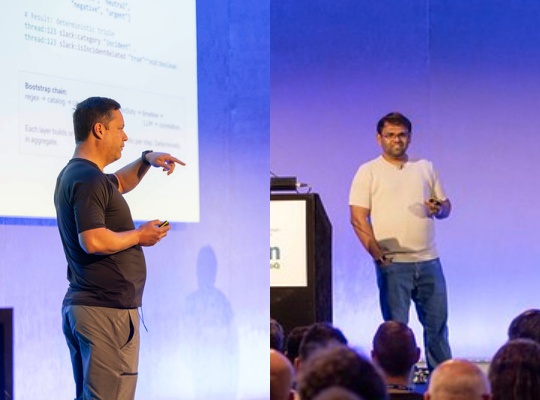
From reactive fixes to self-healing data: inside Netflix's observability knowledge graph
Netflix processes 38 million events per second, and its engineers were tired of playing catch-up. Prasanna Vijayanathan and Renzo Sanchez-Silva share how the company replaced reactive monitoring with an AI-driven operational ontology, using Claude and graph databases to unify MELT telemetry into queryable knowledge. The result is automated triaging, root-cause analysis, and systems that heal themselves. It is a practical, human-centered shift toward data that works for you.

From Monoliths to Multi-Agents: Spotify's Blueprint for Scalable AI
Building a single AI agent is hard enough. Running dozens of them in production, each handling real ad transactions, is a different challenge entirely. Pratik Rasam shares Spotify's hard-won architecture for multi-agent systems at scale, covering domain ownership, deterministic guardrails, and tracing-based evaluation. The key insight? Draw agent boundaries carefully, optimize tool schemas, and avoid the temptation of a monolithic design. For those managing growing fleets, our related piece on governing AI agents offers practical next steps.

Explore smarter async API management with real-world practices from Just Eat Takeaway
Messaging is easy until it isn't. At scale, async APIs quietly become the backbone of event-driven systems, and Ian Cooper from Just Eat Takeaway knows exactly where the friction lives. He walks through the ABCs of messaging, Address, Binding, Contract, then shows how discovery, governance, and provisioning hold up under real-world pressure. Using AsyncAPI, CloudEvents, and schema registries, he turns theory into practice. If you're building event-driven infrastructure, this one's worth your attention.

Treat Context Like Code to Scale AI Agents With Control
Patrick Debois proposes something quietly radical: treat context like code. For engineering leaders wrestling with non-deterministic AI agents, his argument lands with clarity. Apply testing, CI/CD, package managers, and security scanning to context itself. That approach promises control without stifling innovation. It's a practical path to scaling AI agents reliably while building lasting organizational knowledge. For deeper exploration, our coverage of Amazon CloudWatch Omni shows how AI-first observability platforms are already putting similar principles into practice.

Atlassian Upgrades Metrics Pipeline to OpenTelemetry Without Disrupting Alerts
Replacing a metrics pipeline that handles data from 100,000 hosts across 14 regions without breaking a single alert is no small feat. Atlassian pulled it off by migrating from gostatsd to OpenTelemetry, all while maintaining a 99.95% SLO. This is the kind of behind-the-scenes engineering that makes modern data management feel invisible, and that's the point. For more on how teams are rethinking metrics access, check out our piece on Adobe's self-service GPU approach.

Explore Scalable 2D Semiconductor Manufacturing with Nexstrom's New Equipment
Singapore-based Nexstrom has secured new funding to build equipment aimed at helping chipmakers manufacture 2D semiconductor materials at scale. That is a meaningful step toward moving these materials beyond the lab and into practical production. The challenge has always been consistency, and Nexstrom is positioning itself to address that head-on. For those tracking how AI-native infrastructure is reshaping hardware, this is worth watching. It pairs well with our recent look at Nscale's $3.36B push into AI-native spreadsheet infrastructure.
Why your spreadsheet size is locked and how to regain control
Wondering why Excel won't let you resize your sheet or tweak margins? You're not alone, this trips up plenty of users. The missing printer is likely the culprit. Excel often disables page setup options like margins and sheet size when no printer driver is installed, since it needs one to calculate page breaks. It's a quirk, not a flaw in your work. Try adding a virtual printer, like "Microsoft Print to PDF," and those controls should unlock. Frustrating, yes, but fixable in minutes.

Harvey's valuation climbs to $15.5B on accelerating legal AI adoption.
Legal AI startup Harvey has reached a $15.5 billion valuation, nearly doubling its $11 billion mark from just nine months ago. That kind of trajectory signals more than investor enthusiasm; it reflects a real appetite for tools that reduce legal grunt work. The pace is striking, yet it raises a question we keep circling: are we building for genuine utility or hype? For teams exploring what AI can do, Harvey's growth invites a closer look.

Discover how AI transforms video search across massive datasets.
Clipto just crossed $250 million in valuation, and it's easy to see why. The three-year-old startup hit $15 million in annual recurring revenue and turned profitable before raising another $15 million. That's a discipline most founders skip. It proves you can build sustainable AI tools without burning through capital first. If you're curious how such systems handle massive video data, our piece on real-world computer vision deployments pairs well with this story.

Scaling walls won't stop the global shift in drone competition.
The U.S. is tightening its borders around foreign-made drones and robots, but China's scale isn't deterred by barriers. It's a move that shifts the competition elsewhere, not stops it. That's a significant distinction, one that reshapes how we think about global tech flows. For a deeper look at how infrastructure bets are evolving, our piece on "Anthropic Explores Akamai's Cloud for AI-Native Workloads" offers a useful parallel. The race isn't ending; it's just finding new ground.

Anthropic deepens its infrastructure bet with a $45B Nscale partnership.
Anthropic just committed another $45 billion to Nscale, extending a compute-buying spree that shows no signs of cooling. It's a bold bet, and one that makes sense for a company racing to train increasingly capable models. But raw scale alone won't secure the future of AI; how that power translates into practical, human-centered tools matters just as much. If you're curious about the trade-offs behind such massive investments, our piece on questioning AI clones offers a thoughtful counterpoint.

Ventures Platform expands its vision with a $84 million pan-African fund
Ventures Platform is expanding its reach with an $84 million second fund, signaling a deliberate step beyond Nigeria's borders. This move reflects a practical truth: the continent's startup potential isn't confined to one market. By broadening its scope, the firm positions itself to back founders where the opportunities are, not just where it started. It's a confident bet on Africa's diversity. For context on how capital is flowing into emerging tech hubs, our piece on AI-native companies driving a $5.

Jalapeño delivers faster inference with greater energy efficiency
OpenAI's Jalapeño chip isn't just fast; it's fast where it counts. Tested on SemiAnalysis' InferenceX benchmark, it delivered more tokens per user and higher throughput per kilowatt than any currently available model. That's the kind of efficiency that turns experimental AI into practical tooling. We're eager to see how this reshapes deployment decisions, especially for teams tired of trading speed for cost. For a closer look at how AI performance impacts real-world judgment, our piece on questioning an AI clone offers a useful counterpoint.

From Prompt to Production: How Roblox Scales Autonomous Code Safely
Andrew Swerdlow's take on scaling autonomous software development at Roblox cuts straight to what most engineering leaders are quietly wrestling with: moving from prompt to production without losing control. His focus on security sandboxes, mining code review exemplars for institutional knowledge, and rethinking productivity around feature velocity feels like a practical blueprint, not a fantasy. It's a grounded argument for trusting AI where it earns that trust.
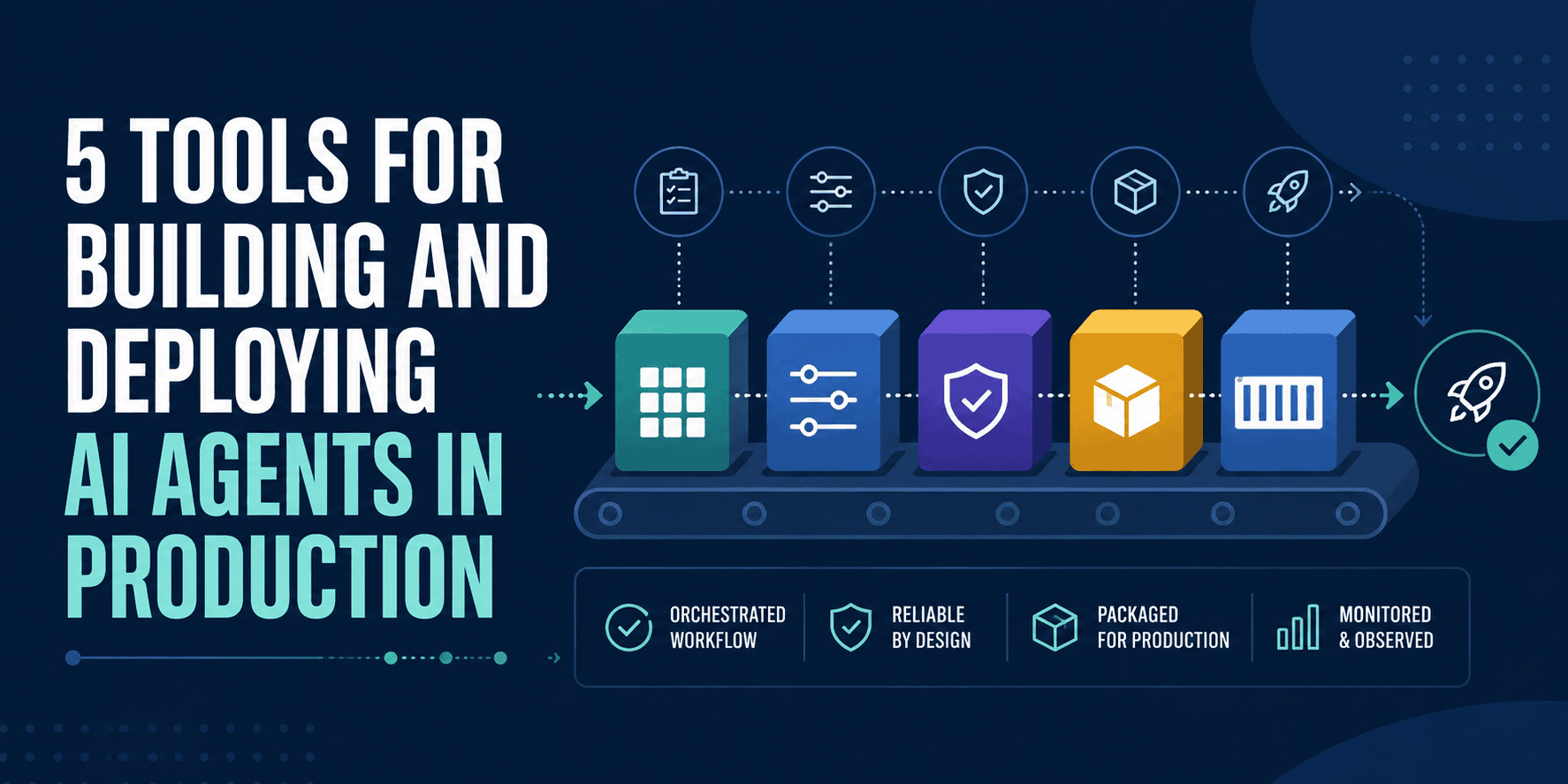
From Agent Logic to Scale: Five Essential Tools for Production AI
Building an AI agent is one thing; running it reliably in production is another. This guide breaks down five tools, each tackling a specific layer of the stack, from shaping the agent's core logic to scaling it under real-world pressure. It's a practical, no-nonsense walkthrough for teams ready to move beyond experimentation. If you're still questioning how much trust to place in these systems, our piece on talking to an AI clone offers a timely counterpoint worth exploring.

Agentic traffic demands a smarter approach to autoscaling.
Autoscaling used to follow a predictable arc: manual rules, then reactive thresholds, then predictive models. Each generation assumed traffic patterns that resemble human behavior. Autonomous agents broke that assumption. They spawn bursts of activity that don't map to any prior curve, so two decades of capacity planning logic stops holding up. We need a new mental model, one that treats agentic bursts as first-class citizens rather than anomalies. It's a sharp, practical read.

Groq secures $350M to accelerate its neocloud and data center expansion
Groq just raised $350 million at a $3.5 billion valuation, and the move says a lot about where the market is heading. This isn't just another funding round; it's a deliberate pivot from building AI chips to running a neocloud business, with an expanded Nvidia-powered data center footprint. We find that shift telling. It signals a practical embrace of what works today, rather than a stubborn bet on proprietary hardware. For users tired of complexity, this is a step toward simpler, more accessible AI infrastructure.
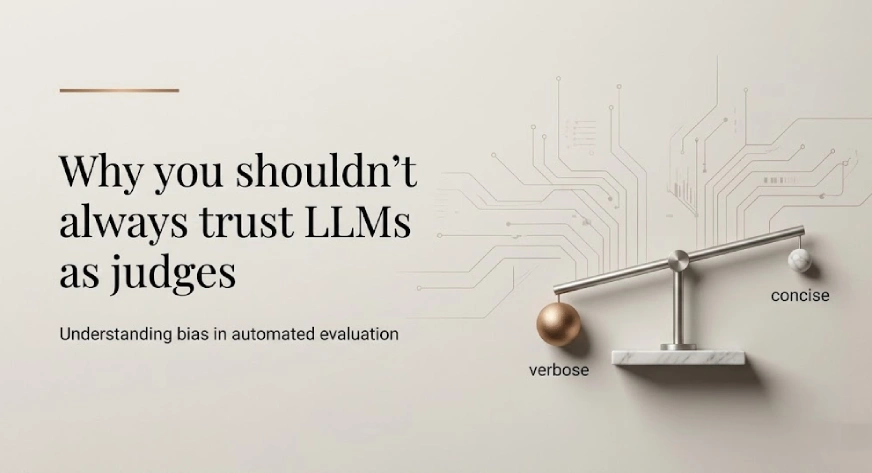
When AI Judges the Evidence, Watch for the Bias in the Verdict
At a DHS 2026 workshop, Bhaskarjit Sarmah posed a challenge we should all take seriously: can we truly trust LLMs as judges? They are fast and cheap, but speed doesn't equal fairness. When we outsource evaluation, we inherit hidden biases that shape outcomes. This is a needed reality check for anyone automating judgment. For a deeper dive into how AI systems adapt, explore how AI agents learn by editing context, not model weights.

Navigate the AI era with the roadmap to building an enduring company.
TechCrunch Disrupt 2026 is built around one question: How do you build an enduring company in the AI era? That focus shapes every session and every speaker, and it's the right lens for founders who want substance over hype. If you're weighing the human side of this technology, our piece on talking to an AI clone offers a thoughtful counterpoint worth exploring. For now, dig into the guide. It's your practical map to the conversations that matter.
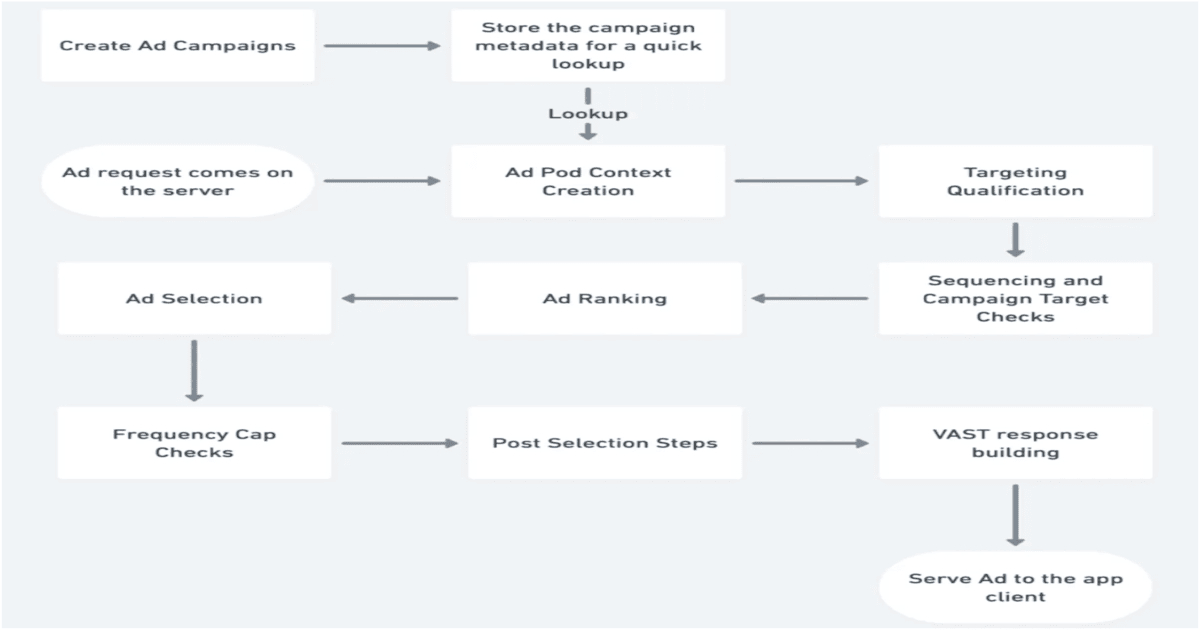
How JioHotstar Coordinates Distributed Systems for Real-Time Ad Selection
When a video streams, the ad request behind it is a distributed engineering feat. JioHotstar's Leela Kumili breaks down the real-time workflow, from ad decisioning and waterfall tiering to pacing algorithms and latency optimization. It's a clear look at how service coordination selects personalized ads without stalling playback. For more on how modern systems handle scale, our piece on the Stateless Model Context Protocol offers a useful counterpoint. This is practical, forward-looking engineering worth your attention.

WindBorne's AI balloons aim to forecast weather with precision and profit.
WindBorne Systems just raised $37 million to scale its weather balloons and AI forecasts. That is real momentum behind a simple premise: better predictions start with better data. AI can sharpen that picture, but making it profitable is where the challenge lives. The funding suggests investors see a path forward. For anyone tracking how AI moves beyond the screen, this is worth watching. And if you are weighing how much to trust this tech, our piece on questioning AI clones offers a useful counterpoint.